Planning to visit the Rudranath Temple in 2026, you have many doubts in mind — when will the temple open, what is the best season, how difficult is the trek, how to reach, and whether beginners can complete the journey safely or not.
Rudranath Temple is one of the most spiritual yatra treks in Uttarakhand. Unlike Kedarnath, this trail remains less crowded and takes you through dense forests, high-altitude bugyals, remote ridges, and peaceful mountain landscapes.
In this complete guide, you will find everything about the Rudranath Temple opening date 2026, closing date, trek route, itinerary, difficulty level, accommodation, permits, weather conditions, safety tips, and Rudranath trek package details so you can plan your yatra properly without confusion.
Rudranath Temple Opening Date 2026
The rudranath temple opening date 2026 is traditionally determined on the auspicious day of Akshaya Tritiya, falling in late April or early May. For 2026, the temple gates are expected to open on May 18, 2026. This opening is not just a logistical event but a profound spiritual ceremony. The idol of Lord Rudranath, which is worshipped at the Gopinath Temple in Gopeshwar during the winter months, begins its journey back to the high-altitude shrine in a vibrant palanquin (Doli) procession.
The “Doli Yatra” is a sight to behold. Hundreds of devotees accompany the palanquin, chanting Vedic hymns and playing traditional instruments like the Dhol and Damau. The procession typically stops at intermediate locations like Lyuti Bugyal to allow devotees to pay their respects. On the day of the opening, the chief priest (Pujari) performs special “Abhishek” rituals before the “Kapat” (doors) are officially thrown open to the public amidst echoes of “Har Har Mahadev.”
Visiting during the opening week is an intense experience. While the energy is unmatched, the weather can be unpredictable. You might encounter lingering snow patches on the route, especially near the Pitradhar pass. It is essential to monitor local announcements from the temple committee as dates can sometimes shift by a day based on Hindu astrological calculations. This period marks the start of the rudranath trekking season, inviting pilgrims to witness the face of Shiva in the wildest of the Panch Kedar shrines.
Rudranath Temple Timing & Trekking Schedule
Activity / Event | Timing | Important Notes |
Morning Darshan | 6:00 AM – 12:00 PM | The temple opens at dawn for pilgrims. |
Mid-day Break | 12:00 PM – 4:00 PM | Doors close as the deity is offered “Bhog” and priests rest. |
Evening Rituals | Opens at 4:00 PM | Temple re-opens for the afternoon/evening session. |
Evening Aarti | 7:00 PM | The most spiritual part of the journey. |
Darshan Queue Wait | 30–40 Minutes | Estimated wait time during peak days in 2026. |
Latest Departure (Descent) | By 2:00 PM | Mandatory for those not staying in huts to avoid trekking in the dark. |
Understanding the trek time and temple schedule is vital for planning your daily hiking mileage. Generally, the rudranath temple opens its doors for “Darshan” at 6:00 AM and remains open until 12:00 PM. There is a mid-day break where the deity is offered “Bhog” and the priests rest. The temple re-opens at 4:00 PM for evening rituals, culminating in a soul-stirring “Aarti” at 7:00 PM.
For trekkers, this means you must time your final ascent carefully. If you are staying at the basic huts near the temple, you can attend the evening Aarti, which is arguably the most spiritual part of the journey.
However, if you are planning to descend back to lower camps, you must ensure you leave the temple premises no later than 2:00 PM to avoid trekking in the dark. The high-altitude terrain is tricky, and visibility drops rapidly after sunset.
Rudranath Temple Closing Date 2026: When the Doors Shut
As autumn transitions into winter, the rudranath temple closing date 2026 is tentatively scheduled for October 25, 2026, coinciding with the festival of Bhai Dooj. The closing ceremony is as somber and significant as the opening. As the snow begins to blanket the inner Himalayan ranges, the “Eka-Mukh” idol is prepared for its descent. The temple is thoroughly cleaned, and a “Bhandara” (community feast) is often organized for the remaining pilgrims and shepherds.
The “Kapat” are closed after a final, elaborate Maha-Aarti. An eternal lamp (Akhand Jyoti) is lit inside the sanctum, believed to stay lit through the six months of winter. The idol then begins its journey back to Gopeshwar. After the closing date, the rudranath trek becomes extremely dangerous and is officially discouraged. The water sources freeze, and the basic shelters (Dharamshalas) close their doors.
Planning a trip near the closing date requires extreme caution. While the autumn skies are crystal clear, offering the best views of the peaks, the temperature at Rudranath can plunge to -5°C at night. If you miss the closing date, you will find a locked temple and a ghost-town atmosphere. It is the last chance for the year to seek blessings at the fourth Kedar before the region enters its long, snowy slumber.
The Significance of Lord Rudranath: The Fourth Kedar of Panch Kedar Temple
Rudranath Temple is considered the fourth temple of the sacred Panch Kedar Yatra dedicated to Lord Shiva. According to the Mahabharata, after the Kurukshetra war, the Pandavas sought atonement for the sin of “Gotra Hatya” (killing kinsmen). Lord Shiva, wishing to avoid them, took the form of a bull and dove into the earth at Kedarnath. His body parts later reappeared at five different locations: the hump at Kedarnath, the arms at Tungnath, the navel at Madhyamaheshwar, the hair (Jata) at Kalpeshwar, and the face at Rudranath.
At Rudranath, Lord Shiva is worshipped as “Neelkanth Mahadev” in his benevolent yet fierce facial form. Unlike other Kedar shrines where the deity is worshipped in symbolic forms like a lingam or hump, Rudranath is unique because you worship a physical face carved into the rock. The temple is a natural rock cave (shila) tucked under a massive boulder.
The spiritual significance extends to the surrounding water bodies. Near the temple flows the Vaitarani River (also known as the River of Salvation), where devotees perform rituals for their ancestors. The temple is flanked by sacred pools like Surya Kund, Chandra Kund, and Tara Kund. It is believed that a pilgrimage here is incomplete without a holy dip in the icy waters of the Vaitarani, symbolizing the crossing from the material world to the divine realm.
Why Should We Visit Rudranath Temple?
You must visit Rudranath Temple because it remains the most pristine and untouched of all the Panch Kedar temples. The sheer rudranath trek distance acts as a natural filter, ensuring that only the most dedicated devotees and adventure seekers reach its gates. It is a place where “Bhakti” (devotion) meets “Shakti” (power).
- Unrivaled Natural Beauty: The trek takes you through the world-famous Bugyals (alpine meadows) of Chamoli. Standing at Pitradhar, you get a 360-degree view of Nanda Devi, Trishul, and Parvati peaks that are arguably better than the views from Tungnath.
- The Wildest Kedar: There are no motorable roads anywhere near the shrine. This isolation preserves an energy of silence and meditation that is increasingly rare in the Himalayas.
- Ancestral Peace: For those seeking to perform Tarpan for deceased loved ones, the Vaitarani river at Rudranath is considered as sacred as Gaya in Bihar.
- Testing Your Limits: The trek is a physical and mental challenge. Completing the rudranath yatra provides a sense of accomplishment that stays with you for a lifetime. It is a journey that strips away your ego, leaving you in awe of the raw power of nature.
Key Highlights of the Rudranath Temple Trek
The Rudranath trek offers experiences that feel very different from most Himalayan treks.
The first major highlight is Panar Bugyal. These alpine meadows stretch endlessly with wide Himalayan views on all sides. During sunset, the entire landscape turns golden-orange.
Another unforgettable section is the ridge trail near Pitradhar. Strong mountain winds, fog movement, and exposed mountain edges create a dramatic trekking atmosphere.
The temple itself is another major highlight. Unlike big stone temples, Rudranath feels raw and natural because of its cave-like structure.
The trek also provides close Himalayan views of:
- Nanda Devi
- Trishul
- Chaukhamba
- Hathi Parvat
One unique thing about the Rudranath trek is silence. Since crowd levels remain lower compared to Kedarnath, trekkers experience peaceful forests, remote campsites, and quiet mountain landscapes throughout the route.
Rudranath Trekking Route Options and Itinerary Overview
The rudranath trekking route is not a singular path; there are several ways to reach the shrine, each varying in difficulty and distance.
- Sagar Village Route (Most Popular): This is the direct route starting from Sagar village near Gopeshwar. It is steep but well-defined.
- Day 1: Reach Gopeshwar/Sagar.
- Day 2: Sagar to Panar Bugyal (12 km steep climb).
- Day 3: Panar Bugyal to Rudranath via Pitradhar (8 km ridge walk).
- Day 4: Rudranath to Sagar (20 km descent).
- Helang-Kalpeshwar Route: Often used by those completing the Panch Kedar circuit, the kalpeshwar rudranath trek is longer and involves crossing high ridges.
- Day 1: Reach Helang/Kalpeshwar.
- Day 2: Kalpeshwar to Dumak Village.
- Day 3: Dumak to Panar/Rudranath.
- Mandal Village Route: Known for its dense forest and the Anasuya Devi temple. This route is longer but more scenic.
- Day 1: Reach Mandal.
- Day 2: Mandal to Anasuya Devi to Hansadungi.
- Day 3: Hansadungi to Rudranath.
The rudranath trek itinerary usually requires 4 to 5 days to complete comfortably. Rushing the trek in km (approx. 20km one way) can lead to severe fatigue or altitude sickness. We recommend the Sagar route for the ascent and the Mandal route for the descent to experience the full diversity of the region.
How to Reach Rudranath Temple from Delhi, Haridwar & Rishikesh
Reaching the base of the rudranath temple requires a multi-stage journey through the heart of Uttarakhand.
- From Delhi: The most convenient way is to take an overnight train (Nanda Devi Express) or a luxury bus to Haridwar or Rishikesh. From there, you must hire a taxi or take a state transport bus toward Gopeshwar. The road journey from Delhi to Gopeshwar is roughly 450 km and takes 14-16 hours.
- From Haridwar/Rishikesh: These are the primary gateway cities. You will travel along the Badrinath Highway (NH7), passing through the “Panch Prayags”—Devprayag, Rudraprayag, and Karanprayag. At Chamoli, you take a diversion toward Gopeshwar. From Gopeshwar, the trekking base of Sagar Village is just 5 km away and easily accessible by local auto or taxi.
- By Air: The nearest airport is Jolly Grant Airport, Dehradun. From there, you can hire a private taxi service like chamoli texi service to Gopeshwar, which is around 220 km away..
- By Rail: The nearest railway station is Rishikesh/Yog Nagari Rishikesh. However, for better connectivity, many prefer Haridwar Junction.
Once at Sagar or Mandal, the motorable road ends, and your rudranath trek distance on foot begins. Ensure you reach the base village by afternoon to rest and start your trek early the next morning.
Best Time to Visit Rudranath Temple: Seasonal Weather Guide
The rudranath trek’s best time to visit is split into two distinct windows: Summer (May to June) and Post-Monsoon (September to October).
- Summer (May – June): This is the peak season following the rudranath opening date 2026. The weather is pleasant during the day (15°C to 20°C), though nights are chilly. The meadows are vibrant green, but the trails can be crowded. This is the best time for those who prefer social trekking and warmer temperatures.
- Monsoon (July – August): The rudranath trek in monsoon is extremely challenging. While the valley turns into a “Valley of Flowers” with rare blooms, the trails become slippery and prone to leeches. Landslides on the Gopeshwar road are common. Only experienced trekkers with high-quality rain gear should attempt this.
- Autumn (September – October): This is arguably the best time for photography. The skies are crystal clear, offering the sharpest views of the snow-capped peaks. The air is crisp, and the Brahamakamals are in full bloom. However, the temperature at the temple can drop below zero at night.
- Winter (November – April): The temple is closed. The region is buried under several feet of snow, making the rudranath trek route impassable.
Rudranath Trek Difficulty Level: What Beginners and Intermediates Should Expect
The rudranath trek is rated as Moderate to Difficult. Unlike Tungnath, which is a paved 4-km walk, Rudranath involves a 20-km (one way) journey with a massive altitude gain.
- For Beginners: This trek will be a massive test of endurance. The initial climb from Sagar to Panar is a “vertical” ascent through the forest with very few flat patches. Beginners must start a fitness regime (cardio and leg strength) at least 2 months in advance. Rushing is your enemy; take frequent breaks and stay hydrated.
- For Intermediates: You will find the ridge walk from Panar to Rudranath exhilarating but tiring. The thin air at 11,000+ feet will slow your pace. The main challenge for intermediates is the rudranath trek in km for a single day—descending 20 km back to Sagar in one go can be grueling on the knees.
Regardless of your level, do not underestimate the “Pitradhar” climb. The weather can change in minutes, turning a sunny meadow into a foggy, cold ridge where losing the trail is easy. Always carry a physical rudranath trek map or hire a local guide.
Permits, Registration & Accommodation and Facilities During the Rudranath yatra
Before you start the rudranath trek, you must complete the mandatory registration for rudranath yatra. This can be done online via the Uttarakhand Tourism portal or at the registration counters in Rishikesh or Gopeshwar. Additionally, since the trek passes through the Kedarnath Wildlife Sanctuary, you may need to pay a small forest entry fee at the Sagar village check-post.
Accommodation Options:
- Sagar/Gopeshwar: Plenty of budget and mid-range hotels.
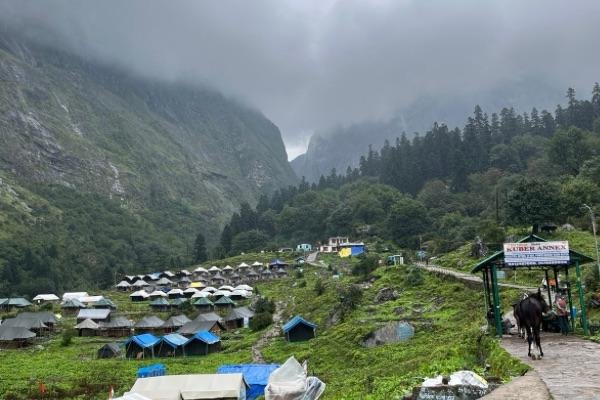
- Panar Bugyal: Basic wooden huts and temporary tents are available during the season. Expect shared bedding and minimal facilities.
- Rudranath Temple: There are a few “Dharamshalas” managed by the temple committee and local priests. They offer basic mats and blankets. In peak season after the rudranath temple opening date 2026, these can get full, so carrying your own lightweight tent and sleeping bag is a smart backup.
Facilities: There are no luxury facilities. Electricity is non-existent beyond Sagar; some huts use solar lamps. Water is sourced from natural springs. Mobile connectivity (mostly BSNL) is spotty and usually vanishes after Panar Bugyal.
Essential Packing List for the Rudranath Trek
your packing must be strategic.
- Footwear: High-ankle trekking boots with a good grip are non-negotiable. You’ll be walking on mud, loose stones, and grass.
- Clothing: Use the layering system. A moisture-wicking base layer, a fleece mid-layer, and a heavy down jacket for the nights. Even in June, you’ll need a jacket at the temple.
- Rain Gear: A sturdy poncho is better than an umbrella, especially for the rudranath trekking in monsoon.
- Health Kit: Band-aids, crepe bandages, pain relief spray, and Diamox (for altitude sickness, only after consulting a doctor).
- Electronics: A high-capacity power bank. Your phone battery will drain quickly in the cold.
- Misc: A high-quality headlamp (essential for early morning Darshan), sunblock, and chlorine tablets to purify spring water.
Safety Tips and Altitude Awareness for Trekkers
Safety on the rudranath trek route is about respecting the mountain.
- Acclimatization: Do not climb too fast. If you feel a persistent headache or nausea, it’s a sign of Acute Mountain Sickness (AMS). Descend immediately to a lower altitude like Panar.
- Weather Watch: If the fog settles in on the ridges, stop walking. It is very easy to lose the rudranath trek route map in zero-visibility conditions.
- Hydration: Drink at least 4 liters of water daily. The dry mountain air dehydrates you faster than you realize.
- Trek in Groups: Never trek alone. The region is home to black bears and leopards. While they usually avoid humans, a group is always safer.
- Emergency Contacts: Keep the numbers of the Gopeshwar Police Station and the local SDRF team saved, although network is rare.
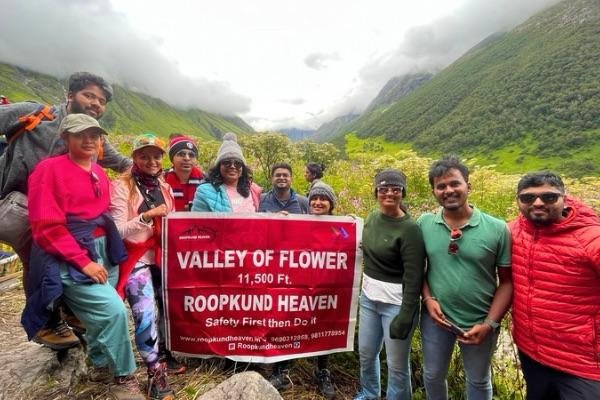
Why we choose Roopkund Heaven for Rudernath temple yatra
Many trekkers choose Roopkund Heaven for the Rudranath trek booking because they provide organised itineraries, local trek support, accommodation arrangements, and transportation management.
For beginners, structured trek planning becomes extremely useful because remote Himalayan treks involve multiple logistics like permits, stays, food arrangements, and local route coordination.
Rudranath Trek Package Cost 2026: Budget vs Premium Options
The rudranath trek package cost varies significantly based on your level of comfort.
- Budget Option (Self-Planned): If you travel by local buses, stay in shared Dharamshalas, and carry your own gear, you can complete the trek for ₹6,000 – ₹8,000 per person starting from Rishikesh.
- Standard Package: A professional rudranath trek package usually costs between ₹12,000 and ₹18,000. This typically includes SUV transport, all meals, experienced guides, and pre-booked accommodation in Gopeshwar and Panar.
- Premium Options: For those wanting private tents, porters to carry their personal luggage, and customized meals, the cost can go up to ₹25,000+.
FAQs:
- What is the rudranath trek distance in km? The total trek distance is approximately 40-44 km (round trip) depending on the starting point. From Sagar, it is roughly 20 km one way.
- How do I handle the rudranath trek in monsoon? Use waterproof boots, carry a heavy-duty poncho, and be prepared for leeches. Check for road blockages at Chamoli before starting.
- Is rudranath trek booking required in advance? Yes, especially for 2026, as the Uttarakhand government is regulating pilgrim numbers. Booking a package or registering online is highly recommended.
- Can I do the kalpeshwar to rudranath trek? Yes, this is a popular 5-6 day cross-over trek connecting the two Kedar shrines via the remote villages of Dumak and Kalgot.