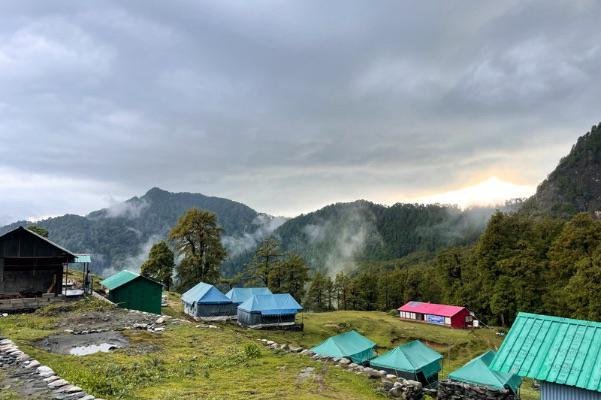
The Hampta Pass Trek is a visual spectacle and one of the most easily reachable very high treks in the Indian Himalayas. The trek is popular because of its sudden change in scenery. The trek leads you through Kullu Valley with thick green forest and later to Lahaul and Spiti Valley with bare, dry deserts which look like the moon. With the highest elevation of 14,100 ft (4,298 m) it is an ideal high-altitude first experience because the level of the challenge is kept low and no technical mountaineering skills are needed.
This detailed guide has everything that you must know to perfectly plan and complete your Hampta Pass journey in 2026. It includes the ideal itinerary, a difficulty level honesty, the best period to come, and necessary preparation tips.
Hampta Pass: Trek Overview & Difficulty Level
Hampta Pass trek is classified as Moderate. It is perfect for a beginner who has a good level of fitness, but still, it is not a walk in the park. The degree of difficulty results from a mix of causes, such as the fast altitude increase, the single day with a hard crossing of a mountain pass, and the necessity of fording cold streams from the glacier.
- Maximum Altitude: Hampta Pass Summit 14100 ft
- Total Distance: Around 26 to 30 km in 4 to 5 days.
- Fitness Requirement: You should be capable of doing a 4-5km brisk walk or jog in 30-40 minutes without putting too much strain on yourself, and you need to practice climbing stairs/hills for at least one month before.
Key Challenges for Beginners:
- Altitude Gain: The three days ascent from Jobra 9,800ft, which is the base, to the summit 14,100 ft requires very good acclimatization to avoid Mountain Sickness (AMS).
- Pass-Crossing Day (Day 3): This is the most difficult day and it includes the steep and long climb to the Pass and the equally steep and long descent to the Spiti Valley.
- River Crossings: You will cross the Rani Nallah and some other glacial streams. In case it is the season when water flows fast and is cold, you will be assisted by the guides or making a human chain to cross the water safely.
Is it safe for solo or first-time trekkers? Yes, but safety can be better guaranteed if a beginner is accompanied by an organized guided trek. Besides safety, a beginner can benefit from help with logistics (food, tents, permits) and the guide’s skill in dealing with the unpredictable weather and river crossings.
The Ideal Hampta Pass Trek Itinerary (5 Days)
A 5 day plan is the most popular and suggested itinerary for a beginner which also comprises the amazing Chandratal Lake trip. This program facilitates acclimatization and the pace is not too fast.
Day 1: Manali to Jobra (Drive) | Jobra to Chika (Trek)
- Altitude: 6,700 ft to 10,100 ft
- Trek Distance: 2 km (approx. 1-2 hours)
- Highlights: Jobra is reached by a beautiful two-hour drive from Manali, and then a short, 1-2 hour, nice and easy acclimatization walk through the forest of pine, maple, and birch trees along the Rani Nallah (river) follows. The Chika campsite is a wonderful riverside meadow.
Day 2: Chika to Balu Ka Ghera (Trek)
- Altitude: 10,100 ft to 11,900 ft
- Trek Distance: 5 km (approx. 5-6 hours)
- Highlights: The trek, which was initially gentle, took a turn for the steep as the route snaked higher and higher through the lush meadows and the hikers were able to take in the view of the Dhauladhar Range. A couple of small streams were crossed. Balu Ka Ghera which literally means “bed of sand” is a vast, open, area at the foot of the pass, and it is the most important acclimatization site from where the big climb is undertaken.
Day 3: Balu Ka Ghera to Hampta Pass to Siagoru (Trek)
- Altitude: 11900 ft to 14100 ft (Pass) to 12900 ft
- Trek Distance: 10 km (approx. 8-9 hours)
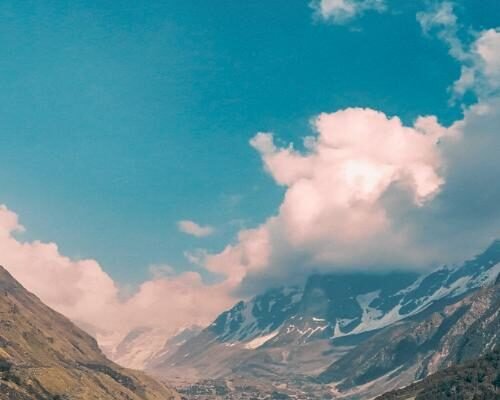
- Highlights: The D-Day. The major challenge is the steep 3-4 hour climb to the Hampta Pass summit. The view over the Spiti and Lahaul peaks, including Deo Tibba and Indrasen, is the magnificent panorama that awaits the trekkers. After crossing the pass, the steep descent into the barren, rocky terrain of the Lahaul Valley to the Siagoru campsite is equally steep.
Day 4: Siagoru to Chatru (Trek) | Drive to Chandratal Lake & Back
- Altitude: 12900 ft to 11000 ft
- Trek Distance: 7 km (approx. 4-5 hours)
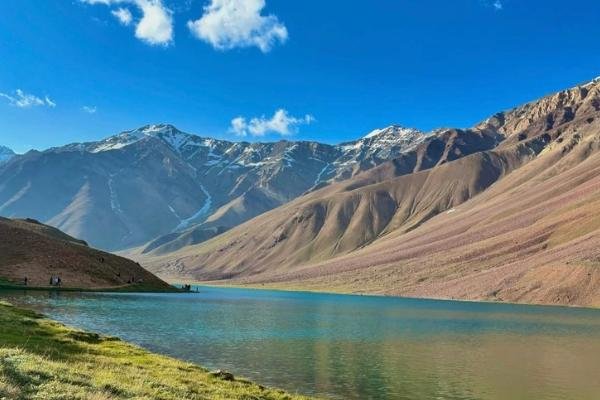
- Highlights: A simple walk down a valley of glacial riverbeds and scree slopes led to Chatru, a junction where the Lahaul, Spiti, and Kullu valleys meet. From Chatru, a highly recommended drive takes you to the stunning, crescent-shaped Chandratal Lake (Moon Lake) before returning to the Chatru campsite.
Day 5: Chatru to Manali (Drive)
- Altitude: 11000 ft 6700 ft
- Drive Distance: 70-80 km (approx. 5-7 hours)
- Highlights: A long, beautiful journey back to Manali is by car and the route mostly goes through the famous Atal Tunnel (a major infrastructure achievement) or, depending on the itinerary/conditions, via the Rohtang Pass road, thus completing the magnificent circuit.
Selecting the Best Season for Your Trek
Hampta Pass Trek’s main operating window is from Mid-June to Mid-October. The choice of each time period distinctly affects the trekking experience.
June to Mid-July: Snow Lover’s Paradise
- What to Expect: The pass is covered with heavy snow, and so is the camp Balu Ka Ghera. You will have to walk on the snow for a major part of your route. The lower valleys are getting greener, and wildflowers start to bloom.
- Pros: Fantastic snowy scenery; quiet and cold.
- Cons: The river crossings are the hardest parts due to snow melt and high water volume; trails can be slippery.
Mid-July to August: Peak Green & Monsoon Magic
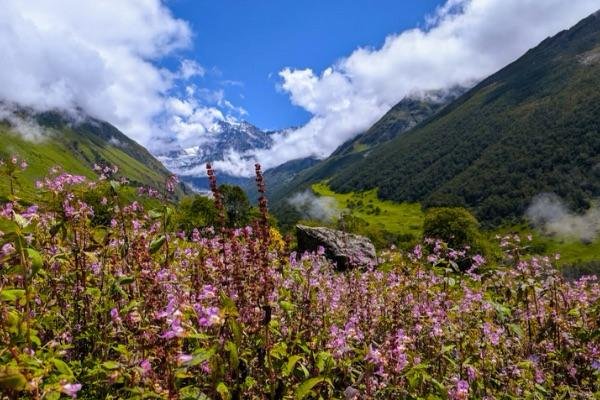
- What to Expect: The Kullu Valley side is extremely green and filled with water falling from the sky in the form of the seasonal monsoon and many flowers (the Spiti side remains mostly dry). Almost all snow from the pass has melted.
- Pros: Nature is at its most beautiful and vibrant green.
- Cons: There is a possibility of rain (mostly in the afternoon), which may make trails muddy and slippery. River crossings are still high and strong.
September to Early October: Clear Skies & Autumn Hues
- What to Expect: Stable weather and clear views make this time the best to visit the most of the time. The monsoon has already gone and thus it is very cold and dry. The nights are cold and the trails are dry. Also, there are not so many.
- Pros: The best chance of seeing the stunning panoramic views; dry trails; comfortable temperatures for walking during the day.
- Cons: Nights become extremely cold and temperatures drop to sub-zero especially at Siagoru. Less snow on the pass (if that is a priority).
Essential Knowledge & Preparation for 2026
Proper preparation is a must if one is to be safe and have a good time on the trek.
Physical Fitness Plan
At least 4-6 weeks before the date of the trek, you need to start your training. Work most on Cardiovascular Endurance and Leg Strength:
- Cardio: One should do quick walking, jogging, or cycling for 45-60 minutes, 4-5 times a week. The main goal here is to build up endurance.
- Stairs/Uphill Walks: One should practice going up stairs (or a steep hill) for 30 minutes with a day-pack to imitate the load and the movement of trekking.
- Strength: Add to your program bodyweight exercises like squats and lunges that will help you develop and strengthen your leg muscles that are very important when there are steep ascents and descents.
- Acclimatization: You should plan to come to Manali a day before with the purpose of resting and getting used to the altitude (6,700 ft) before starting the drive to Jobra.
The Hampta Pass Trek Packing List
It is very important to pack light but what is more important is to pack smart if you are to be faced with very extreme temperature variations.
Category | Must-Have Essentials | Crucial Notes |
Footwear | High-Ankle, waterproof trekking boots, Camp shoes (floaters/sandals), 4-5 pairs of woollen/anti-blister socks. | The most important gear item. Test your boots beforehand. Camp shoes are critical for stream crossings. |
Clothing | Thermal Inners (top & bottom), 2-3 trekking shirts (full sleeve, quick-dry), Fleece jacket, Down/Insulated jacket, Raincoat/Poncho. | Dress in layers it gets cold quickly. Waterproof outerwear is non-negotiable for rain or snow. |
Gear | Backpack (50-60), Headlamp with extra batteries, Trekking Poles, Sunglasses (UV protected), Sun Cap/Woollen Cap, Gloves. | Trekking poles are highly recommended for stability on slopes and during stream crossings. Sunglasses are essential to prevent snow blindness. |
Personal | Personal first-aid kit, Water bottle/Hydration pack (2text capacity minimum), Sunscreen & Lip balm (SPF 30+), Basic toiletries. | Stay aggressively hydrated to combat altitude sickness. |
Altitude Sickness (AMS) Protocol
The rapid ascent on the Hampta Pass Trek poses a risk of AMS. The main prevention measures are:
- Walk Slow: One should trek at a steady and comfortable pace (sometimes referred to as the ‘trekker’s pace’).
- Hydrate: On a daily basis, one needs to drink 4-5 liters of water.
- Don’t Rush: Please pay attention to what your body tells you and if you are having a headache, nausea or dizziness, inform your guide immediately and take rest as well.
Network and Connectivity
Mobile service (Airtel, Jio) is available in Manali and somewhat up to Jobra/Sethan. You will not get any cellular network from Chika camp until you arrive at Chatru/Manali on the last day. Enjoy this digital detox!
“ The Hampta Pass Trek is a perfect Himalayan adventure package providing a connection between two incomparably diverse by nature and culture regions. With adequate preparation and taking the MTNs seriously, your 2026 trek will be an incredible and satisfying high-altitude experience ”