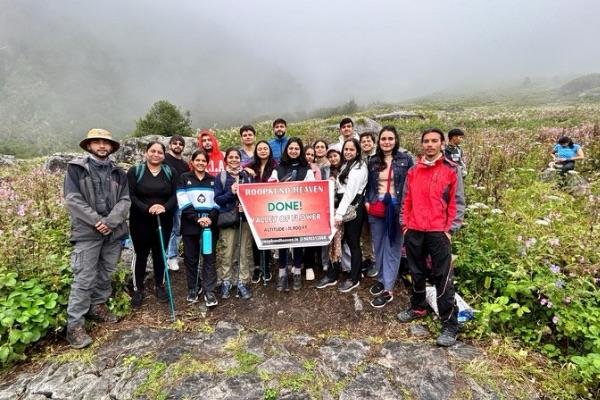
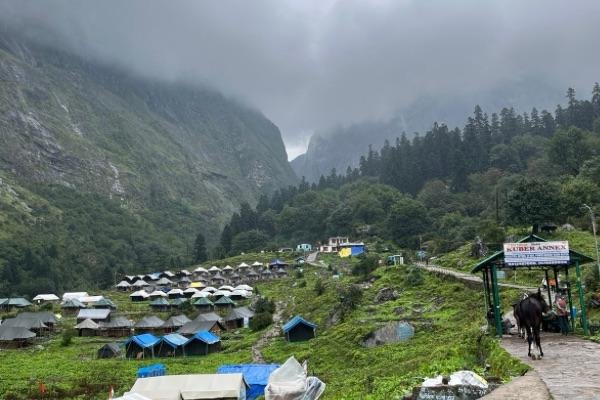
I’ll remember my first moment of seeing the Bedni campsite like it was yesterday. It was around 4 in the afternoon, almost 11,000 feet high, and my lungs initially refused to cooperate with me. Still, such a stunning sight brought a simple and quite un-profound thought to my mind: “Is this really happening? Or is it just life-Photoshopped?
The grass was so lush and vibrant it seemed like artificial neon, and the silence was so intense that one could almost hear the clouds moving. I must confess that for several months I have been scrolling through the filtered pictures of Himalayan mountain ranges on Instagram, thinking that those kinds of sights must be so breathtaking that you’d have to sell a kidney to afford a trip there. However, before I had even realized it, I was actually in Uttarakhand, a state in the Indian Himalayan region, Gharwal, and I was gazing at Ali Bedni Bugyal.
So, if you are in your 20s or 30s and have been “thinking” about going on a trek but haven’t yet decided because you are afraid of, say, somehow falling off a vertical cliff—this is a sign. It is much more than a walk; it is a kind of complete sensory metaphor. That is why this trail, in my biased but well-traveled view, is the most beautiful meadow trek in India.
What Is a Bughyal Anyway?
Simply put, before we get to the details, let’s explain the word. In Garhwali, the language spoken in the Gharwal region of the Himalayas, “Bugyal” refers to a high-altitude grassy meadow. These “velvet carpets of Nature” or “smooth soft grass carpets” are not just any patches of grass but huge, gently rolling expanses of green that are located very high above the forest line. It is, to some extent, rather contradictory that you, on the one hand, keep sweating heavily inside the dense forest, and on the other hand, as soon as the trees disappear, you are in a vast open space that looks as if it were taken out of a fantasy novel.
The "Double Threat" of the Twin Meadows
Usually, there is only one magnificent meadow in a trek. This one? You get two meadows for the price of one. Ali Bugyal and Bedni Bugyal are like two siblings—Ali being the wild, gigantic one with splendid views of the peaks, and Bedni being the quiet, soulful one with a lake (Bedni Kund) hidden that looks like a mirror of the sky.
What I believe to be the main distinguishing factor is that it is so large in size. It is as if you were not just viewing the meadows, but you had the opportunity to walk through them for miles. The feeling of the vastness of the meadows is sort of indefinite.
The "Vibe Check": Why Does This Trek Feel Different
We have to be honest—trekking can be scary. You watch such climbers climb a sharp vertical ice wall and then think this way, “No, thanks, I prefer to be in my bed with snacks.” However, Ali Bedni Bugyal is a different case; it’s easy to get to; it’s not hard. It is extremely patient and will not break you apart; it is just interested in giving you a good time.
The Perfect Difficulty Sweet Spot
This is not something that you can only do if you are an elite athlete. Well, I would say that you should be doing some kind of cardio beforehand, but obviously, just from making a trip to the fridge doesn’t count for that (don’t be like me). It is a moderately difficult trek. The hills aren’t so steep that you can’t climb them, but you don’t have to work too hard for them either.
There is a path that is easy to follow. You won’t be climbing over rocky terrain or hanging on to a cliff. Most of the time, it’s just… you’re going. You barely do walking but the type of walking that actually allows you to glance up and enjoy the scenery instead of staring down at your boots.
The Visual Payoff (The "Ooh-Aah" Factor)
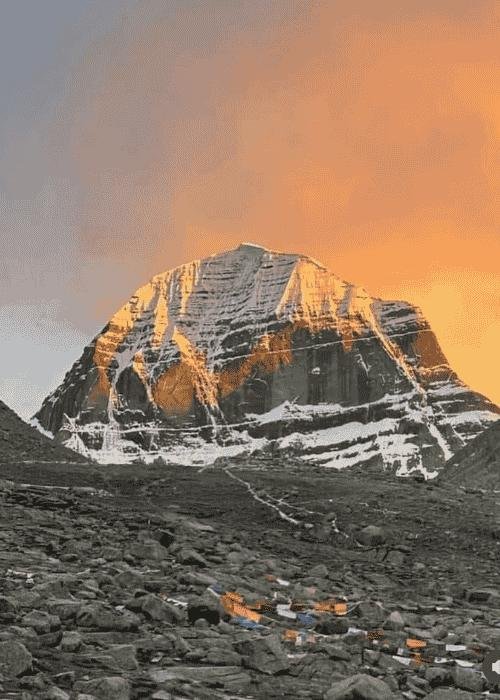
As soon as you enter the oak and rhododendron forest and come on to the meadows, it is very much like a flashback. In that instance, the forest disappears, and you are witnessing Mount Trishul and Nanda Ghunti.
They are so close that it seems like you can literally touch them. Actually, it is, to some extent, humbling. It makes you realize how Instagram-worthy day-to-day work emails or that annoyingly stressful group chat are. I was holding a cup of black tea, gazing at Trishul, and thinking how that mt has been present here throughout the ages and is indifferent to my 5-year plan. It’s a lovely sensation.
Your Step-by-Step Roadmap
people get over just the act of planning. Where should I begin? How am I going to get there? It’s okay because I have the essentials here so that you don’t have to do a 3 AM google search.
Getting to the Basecamp: The Long Drive to Lohajung
Usually, the point where people start their ali bedni bugyal trek is Lohajung. From Kathgodam or Rishikesh, you will most certainly begin the journey to get there.
- Rishikesh is considered the Yoga capital of the world. You can take GV Travels, a local bus, or a taxi from there to get to Lohajung. It will take you about 12-13 hours to reach your destination. The total distance is 280 km.
- Taxis are also available from Rishikesh to Lohajung and cost approximately Rs. 5000.
- You can also take a train from Delhi to Kathgodam. It takes around five hours, and the tickets vary depending on the coaches. One can also catch an overnight train, which takes more time. Then continue your journey by renting a taxi or bus to Lohajung.
A Typical 6-Day Itinerary
- Drive to Lohajung – Stay at a local homestay
- Trek to Ali Bugyal – Camp under the stars
- Walk to Bedni Bugyal – Experience local culture
- Down to Glacial Lake Tal – Fresh mountain air
- Return Lahajung – Indulge in traditional cuisine
- Drive back to Rishikesh/Delhi – Relish memories
Packing Like a Pro (Without Breaking Your Back)
I have come across these instances where people lug a hair dryer and heavy denim jackets on a trekking trip. Please, no matter how much you love these things, think about the fact that you have to carry them (or someone else for you) and that every gram is important.
The "Must-Haves"
- backpack
- water bottle or hydration pack
- first aid kit
- windproof jacket
Let’s Talk About the "Feeling" (The Emotional Stuff)
People go to the mountains to experience something that the city lifestyle has made them lose, I guess. Perhaps it is just perspective what we get. Or maybe it is the sheer tensile of taking a deep breath without looking at your phone each time.
What comes to your mind when you think of the quote: “When the soul sees the mountains, it is purified”. How many times do you remember the mountains when your soul is troubled? What is it about nature that has a compelling and almost immediate impact on our mood and wellbeing, and makes us feel recharged and kinder to others?
Just Go.
Listen, I understand your fear and hesitation. It may be a worry about how much it will cost, how you’ll get the time off work or whether you have enough stamina. But really, what is stopping you? You’ll never be completely prepared. You just need to put your things in a bag, book a ticket and show up.
If you ever get to stand on Ali Bugyal, happy with the sunset literally splashing the Himalayas with its golden light and the wind making you hear your own voice, you won’t have made any calculations of your bank account or taken your pulse. You’ll simply be thinking, ‘I can’t believe I’m actually here!
And, to be honest, what else would traveling be about if not for finding that inner spark of life again?