About Joshimath
Joshimath, also known as Jyotirmath, is one of the most important towns in the Garhwal Himalayas of Uttarakhand. Located in the Chamoli district at an altitude of about 1,875 metres (6,150 feet), it serves as the main gateway to famous destinations such as Badrinath Dham, Auli, Valley of Flowers, Hemkund Sahib, Kuari Pass, Pangarchulla Peak, and many other trekking routes. While many travellers stop here on their way to these places, Joshimath is much more than just a transit town.
The town has great religious importance and is home to one of the four sacred monasteries established by Adi Shankaracharya. It is also an important stop on the Char Dham Yatra, attracting thousands of pilgrims every year. Ancient temples, sacred sites, and traditional Himalayan culture give Joshimath a special spiritual atmosphere.
At the same time, Joshimath is a popular destination for adventure lovers and nature enthusiasts. It is the base for several famous Himalayan treks and the starting point for visiting Auli, one of India’s best skiing destinations. Visitors can enjoy activities such as trekking, skiing, ropeway rides, sightseeing, photography, and exploring nearby mountain villages.
One of the biggest attractions of Joshimath is its stunning natural beauty. The town is surrounded by dense forests, green meadows, snow-covered mountains, and beautiful valleys. On clear days, visitors can enjoy views of famous Himalayan peaks such as Nanda Devi, Dronagiri, Hathi Parvat, Ghori Parvat, and Kamet. During the monsoon season, Joshimath becomes the main base for visiting the world-famous Valley of Flowers, while winter brings snowfall and attracts tourists heading to Auli for snow activities.
Joshimath can be visited throughout the year, but the best time to visit is usually April to June and September to November, when the weather is pleasant and the mountain views are clear. The town offers hotels, guesthouses, restaurants, local markets, and all the basic facilities needed for a comfortable stay.
Whether you’re planning a spiritual journey to Badrinath, a trek through alpine meadows, a skiing adventure in Auli, a visit to the Valley of Flowers, or simply want to experience the beauty of the Himalayas, Joshimath serves as the perfect starting point. Its unique blend of sacred heritage, mountain landscapes, adventure opportunities, and cultural richness makes it one of the most important and rewarding destinations in Uttarakhand.
History & Significance
Historical & Religious Significance of Joshimath
Joshimath has been a major spiritual centre for centuries. It holds a special place in Hindu traditions and serves as an important stop on the Char Dham route.
The town’s ancient name, Jyotirmath, means “Monastery of Divine Light.”
Joshimath as One of the Four Mathas of Adi Shankaracharya
The spiritual significance of Joshimath is closely connected to Adi Shankaracharya, the great Hindu philosopher and saint who travelled across India in the 8th century. To preserve and spread the teachings of Advaita Vedanta, he established four major monasteries, known as Mathas, in different parts of the country.
Joshimath became the northern monastery, known as Jyotir Math, while the other three were established at Sringeri (South), Dwarka (West), and Puri (East). Jyotir Math is associated with the Atharva Veda and continues to be an important centre for spiritual learning, religious studies, and traditional Hindu practices.
Even today, devotees, scholars, and visitors come to Joshimath to learn about its spiritual heritage and visit the historic Jyotir Math founded by Adi Shankaracharya.
Joshimath – The Winter Abode of Lord Badrinath
Joshimath is also known as the winter seat of Lord Badrinath. Every year, when heavy snowfall makes Badrinath inaccessible during winter, the temple closes for several months. Before the closure, the sacred idol of Lord Badrivishal (Badrinath) is ceremonially brought to the Narsingh Temple in Joshimath.
The idol remains here throughout the winter season, and daily worship continues until the Badrinath Temple reopens in spring, usually between April and May. This centuries-old tradition gives Joshimath immense religious importance and makes it a significant pilgrimage destination even when Badrinath is closed.
For many devotees, visiting Joshimath during winter offers a rare opportunity to seek the blessings of Lord Badrinath and experience the town’s unique spiritual atmosphere.
Places to Visit in Joshimath
Temples & Spiritual Sites
Narsingh Temple (Narsingh Badri Temple)
Narsingh Temple is the most important religious site in Joshimath. Dedicated to Lord Narsimha, the fourth incarnation of Lord Vishnu, the temple attracts thousands of devotees every year. During winter, when Badrinath Temple remains closed due to heavy snowfall, the idol of Lord Badrinath is brought here and worshipped.
The 4th Incarnation of Vishnu – Lord Narsimha
According to Hindu mythology, Lord Narsimha appeared in a half-man, half-lion form to protect his devotee Prahlad and destroy the demon king Hiranyakashipu. The temple houses an ancient idol of Lord Narsimha that holds great religious significance.
Legend of Shankaracharya’s Idol Installation
Local beliefs say that Adi Shankaracharya installed the idol during his visit to the region. There is also a famous prophecy connected to the temple. The left arm of the idol is believed to be gradually thinning. It is said that when the arm eventually breaks, the route to Badrinath will become inaccessible, and Bhavishya Badri will become the future seat of Lord Vishnu’s worship.
Architecture of Narsingh Temple
The temple reflects traditional Garhwali architecture with stone walls, wooden carvings, and a simple yet beautiful Himalayan design. Its peaceful surroundings make it an ideal place for prayer and meditation.
Spiritual Rituals and Aarti at Narsingh Temple
The morning and evening aarti are among the highlights of a visit to the temple. The sound of devotional chants, temple bells, and incense creates a spiritual atmosphere that many visitors find memorable.
Shankaracharya Math (Jyotir Math)
Shankaracharya Math, also known as Jyotir Math, is one of the four monasteries established by Adi Shankaracharya in India. It is an important centre of Hindu learning and philosophy. Visitors can explore the peaceful complex and learn about the spiritual heritage of the region.
Bhavishya Badri Temple
Located near Subhain village, around 17 km from Joshimath, Bhavishya Badri is one of the Panch Badri temples. According to local belief, this temple will become the future abode of Lord Vishnu if access to Badrinath is ever blocked. The short trek to the temple passes through beautiful forests and mountain scenery.
Kalpavriksha (The Ancient Wish-Fulfilling Tree)
Inside the Shankaracharya Math complex stands the famous Kalpavriksha, an ancient mulberry tree believed to be over 2,500 years old. It is said that Adi Shankaracharya meditated beneath this tree. Many pilgrims visit the site to offer prayers and experience its peaceful atmosphere.
Adi Shankaracharya Samadhi
This memorial honours Adi Shankaracharya and his contribution to Indian philosophy and spirituality. It is a quiet place where visitors can reflect and learn about the life of one of India’s greatest spiritual leaders.
Jyoteshwar Mahadev Temple
Located near the Kalpavriksha tree, Jyoteshwar Mahadev Temple is dedicated to Lord Shiva. The temple is known for its calm surroundings and spiritual significance, making it a peaceful stop during your visit to Joshimath.
Adventure & Nature Attractions
Auli – India’s Premier Ski Resort
Located about 14 km from Joshimath, Auli is one of India’s most famous hill stations and skiing destinations. During winter, its snow-covered slopes attract skiers from across the country. In summer, the area transforms into beautiful green meadows with stunning Himalayan views.
Joshimath Ropeway (Auli Cable Car)
The Joshimath–Auli Ropeway is one of the longest cable car rides in Asia. The ride offers breathtaking views of forests, mountains, valleys, and snow-covered peaks. It is one of the most popular attractions for visitors staying in Joshimath.
Tapovan Meadows
Tapovan is known for its natural hot water springs, scenic landscapes, and peaceful environment. It is a popular stop for trekkers and travellers looking to enjoy nature away from crowded tourist spots.
Vasudhara Falls
Located near Mana Village beyond Badrinath, Vasudhara Falls is a beautiful waterfall surrounded by dramatic Himalayan scenery. The short trek to the falls offers excellent views and is a favourite among nature lovers.
Nanda Devi National Park
A UNESCO World Heritage Site, Nanda Devi National Park is one of India’s most important protected mountain regions. The park is home to rare wildlife, alpine vegetation, and spectacular Himalayan landscapes.
Nilkanth Peak Viewpoint
Nilkanth Peak is one of the most iconic mountains visible from the region. On clear days, visitors can enjoy incredible views of the snow-covered summit, especially during sunrise and sunset.
Auli Lake (Man-Made High-Altitude Lake)
Located near Auli, this artificial lake helps support skiing activities during winter. Surrounded by mountains and meadows, it is also a peaceful place to relax and enjoy the scenery.
Chenap Valley
Chenap Valley is a lesser-known destination near Joshimath that offers untouched natural beauty. The area is ideal for trekking, nature walks, photography, and travellers looking for an offbeat Himalayan experience.
Nearby Day Trip Destinations
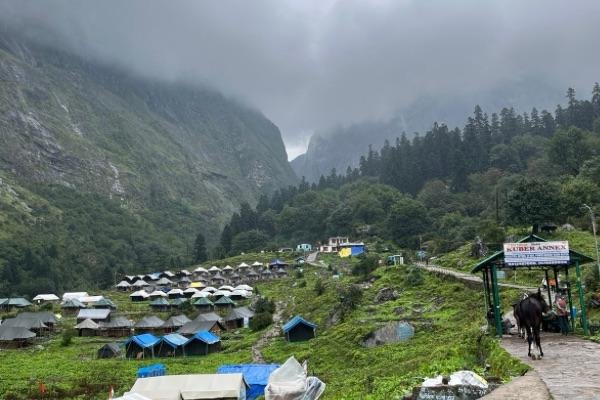
Ghangaria
Ghangaria serves as the base camp for both the Valley of Flowers Trek and Hemkund Sahib Trek. Most trekkers stay here before continuing their journey to these famous destinations.
Govindghat
Located about 19 km from Joshimath, Govindghat is the starting point for the Valley of Flowers and Hemkund Sahib treks. It is an important stop for pilgrims and trekkers travelling in the region.
Vishnuprayag (Confluence of Alaknanda & Dhauliganga)
Vishnuprayag is one of Uttarakhand’s sacred Panch Prayags, where the Alaknanda and Dhauliganga rivers meet. The scenic river confluence and nearby temple make it a worthwhile stop.
Valley of Flowers (4 km from Ghangaria)
A UNESCO World Heritage Site, the Valley of Flowers is famous for its colourful alpine blooms that cover the valley during the monsoon season. It is one of the most beautiful trekking destinations in India.
Hem Kund Sahib
Situated at an altitude of about 4,329 metres, Hem Kund Sahib is one of the highest Sikh pilgrimage sites in the world. The sacred lake and surrounding mountains create a truly breathtaking setting.
Badrinath Temple
Located around 45 km from Joshimath, Badrinath Temple is one of the four Char Dham pilgrimage sites. Dedicated to Lord Vishnu, it is among the most important and visited temples in India. Many travellers use Joshimath as their base before visiting Badrinath.
Things to Do in Joshimath
Adventure Activities
- Skiing & Snowboarding at Auli — GMVN runs beginner to advanced courses from January to March.
- Cable Car / Ropeway Ride — One of the longest in Asia; non-negotiable if you’re here.
- Trekking — Joshimath is the starting point or transit for several major Himalayan treks.
- River Rafting — The Alaknanda river near Joshimath has stretches suitable for rafting.
- Camping in the Alpine Meadows — Tapovan and nearby meadows are excellent camping zones.
- Nature Walks & Photography — The town itself and the surrounding forests offer fantastic walking routes.
Spiritual & Cultural Experiences
- Temple Hopping — Narsingh, Bhavishya Badri, Jyoteshwar, and Shankaracharya Math can all be covered in a single day.
- Evening Aarti at Narsingh Temple — A deeply atmospheric experience, especially during winter when the Badrinath idol is in residence.
- Exploring Shankaracharya Math — Spend time with the monks, learn about Advaita Vedanta, and sit under the Kalpavriksha.
- Local Market Shopping — Woollen shawls, Garhwali handicrafts, local honey, and mountain herbs are the best buys here.
Trekking Destinations Near Joshimath
Joshimath is arguably the best trekking hub in the Garhwal Himalayas. Here’s a quick overview:
Trek | Difficulty | Duration | Best Season |
Easy–Moderate | 4–6 days | July–Sept | |
Hemkund Sahib | Moderate | 5–6 days | June–Oct |
Bagini Glacier | Difficult | 10–12 days | May–Sept |
Moderate | 5–6 days | Apr–June, Oct–Nov | |
Tapovan | Moderate | 4–5 days | May–Oct |
Chenap Valley | Moderate | 4–5 days | May–Oct |
Bhavishya Badri | Easy | 1–2 days | Apr–Nov |
Best Time to Visit Joshimath
Joshimath is a year-round destination, and each season offers a different experience. Whether you’re planning a pilgrimage, trekking adventure, nature trip, or winter holiday, choosing the right season can make your visit even more enjoyable.
Season-by-Season Breakdown
Summer (April – June)
Summer is one of the most popular times to visit Joshimath. The weather remains pleasant, with temperatures generally ranging between 10°C and 20°C, making it ideal for sightseeing and outdoor activities. Roads are usually clear, and the Badrinath Temple opens for pilgrims during this period.
Best for:
- Badrinath pilgrimage
- Auli sightseeing
- Trekking and outdoor adventures
- Ropeway rides and mountain views
- Family vacations
Monsoon (July – August) – Valley of Flowers Season
Monsoon transforms the region into a lush green paradise. This is the peak season for visiting the Valley of Flowers National Park, when thousands of alpine flowers bloom across the valley. Waterfalls become more impressive, and the mountains look vibrant and fresh.
Best for:
- Valley of Flowers Trek
- Nature photography
- Green Himalayan landscapes
- Monsoon scenery
However, heavy rainfall can sometimes lead to landslides and temporary road disruptions, so travellers should check weather and road conditions before their journey.
Autumn (September – November)
Autumn is considered by many experienced travellers and trekkers to be the best time to visit Joshimath. The monsoon clouds disappear, leaving behind crystal-clear skies and spectacular mountain views. The weather remains comfortable, and trekking conditions are generally excellent.
Highlights:
- Clear views of Himalayan peaks
- Pleasant daytime temperatures
- Excellent trekking conditions
- Less crowded than summer
- Great photography opportunities
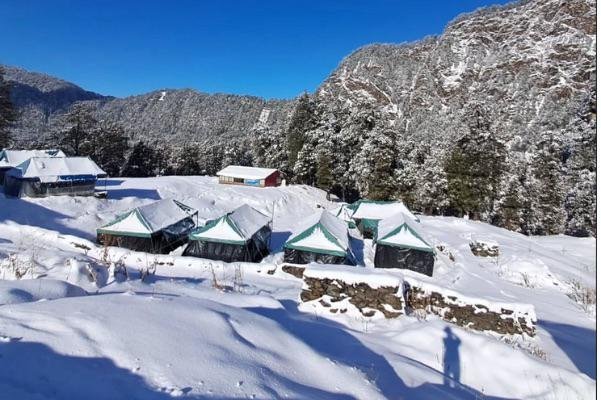
Winter (December – March) – Skiing Season at Auli
Winter brings snowfall to the surrounding mountains and turns the region into a snowy wonderland. While Badrinath remains closed during this period, Joshimath continues to attract visitors, especially those heading to Auli, one of India’s most famous skiing destinations.
Best for:
- Skiing and snowboarding
- Snowfall experiences
- Winter photography
- Snow-covered Himalayan landscapes
- Auli winter holidays
During winter, Joshimath also becomes spiritually significant as the idol of Lord Badrinath is worshipped at the Narsingh Temple, making it an important destination for devotees.
Overall, April to June and September to November are the best times for most travellers, while July–August is perfect for the Valley of Flowers and December–March is ideal for snow lovers and skiing enthusiasts.
How to Reach Joshimath
Joshimath is well connected to major cities in Uttarakhand and North India, making it easy to reach by road, train, air, or helicopter. As the gateway to Badrinath, Auli, Valley of Flowers, Hemkund Sahib, Kuari Pass, Chopta, and several Himalayan treks, thousands of travellers pass through Joshimath every year.
By Road
The most convenient way to reach Joshimath is by road.
- Delhi to Joshimath: Approximately 490 km (12–14 hours) via Rishikesh and NH-7.
- Rishikesh to Joshimath: Approximately 250 km (8–9 hours).
- Haridwar to Joshimath: Approximately 270 km (9–10 hours).
- Dehradun to Joshimath: Approximately 290 km (9–10 hours).
Regular buses, shared taxis, and private cabs operate from Delhi, Haridwar, Rishikesh, and Dehradun. The route follows the scenic Alaknanda Valley and passes through Devprayag, Rudraprayag, Karnaprayag, and Chamoli before reaching Joshimath.
If you prefer a hassle-free journey, you can also book a private taxi through local operators such as Chamoli Taxi Service, which provides cab services for Joshimath, Auli, Badrinath, Valley of Flowers, Hemkund Sahib, and other destinations across Uttarakhand.
By Air
The nearest airport is Jolly Grant Airport, Dehradun, located approximately 270 km from Joshimath.
The airport is well connected with major Indian cities, including Delhi, Mumbai, Bengaluru, Hyderabad, and Kolkata. From the airport, travellers can hire a taxi or take shared transport to Joshimath.
By Train
The nearest railway stations are:
- Haridwar Railway Station
- Rishikesh Railway Station
Both stations have regular train connections with Delhi and many other major cities. From there, buses, shared jeeps, and taxis are available for the onward journey to Joshimath.
By Helicopter
Helicopter services are available between Dehradun (Sahastradhara Helipad) and Auli, which is located just a few kilometres from Joshimath.
This is the fastest way to reach the region, although flights are subject to weather conditions and seasonal schedules.
Travel with Roopkund Heaven
If you’re planning to visit Joshimath for a trek, pilgrimage, or sightseeing tour, Roopkund Heaven can make your journey much easier. We provide transportation add-on options with many of our trekking and tour packages, allowing travellers to avoid the stress of arranging separate transportation.
Transport assistance is available with popular trips such as:
- Valley of Flowers Trek
- Hemkund Sahib Yatra
- Auli Tour Packages
- Chopta Tungnath Trek
- Kuari Pass Trek
- Char Dham Yatra
- Badrinath Tour Packages
- Other Himalayan trekking adventures
Depending on the package, travellers can choose pickup and drop services from Dehradun, Haridwar, or Rishikesh, making the entire journey smoother and more convenient.
Whether you are travelling independently or joining one of our guided tours, reaching Joshimath is straightforward, and it remains the perfect base for exploring the breathtaking Garhwal Himalayas.
Where to Stay in Joshimath
Accommodation Options
Luxury Hotels & Resorts: A handful of well-appointed properties have come up in recent years, offering mountain views, good food, and comfortable rooms. Expect to pay ₹3,000–₹8,000 per night depending on season.
Budget Hotels: Plenty of clean and affordable guesthouses line the main bazaar area. Most offer basic amenities for ₹700–₹1,500 per night — perfectly fine for trekkers and backpackers.
Guesthouses & Homestays: The warmest option. Local families offer home-cooked meals and genuine Garhwali hospitality. Prices start from ₹500–₹1,000 per night and the experience is far richer than any hotel.
Camping Near Joshimath: Several organised campsites operate near Auli and Tapovan meadows, especially in summer and winter. A great option for adventure travellers.
Note: Book in advance during peak pilgrim season (May–June) and skiing season (January–March). Availability drops sharply.
Joshimath Travel Itinerary
2-Day Itinerary
Day 1: Arrive Joshimath → Check in → Narsingh Temple evening aarti → Local market walk
Day 2: Morning at Shankaracharya Math & Kalpavriksha → Ropeway ride to Auli → Auli Lake → Return to Joshimath → Depart
3-Day Itinerary
Day 1: Arrive → Settle in → Narsingh Temple → Vishnuprayag (evening)
Day 2: Ropeway to Auli → Skiing or nature walk → Nilkanth Peak viewpoint → Return
Day 3: Day trip to Bhavishya Badri Temple → Jyoteshwar Mahadev → Shankaracharya Math → Depart
5-Day Itinerary (Including Auli & Valley of Flowers)
Day 1: Arrive Joshimath → Narsingh Temple → Rest
Day 2: Auli ropeway + Auli Lake → Skiing/snowboarding or meadow walk
Day 3: Drive to Govindghat → Trek to Ghangaria (14 km) → Rest
Day 4: Trek Valley of Flowers (4 km from Ghangaria) → Optional: Hem Kund Sahib
Day 5: Return to Govindghat → Drive back to Joshimath → Shankaracharya Math → Depart
Tips for Traveling to Joshimath
Packing Essentials for Joshimath:
- Warm layered clothing (even in summer, evenings get cold)
- Sturdy trekking shoes with ankle support
- Raincoat or waterproof jacket
- Sunscreen and UV sunglasses (UV exposure is high at altitude)
- Personal medication and a basic first-aid kit
- Power bank and extra camera batteries (charging points are limited on trails)
Altitude Sickness – What to Know: Joshimath sits at ~1,875 metres — comfortable for most people. However, if you’re heading to Auli (2,519 m), Hem Kund Sahib (4,329 m), or higher treks, acclimatise gradually. Symptoms of altitude sickness include headache, nausea, and fatigue. Descend immediately if symptoms worsen.
Permits & Entry Requirements:
- Nanda Devi National Park requires entry permits (arranged in Joshimath or Govindghat)
- Foreign nationals need an Inner Line Permit for some areas near the Chinese border — check current regulations before travelling
Local Customs & Etiquette:
- Remove footwear before entering temples
- Dress modestly, especially at religious sites
- Photography inside temple sanctums is often restricted — always ask first
- Plastic carry bags are banned in many parts of Uttarakhand — carry a reusable bag
Best Photography Spots:
- Nilkanth Peak viewpoint (especially at sunrise)
- Auli ropeway ride
- Narsingh Temple in evening aarti light
- Valley of Flowers in full bloom (July–August)
- Vishnuprayag confluence
Local Food & Cuisine in Joshimath
Popular Local Dishes to Try
Joshimath’s food scene is humble but genuinely good. The mountain kitchen leans on wholesome, warming flavours:
- Kafuli — a thick green leafy curry made with fenugreek and spinach, served with rice
- Phaanu — a slow-cooked lentil dish unique to Garhwal
- Aloo Ke Gutke — spiced potato dish, a Uttarakhand staple
- Bal Mithai — a dark fudge-like sweet coated in sugar balls, popular across Kumaon-Garhwal
- Chai with Jaggery — simple, addictive, and best had while looking at the mountains
Best Restaurants & Dhabas in Joshimath
The main bazaar area has several small dhabas and local eateries. Most serve North Indian thalis alongside local dishes. Don’t expect fine dining — but do expect generous portions and good chai. GMVN rest houses also serve decent meals for guests.
Joshimath FAQs
- What are the top places to visit in Joshimath? Narsingh Temple, Shankaracharya Math, Auli, Auli Ropeway, Bhavishya Badri Temple, Kalpavriksha, Nanda Devi National Park, Tapovan, and Vishnuprayag.
- What is the best time to visit Joshimath? April to June for general tourism and pilgrimages; July–August for Valley of Flowers; September–November for clear skies and fewer crowds; December–March for skiing at Auli.
- How far is Joshimath from Rishikesh? Approximately 250 km — about 8–9 hours by road.
- Is Joshimath safe to visit? Yes, for the most part. The town has faced land subsidence issues (cracks in buildings, road damage) since 2023. Travellers should stay updated on current conditions, avoid visibly damaged structures, and follow local authority advisories. The surrounding areas, including Auli and trekking routes, remain accessible.
- How many days are enough for Joshimath? Two days covers the town comfortably. Add one more for Auli. If you’re including Valley of Flowers and Hem Kund Sahib, plan 5–7 days total.
- What is the altitude of Joshimath? Joshimath sits at approximately 1,875 metres (6,150 feet) above sea level.
- Can beginners trek from Joshimath? Absolutely. The Bhavishya Badri trail and Tapovan approach are suitable for beginners. Valley of Flowers is rated easy-to-moderate and is widely recommended for first-time Himalayan trekkers.
- Is the Auli ropeway open year-round? No. It typically closes during the monsoon season (roughly July–August) due to safety concerns. Check with GMVN for current operating schedules.
- What language do people speak in Joshimath? Garhwali is the local language, but Hindi is widely understood and spoken. English is understood at most hotels and tourist-facing businesses.
- Are ATMs available in Joshimath? Yes, there are ATMs in Joshimath town. However, they can run out of cash during peak season. Carry enough cash before heading to Ghangaria or Auli, where options are limited.
- What is the significance of Joshimath in Char Dham Yatra? Joshimath is the closest major town to Badrinath — one of the four Char Dham sites. Most Char Dham Yatra travellers stop here for a night before or after Badrinath. It also serves as the winter seat of Lord Badrinath’s idol.
- Is Joshimath suitable for families with children? Yes, especially if you’re sticking to the town, Auli ropeway, and Vishnuprayag. Higher altitude treks like Hem Kund Sahib are better suited to older children and adults with prior trekking experience.
- What is the temperature in Joshimath in winter? Winter temperatures (December–February) drop to 0°C to -5°C at night. Daytime highs are around 5–10°C. Heavy woolens, thermals, and windproof jackets are essential.
- Can I do Badrinath as a day trip from Joshimath? Yes. Badrinath is about 45 km (roughly 1.5–2 hours) from Joshimath by road. An early departure allows a full day at the temple and return by evening.
- Is Joshimath connected to Auli by road? Yes. Auli is 13–14 km from Joshimath by road. The ropeway is the more popular (and scenic) option, but road access by jeep or car is available too.
- Are there vegetarian food options in Joshimath? Predominantly yes. Most eateries in Joshimath serve vegetarian food. Being a pilgrimage town, non-vegetarian options are limited and not widely available.
- What permits are needed for trekking near Joshimath? The Valley of Flowers requires an entry fee and permit at the park gate. Nanda Devi National Park requires separate permits. For the Bagini Glacier and high-altitude treks close to the border, additional Inner Line Permits may be needed for Indian and foreign nationals.
- Is there mobile network connectivity in Joshimath? Yes, BSNL and Jio have reasonable coverage in Joshimath town and along the main road. Connectivity weakens significantly on trekking trails and in remote valleys.
- Can I hire a local guide in Joshimath? Yes, and it’s strongly recommended for longer or off-beat treks. Local guides not only know the terrain but also add cultural context that no guidebook can replace. Ask your hotel or the local tourism office for licensed guides.
- What’s special about Joshimath compared to other hill towns? Unlike purely scenic hill stations, Joshimath offers a rare combination — ancient spiritual history, world-class adventure (skiing, trekking), and access to some of India’s most extraordinary natural sites. It’s understated, authentic, and genuinely rewarding for travellers who take the time to explore beyond the usual checklist.