Adi kailash and om parvat yatra overview
The Adi Kailash and Om Parvat Yatra is a high-altitude pilgrimage in Uttarakhand’s Pithoragarh district, close to the Indo-Tibetan border. Unlike typical treks, this is mostly a road-based journey with short hikes.
You visit:
- Adi Kailash (Chhota Kailash) – spiritually linked to Lord Shiva
- Om Parvat – known for the natural ॐ formation on the mountain
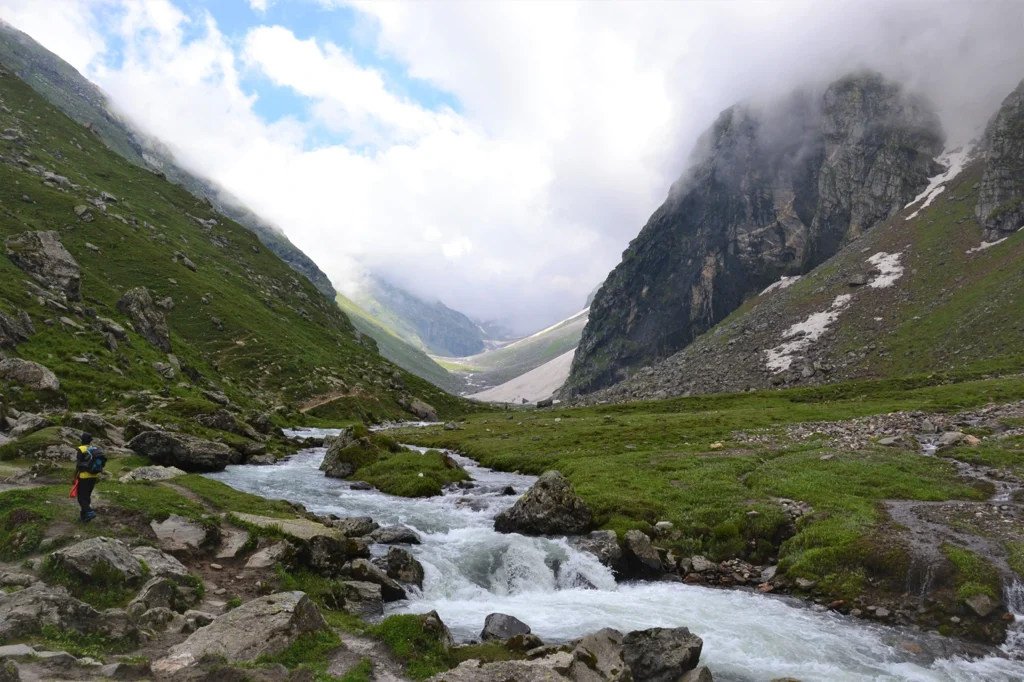
The route passes through remote Himalayan villages, river valleys, and rugged terrain that still feels untouched.
key highlights of adi kailash yatra
Why are thousands of pilgrims and trekkers flocking to this remote corner of India in 2026? It’s about the “Big Three” sights:
- Om Parvat: A mountain where the snow falls naturally to form the sacred “ॐ” (Om) symbol. It is a geological marvel that leaves even the most cynical observers in awe.
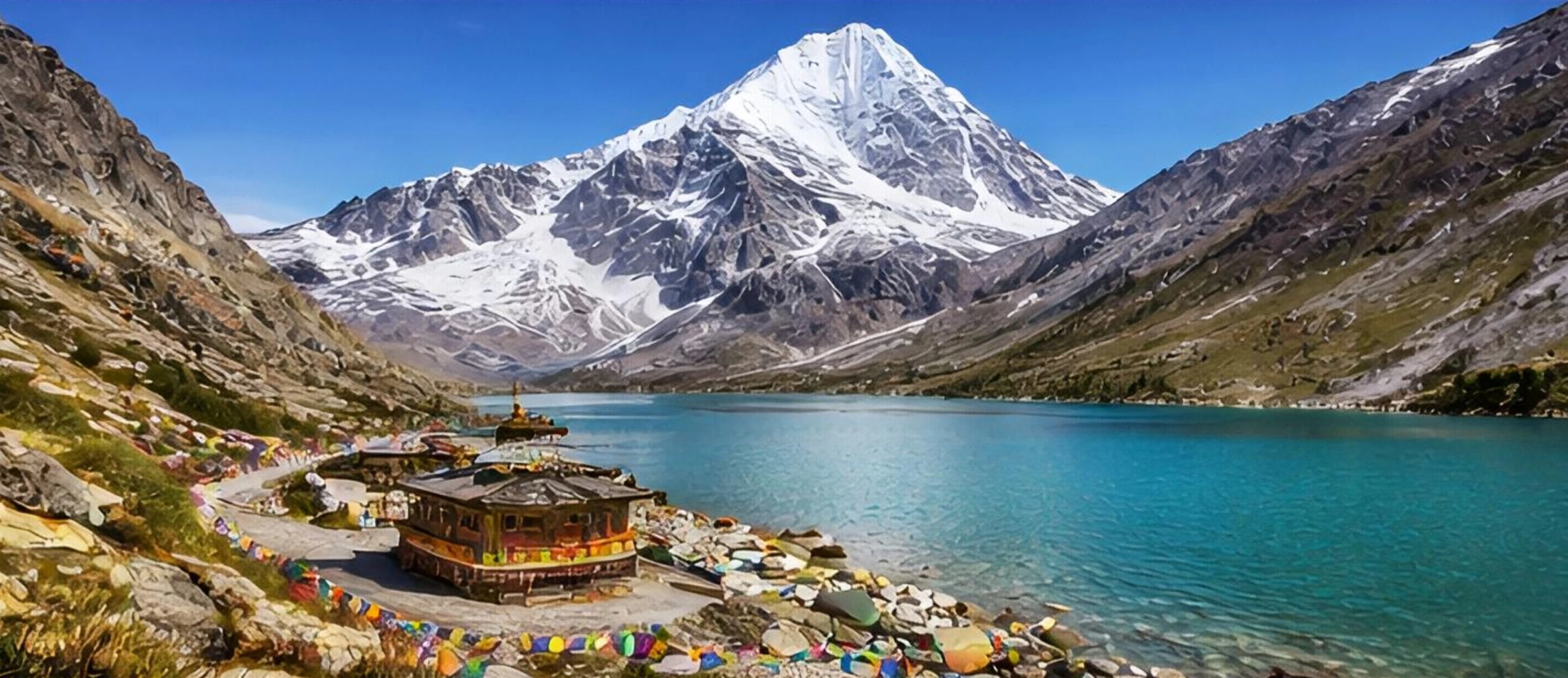
- Parvati Sarovar: A high-altitude lake near the base of Adi Kailash, believed to be the bathing place of Mata Parvati. Its crystal-clear waters reflect the surrounding peaks like a mirror.
- Kuti Village: Named after Mata Kunti (mother of the Pandavas), this village offers a glimpse into the ancient Bhotia culture, with houses featuring intricate wood carvings that have survived for centuries.
What Is the Average adi kailash yatra Package Cost in 2026?
For the 2026 season, The adi kailash yatra Package cost varies depending on comfort, group size, and logistics.
Typical range:
- Budget group packages: ₹25,000 – ₹35,000
- Standard packages: ₹35,000 – ₹50,000
- Premium/private packages: ₹50,000+
Cost depends on:
- Type of vehicle (Bolero vs Tempo Traveller)
- Accommodation quality
- Group size
- Inclusion of permits and coordination
In this region, logistics are expensive. So extremely cheap packages often skip essential safety or planning.
What’s Included and Excluded in an Adi Kailash Yatra Package?
When you book an adi kailash yatra Package, you aren’t just paying for a ride; you are paying for a complex web of logistics in a high-security zone.
What is usually Included:
- Accommodation: Stays in Dharchula (hotels) and Gunji/Nabi/Kuti (homestays or KMVN huts).
- Meals: Nutritious, simple vegetarian meals designed for high-altitude digestion.
- Transport: 4×4 Jeeps from Dharchula onwards and SUVs from Kathgodam.
- Permit Assistance: Handling of the Inner Line Permit (ILP) and local police verification.
- Safety: Oxygen cylinders, oximeters, and experienced mountain guides.
What is typically Excluded:
- Personal Gear: Trekking poles, heavy down jackets, or raincoats.
- Porters/Mules: If you wish to offload your personal backpack.
- Travel Insurance: Highly recommended but usually an extra cost.
- Personal Snacks: Energy bars, dry fruits, or specialized beverages.
How Much Extra Money Should You Keep?
Beyond your adi kailash yatra package cost, it’s smart to carry around ₹10,000 to ₹12,000 in physical cash.
Why cash? Because UPI and mobile networks are unreliable beyond Dharchula, and you won’t be able to depend on digital payments.
You’ll need this money for:
- Mule/Pony hire: If you decide on the spot not to walk the final stretch to Parvati Kund (approx. ₹1,500 – ₹2,500)
- Hot water: Some remote homestays charge extra for buckets of hot water
- Tipping: For drivers, cooks, and guides who support your journey
- Souvenirs: Local Kumaoni woollens, herbs, or small items from Dharchula
Carrying enough cash ensures you don’t face unnecessary stress in remote areas where basic facilities are limited.
Recommended Adi Kailash Packages for a Hassle-Free Journey
If you are looking for a blend of safety, local expertise, and value, the Adi Kailash Yatra package by Roopkund Heaven is highly recommended for 2026.
Roopkund Heaven has built a reputation for handling the “bureaucratic headache” of the Dharchula permits with extreme efficiency. Their itineraries are designed with a focus on acclimatization, ensuring that pilgrims don’t just reach the destination, but do so without falling ill to AMS. Their ground staff consists of locals from the Kumaon region, which means you get authentic cultural insights and a safer journey through the unpredictable mountain roads.
Detailed 7-Day Adi Kailash and Om Parvat Yatra Itinerary
This itinerary is designed for 2026 to maximize darshan time while minimizing altitude risks:
- Day 1: Kathgodam to Dharchula (280 km drive): A long, scenic drive along the Kali River. Overnight at Dharchula.
- Day 2: Dharchula Permit Day & Local Sightseeing: Finalizing Inner Line Permits. Visit the Nepal border bridge.
- Day 3: Dharchula to Gunji/Nabi (70 km Jeep Drive): The real adventure begins. Crossing high-security check-posts. Overnight in a traditional homestay.
- Day 4: Gunji to Jolingkong (Adi Kailash Darshan): A drive to the base of Adi Kailash. Visit Parvati Sarovar and the ancient Shiva temple. Return to Gunji.
- Day 5: Gunji to Nabhidhang (Om Parvat Darshan): Visit the vantage point for the natural “Om” symbol. Explore the “Kala Pani” temple, the source of the Kali River.
- Day 6: Gunji to Dharchula: Descending back to lower altitudes. A celebratory dinner in Dharchula.
- Day 7: Dharchula to Kathgodam: The final drive back to the plains for your evening train or flight.
Best Time to do Adi Kailash yatra trek: Season-Wise Weather Guide
- May to June (Peak Season): The best time for clear views of adi kailash om parvat. The snow has partially melted, revealing the “Om” symbol clearly. Temperatures: 10°C (Day) to -2°C (Night).
- September to October (Autumn Window): Post-monsoon, the dust settles, offering the sharpest photographs. The air is crisp and the flora turns golden.
- July to August (Monsoon): Not recommended. The Pithoragarh-Dharchula road is highly prone to landslides, which can leave you stranded for days.
How to Reach Adi Kailash from Major Cities in India
- From Delhi: Take the overnight Ranikhet Express or the Shatabdi Express to Kathgodam.
- From Mumbai/Bangalore: Fly into Pantnagar Airport (the closest airport, 35 km from Kathgodam) or Bareilly, then take a taxi.
- By Road: Volvo buses run daily from ISBT Anand Vihar in Delhi to Haldwani/Kathgodam.
Permits & Documentation Required for Adi Kailash Yatra
This is the most critical part of your preparation. You cannot simply “show up” at the adi kailash trek.
- Inner Line Permit (ILP): Issued by the SDM at Dharchula. You need to be physically present for a brief police interview.
- Medical Fitness Certificate: Signed by an MBBS doctor, stating you are fit for high-altitude travel.
- Character Certificate: A document from your local police station or a valid passport to prove your credentials.
- Identity Proof: Carry the original and 10 photocopies of your Aadhaar Card.
Permits are processed through local authorities, often via tour operators. Without permits, you won’t be allowed beyond certain checkpoints.
Adi Kailash Weather Conditions: What to Expect
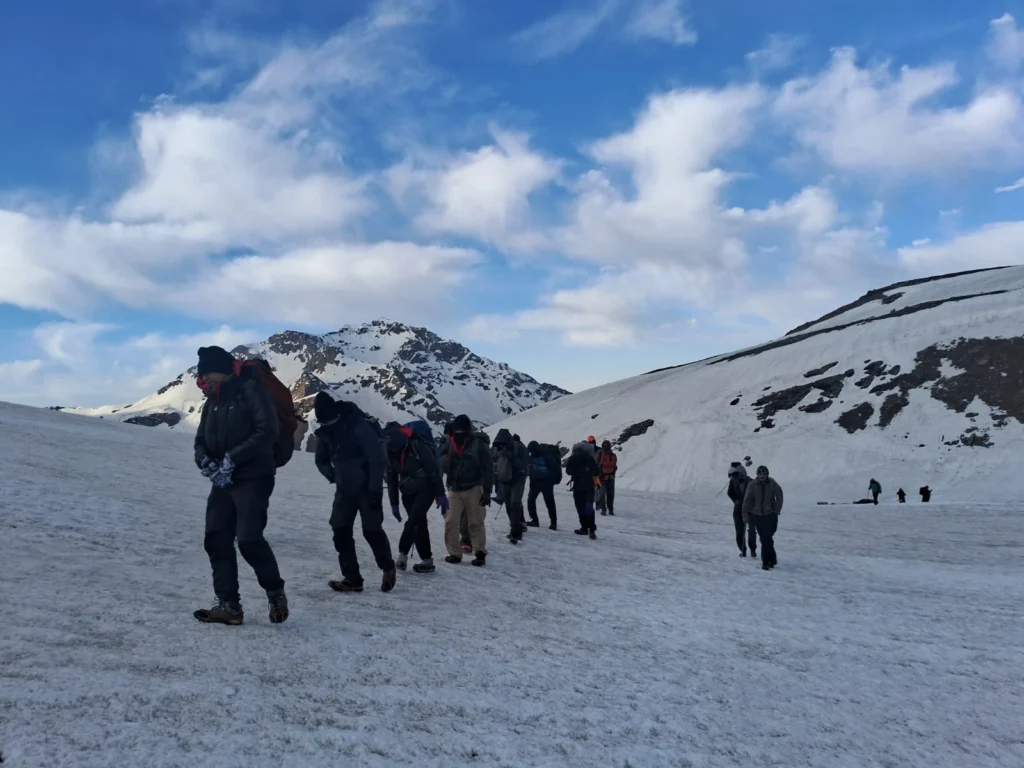
The adi kailash weather is famously fickle. In Gunji (10,500 ft), you might experience burning sun during the day, requiring heavy sunscreen, but as soon as the sun dips behind the ridges, the temperature plummets. At Jolingkong (14,000 ft+), expect biting winds even in June. Always prepare for the “Wind Chill Factor”—even if the thermometer says 5°C, the wind can make it feel like -5°C.
Adi Kailash Trek Difficulty Level: Is It Suitable for Beginners?
In 2026, the adi kailash yatra is rated as Easy-Moderate. It is suitable for beginners because the walking distance is minimal (3-5 km per day). However, it is “Moderate” because of the Altitude. You are spending multiple nights above 10,000 feet. If you can walk on a treadmill for 30 minutes at a moderate pace, you are physically fit enough, but your body must be able to handle the decreased oxygen levels.
Accommodation, Food & Facilities During the Yatra
- Accommodation: Expect “Cinderella Stays”—charming but basic. You will sleep in wooden homestays with thick blankets. Toilets are mostly shared and may be dry-pit style at higher altitudes.
- Food: Local Kumaoni food like Bhatt ki Churkani and Mandua Roti is often served. It is high in energy and easy to digest.
- Facilities: Do not expect mobile signals beyond Dharchula (except BSNL in patches). Carry a power bank as solar charging is weather-dependent.
Essential Packing List for Adi Kailash Yatra
- Clothing: 3 layers of woolens, including a heavy down jacket and thermals.
- Footwear: Waterproof trekking boots with a good grip (Grip is key for Parvati Kund).
- Health: Sunscreen (SPF 50+), lip balm, and moisturizer.
- Rain Gear: A sturdy poncho; mountain rain is unpredictable.
- Spiritual: A small diary to record your reflections.
Hidden Costs & Extra Expenses to Consider
Always check if your adi kailash tour package covers the “Buffer Day.” If heavy snow or road blocks prevent you from moving, who pays for the extra night’s stay? Most budget packages exclude this. Also, factor in the cost of a specialized mountain sickness medicine like Diamox and the cost of renting an oxygen cylinder if it isn’t included in your base package.
Safety Tips & Altitude Sickness Awareness
Safety on the adi kailash om parvat yatra is 90% acclimatization.
- The Golden Rule: Walk slow, breathe deep, and drink 4 liters of water daily.
- Symptoms: If you have a persistent headache, loss of appetite, or nausea, inform your guide immediately.
- Descent is the Cure: If AMS symptoms worsen, the only “medicine” is descending to a lower altitude.
- No Alcohol: Avoid alcohol and smoking entirely, as they dehydrate the body and mask AMS symptoms.
conclusions
The adi kailash yatra Package is not just about cost—it’s about logistics, safety, and expectations. This is a remote Himalayan journey where planning matters more than saving a few thousand rupees.
Choose a trusted partner like Roopkund Heaven.