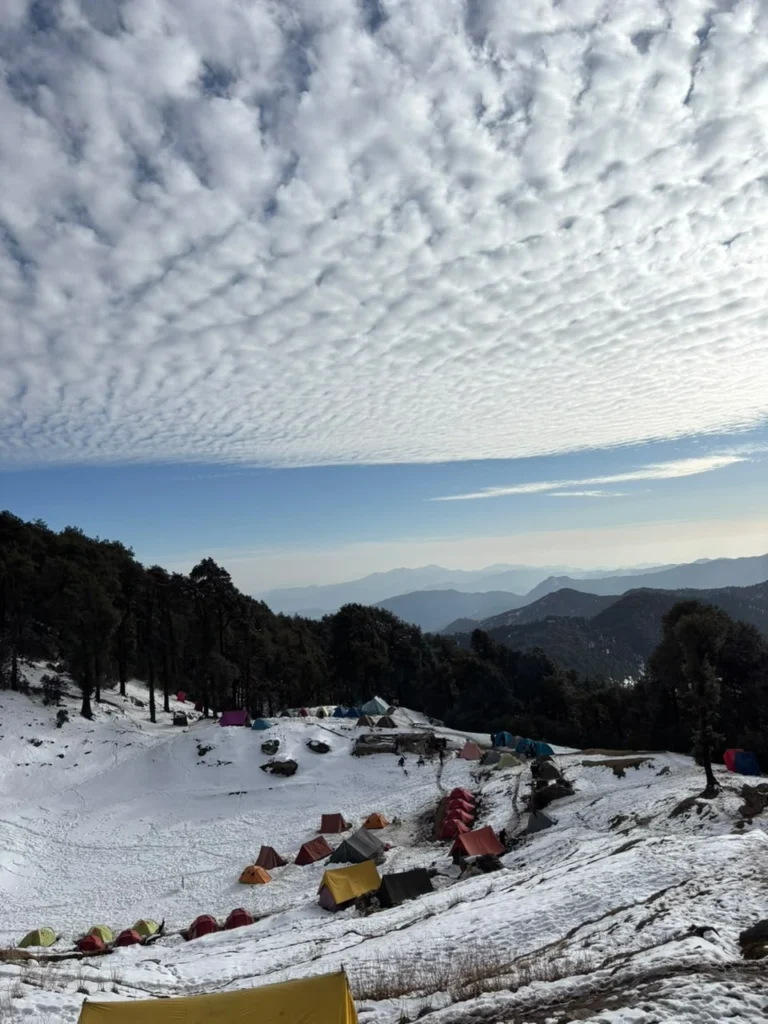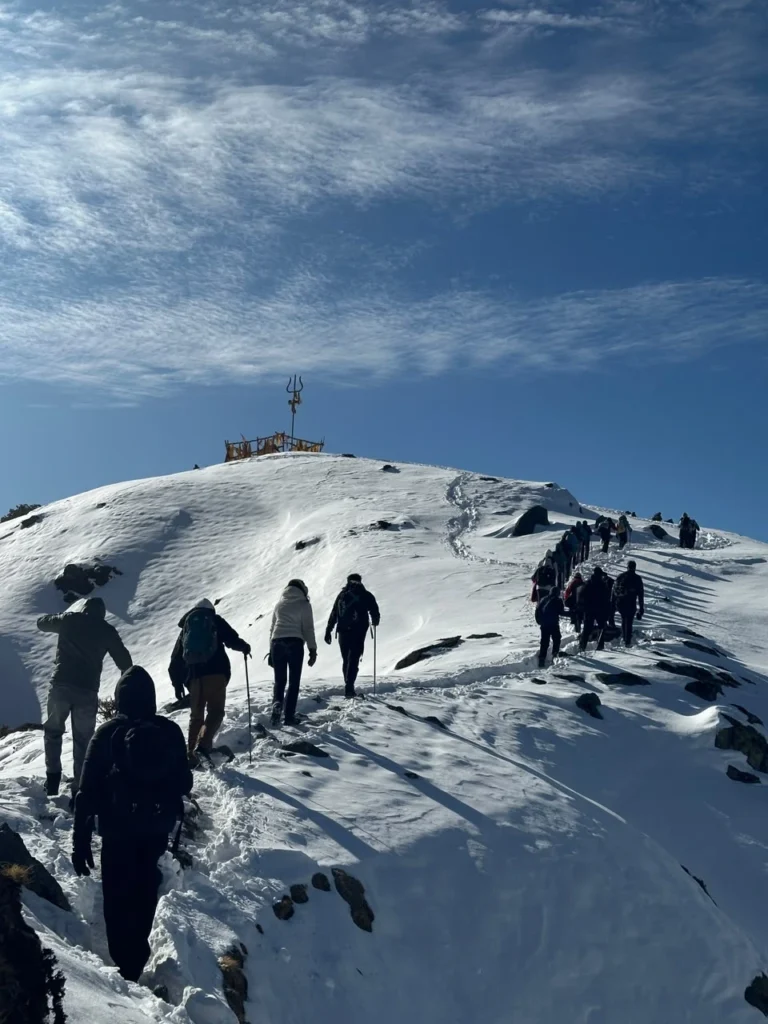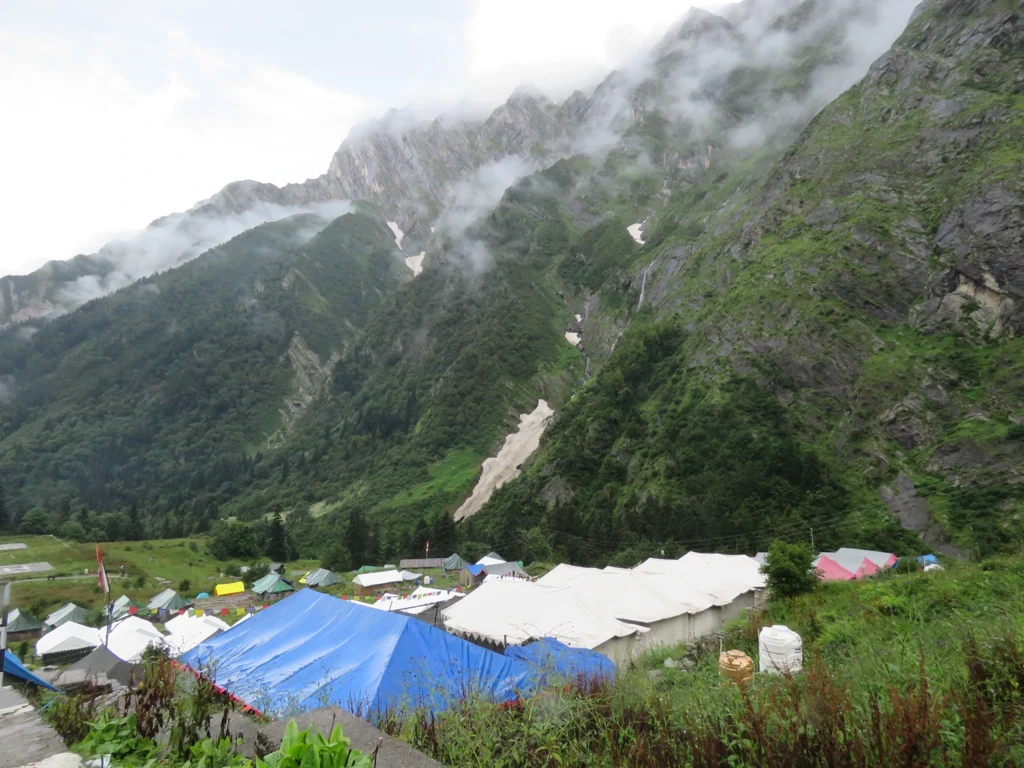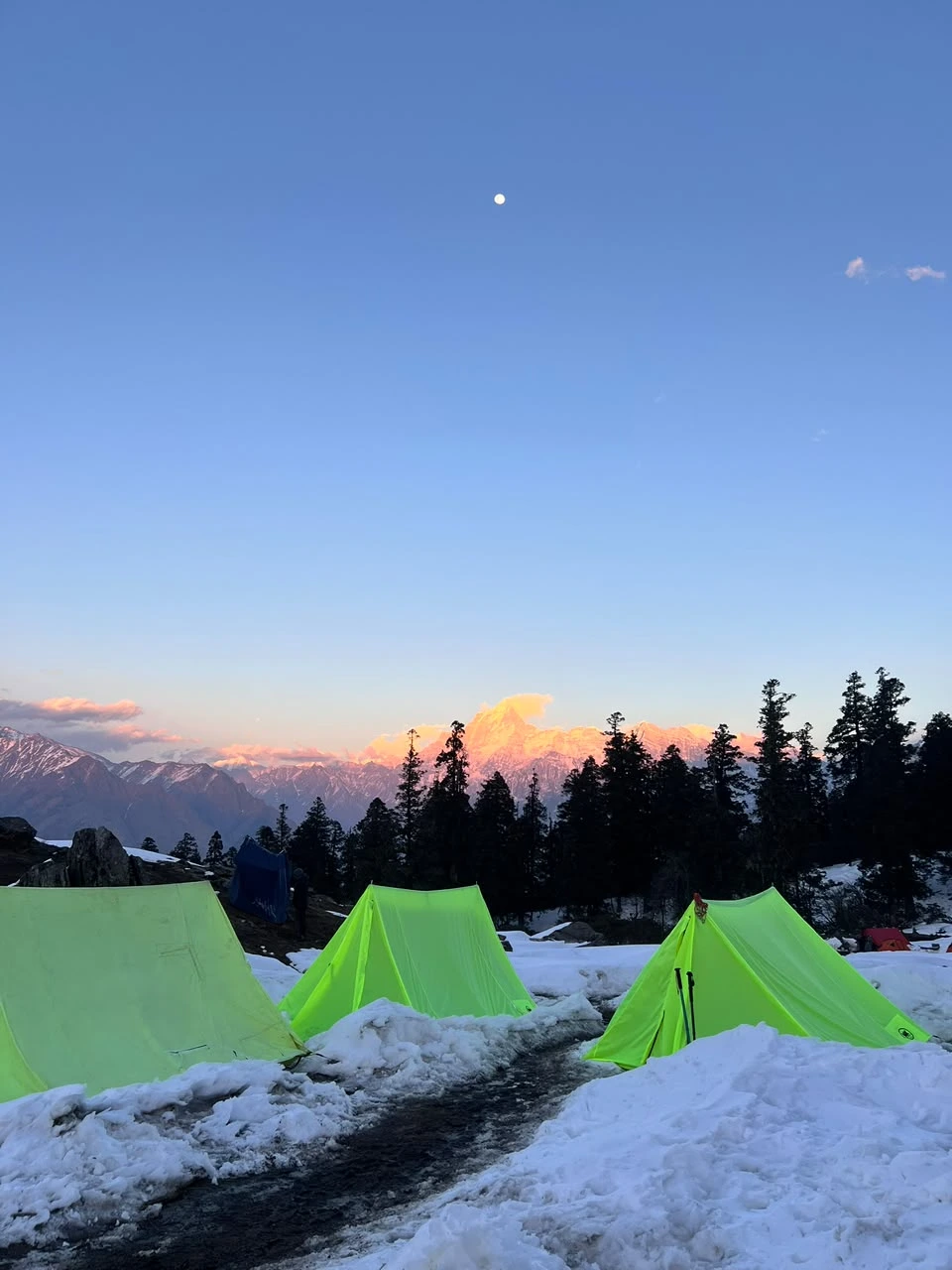
Winter in the Himalayas is full of surprises. Two trekking trails located in the same region can experience completely different snow conditions, even when their elevations are relatively similar. One trail may be covered in fresh powder, while another may have only scattered patches of snow beneath the forest canopy. This difference is particularly interesting when comparing the Kuari Pass trek and the Brahmatal trek, two of Uttarakhand’s most popular winter trekking destinations.
Both treks are known for their spectacular mountain views, snow-covered forests, and peaceful Himalayan landscapes. Yet their snowfall patterns, snow accumulation, and the time snow remains on the ground can vary considerably.
So, why does this happen? Is altitude the only factor controlling snowfall, or does the Himalayan landscape have a more complicated story to tell?
The answer lies in a fascinating combination of mountain geography, atmospheric conditions, wind direction, sunlight, and the movement of winter weather systems.
Understanding the Himalayan Snowline
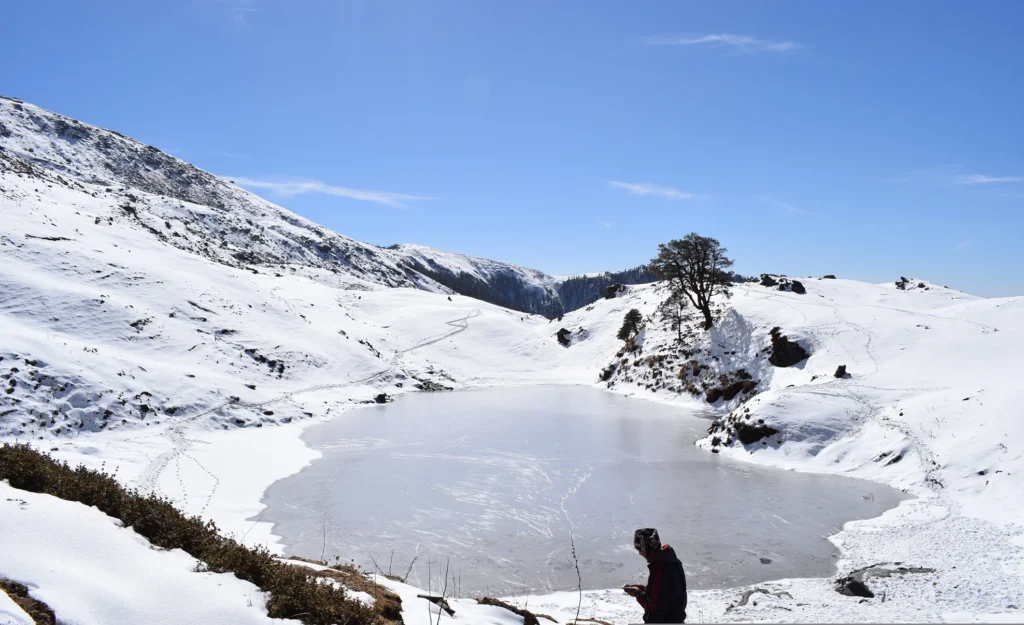
Before comparing Brahmatal and Kuari Pass, it is important to understand what the snowline actually means.
In simple terms, the snowline is the elevation above which snow remains on the ground under particular seasonal conditions. However, the term has different meanings in geography and mountaineering.
The permanent snowline refers to the approximate elevation above which snow and ice can persist throughout the year. The seasonal snowline, on the other hand, changes with temperature, precipitation, sunlight, and weather patterns.
For winter trekkers, the seasonal snowline is the more relevant concept.
During December, January, and February, snowfall can temporarily lower the snowline across the Uttarakhand Himalayas. Trails that remain green or brown during autumn may gradually turn white as winter storms bring snow to higher elevations.
However, the snowline does not descend evenly across every mountain.
A shaded valley may retain snow for weeks, while a nearby sun-facing slope may lose its snow cover much faster. Similarly, an exposed ridge may receive substantial snowfall but struggle to retain it because strong winds redistribute the snow.
This is why two Himalayan treks at comparable elevations can offer noticeably different winter experiences.
Kuari Pass Trek: Where Mountain Exposure Changes the Snow Experience
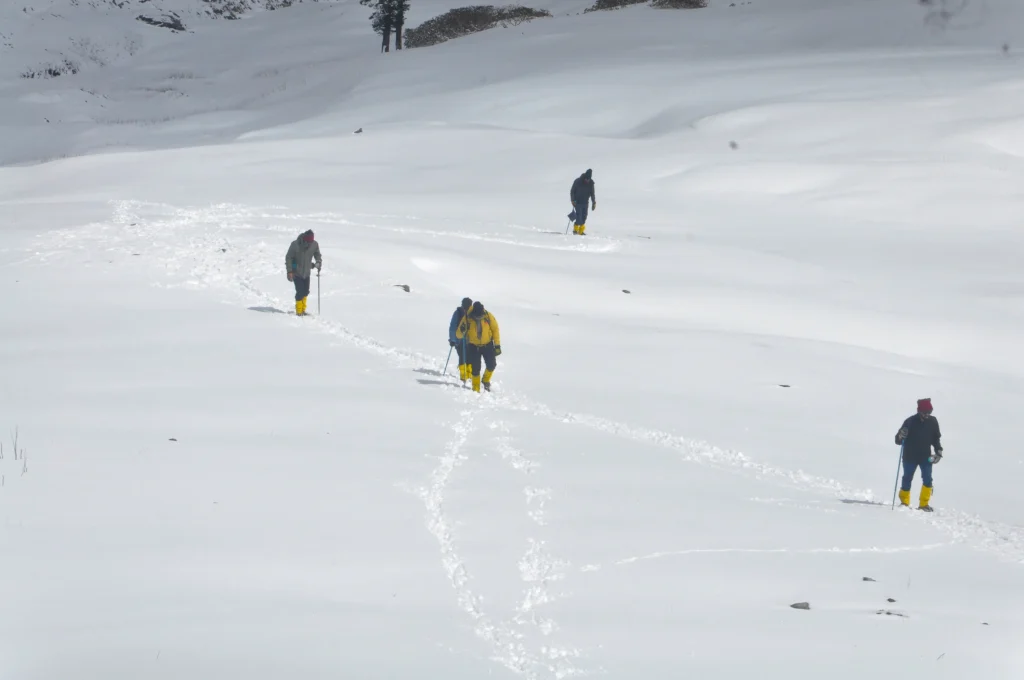
The Kuari Pass trek is among the most scenic winter trekking routes in Uttarakhand. Situated in the Garhwal Himalayas, the route is particularly admired for its views of prominent Himalayan peaks, including Nanda Devi, Dronagiri, and other surrounding summits.
The trekking route passes through mountain forests, open clearings, and high-altitude slopes before reaching the Kuari Pass area, at approximately 3,650 metres, depending on the route and reference used.
During winter, the landscape changes dramatically.
Forest trails can become covered with snow, open meadows may develop a continuous white surface, and the surrounding mountains appear especially striking against clear winter skies.
However, snowfall across the Kuari Pass route is not uniform.
1. Exposure to Winter Weather Systems
Much of Uttarakhand’s significant winter snowfall is associated with weather systems known as western disturbances.
These systems travel eastward and can bring moisture, clouds, rain, and snowfall to the western Himalayas.
When a western disturbance reaches the Garhwal region, the amount of precipitation experienced by individual valleys and mountain slopes depends partly on the storm’s track, moisture supply, and interaction with the terrain.
The Kuari Pass region contains exposed mountain slopes and ridgelines where wind and terrain can strongly influence how snow accumulates.
Some sections may develop deep snow deposits, while others remain relatively exposed.
2. Wind Can Move Snow After It Falls
One of the most interesting characteristics of the Kuari Pass winter landscape is the influence of wind.
At higher elevations, strong winds can lift loose snow from exposed surfaces and deposit it in sheltered depressions or behind natural obstacles.
This process is known as snow redistribution.
As a result, the depth of snow visible on the trail does not always represent how much snowfall occurred during the storm.
An exposed ridge may have relatively little snow, while a sheltered section nearby may contain much deeper accumulations.
This variation can also make winter route conditions more challenging than expected.
3. Sunlight Influences How Long Snow Survives
The direction a mountain slope faces plays an important role in determining how quickly snow melts.
In the Northern Hemisphere, south-facing slopes generally receive more direct winter sunlight than north-facing slopes.
Consequently, snow on sun-facing sections of the Kuari Pass route may melt or become patchy sooner than snow in shaded forests and sheltered terrain.
Even within a short walking distance, trekkers may encounter frozen snow, wet ground, and relatively dry sections.
These differences are a natural part of Himalayan winter conditions.
Brahmatal Trek: Why Forests, Valleys, and Terrain Create a Different Snow Landscape
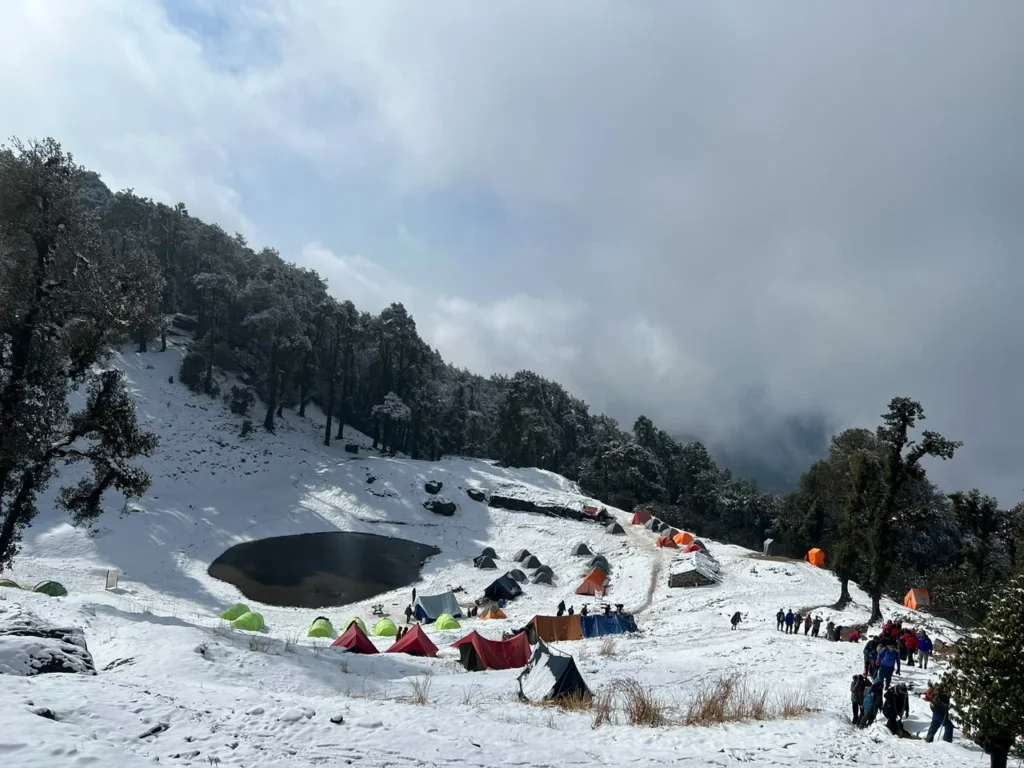
The Brahmatal trek offers a different kind of winter experience.
Located in the Chamoli district of Uttarakhand, the trek is famous for its alpine lake, forested trails, mountain ridges, and panoramic views of the surrounding Himalayan ranges.
The route commonly reaches elevations of approximately 3,700 metres near its higher viewpoints, although exact elevations depend on the itinerary.
Like Kuari Pass, Brahmatal experiences winter snowfall associated with regional weather systems. However, its local terrain creates a distinct pattern of snow accumulation and retention.
1. Forested Trails Can Preserve Snow Differently
One of Brahmatal’s most recognisable features is its passage through oak and rhododendron forests.
During winter, these forests create a beautiful environment where snow settles on branches, tree trunks, and the surrounding ground.
Forest cover influences snow conditions in several ways.
Trees can intercept falling snow, preventing some of it from immediately reaching the ground. At the same time, the forest canopy reduces direct sunlight and often limits wind exposure.
This means snow beneath the trees may melt more slowly in certain conditions, even though the initial amount reaching the forest floor may be lower than in nearby open terrain.
The result is a patchwork of snow depths that changes with forest density, temperature, and recent weather.
2. Sheltered Terrain Can Hold Snow Longer
Parts of the Brahmatal route pass through relatively sheltered slopes and depressions.
These locations may experience less direct wind exposure than open ridgelines.
When snow accumulates in sheltered areas, it can remain on the ground longer, particularly where temperatures stay low and sunlight is limited.
However, this does not mean Brahmatal always receives more snowfall than Kuari Pass.
The important distinction is between snowfall amount and snow retention.
A location may receive less fresh snowfall but retain its existing snow cover for longer. Another location may receive more snowfall but lose some of it through melting, wind redistribution, or sublimation.
Understanding this difference helps explain why photographs taken on the same date can show contrasting snow conditions on the two treks.
3. The Frozen Brahmatal Lake Experience
One of the major winter attractions of Brahmatal is the possibility of seeing its alpine lake frozen or partially frozen.
As temperatures remain below freezing for extended periods, ice can develop across the lake surface.
However, the timing and extent of freezing depend on temperature patterns, lake conditions, and the severity of the winter.
A frozen lake does not necessarily indicate that the surrounding area received exceptionally heavy snowfall.
Lake freezing is primarily related to sustained cold conditions, whereas snowfall depends on atmospheric moisture and precipitation.
This distinction makes Brahmatal particularly interesting for trekkers who want to understand the science behind Himalayan winters.
Kuari Pass vs Brahmatal: Why Snowfall Conditions Differ
Although both routes are located in the Garhwal Himalayas, their winter conditions are influenced by several interacting factors.
| Factor | Kuari Pass Trek | Brahmatal Trek |
| Terrain | Forests, open slopes, exposed ridges | Forests, sheltered slopes, alpine lake and ridges |
| Wind influence | Can be pronounced on exposed sections | Varies between sheltered forests and open ridges |
| Snow accumulation | Often uneven due to wind redistribution | Can persist in sheltered and shaded areas |
| Sunlight exposure | Varies considerably across slopes | Shaded forests and open sections behave differently |
| Winter highlight | Snowy mountain panoramas and ridge landscapes | Snow-covered forests, lake scenery and mountain views |
| Snow reliability | Depends on recent storms and temperatures | Depends on recent storms and temperatures |
Neither trek can consistently be described as receiving more snowfall without comparing reliable observations from the same period.
The apparent difference often comes from where snow collects, how long it remains, and which sections trekkers actually visit.
The Role of Western Disturbances in Himalayan Snowfall
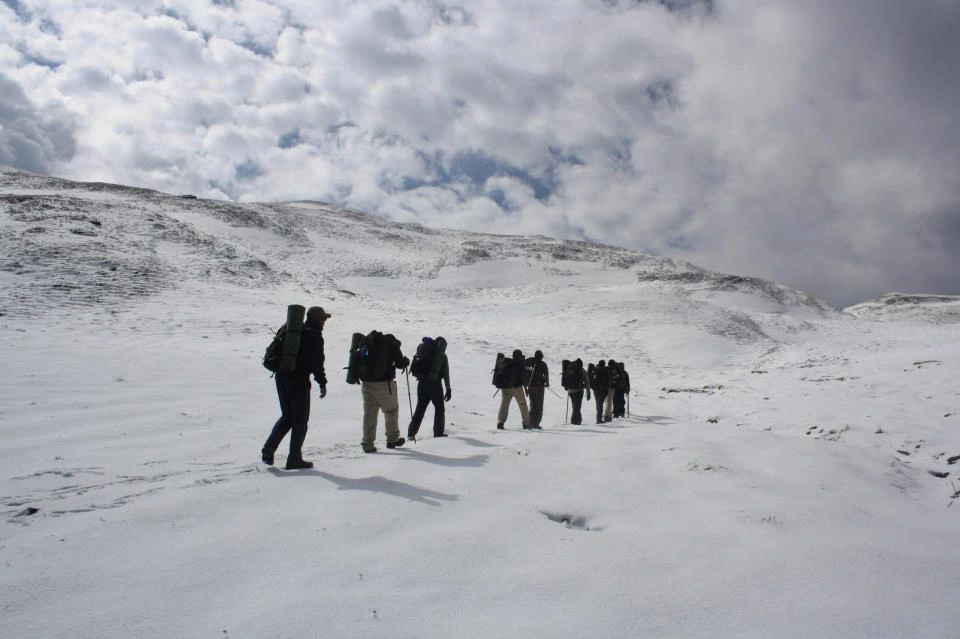
Western disturbances are among the most important weather systems responsible for winter precipitation across the western Himalayas.
They are eastward-moving atmospheric disturbances that commonly originate within the broader Mediterranean–West Asian region and interact with moisture sources along their journey.
When these systems approach northern India, they can bring cloud cover, rain, and snowfall.
However, not every western disturbance produces the same results.
Some systems bring widespread precipitation, while others affect only selected mountain areas.
The elevation at which precipitation falls as snow also depends on the temperature structure of the atmosphere.
During a colder storm, snow may reach lower elevations. During a relatively warm storm, precipitation at similar elevations may fall as rain or a mixture of rain and snow.
This explains why the Brahmatal trek might experience fresh snowfall during one weather event while the Kuari Pass trek receives lighter precipitation, or vice versa.
The exact outcome depends on the characteristics of the storm rather than the name or popularity of the trekking destination.
Does Higher Altitude Always Mean More Snowfall?
A common misconception among winter trekkers is that a higher trekking destination must receive more snowfall.
Altitude certainly matters, but it is only one part of the equation.
Higher elevations generally experience lower temperatures, making snowfall and snow retention more likely during suitable weather conditions.
However, snowfall also requires sufficient atmospheric moisture and a weather system capable of producing precipitation.
A high mountain ridge can remain relatively dry during a particular storm, while a lower slope exposed to moist rising air receives substantial snowfall.
This process is influenced by orographic lifting, which occurs when air is forced upward over mountain terrain.
As moist air rises, it cools and may form clouds and precipitation.
Mountain orientation, wind direction, and local atmospheric conditions determine where this process is strongest.
Therefore, the relationship between altitude and snowfall is not always straightforward.
This principle applies to many Himalayan Treks, including Brahmatal, Kuari Pass, and other trekking destinations across Uttarakhand.
What Can Ali Bedni Bugyal Tell Us About Winter Snowfall?
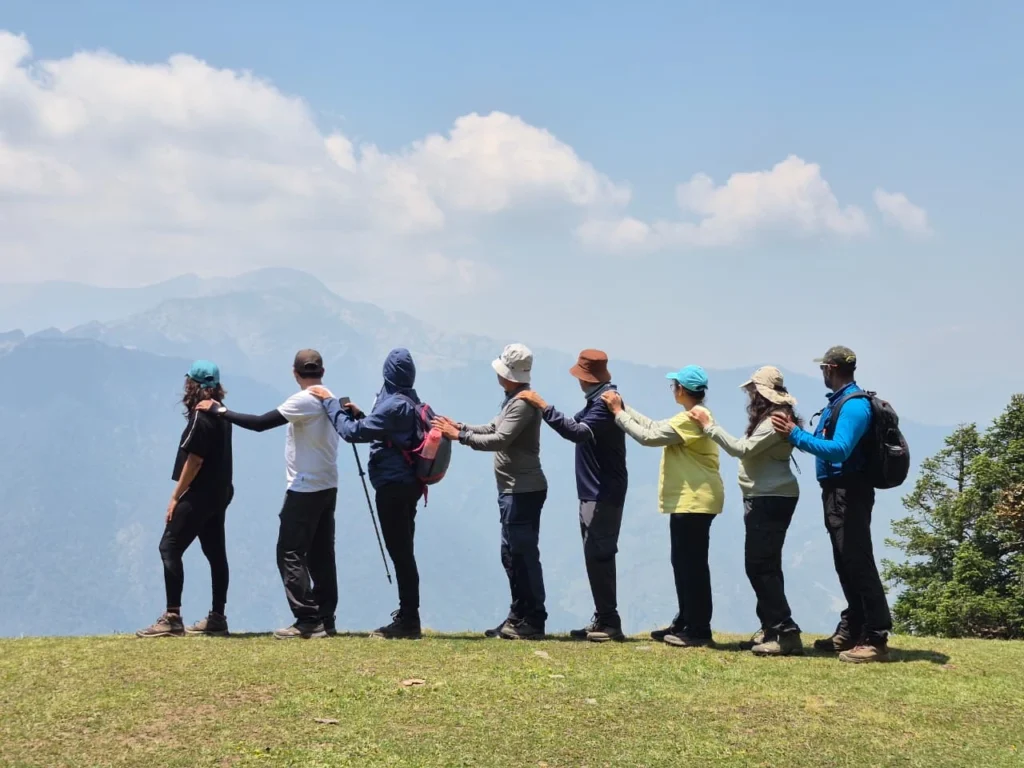
The Ali Bedni Bugyal trek provides another interesting example of how mountain terrain influences winter snow conditions.
Ali and Bedni Bugyal are among the most celebrated high-altitude meadow landscapes in Uttarakhand.
During the warmer months, these expansive grasslands are known for their greenery and sweeping Himalayan views.
In winter, the landscape can become covered with snow, creating an entirely different mountain environment.
Unlike densely forested sections of Brahmatal, the open meadow terrain of Ali Bedni Bugyal is more directly exposed to wind and sunlight.
This exposure can produce considerable variation in snow depth.
Strong winds may remove loose snow from exposed sections and deposit it in sheltered hollows. Meanwhile, slopes facing the sun may lose their snow cover more quickly than shaded areas.
The Ali Bedni Bugyal trek therefore demonstrates an important lesson: the appearance of a snow-covered landscape depends on more than the amount of snow that originally fell.
Winter access to the meadows can also be affected by weather, snow depth, route conditions, and applicable permissions. Travellers should confirm current access arrangements before planning a winter visit.
Roopkund Trek: A More Extreme Example of Himalayan Winter Conditions
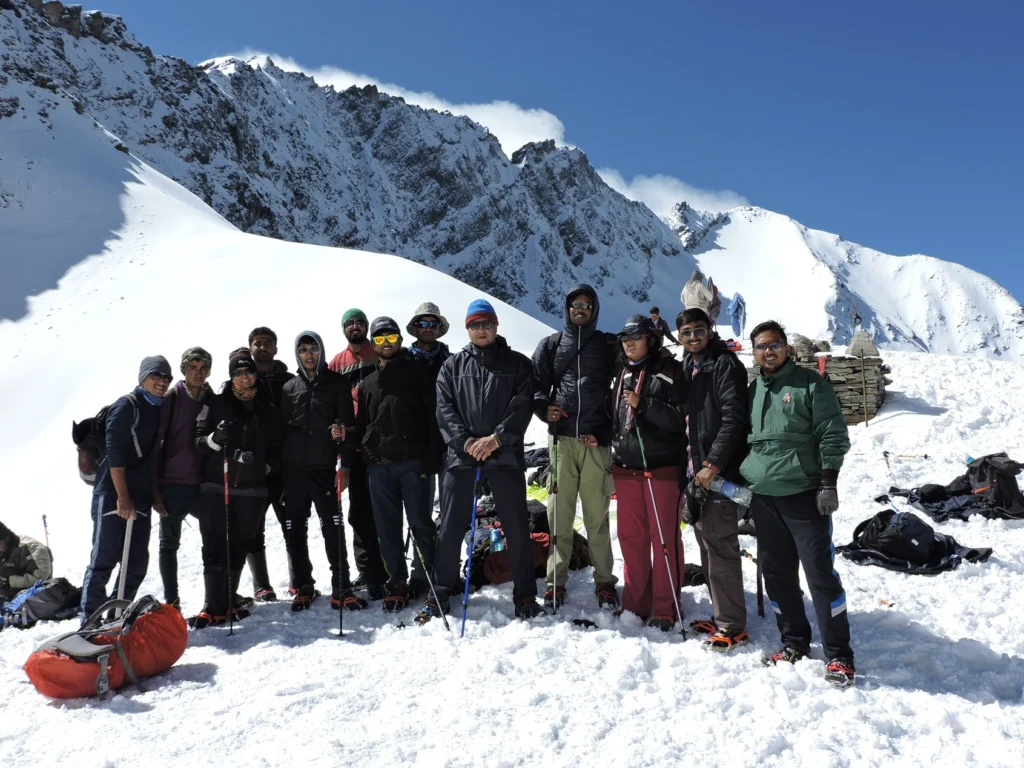
The Roopkund trek offers an even more dramatic example of how altitude and terrain affect winter travel.
Roopkund Lake is situated at approximately 5,000 metres in the Garhwal Himalayas and is internationally known for the human skeletal remains discovered around the lake.
At such elevations, winter conditions can be severe.
Temperatures frequently remain below freezing, snow and ice may persist for extended periods, and strong winds can create challenging conditions across exposed terrain.
The Roopkund region also illustrates why snowfall and snow cover should not be treated as identical.
A high-altitude location may retain snow for long periods because temperatures remain low, even when there has been limited recent snowfall.
Similarly, wind can redistribute snow across steep slopes and ridgelines, creating highly uneven accumulations.
Unlike accessible winter trekking routes such as Brahmatal and Kuari Pass, the Roopkund route has faced restrictions associated with the protection of sensitive alpine environments. Its current access status must be verified with the relevant authorities rather than assumed.
For winter travellers, the region is best understood as an example of the powerful environmental conditions found in the higher Himalayas, not as a routine winter trekking option.
December, January, or February: When Can You Expect Snow on Brahmatal and Kuari Pass?
The timing of snowfall is one of the most frequently discussed subjects among people planning Himalayan winter treks.
However, no month guarantees fresh snowfall on either route.
December: The Beginning of the Winter Transformation
December often marks the transition toward more persistent winter conditions at higher elevations.
Early winter snowfall may begin covering sections of the Brahmatal and Kuari Pass trails, particularly following strong western disturbances.
However, snow cover can remain inconsistent during the first part of the month.
Some years bring significant snowfall relatively early, while others remain comparatively dry.
January: Colder Conditions and Greater Snow Potential
January is typically among the coldest months across these trekking regions.
Cold temperatures can support snow accumulation and help preserve snow deposited by earlier storms.
This makes January an attractive period for trekkers seeking snowy Himalayan landscapes.
Nevertheless, a dry January can still produce less fresh snowfall than expected.
February: Established Snow Cover and Changing Weather
February can offer substantial existing snow cover at higher elevations, particularly after active winter weather periods.
Fresh snowfall remains possible, but increasing sunlight and changing temperatures can influence snow conditions on exposed slopes.
The experience may vary considerably between the beginning and end of the month.
For both Brahmatal and Kuari Pass, checking recent local conditions is more useful than relying exclusively on historical monthly patterns.
Why Two Trekkers Can Have Completely Different Snow Experiences
Imagine two groups planning winter treks in Uttarakhand.
One group visits Kuari Pass shortly after a significant snowfall event. The forest trails are covered in fresh snow, the surrounding ridges appear white, and the landscape looks like a classic Himalayan winter postcard.
Another group visits Brahmatal a week later, after several clear and relatively warm days.
Although Brahmatal may have received snowfall during the same weather system, some exposed sections could already have lost part of their snow cover.
The second group might encounter deeper snow in shaded forests but comparatively patchy conditions on sun-facing slopes.
If both groups share photographs online, it might appear that Kuari Pass received far more snowfall.
In reality, the difference could reflect the timing of their visits, local terrain, and snow retention rather than a major difference in total precipitation.
This is why judging a winter trek solely from social media photographs can be misleading.
How to Choose Between Brahmatal and Kuari Pass for a Winter Trek
For travellers planning a winter adventure, the decision should not depend entirely on which destination is expected to receive more snow.
Both treks offer distinct experiences.
Choose Brahmatal If You Enjoy Forests and Alpine Lake Landscapes
Brahmatal is especially appealing to trekkers who enjoy walking through mountain forests, exploring changing winter scenery, and experiencing the atmosphere of a high-altitude lake.
The combination of wooded trails, open viewpoints, and the possibility of frozen lake scenery makes it a memorable winter destination.
Choose Kuari Pass If You Prefer Expansive Himalayan Mountain Views
Kuari Pass is an excellent choice for trekkers drawn to wide mountain panoramas and dramatic ridgeline scenery.
Its views of the Garhwal Himalayan peaks are among its strongest attractions.
During suitable winter conditions, snow-covered forests and open slopes add another dimension to the experience.
Both treks require appropriate winter clothing, suitable footwear, physical preparation, and an itinerary adapted to prevailing weather and trail conditions.
How Climate Variability Is Changing the Winter Trekking Conversation
Snowfall in the Himalayas varies naturally from year to year, but longer-term changes in temperature and precipitation patterns are also important.
Rising temperatures can influence the elevation at which precipitation falls as snow rather than rain.
Changes in storm frequency, intensity, and seasonal timing may also affect the development of winter snow cover.
However, snowfall trends are not identical across every Himalayan region.
Individual winters can still produce heavy snowfall, even within a broader warming climate.
For trekking destinations such as Brahmatal and Kuari Pass, this makes long-term observation and accurate weather information increasingly valuable.
Trekkers should avoid assuming that a destination will experience the same snowfall conditions every December or January.
Instead, winter travel planning should combine seasonal expectations with recent weather reports, local route assessments, and professional guidance.
Conclusion: The Real Mystery Is Not How Much Snow Falls, but Where It Stays
The difference between snowfall on the Kuari Pass trek and the Brahmatal trek reveals something fascinating about the Himalayas.
Snow does not simply fall evenly across a mountain landscape.
Its distribution is shaped by elevation, weather systems, wind, sunlight, forest cover, and the orientation of individual slopes.
Kuari Pass demonstrates how exposed ridges and mountain terrain can influence snow redistribution, while Brahmatal highlights the role of forests, sheltered sections, and local temperature conditions in preserving winter snow.
The same principles can be observed across other Himalayan destinations, including the Ali Bedni Bugyal trek and the higher-altitude landscapes associated with the Roopkund trek.
For anyone exploring Himalayan Treks during winter, understanding these natural processes makes the journey more meaningful.
After all, the beauty of winter trekking is not only about finding snow. It is about discovering how the mountains transform with every storm, every change in temperature, and every passing season.
Plan Your Winter Himalayan Adventure with Roopkund Heaven
Whether you are drawn to the snow-covered forests of Brahmatal or the sweeping mountain views of Kuari Pass, Roopkund Heaven can help you explore the Himalayas with experienced local guidance and a greater understanding of the mountain environment.
Explore our winter trekking experiences and choose a journey that matches your interests, fitness level, and preferred travel dates.
Frequently Asked Questions
1. Does Brahmatal receive more snowfall than Kuari Pass?
There is no consistent evidence that Brahmatal always receives more snowfall than Kuari Pass. Snowfall varies with weather systems, elevation, terrain, and local atmospheric conditions. Both treks can experience significant winter snow.
2. Which is better for snow trekking, Brahmatal or Kuari Pass?
Both are popular winter trekking destinations. Brahmatal is particularly attractive for forest trails and alpine lake scenery, while Kuari Pass is known for its expansive Himalayan mountain views. The better option depends on your interests and current trail conditions.
3. Which month is best for snowfall on the Brahmatal trek?
January and February often offer good opportunities to encounter established snow cover, but fresh snowfall cannot be guaranteed. Conditions vary from year to year.
4. Can I experience snowfall on the Kuari Pass trek in December?
Yes, snowfall is possible in December, particularly when western disturbances affect Uttarakhand. However, early winter snow cover may be inconsistent.
5. Why do some Himalayan trekking routes have more snow than others?
Snowfall and snow retention depend on several factors, including altitude, mountain orientation, wind exposure, temperature, forest cover, and the movement of weather systems.
6. Is the Ali Bedni Bugyal trek suitable for winter?
Ali Bedni Bugyal can experience significant winter snow, which may make access challenging. Suitability depends on route conditions, permissions, weather, and the trekker’s experience. It should not automatically be treated as a regular winter trekking route.
7. Is the Roopkund trek open during winter?
Roopkund is not a standard winter trekking route, and access has been subject to environmental restrictions. Travellers should verify the latest official permissions and route status before making plans.
8. Does a frozen Brahmatal Lake mean there has been heavy snowfall?
Not necessarily. Lake freezing primarily depends on sustained cold temperatures, while snowfall depends on moisture and atmospheric conditions. A lake can freeze even without exceptionally heavy snowfall.