Brahmatal Trek
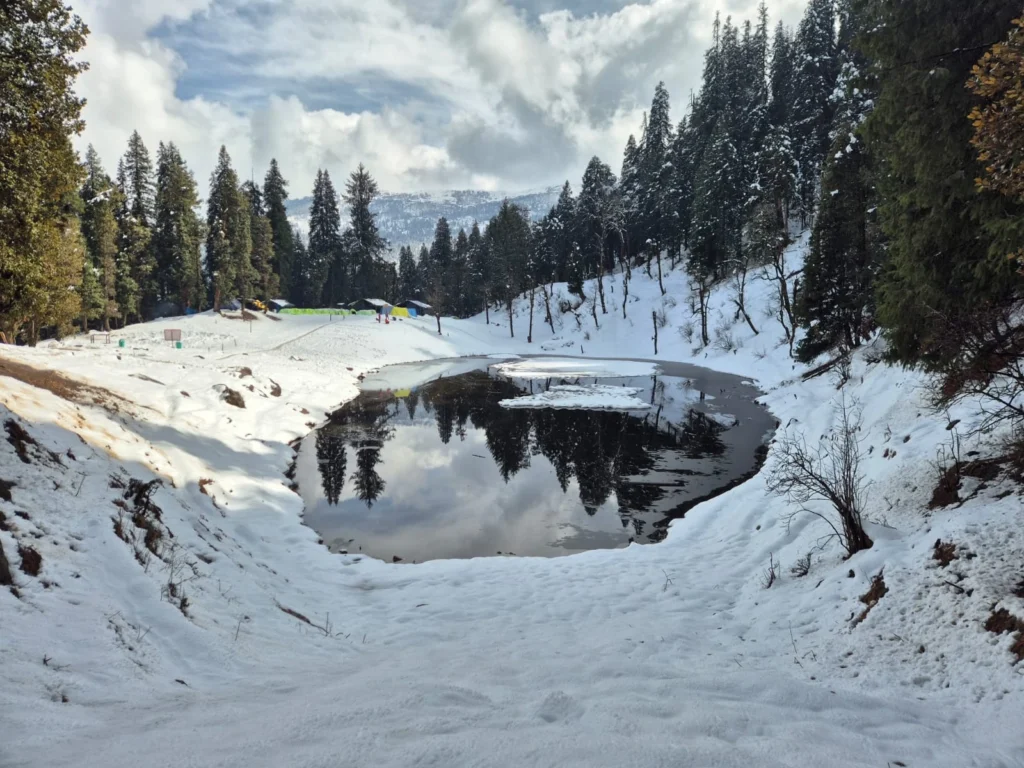
Bekaltal Lake: Nestled among dense oak and rhododendron maple forests, Bekaltal Lake is the first lake trekkers encounter on the Brahmatal route, frozen and silent in winter
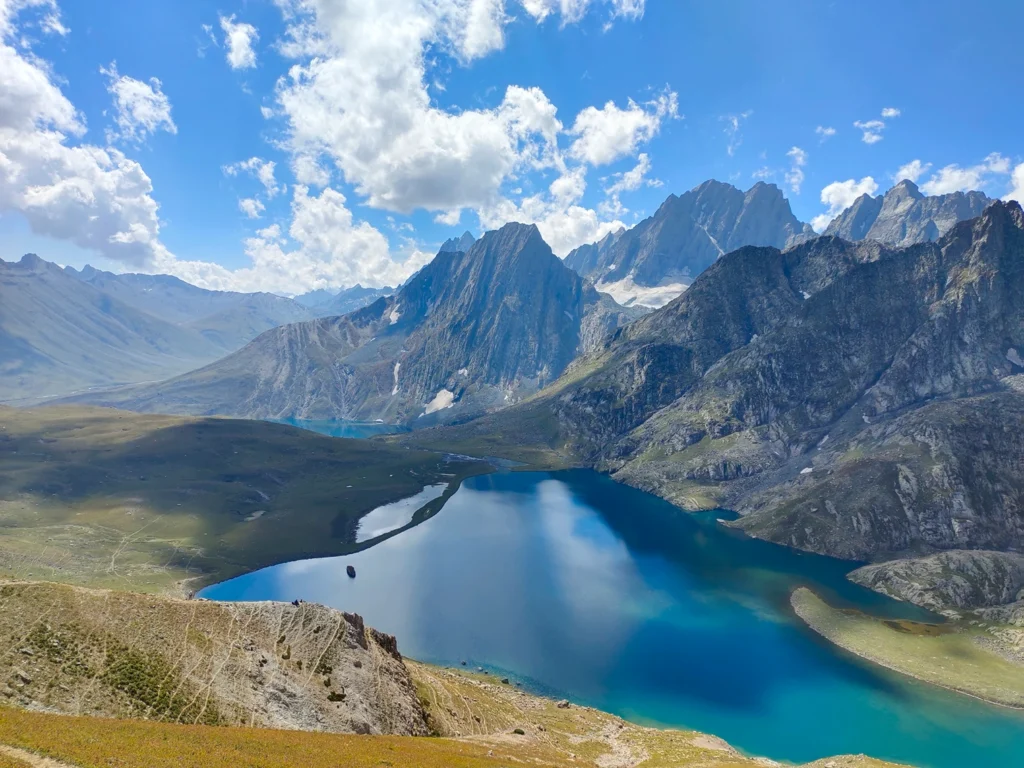
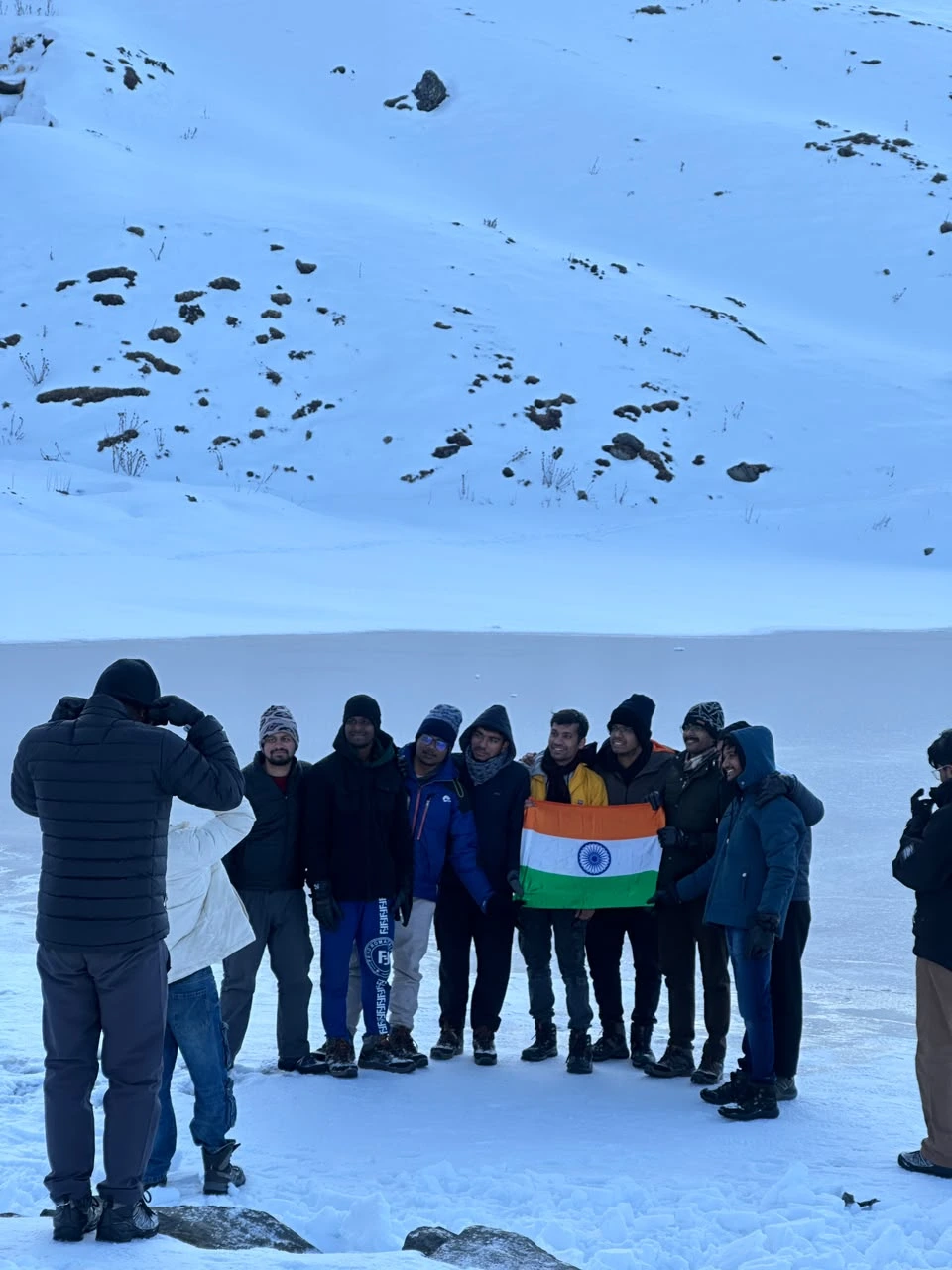
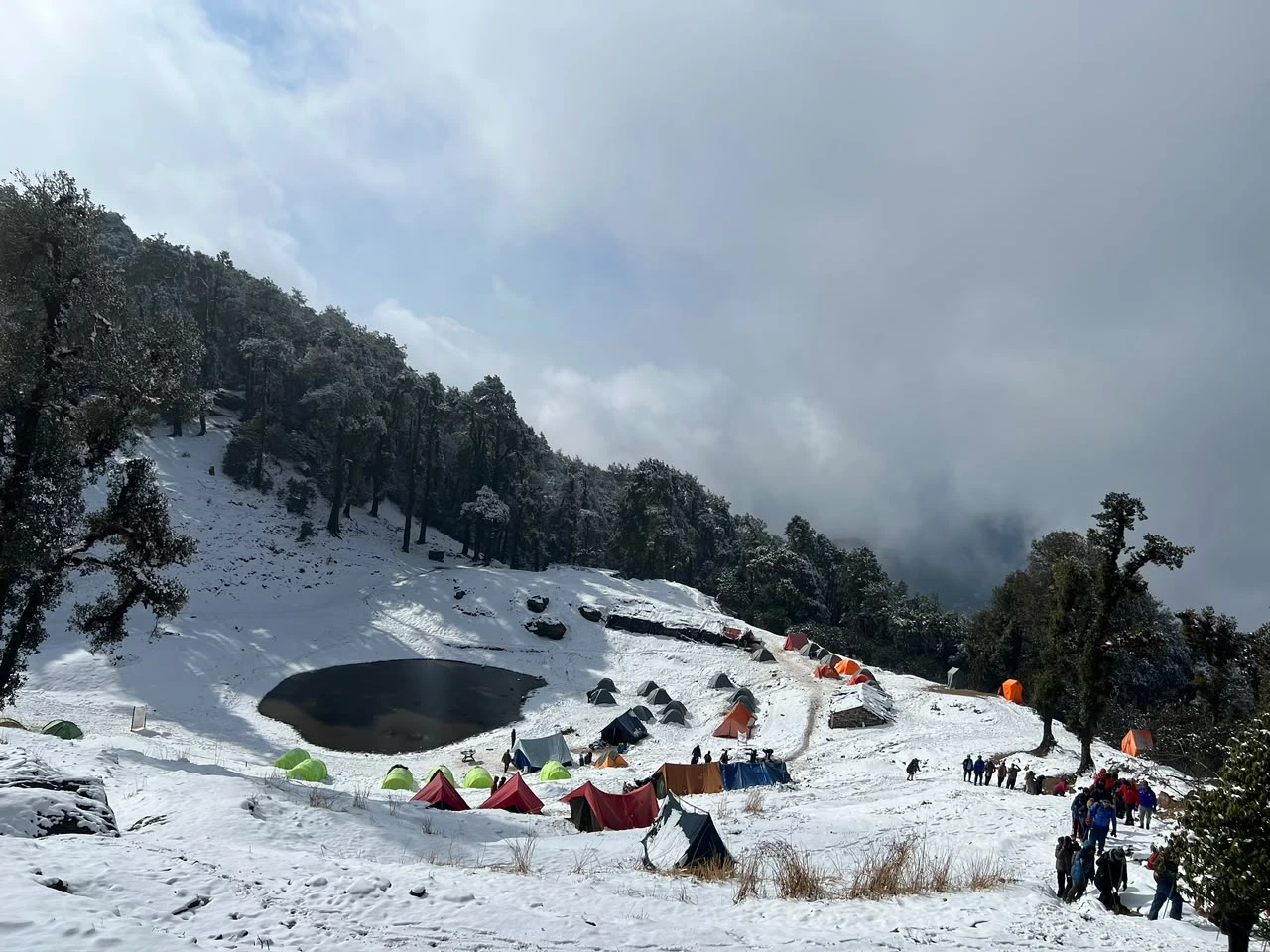
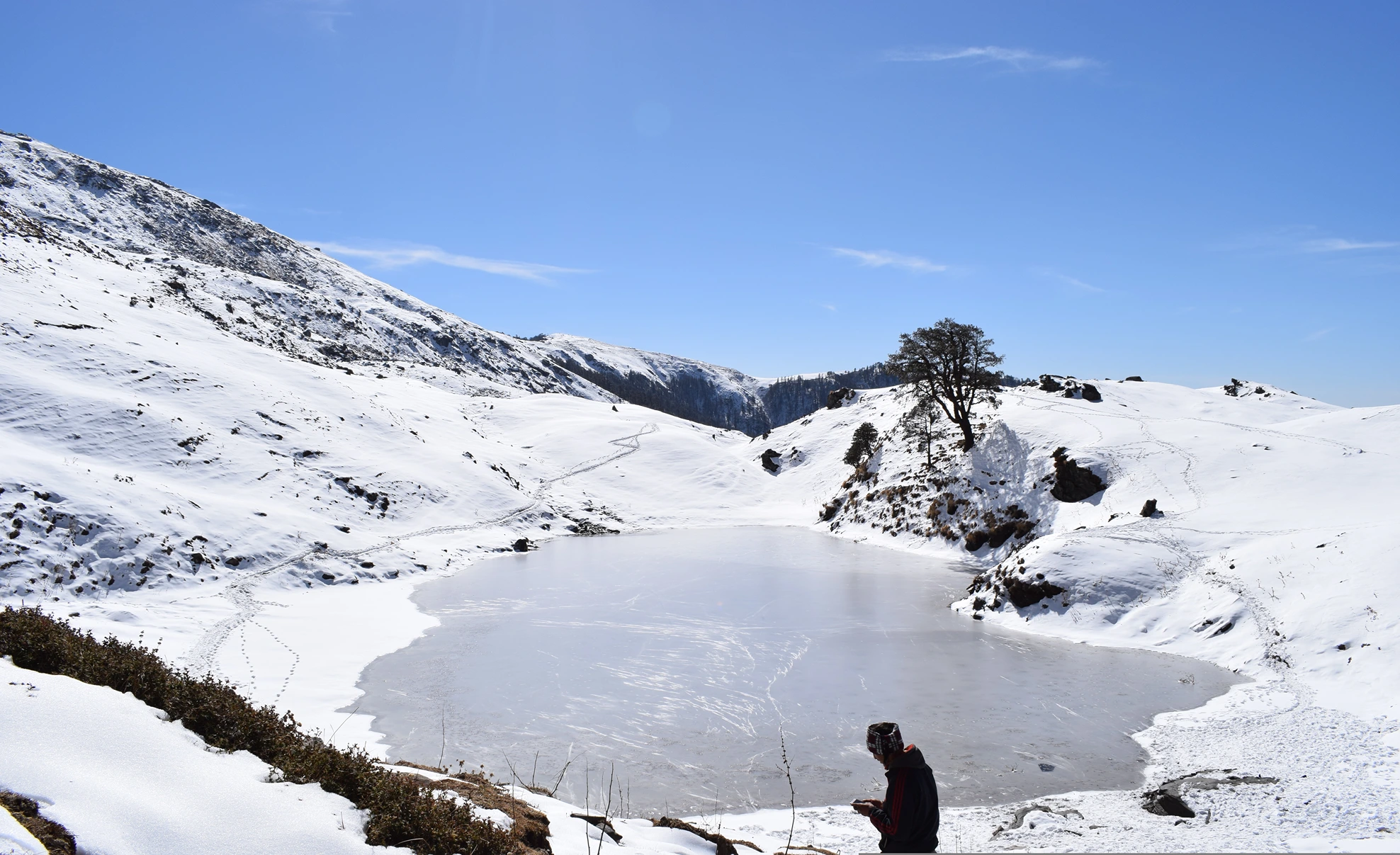
Brahmatal Lake: A high-altitude alpine lake at 10,190 ft, frozen solid in winter, named after Lord Brahma and central to the trek’s spiritual identity and mythology
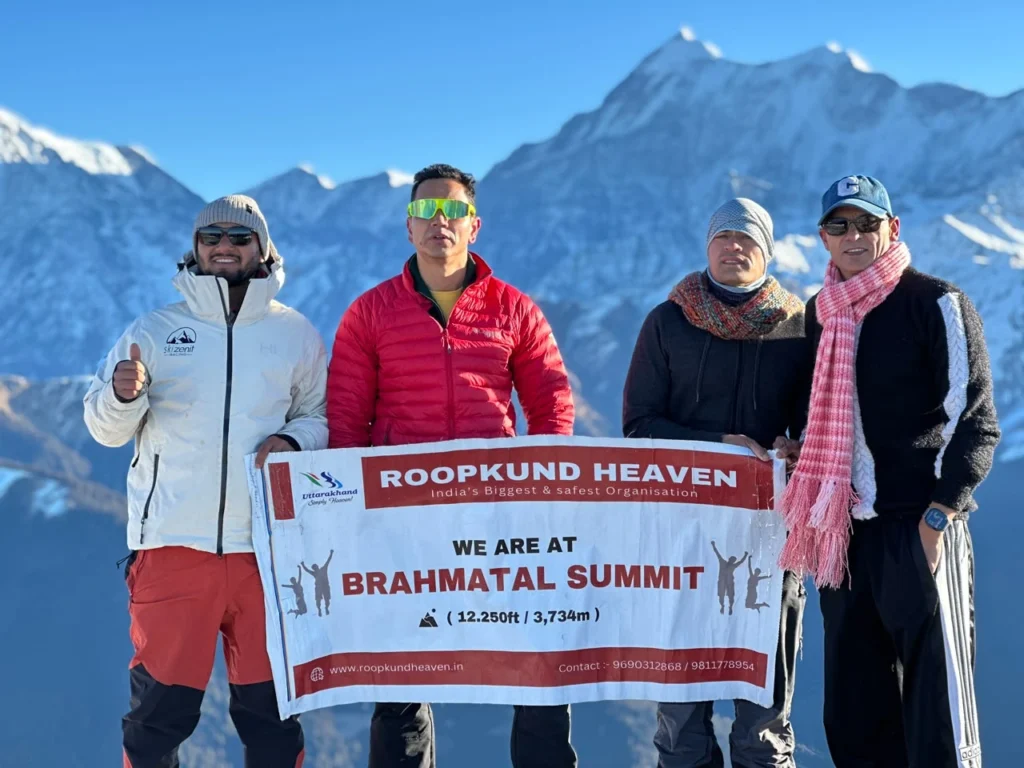
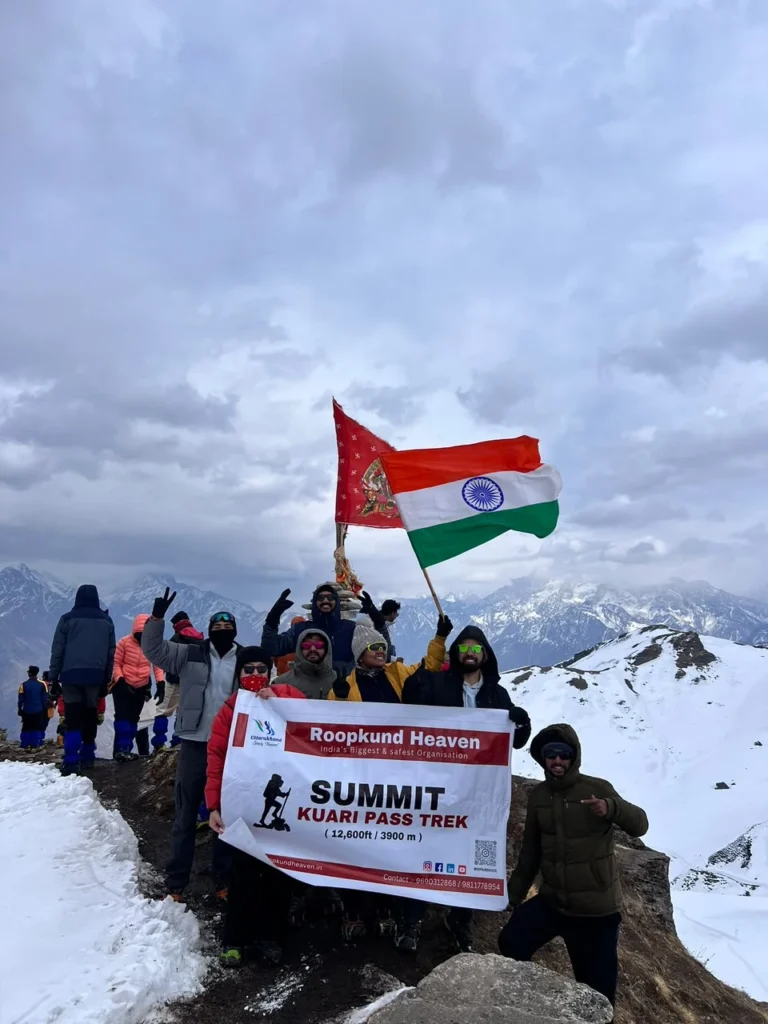
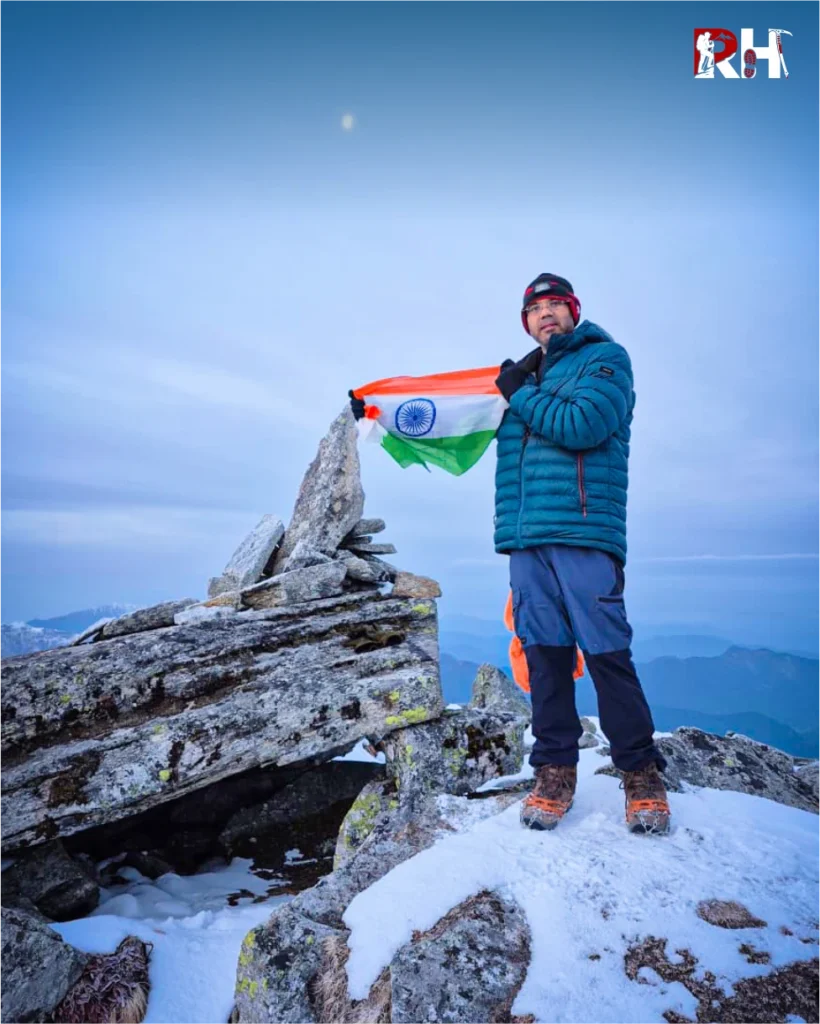
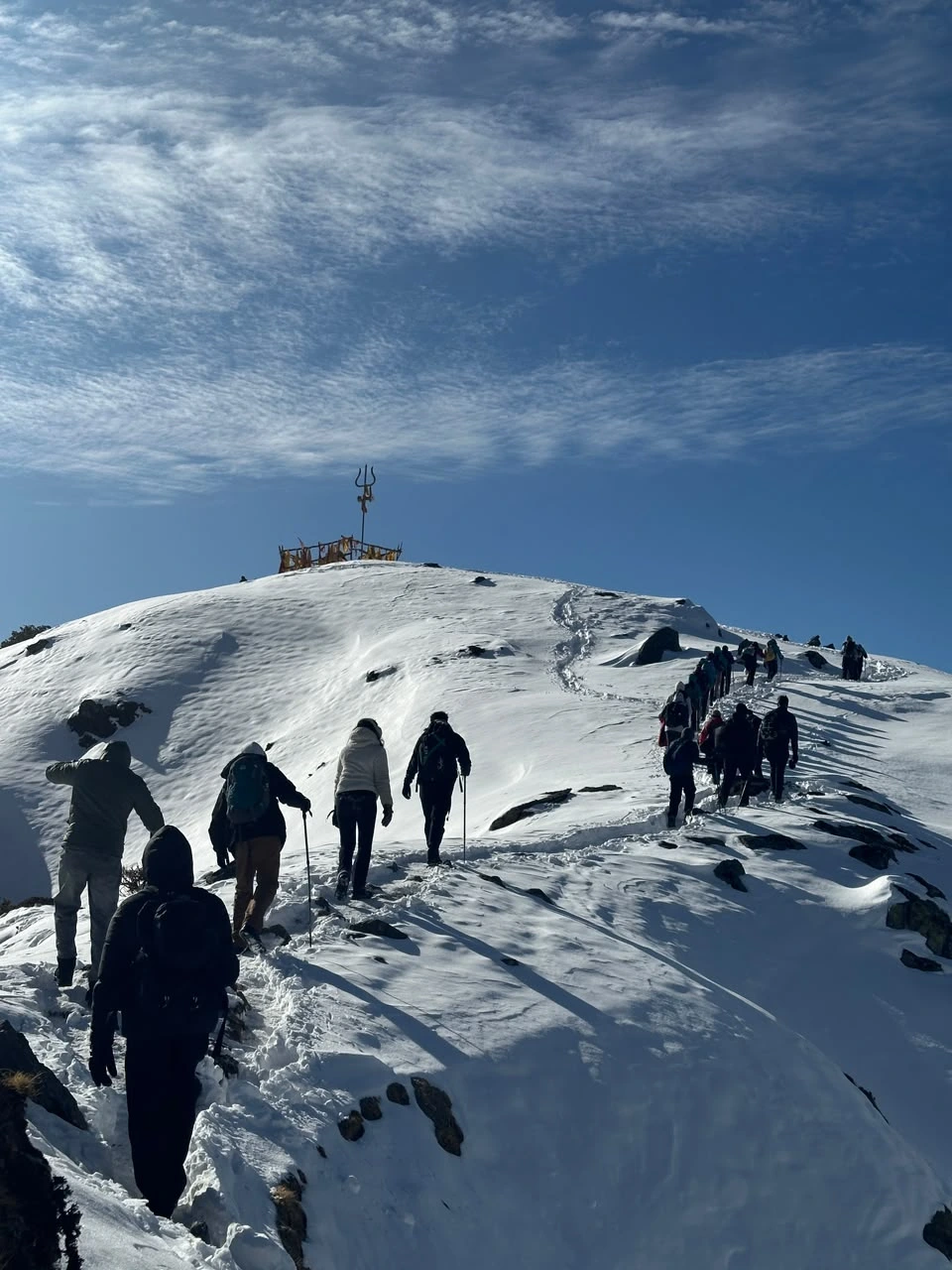
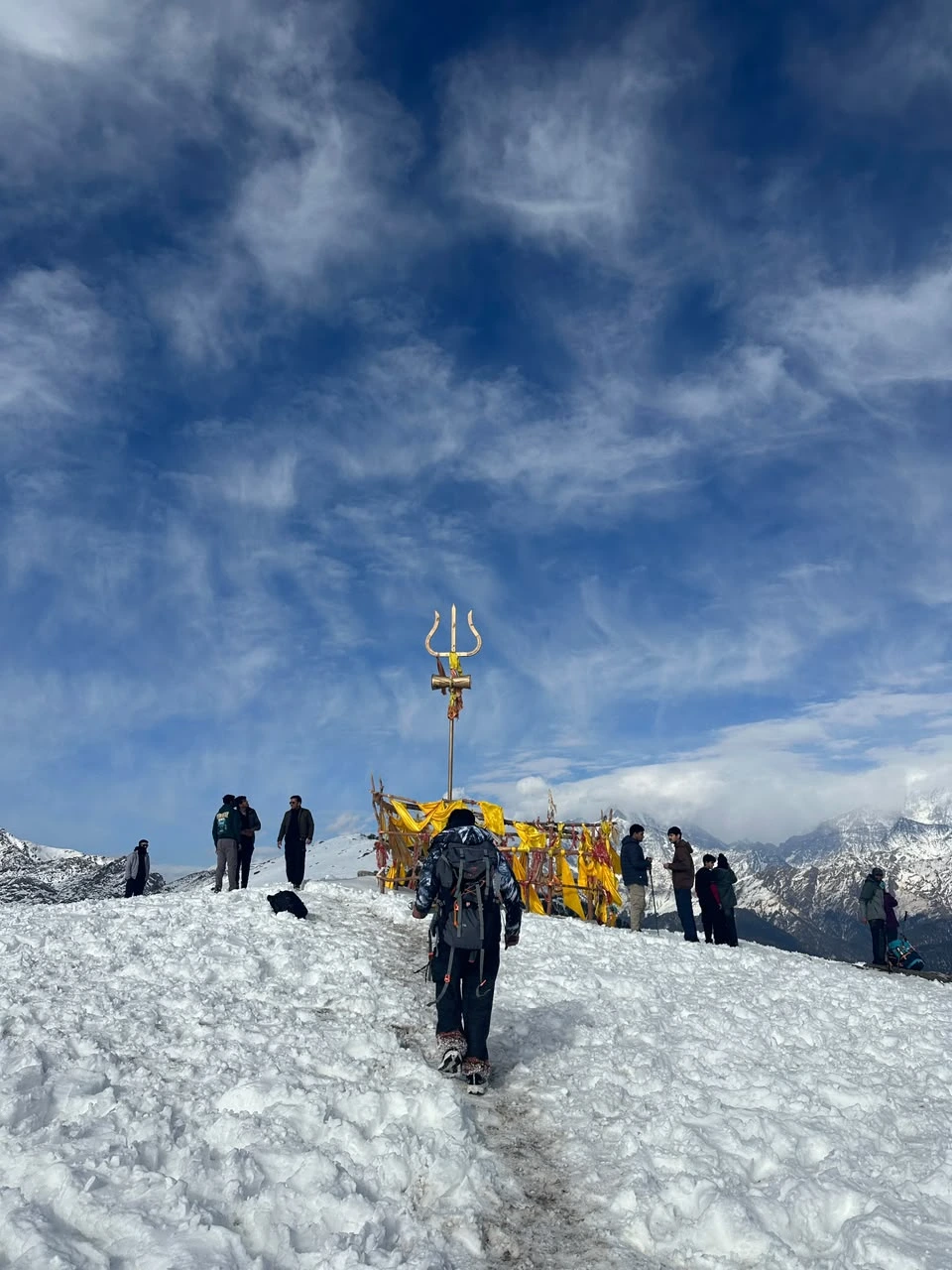
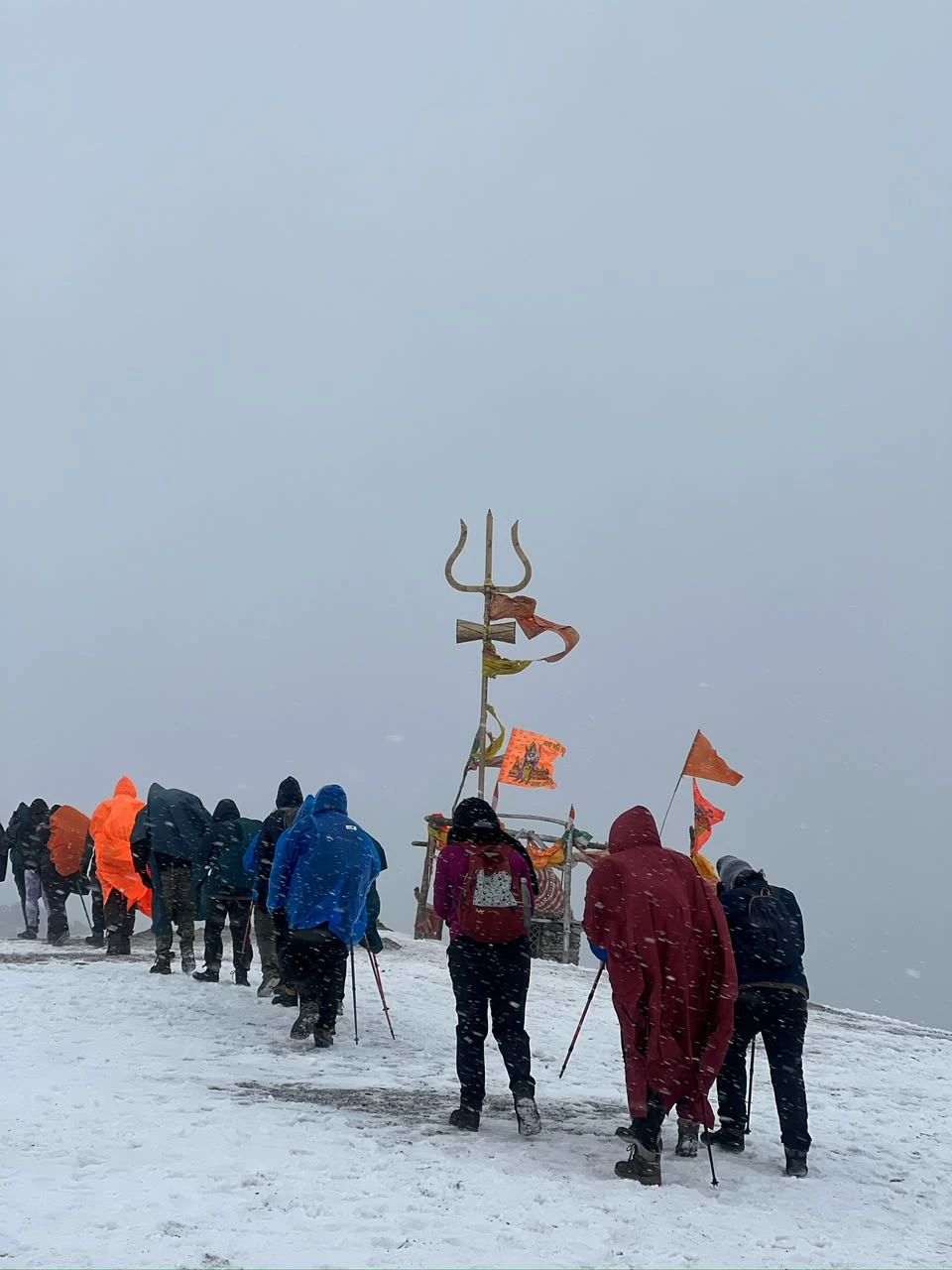
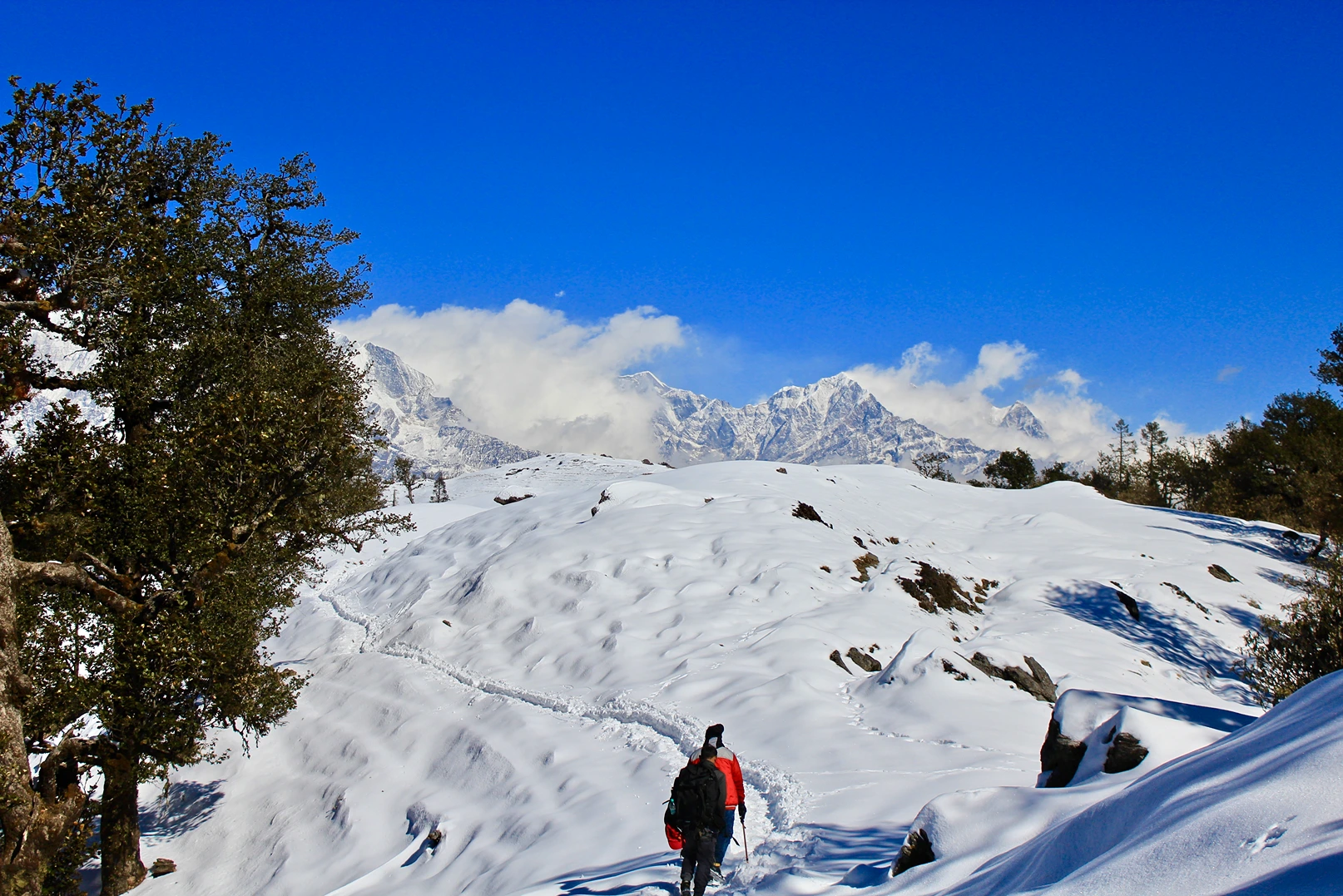
Brahmatal Top Summit: A 12,250 ft summit ridge offering panoramic views of Mt. Trishul (7,120 m), Nanda Ghunti (6,310 m), and the wider Garhwal Himalayan skyline
Ancient Oak and Rhododendron Forests: Century-old golden oak and silver oak trees lining the trail, home to Himalayan woodpeckers, magpies, and white-capped redstarts; the forests bloom red and pink with rhododendron in spring
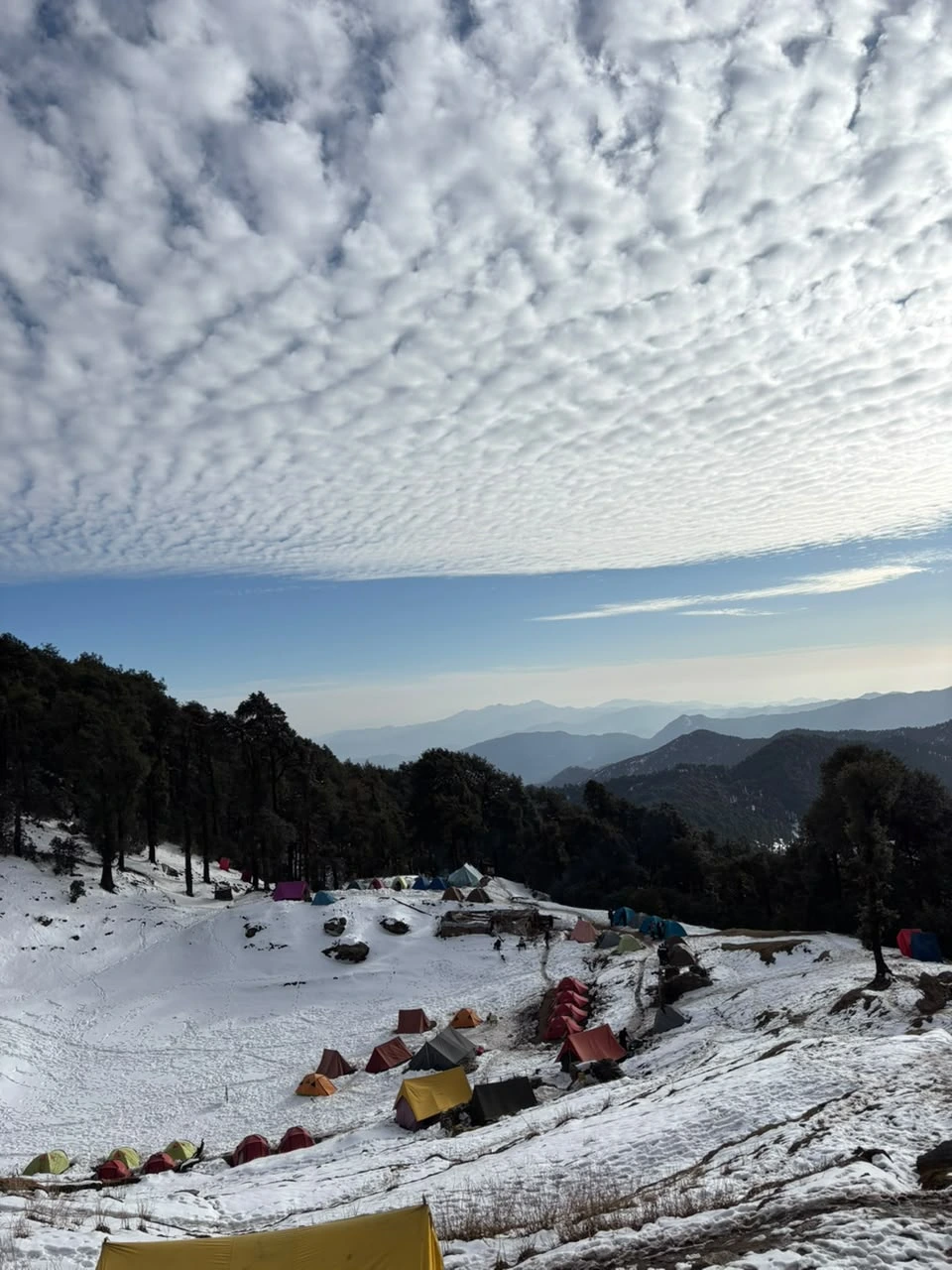
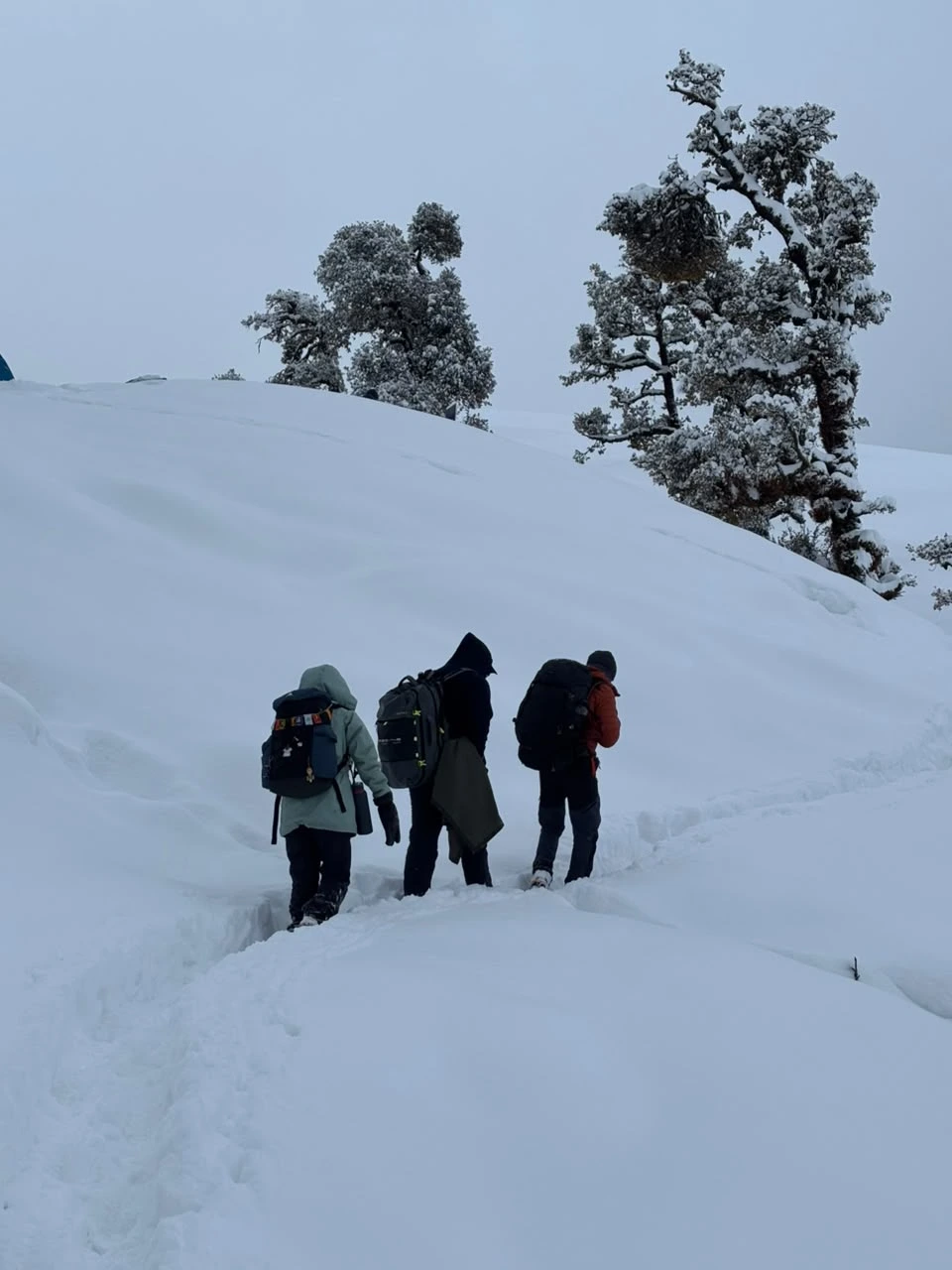
Winter Snowfields: From December through February, the trail above Bekaltal is buried in deep, accessible snow, delivering a genuine winter trekking experience without technical difficulty
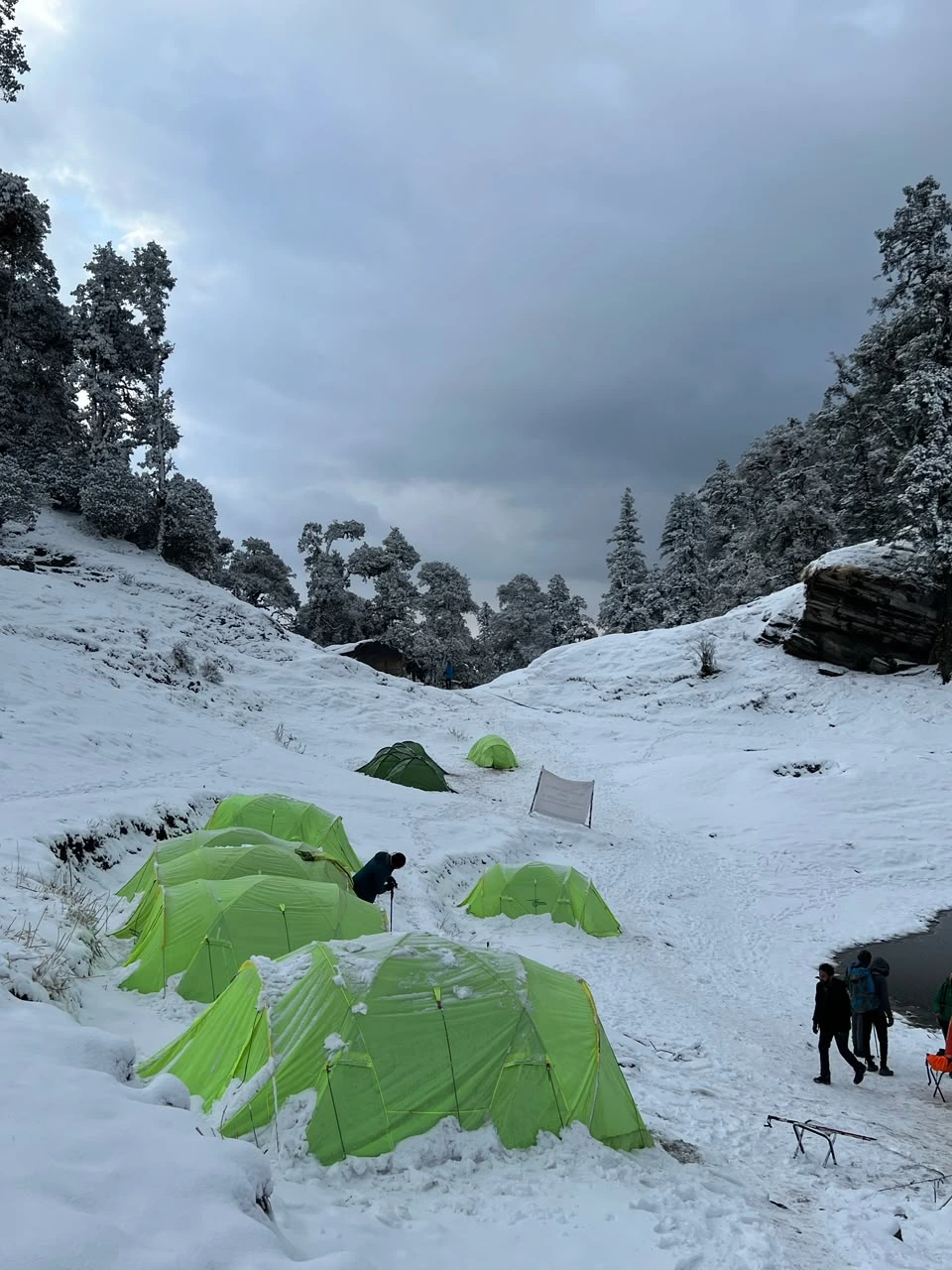
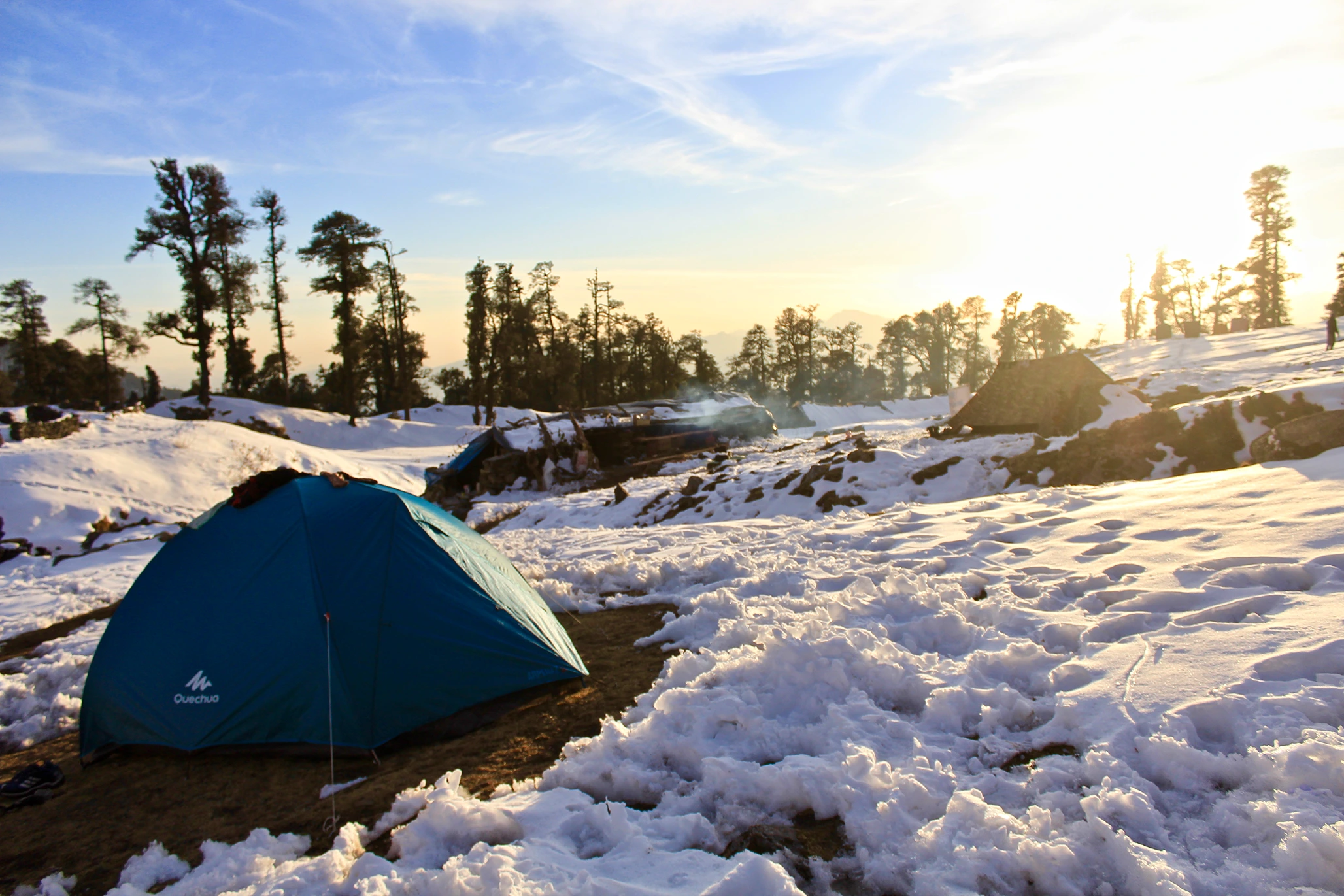
Gujreni Campsite: A peaceful campsite surrounded by dense forests of golden oak, silver oak, and rhododendron trees, near the Gujreni stream and a perfect spot for birdwatching
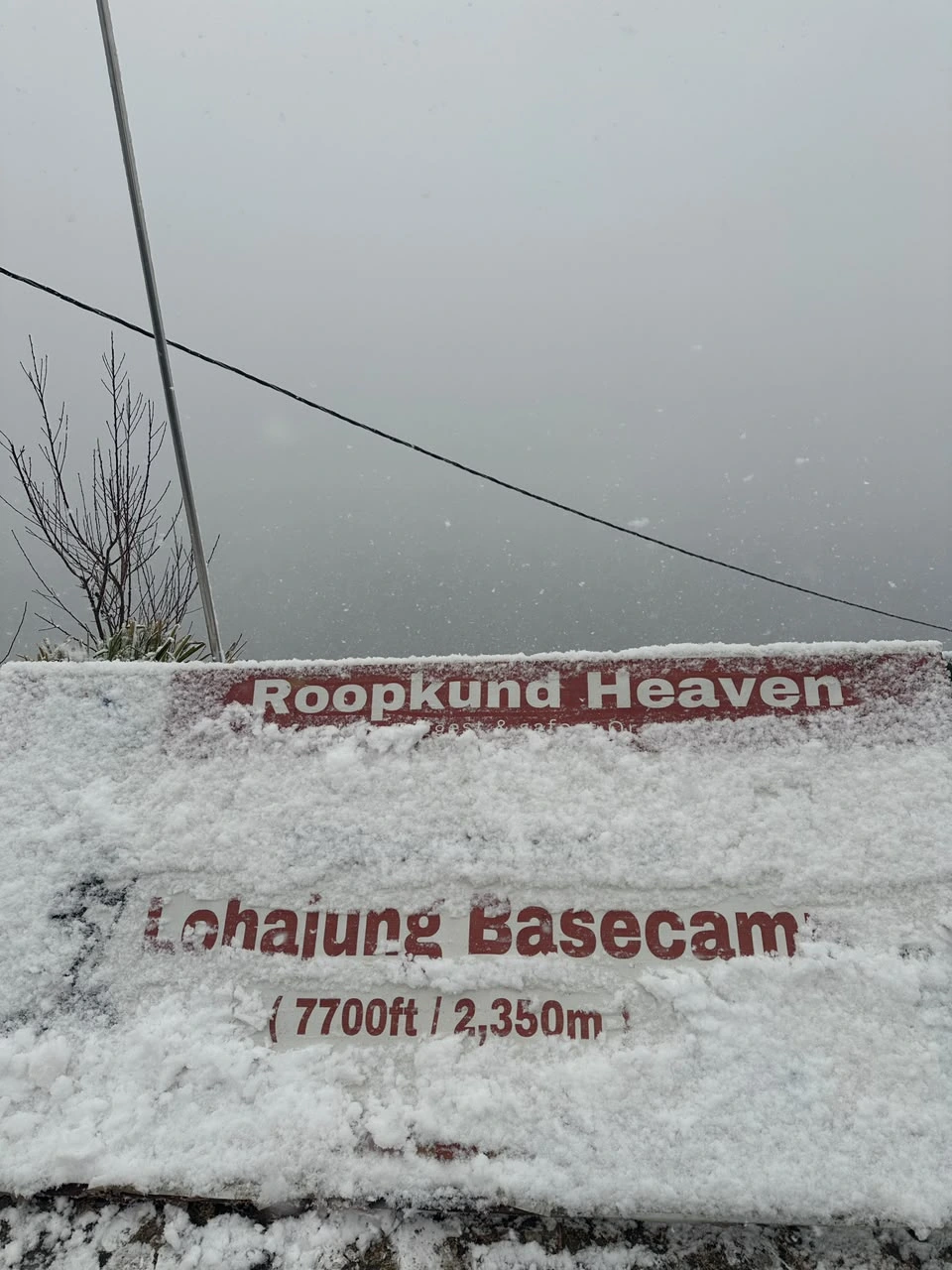
Lohajung Base Camp: A small business town at roughly 7,600 ft with views of Nanda Ghunti mountain and striking sunsets across the southern valley
Brahmatal Trek Overview
Clear trek details, booking dates, inclusions, and rental options.
There is a category of Himalayan trek that exists specifically for the months when most other trails close. When the high passes fill with snow and the meadow treks become inaccessible and the mountains hand down their annual verdict that says not yet, not this way, not until spring, there are a handful of routes that stay open anyway. Routes built for winter, not despite it.
Brahmatal is one of them. At an altitude of 3,800 metres, the Brahmatal trek is open throughout the winters when most other trekking routes are closed, making it a perfect winter trek for beginners.
Why Trekkers Love It
The name itself carries the weight of the place. Brahmatal means the lake of Brahma, the Hindu god of creation, and local legend holds that Lord Brahma meditated beside this very lake high in the Garhwal Himalayas. Whether or not you carry that belief with you, the fact remains that you will spend a night camped beside a lake considered sacred enough to be named after the creator of the universe, frozen solid, silent, and ringed by snow-covered oak and rhododendron forest that has stood for centuries.
This is not a trek built around one dramatic moment. It is built around a sustained, layered experience that gets better with every day. Two glacial lakes, Bekaltal and Brahmatal, each with their own mythology. Forests of golden oak and rhododendron so old and so dense that birdwatchers come specifically for the Himalayan woodpeckers and white-capped redstarts that live within them. Open snowfields that stretch toward a summit ridge with a view that ranks among the best winter panoramas in the entire Garhwal region. And a difficulty level gentle enough that thousands of first-time trekkers complete it successfully every winter without any prior high-altitude experience.
The Brahmatal Trek is a 6-day, 24-km route in Uttarakhand’s Chamoli district, starting at Rishikesh, driving to Lohajung village, and climbing through forest to Bekaltal Lake, then to Brahmatal Lake, then to the summit ridge of Brahmatal Top at 12,250 feet, before descending back to Lohajung. The entire route stays within a forest and meadow ecosystem that, in winter, transforms completely into a landscape of snow-laden branches, frozen water, and white silence.
What separates Brahmatal from comparable winter treks is the gentleness of its gradient. Compared to other beginner-friendly Himalayan treks like Kedarkantha and Kuari Pass, Brahmatal offers a relatively smoother gradient with better-distributed altitude gain. The overall climb is shorter than Kedarkantha, and the terrain is more predictable than Kuari Pass. This does not mean it is without effort. The first day’s climb from Lohajung and the final summit push both involve genuine steep sections. But the altitude gain is spread sensibly across four trekking days, which makes acclimatization natural rather than forced.
Day 1 is the long drive from Rishikesh to Lohajung, 260 kilometres through the Alaknanda Valley.
Day 2 climbs from Lohajung through dense forest to Bekaltal, the first of the two lakes, sitting quietly inside a ring of oak and rhododendron trees.
Day 3 continues to Brahmatal Lake itself, where the forest begins to open and the first proper mountain views appear.
Day 4 is summit day, climbing through snowfields to Brahmatal Top at 12,250 feet, where Trishul, Nanda Ghunti, and the wider Garhwal skyline open in a sweep that makes the entire trek worthwhile.
Day 5 descends all the way back to Lohajung.
Day 6 is the drive home.
The trek is graded easy to moderate. The maximum altitude is 12,250 feet, which is not too high compared to some other treks, but it still requires good physical conditioning. The forest sections are gradual. The summit day has real steepness, but nothing technical. No ropes, no crampons required in normal conditions, no glacier crossings. There is no technical climbing involved. Most sections have gentle inclines, suitable for first-timers.
The right person for this trek is someone who wants a genuine Himalayan winter experience, frozen lakes, snow-laden forests, a real summit view, without needing prior high-altitude trekking experience or specialized equipment. Someone who is reasonably fit, willing to walk 4 to 6 hours a day through cold forest and open snowfield, and who understands that some of the best Himalayan memories come not from the hardest treks but from the ones that let you actually enjoy where you are instead of just surviving the effort to get there.
The total distance is 24 kilometres over 6 days. Daily trekking distances range from 4 km on the first trekking day to 7 km on the longer days. The total altitude gain from Lohajung to Brahmatal Top is roughly 4,650 feet, spread sensibly across three full days of climbing.
If you are ready for a winter trek that delivers frozen lakes, ancient forests, and a genuine Himalayan summit view without demanding technical skill, there is no reason to wait.
Day wise plan
Follow a beautiful Himalayan journey from Lohajung through ancient forests, frozen lakes, snow-covered campsites, and scenic summit ridges while experiencing some of Uttarakhand’s finest winter mountain landscapes.
The Brahmatal Trek begins with the familiar long drive through the Alaknanda Valley that defines the approach to so many Chamoli district treks. Leave Rishikesh by 6 AM. The road follows the river upstream through Devprayag, Rudraprayag, and Karnaprayag, the great confluences where smaller rivers join the Alaknanda on their way to becoming the Ganga.
After Karnaprayag, the road climbs through pine forest and smaller valleys, narrowing with every kilometre until it reaches Lohajung by late afternoon. This small business town sits at roughly 7,600 feet, with a one-strip bazaar, a few basic restaurants, and a handful of lodges. The views of Nanda Ghunti and the sunset across the southern valley are enough to mark the beginning of something. Settle into your guesthouse, eat, hydrate, and sleep early. Tomorrow the climbing begins.
Tip: Withdraw cash in Rishikesh or Karnaprayag. There are no ATMs in Lohajung or beyond. Mobile network becomes unreliable after Lohajung.
The trail out of Lohajung climbs immediately and steeply for the first stretch, the single steepest section before the summit day itself. Oak forest closes in quickly, and the gradient demands attention from the first kilometre.
As the trail gains height, the forest deepens into a mix of golden oak, silver oak, and rhododendron, trees old enough that their canopy blocks most direct sunlight, leaving the trail in cool, dappled shade. Birdsong is constant. Streams cut across the path at intervals.
After roughly 4 kilometres of climbing, Bekaltal appears through the trees. Nestled among dense oak and rhododendron maple forests, Bekaltal Lake is the first lake on the Brahmatal route, a quiet alpine pool that turns to solid ice in winter, ringed by trees heavy with snow. The campsite sits near the lake at approximately 9,000 feet.
The trail from Bekaltal continues through forest, gentler now than Day 2’s opening climb but sustained over a longer distance. The oak and rhododendron canopy continues, occasionally opening into small clearings that offer the first hints of the mountains ahead.
Many operators camp at Gujreni along this stretch, a peaceful site beside a stream, before continuing onward. Gujreni is surrounded by dense forests and is a favourite for birdwatchers, with Himalayan woodpeckers, magpies, and white-capped redstarts commonly spotted here.
As the trail climbs further, the forest begins to thin in earnest. Snow becomes more consistent underfoot in winter months. And then, after roughly 7 kilometres of walking, the trees open onto Brahmatal Lake itself.
Brahmatal sits at 10,190 feet, a glacial lake with genuine spiritual weight attached to its name. It holds spiritual significance and is believed to be the site where Lord Brahma meditated. In winter, the lake freezes completely, a flat white disc surrounded by snow-draped forest and, beyond the treeline, the first real glimpses of the high peaks that the summit day will reveal in full.
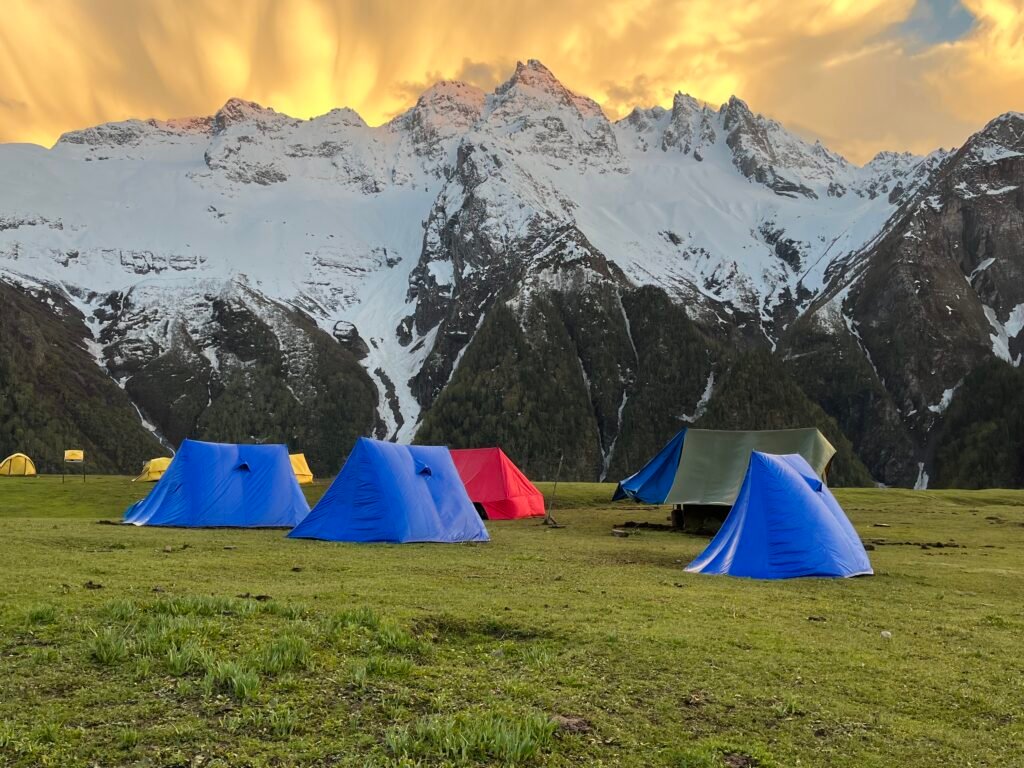
The campsite here is one of the most atmospheric on the route. Camping beside a frozen lake named for the creator of the universe, with snow settling silently on the branches above your tent, is the kind of experience that defines why people choose winter treks over any other season.
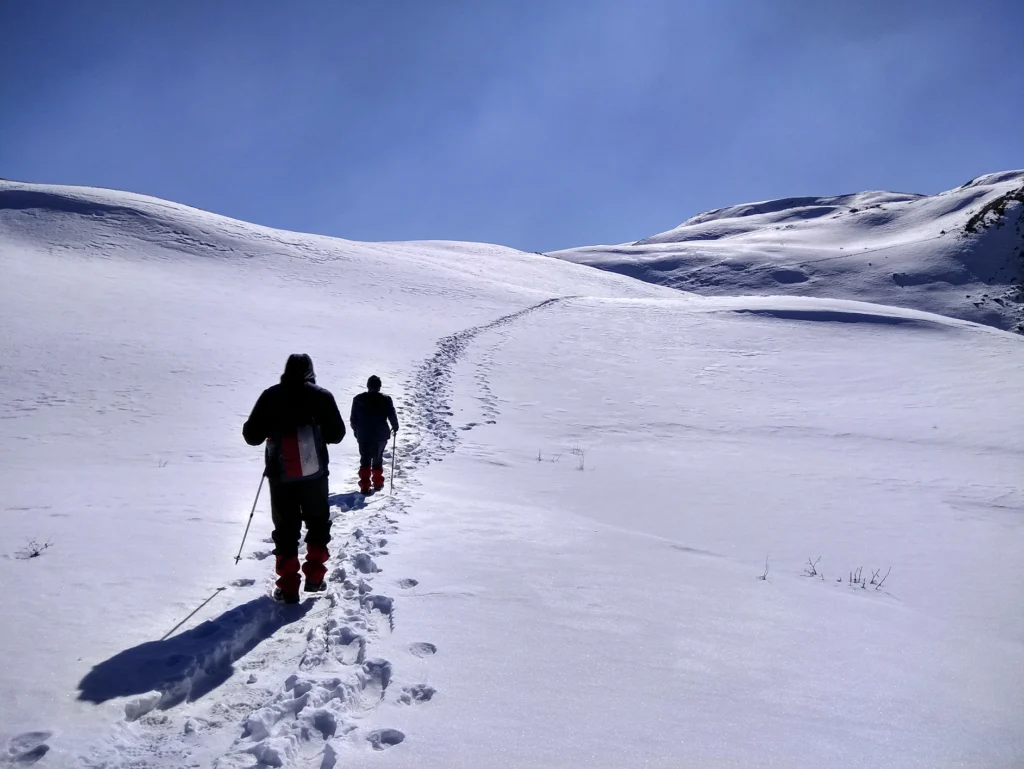
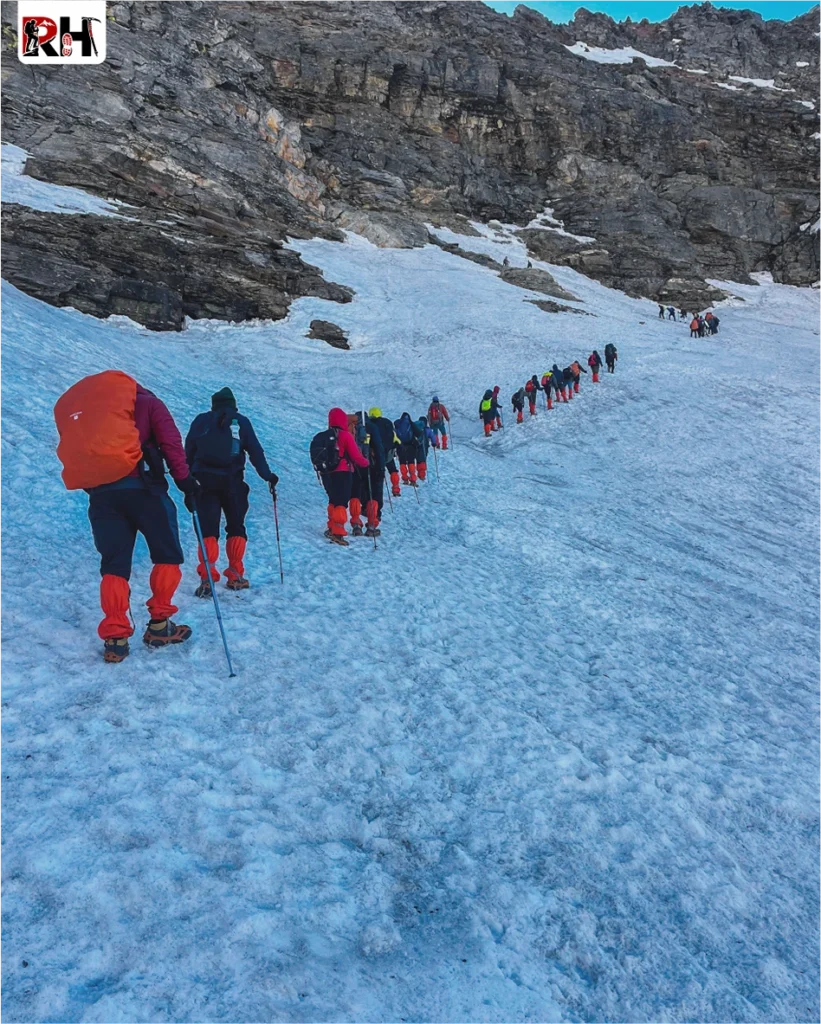
This is the day the forest finally gives way completely to open mountain terrain. Leave camp in the morning once temperatures have eased slightly from the overnight low. The trail climbs out of the trees almost immediately, into open snowfields that stretch toward the summit ridge above. The summit day involves roughly 1,755 feet of steep climbing, the second most demanding section of the entire trek after Day 2’s opening ascent.
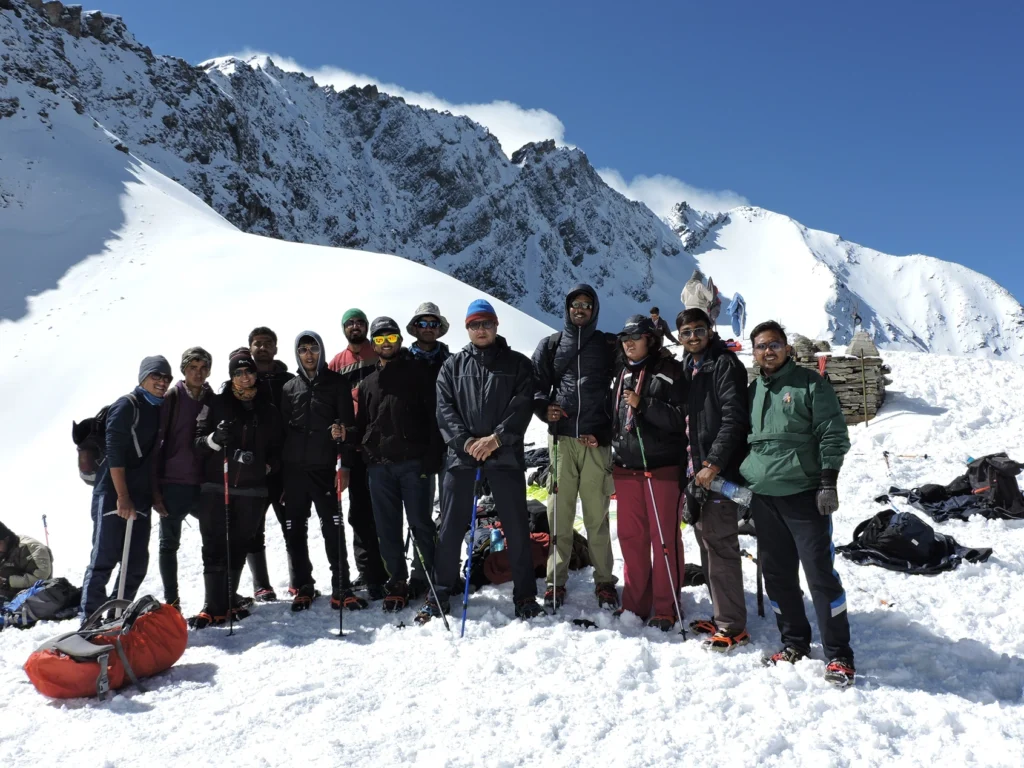
In winter, this section is genuinely beautiful: wide, untouched snowfields, blue sky, and the gradual reveal of peaks that have been hidden behind ridgelines for the past two days. The climb is steady, the gradient noticeable but manageable, and the lack of trees means the views expand with every hundred feet gained.
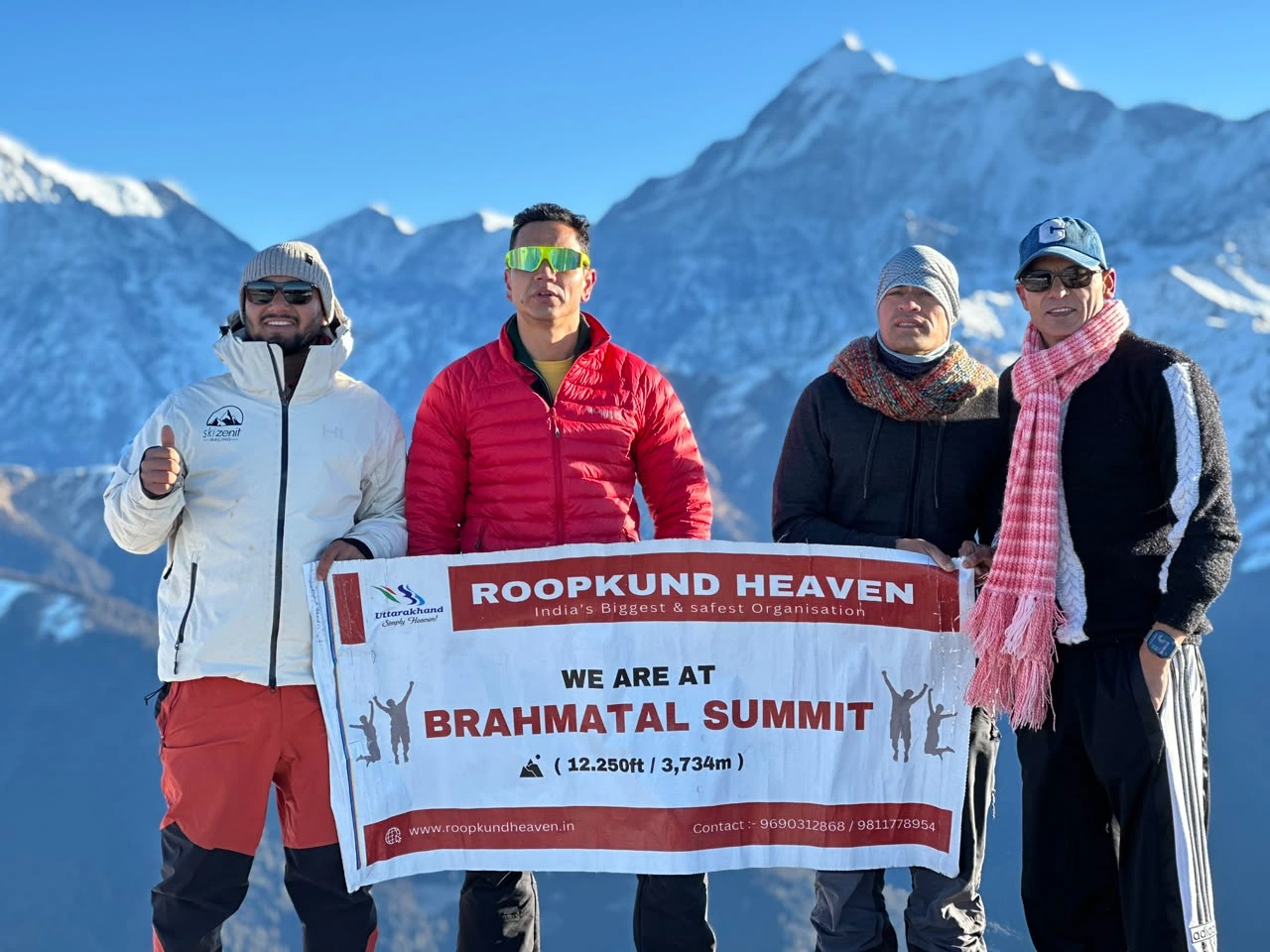
After roughly 3 kilometres of climbing, you reach Brahmatal Top at 12,250 feet. And the view that opens here is the reason this trek has built its reputation.
Mt. Trishul rises directly ahead, its three sharp summits unmistakable against the sky. Nanda Ghunti stands nearby, equally commanding. Mt. Khamet and the wider sweep of the Garhwal Himalayas extend across the horizon. Below, the route you have walked for three days, the frozen lakes, the forests, the village of Lohajung, all reduced to a thin green and white line far beneath the ridge.
Stay as long as the cold allows. Then descend the same trail back through the snowfields to Brahmatal Lake. Arrive at camp by early afternoon. Rest. The hardest section of the entire trek is now behind you.
The descent retraces the trail from Days 2 and 3 in reverse, passing back through Gujreni and Bekaltal before arriving at Lohajung. Downhill walking on snow and forest trail requires care, particularly on the steep section near Lohajung that gave you trouble on the way up and will test your knees on the way down.
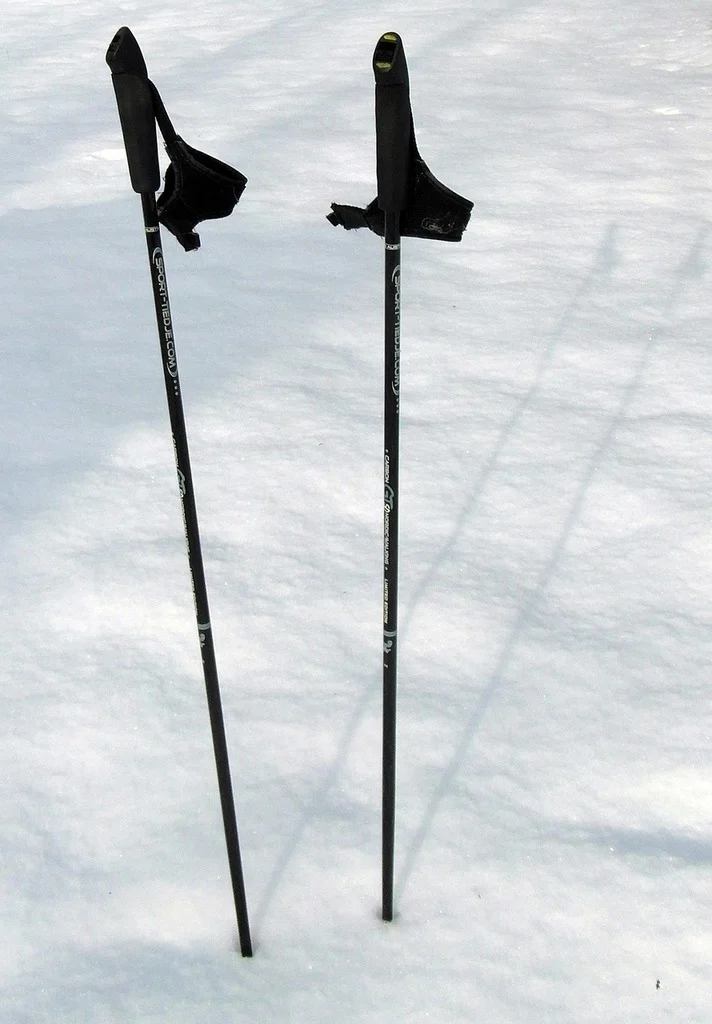
Use trekking poles. Take the steep sections slowly. After roughly 7 kilometres and 5 hours, Lohajung comes back into view. Arrive by early evening. Check into your guesthouse, shower, eat a proper hot meal, and rest. Tomorrow is the long drive home.
The final day reverses the Day 1 drive: Lohajung to Karnaprayag, Rudraprayag, Devprayag, and into Rishikesh by evening. Arrive in Rishikesh by early evening, depending on road conditions. Book onward travel with at least a 2-hour buffer for delays.
The Brahmatal Trek is over. But the memory of a frozen lake named for the creator of the universe, ringed by snow-laden oak forest, with Trishul rising above it all, tends to stay with people far longer than the trek’s modest difficulty rating would suggest.
Inclusion & exclusion
This section includes complete details about accommodation, meals, permits, transportation, camping equipment, trek leadership, and support services included in the Brahmatal Trek package, along with personal expenses and services that are not covered in the overall trek cost.
Inclusions
Exclusions
- Bag Offloading Charges: ₹1,600 per bag
- Maximum Weight Limit: Each offloaded bag should not exceed 10 kg
Best Time to Visit Brahmatal Trek
Brahmatal holds a distinct advantage over most Himalayan treks: it stays open and enjoyable across two very different seasons, and the experience changes substantially depending on which one you choose.
December to February: Peak Winter Season
This is the definitive Brahmatal experience and the reason the trek is famous. During the winter season, the entire trail is blanketed in pristine snow, presenting an ethereal landscape that resembles a winter wonderland.
Both Bekaltal and Brahmatal lakes freeze completely. Daytime temperatures range between 8°C and 15°C, while night temperatures fall to around 0°C to -7°C at lower camps, dropping further at higher elevations. The forest sections become genuinely magical, snow-laden branches, silent white paths, and a stillness that only winter forest produces. Winter months from December to January see daytime temperatures of -2°C to 5°C and nights of -12°C to -5°C at the higher camps near the summit approach.
This is also, somewhat counterintuitively, one of the easier seasons for beginners specifically because the trek is designed for winter. Brahmatal is open throughout the winters when most other trekking routes are closed, making it a perfect winter trek for beginners.
Daytime temperature at Lohajung/Bekaltal: 8°C – 15°C
Night temperature at Brahmatal/summit camps: -5°C to -12°C
Snow coverage: Deep, consistent from Bekaltal onward
Crowds: High, this is peak season for Uttarakhand winter trekking
March to April: Spring Rhododendron Season
Spring, from March to April, offers clear skies and rhododendron blooms. As the winter snow begins to recede, the oak and rhododendron forests along the route burst into colour, red and pink blossoms covering hillsides that were entirely white a month earlier.
This season delivers a fundamentally different trek: greener, warmer, and more colourful, though with less snow on the lower sections. The summit area and upper snowfields typically retain snow into April, giving spring trekkers a combination of blooming forest below and snow-covered summit terrain above.
Daytime temperature at lower camps: 10°C – 15°C
Night temperature at higher camps: 0°C – 7°C
Snow coverage: Reduced at lower elevations, present near summit
Crowds: Moderate
October to November: Autumn Clear Skies
The recommended time to go on this trek, according to some operators, is between October and November, when you witness stunning views and enjoy clear skies and unobstructed views. This window offers excellent visibility of Trishul and Nanda Ghunti without the deep snow of winter, suitable for trekkers who prioritize clear mountain photography over the snow experience itself.
Crowds: Low to moderate
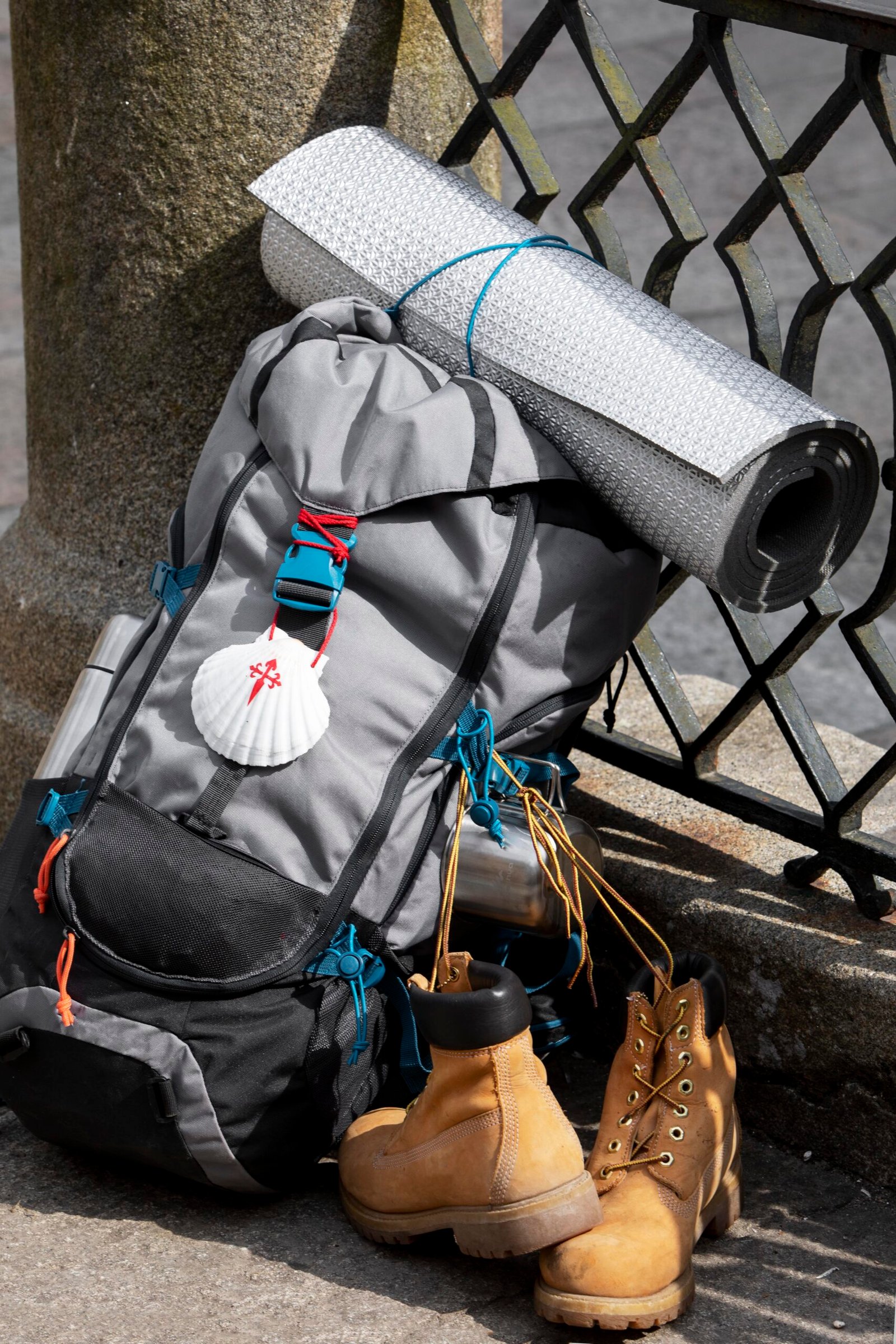
Things to Carry
Pack primarily for winter, even if your trek dates fall in spring. Night temperatures at the higher camps drop well below freezing in nearly every month the trek operates.
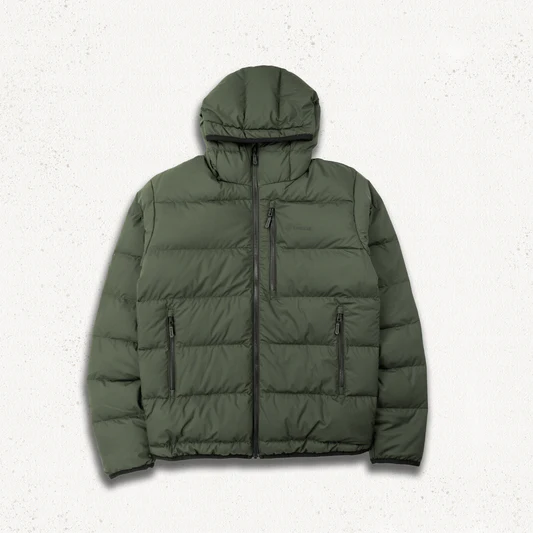
Clothing
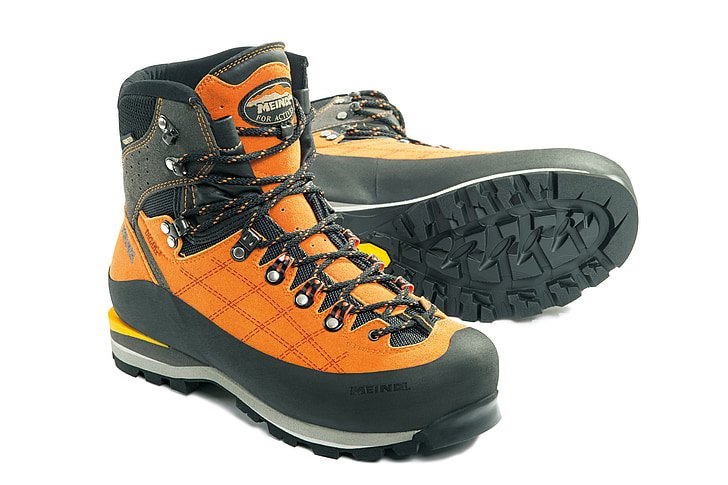
Footwear
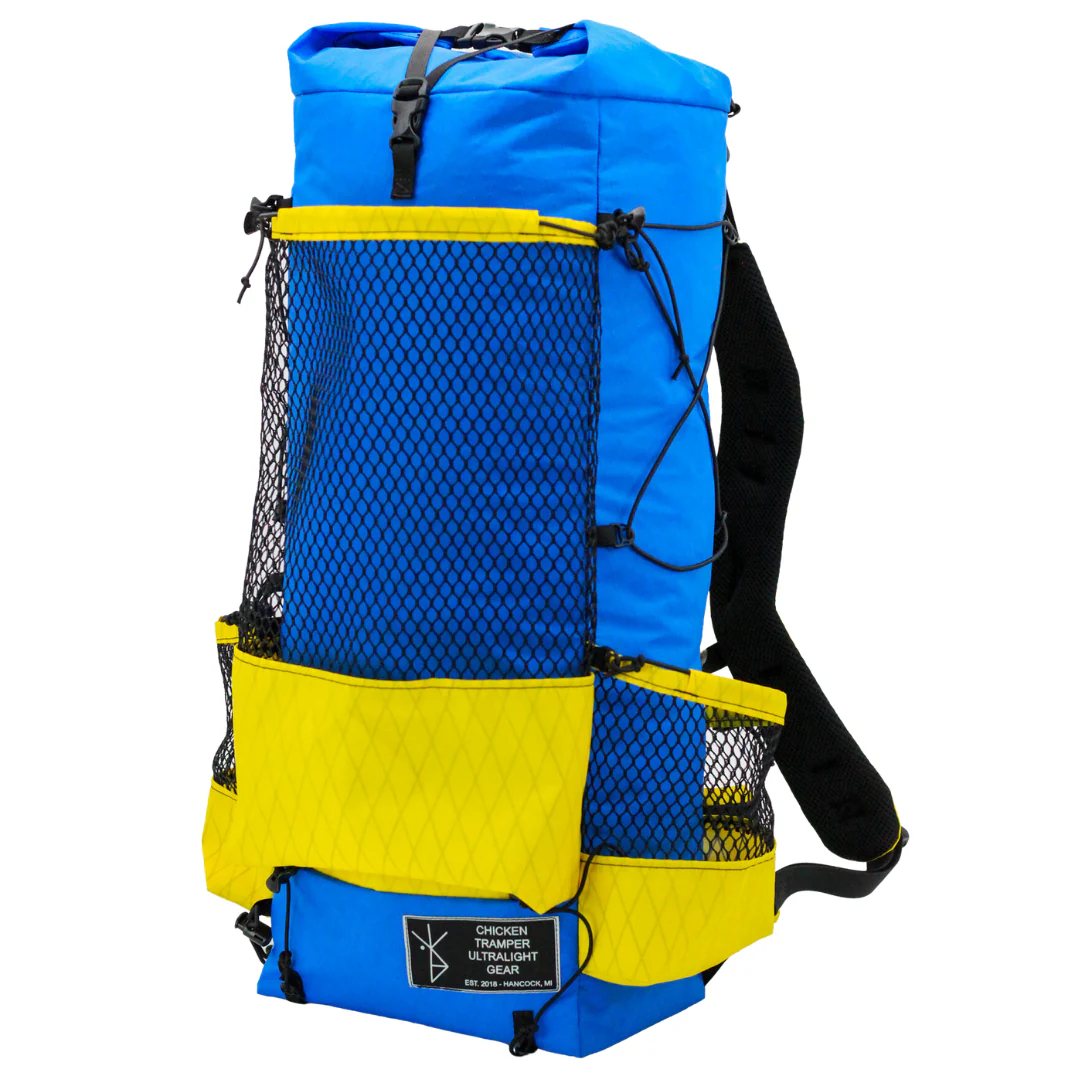
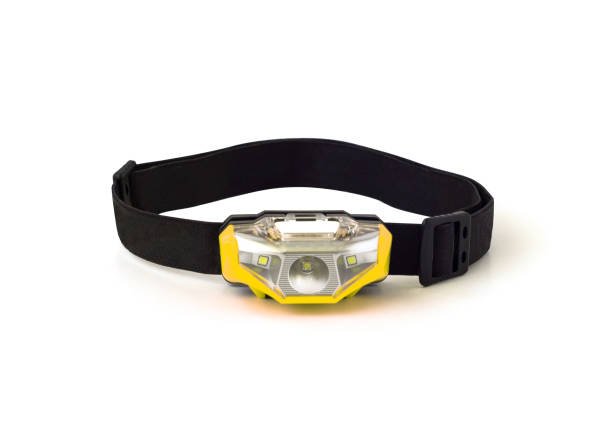
Equipment
Health & Hygiene
Documents & Finance
How to Reach Brahmatal Trek Base Camp
The Brahmatal Trek starts from Lohajung village in Uttarakhand’s Chamoli district. Rishikesh is the main transit hub.
Reach Dehradun
By Air: The nearest airport is Jolly Grant Airport in Dehradun, 21 km from Rishikesh. From the airport, take a taxi or pre-paid cab to Rishikesh (45 minutes).
By Train: Rishikesh Railway Station and Haridwar Junction (24 km from Rishikesh) are well-connected to Delhi, Mumbai, Kolkata, and other major cities.
By Road: Direct UPSRTC and private Volvo buses connect Rishikesh to Delhi (240 km, 6-7 hours), Dehradun (45 km, 1.5 hours), and Haridwar (24 km, 1 hour).
Policy
| Policy Point | Details |
|---|---|
| Booking Confirmation | Your seat is considered confirmed only after the required advance payment is received. |
| Balance Payment | The remaining amount must be cleared before departure or as per the reporting instructions shared by the team. |
| Transport Selection | Pickup from Dehradun is applicable only if that option is selected at the time of booking. |
| ID Requirement | Every participant should carry a valid government photo ID for verification and trek administration. |
| Operational Changes | In case of weather, road, or safety concerns, the itinerary may be adjusted for the well-being of the group. |
| Cancellation Window | Charge / Refund |
|---|---|
| More than 30 days before departure | Minimal processing deduction may apply; remaining amount can be refunded or adjusted as per booking terms. |
| 15 to 30 days before departure | Partial cancellation charge applicable; remaining balance may be refunded or transferred to a future batch if approved. |
| 7 to 14 days before departure | Higher cancellation charge applies because transport, permits, and staffing arrangements are usually already blocked. |
| Less than 7 days before departure | Booking is generally non-refundable due to final operational commitments. |
| No show / Trek departure missed | No refund is usually applicable once reporting is missed without prior written coordination. |
Important: Trek departures and route decisions always remain subject to weather, road access, local administration, and safety conditions. Final operational decisions are taken in the interest of the group.
FAQ's
Brahmatal is a notch less difficult than easy-moderate treks like Kedarkantha. It is considered easy to moderate in terms of difficulty. There is no technical climbing involved, and most sections have gentle inclines, suitable for first-timers. The main challenges are the steep climb on Day 2 and the summit push on Day 4, both manageable with reasonable fitness.
The maximum altitude is 12,250 feet (3,734 meters) at Brahmatal Top. Brahmatal Lake itself sits at 10,190 feet. Base camp at Lohajung is at approximately 7,600 ft.
December to February for snow lovers, or spring from March to May when the trail is filled with blooming rhododendrons. October-November offers the clearest skies with less snow. Avoid July-August (monsoon, slippery trails, heavy rainfall).
6 days from Rishikesh to Rishikesh, including travel days. The actual trekking happens over 4 days (Days 2-5), covering roughly 24 km. Add 1 buffer day for potential weather or road delays.
Starts and ends at Lohajung village, reached by 9-hour road journey from Rishikesh. This is an out-and-back trek, returning via the same general route through Bekaltal.
Yes. It is easy to moderate in difficulty, suitable for beginners with average fitness, and is one of the most beginner-friendly winter treks in Uttarakhand. A simple regimen of walking, stair climbing, and cardio in the weeks before the trek is sufficient preparation.
Two glacial lakes (Bekaltal and Brahmatal) with mythology tied to Lord Brahma; views of Mt. Trishul and Nanda Ghunti from Brahmatal Top at 12,250 ft; ancient oak and rhododendron forests rich in birdlife; deep winter snowfields from December to February; and a genuine summit experience without technical difficulty.
Daytime temperatures during winter months range between 8°C and 15°C, while night temperatures fall to around 0°C to -7°C at lower camps. At higher camps in December-January, daytime temperatures range from -2°C to 5°C, with nights between -12°C and -5°C. Full winter layering including a down jacket is essential.
Mild acclimatization happens naturally as you ascend from Lohajung (7,600 ft) to Bekaltal (9,000 ft) to Brahmatal Lake (10,190 ft) over two days before the summit push to 12,250 ft. Trekkers may experience mild symptoms of altitude sickness near the highest point, but the gradual gain makes serious AMS uncommon. Drink 3-4 litres of water daily and report any symptoms to your trek leader.
Network works in Lohajung. Beyond that, assume no network for 4 days. Download offline maps before leaving Rishikesh.
Indian nationals: Forest entry permits are required and included in most trek packages. Foreign nationals: Check with local authorities for any additional permits required.
Brahmatal is a high-altitude glacial lake at 10,190 ft, believed in local mythology to be the site where Lord Brahma, the Hindu god of creation, meditated. The lake freezes solid in winter and is the namesake and spiritual centrepiece of the entire trek.
Both are beginner-friendly winter treks in similar regions of Uttarakhand. Brahmatal is a notch less difficult than Kedarkantha, with a gentler, more evenly distributed altitude gain. The overall climb is shorter than Kedarkantha, and the terrain is more predictable than Kuari Pass. Brahmatal offers two lakes and a forest-heavy experience, while Kedarkantha is built more singularly around its summit sunrise.
Solo trekking is not recommended. The upper sections in winter involve deep snow and remote terrain with no emergency services nearby. Organised group treks with experienced leaders and proper winter gear are the safer and more responsible way to do this trek.
Rental gear for this trek