Buran Ghati and Rupin Pass are two beautiful high-altitude treks in Himachal Pradesh. Both offer snow, forests, meadows, steep climbs, mountain views and a high-altitude pass crossing.
However, the trail experience is different on both treks. In this guide, we compare both treks so you can easily decide which trek you should do first.
Buran Ghati vs Rupin Pass at a Glance
Here is a quick comparison of Rupin Pass and Buran Ghati based on altitude, duration, difficulty, route and the overall trek experience.
| Trek Details | Rupin Pass | Buran Ghati |
| Highest Point | Around 15,250 ft | Around 15,000 ft |
| Base / Starting Point | Jiskun | Janglik |
| Best Time | May–June & September–October | May–June & September–October |
| Trek Type | Crossover Trek | Crossover Trek |
| Duration | 6 Nights / 7 Days | 6 Nights / 7 Days |
| Difficulty | Difficult | Moderate to Difficult |
| Main Highlights | Rupin Waterfalls, snowfields, Rupin Gully | Buran Ghati Pass, meadows, Chandranahan Lake |
| Terrain | Villages, forests, river crossings, waterfalls, snowfields and gully sections | Forests, meadows, rocky sections, snow and boulders |
| Best For | Trekkers looking for varied terrain and a challenging multi-day trek | Trekkers looking for meadows, snow and a strong pass-crossing experience |
| Beginner Suitability | Better with previous Himalayan trekking experience | Suitable for fit and well-prepared beginners |
| Starting Price | ₹14,500 | ₹13,000 |
Both treks reach around 15,000 ft and take about a week to complete. The main difference is not just altitude. The terrain, steep sections, snow conditions, pass crossing and overall walking effort make each trek feel different.
Rupin Pass offers a changing landscape with villages, forests, waterfalls, snowfields and the famous Rupin Gully. Buran Ghati combines forests, open meadows, snow sections and the Buran Ghati pass, along with Chandranahan Lake.
The Trails Difference Between Buran Ghati and Rupin Pass
The easiest way to understand the difference is to look at what you will actually walk through during the trek.
What the Buran Ghati Trail Feels Like
The Buran Ghati Trek starts from Janglik and takes you through oak and pine forests, wide meadows, high-altitude lakes, rocky sections and snow-covered areas.
The early part of the trek is relatively pleasant, with forest trails leading towards the open Dayara and Litham meadows. As you gain altitude, the landscape becomes wider, with large alpine meadows and mountain views around you.
One of the main highlights is Chandranahan Lake, which sits in a high-altitude setting surrounded by mountains. From here, the trail gradually becomes more challenging as you move towards Buran Ghati Pass at around 15,000 ft.
The pass section is steep and can have snow, rocks and boulders, depending on the season. The descent from the pass is also a major part of the adventure, with steep sections that may require extra care and, depending on conditions and the route used, technical support such as ropes.
Overall, Buran Ghati gives you a mix of forests, huge meadows, a high-altitude lake, snow and one major pass-crossing challenge.
In short: Choose Buran Ghati if you enjoy open meadows, lakes, changing landscapes and a dramatic pass-crossing experience.
What the Rupin Pass Trail Feels Like
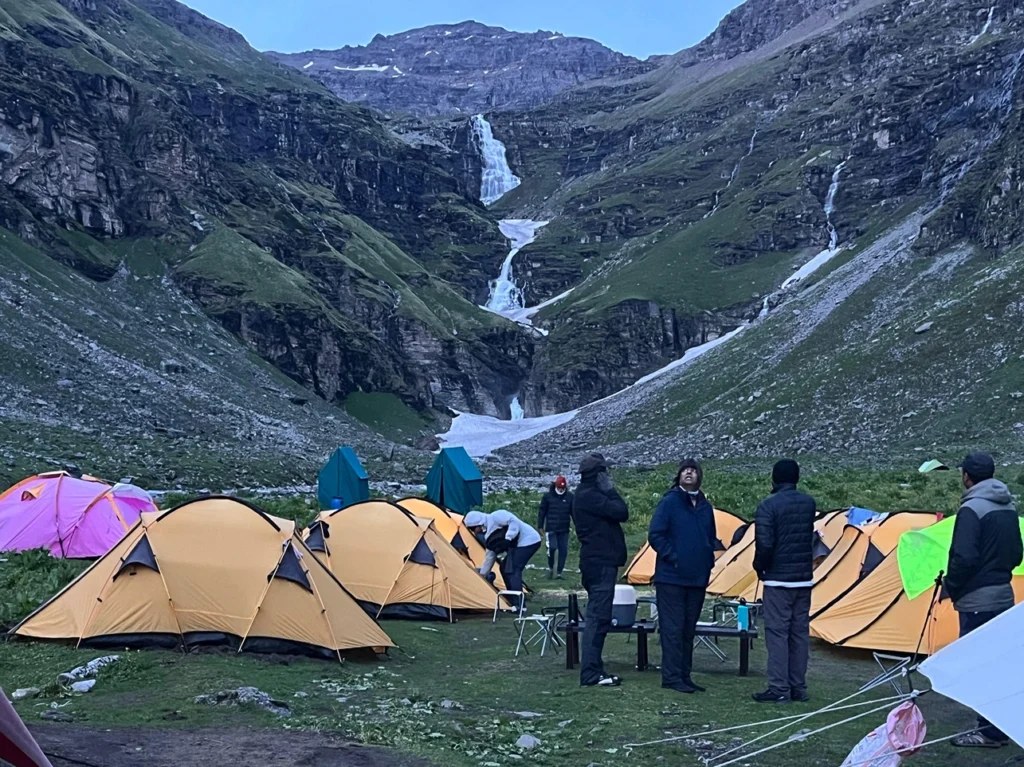
The Rupin Pass Trek starts from Dhaula/Jiskun and gradually moves from lower Himalayan villages and forests into a much more rugged high-altitude landscape.
The trail follows the Rupin River through sections of forest, rocky paths, villages and river valleys. As you climb higher, the scenery keeps changing, with waterfalls, snowfields, steep climbs and narrow sections becoming part of the route.
One of the biggest highlights is the Rupin Waterfall, where the trail passes close to the huge cascading waterfall. Higher up, the route becomes more demanding as you approach the famous Rupin Gully, a narrow and steep section leading towards the pass.
The final climb to Rupin Pass, around 15,250 ft, requires good fitness and steady pacing. After crossing the pass, the landscape changes again as you descend towards the greener Sangla/Kinnaur Valley, making the trek feel like a true crossover journey.
Overall, Rupin Pass gives you a mix of villages, forests, rivers, waterfalls, snowfields, steep climbs and the famous Rupin Gully.
In short: Choose Rupin Pass if you enjoy constantly changing terrain, dramatic waterfalls, steep sections and a more rugged crossover experience.
The Main Trail Difference
The difference is not simply about which trek is higher or harder. It is mainly about the type of terrain and the kind of trekking experience you want.
Which Trek Is More Difficult?
Both treks reach around 15,000 ft, so both require good fitness and preparation. The main difference is how the difficulty is spread across the trek.
Buran Ghati Trek Difficulty
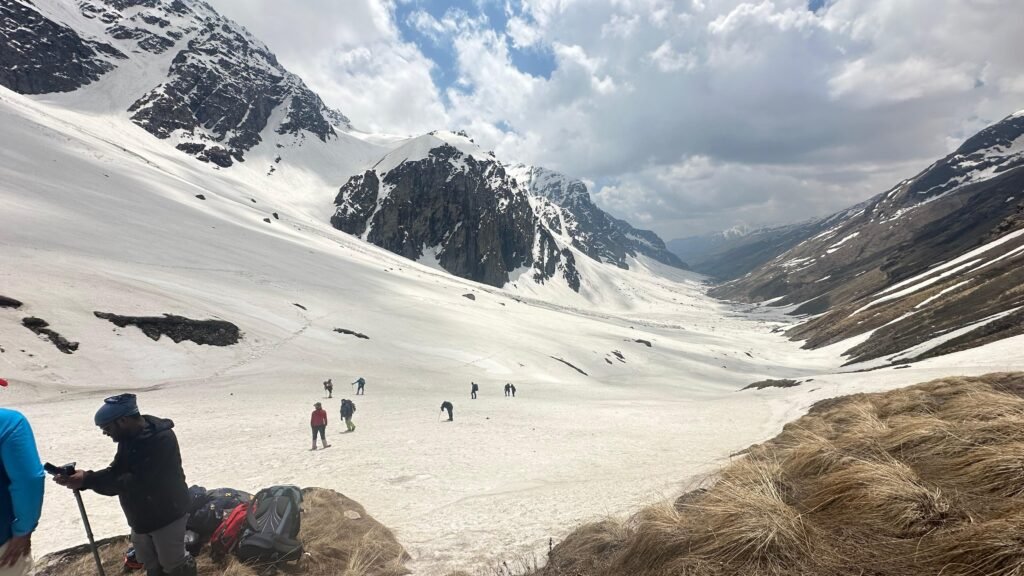
Buran Ghati is easier on the legs compared to Rupin Pass, making it a good option for a fit trekker moving towards high-altitude pass treks. However, starting at around 9,000 ft and climbing to about 15,000 ft means you still need to prepare properly for the altitude.
The main challenges include:
- High altitude
- Steep climbs
- Boulder sections near the pass
- Snow in the summer season
- Long pass-crossing day
- Steep descent after the pass
- Cold conditions at higher camps
The Buran Ghati Pass is the toughest part of the trek. The trail becomes steeper as you approach the pass, followed by a challenging descent on the other side. In May and June, snow can make the pass section more difficult. In September and October, most of the snow usually melts, so you may find more rocks and boulders instead.
Depending on the snow and trail conditions, ropes and technical support may be used on some steep sections. The famous snow-wall descent is mainly seen during the summer snow season, while the autumn route is generally more rocky.
For preparation, give yourself at least a month of regular fitness training. Focus on walking, uphill climbs, cardio and leg strength, and make sure you are comfortable walking for several hours with a backpack.
Rupin Pass Trek Difficulty
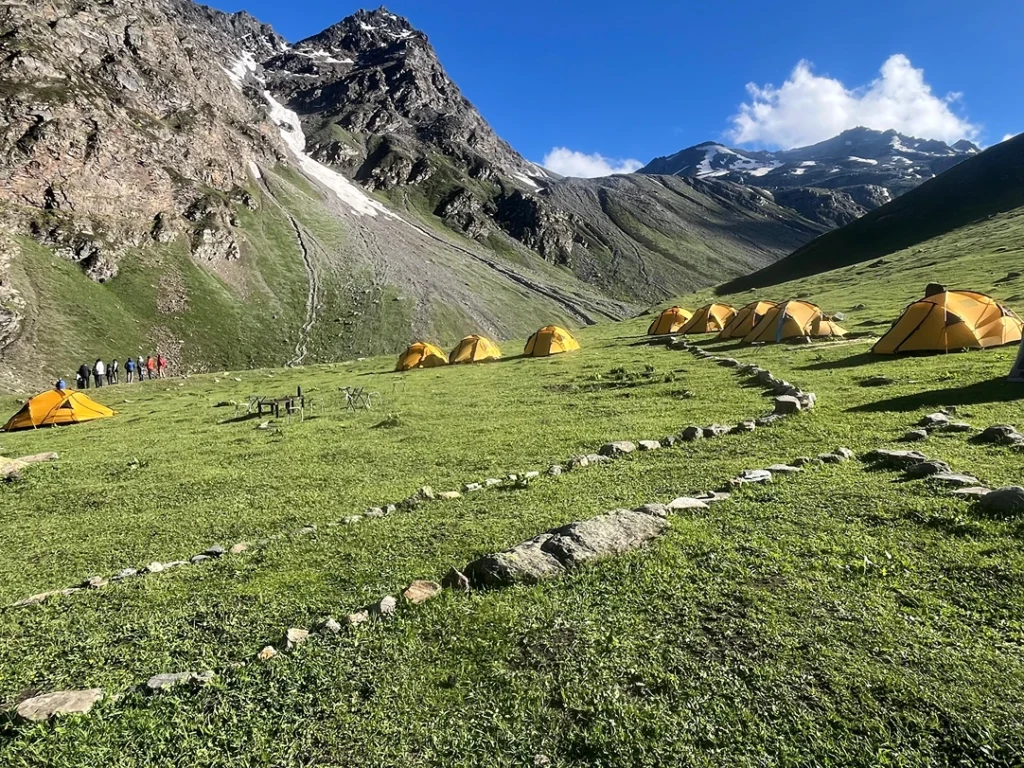
Rupin Pass is a moderate to difficult trek and requires good fitness and endurance. The trail has steep climbs, rocky and boulder sections, river crossings, waterfalls, snowfields and the steep Rupin Gully.
The main challenges are:
- Long walking days
- Steep climbs
- Rocky and boulder sections
- River crossings
- Snow on higher sections in May and June
- The steep Rupin Gully
- A long pass-crossing day
- Cold nights at higher camps
The Rupin Gully and pass-crossing day are among the hardest parts of the trek. The trail becomes very steep after the waterfall sections and continues towards Rupin Pass at around 15,250 ft. The pass-crossing day can take several hours, so good stamina and steady pacing are important.
The difficulty also changes with the season. In May and June, snow can cover the higher sections and make the climb more challenging. In September and October, there is usually less snow, but you may encounter stronger water flow, rocky trails and uneven sections.
We recommend preparing for at least two months before Rupin Pass. We also suggest this trek to trekkers who have completed at least one Himalayan trek before and are comfortable with sustained walking at high altitude.
Which Has More Adventure?
Both Buran Ghati Trek and Rupin Pass Trek offer great adventure. The better choice depends on what kind of adventure you enjoy most. Here is what you can expect.
Buran Ghati Trek Adventure
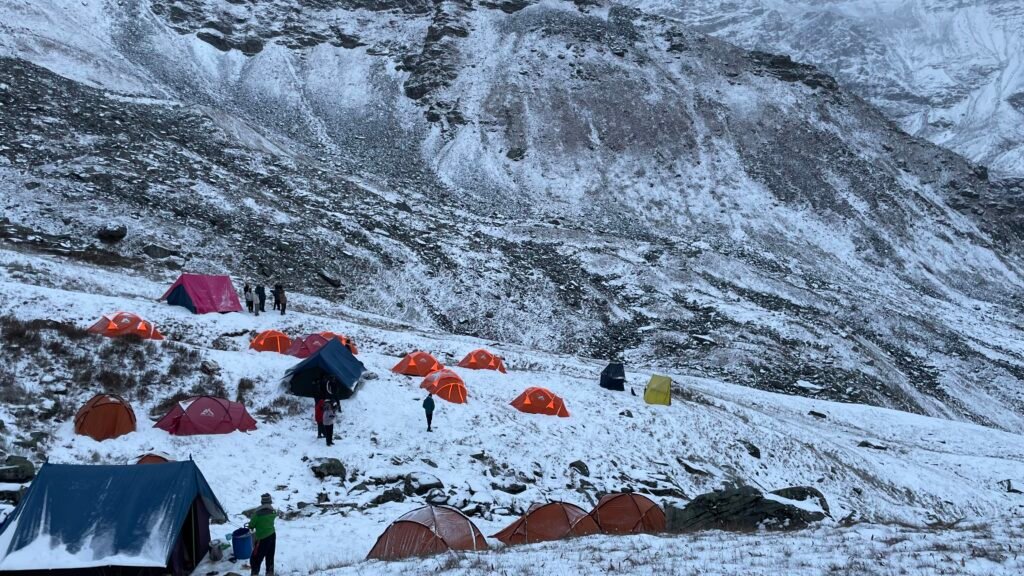
Buran Ghati Trek becomes more adventurous as you gain altitude. The trek takes you through forests, wide meadows, Chandranahan Lake, rocky sections, snow and the Buran Ghati Pass.
- Janglik to Dayara: The trek starts through forest trails and village paths. As you climb, the forest gradually opens into the wide Dayara meadows.
- Dayara Meadows: You walk through large open grasslands with wide mountain views. This is one of the more comfortable and scenic sections of the trek.
- Dayara to Litham: The trail continues through open meadows and changing mountain landscapes before reaching Litham.
- Chandranahan Lake: The route to the lake becomes more challenging, with steep climbs and rocky sections. The lake sits in a beautiful high-altitude setting surrounded by mountains.
- Litham to Dhunda: As you move higher, the trail becomes colder, rockier and more rugged. The open meadow sections slowly give way to high-altitude terrain.
- Snow and Ice Wall: In May and June, snow can remain around Buran Ghati. When conditions allow, the famous snow-wall section can be one of the most exciting parts of the trek. Ropes and harnesses may be used on steep sections when required.
- Buran Ghati Pass: The biggest challenge comes at Buran Ghati Pass, around 15,000 ft. The climb is steep, and the high altitude adds to the difficulty.
- Pass Descent: After crossing the pass, you face a steep and rocky descent. In September and October, when most of the snow has melted, loose rocks and boulders are more common.
- Barua Valley: The trail then descends towards Barua Valley, where the landscape becomes greener and the mountain setting changes into forests and village surroundings.
Overall, Buran Ghati combines forests, wide meadows, Chandranahan Lake, rocky high-altitude terrain, snow, Buran Ghati Pass and the descent into Barua Valley.
The main adventure comes in the higher sections, especially around Chandranahan Lake and Buran Ghati Pass.
Rupin Pass Adventure
Rupin Pass offers a different adventure at almost every section of the trek. The trail keeps changing as you move from villages and forests to rivers, waterfalls, rocky sections, snowfields and the steep Rupin Gully.
- Villages and Forests: The trek starts through mountain villages and forest trails, giving you an easy start before the trail becomes more challenging.
- Rupin River: As you climb higher, you follow the Rupin River through rocky sections and narrow mountain paths.
- Rupin Waterfall: The famous Rupin Waterfall is one of the main highlights. The trail takes you close to the waterfall before climbing towards the higher camps.
- Rocky Sections: After the waterfall, the trail becomes steeper, with boulders, rocks and uneven paths that require careful walking.
- Snow and Snow Bridges: In May and June, snow can cover the higher sections. Snow bridges may also form over water channels, making these sections more challenging.
- Rupin Gully: The Rupin Gully is one of the toughest parts of the trek. It is steep and narrow, so you need good fitness, balance and a steady pace.
- Rupin Pass: The final climb takes you to Rupin Pass at around 15,250 ft. By this point, the previous days of walking also add to the challenge.
- Descent to Sangla: After crossing the pass, the landscape changes again as you descend towards the Kinnaur side and Sangla Valley.
Overall, Rupin Pass combines villages, forests, rivers, waterfalls, rocky trails, snow, steep climbs and a high-altitude pass crossing.
The main difference is that the adventure continues throughout the trek. You face different types of terrain on different days, rather than having one single difficult section.
Which Trek Is Better for Beginners?
A fit and well-prepared beginner can do both Buran Ghati and Rupin Pass, but neither is an easy trek. Both reach around 15,000 ft and include long walking days, steep climbs, uneven trails and several days of trekking.
Buran Ghati may be more manageable for a first high-altitude trek because much of the route passes through forests and open meadows, while the main challenge comes around the higher sections and Buran Ghati Pass. Rupin Pass can feel harder because the trail changes often, with rocky paths, river crossings, waterfalls, snow and the steep Rupin Gully.
Consider Buran Ghati if:
- This is your first high-altitude trek
- You can walk for 6–8 hours when needed
- You are comfortable walking on steep and uneven trails
- You can trek for several days in a row
- You have trained before the trek
Rupin Pass is also possible for a fit beginner, but you should have good stamina and be comfortable with rocky and changing trails. Previous trekking experience is helpful, but it is not compulsory.
In May and June, snow can make the higher sections of both treks more challenging. In September and October, there is generally less snow, but you should still be prepared for rocky, uneven and steep sections.
In short: If you are fit, well trained and comfortable with high-altitude trekking, you can choose either trek. For your first 15,000-ft trek, Buran Ghati may feel more manageable, while Rupin Pass is better if you are ready for longer and more varied terrain.
Which Is Better for May and June?
May and June are important months for both treks because snow can remain on the higher sections.
Buran Ghati in May and June
Buran Ghati is a great choice if you want snow, green meadows, forests and a high-altitude pass crossing. The lower sections are warmer and greener, while the higher areas remain cold and snowy.
At lower camps such as Janglik and Dayara, daytime temperatures can be around 15°C to 20°C, while nights may drop to 5°C to 8°C. At higher camps near Litham, Dhunda and Buran Ghati Pass, daytime temperatures can be around 5°C to 10°C, while nights may fall to around 0°C to -5°C, depending on the weather.
You can expect snow-covered higher sections, cold mornings, snowy slopes and beautiful views of the surrounding mountains. The famous snow-wall section near Buran Ghati can also remain in May and early June, depending on the year’s snowfall.
Main highlights:
- Green forests and Dayara meadows
- Snow-covered higher sections
- Chandranahan Lake
- Buran Ghati Pass
- Snow-wall sections when conditions allow
- Wide Himalayan views
In short: May and June are a good time for a mix of green landscapes and snow, with the best snow usually found on the higher sections.
Rupin Pass in May and June
Rupin Pass offers a mix of snow, forests, rivers, waterfalls and rocky trails in May and June. The lower sections are warmer, while temperatures drop quickly as you climb higher.
At lower camps, daytime temperatures can reach around 20°C to 28°C. At higher camps near the waterfall, Rupin Gully and the pass, daytime temperatures can be around 3°C to 8°C, while nights can drop to around -2°C to -7°C.
Snow can remain around the Rupin Gully and Rupin Pass, and melting snow can create snow bridges, wet rocks and soft snow sections. The famous Rupin Waterfall can also have strong water flow during this period.
Main highlights:
- Mountain villages and forests
- Rupin River
- Rupin Waterfall
- Snow bridges and snowfields when conditions allow
- Rupin Gully
- Rupin Pass at around 15,250 ft
- Views towards Kinnaur and Sangla Valley
In short: May and June are a good time for a snow-filled Rupin Pass experience, but be prepared for cold temperatures, wet trails and changing snow conditions.
Which Is Better for September and October?
Post-monsoon trekking changes the character of both routes.
For Buran Ghati, September and October are generally considered strong trekking months. The monsoon has moved away, the weather can become clearer and the large summer snow sections are usually gone. The pass area can instead involve rocky and boulder terrain.
Buran Ghati in September and October
September and October offer a different experience from the summer snow season. The snow usually melts from most lower and middle sections, leaving greener landscapes, clearer mountain views and more rocky trails.
In September, daytime temperatures at lower camps can be around 12°C to 18°C, while nights may drop to around 5°C to 10°C. At higher camps, temperatures can fall to around 0°C to 5°C at night.
In October, the weather becomes colder. Daytime temperatures at higher camps can be around 5°C to 12°C, while nights can drop to around -2°C to 3°C. The exact temperature depends on altitude and weather conditions.
Trail conditions:
The trail is usually more rocky and bouldery than in the snow season. Some sections can still be wet or slippery after rain, especially in early September. As October progresses, trails are generally drier, but the higher sections become colder.
What to expect:
- Green landscapes in September
- Clearer mountain views
- Cooler mornings and nights
- Less snow around Buran Ghati Pass
- Rocky and boulder sections
- Autumn colours towards October
- Colder nights at higher camps
In short: September is a good time for green landscapes and pleasant trekking conditions, while October brings cooler weather, clearer views and early autumn colours. Carry warm layers for both months, especially for nights at higher camps.
Rupin Pass in September and October
September and October offer a different experience from the May–June snow season. After the monsoon, the weather usually becomes cooler and the mountain views can become clearer. The higher trail is generally more rocky, while snow is usually much less than in early summer.
In September, daytime temperatures at lower camps can be around 15°C to 22°C, while nights can drop to around 5°C to 10°C. At higher camps, temperatures can fall close to 0°C at night.
In October, temperatures become colder. Higher camps can have daytime temperatures around 5°C to 12°C, while nights may drop to around -2°C to 3°C, depending on altitude and weather.
Trail conditions:
Early September can still have wet, muddy or slippery sections after the monsoon. As the season progresses, the trail usually becomes drier, but you should still expect rocks, boulders, steep climbs and uneven sections. Snow conditions will be very different from May and June, so do not expect the same snow-covered trail shown in summer photographs.
What to expect:
- Clearer mountain views after the monsoon
- Cooler days and cold nights
- Green landscapes in September
- Autumn colours towards October
- Rocky and bouldery higher sections
- Less snow than May and June
- Possible wet or slippery sections in early September
- Changing conditions around the higher sections
In short: September and October can be a beautiful time for Rupin Pass, but the experience is different from the summer snow season. Check the current route condition and trek schedule before booking, as post-monsoon conditions can vary from year to year.
Which Trek Has a Longer Walking Distance?
Both Buran Ghati and Rupin Pass are usually completed in 7 Days / 6 Nights, so the trek duration is almost the same. The main difference is the total trek distance.
- Buran Ghati Trek Distance: Around 37–42 km
- Rupin Pass Trek Distance: Around 42 km
So, Rupin Pass is slightly longer by distance, but the difference is only a few kilometres.
Final Verdict
I think the verdict is simple: you don’t really have to choose between Buran Ghati and Rupin Pass. Both offer a completely different Himalayan experience, and both leave you with memories that stay long after the trek is over.
Buran Ghati has a charm of its own. The wide meadows, forests, Chandranahan Lake, snow-covered sections and the dramatic Buran Ghati Pass keep changing the experience as you move higher. It is the kind of trek where the landscape keeps surprising you.
Rupin Pass, on the other hand, feels like a journey that keeps unfolding. You move from villages and forests to the Rupin River, waterfalls, rocky trails, snowfields and the steep Rupin Gully before finally crossing the high-altitude pass. Every stage brings something different.
If you have not done either trek yet, you don’t have to look at Buran Ghati vs Rupin Pass as a choice between two competing treks. They are different experiences, and doing both at different stages of your trekking journey lets you experience two very different sides of the Himalayas.
Whichever you choose first, prepare well, take your time and enjoy the journey.
Why Choose Roopkund Heaven as a Travel Partner?
Choosing the right trek operator matters, especially for high-altitude treks like Buran Ghati and Rupin Pass. At Roopkund Heaven, we focus on well-planned itineraries, clear pricing and reliable trek support.
Our experienced trek leaders, local guides and support staff stay with you throughout the trek. We also carry essential safety equipment such as first aid, an oximeter and oxygen, while gaiters, microspikes and ropes are provided when required.
You get clear information about the itinerary, inclusions, packing list, trek conditions and departure dates, with no hidden charges. Rental trekking gear and services such as bag offloading can also be added if needed.
Most importantly, safety comes first. Our team monitors weather and trail conditions and makes decisions based on the situation on the ground.
Good news: Bookings are officially open for our September and October 2026 batches!
Plan your trek with clear pricing, experienced support and no unnecessary hidden charges.
FAQs
Which trek is more difficult?
Rupin Pass generally feels more demanding because of its sustained walking, changing terrain, steep sections and higher-altitude challenges. Buran Ghati is also a challenging high-altitude trek.
Which trek is better for beginners?
Buran Ghati can be a better starting point for a fit and well-prepared beginner. Rupin Pass is more suitable if you already have some Himalayan trekking experience.
Which trek is longer?
Rupin Pass is slightly longer. It covers around 42 km, while Buran Ghati usually covers around 37–42 km, depending on the route and itinerary.
Which trek has more snow?
May and June usually offer more snow on both treks. Snow conditions depend on the winter snowfall and the weather that season.
Which trek has better views?
Both have beautiful views but different landscapes. Buran Ghati is known for meadows, forests and Chandranahan Lake, while Rupin Pass offers waterfalls, rivers, villages, snowfields and changing mountain scenery.
Which trek is more adventurous?
Both offer plenty of adventure. Buran Ghati is known for its dramatic pass crossing, while Rupin Pass has waterfalls, rocky sections, snowfields and the Rupin Gully.
Which trek is better in September?
Both can be good in September. Buran Ghati offers green landscapes and post-monsoon scenery, while Rupin Pass offers cooler weather, clearer views and less snow than the summer season.
Which trek is better in October?
Both offer cooler weather and clearer mountain views in October. You can also see early autumn colours, while snow is usually limited compared with May and June.
Which trek has a higher altitude?
Rupin Pass is slightly higher, reaching around 15,250 ft, while Buran Ghati reaches around 15,000 ft.
Which trek should I do first?
If you are new to high-altitude trekking, Buran Ghati may be a more manageable first choice for a fit and prepared trekker. Rupin Pass can be considered after gaining some Himalayan trekking experience.