Ali Bedni Bugyal Trek
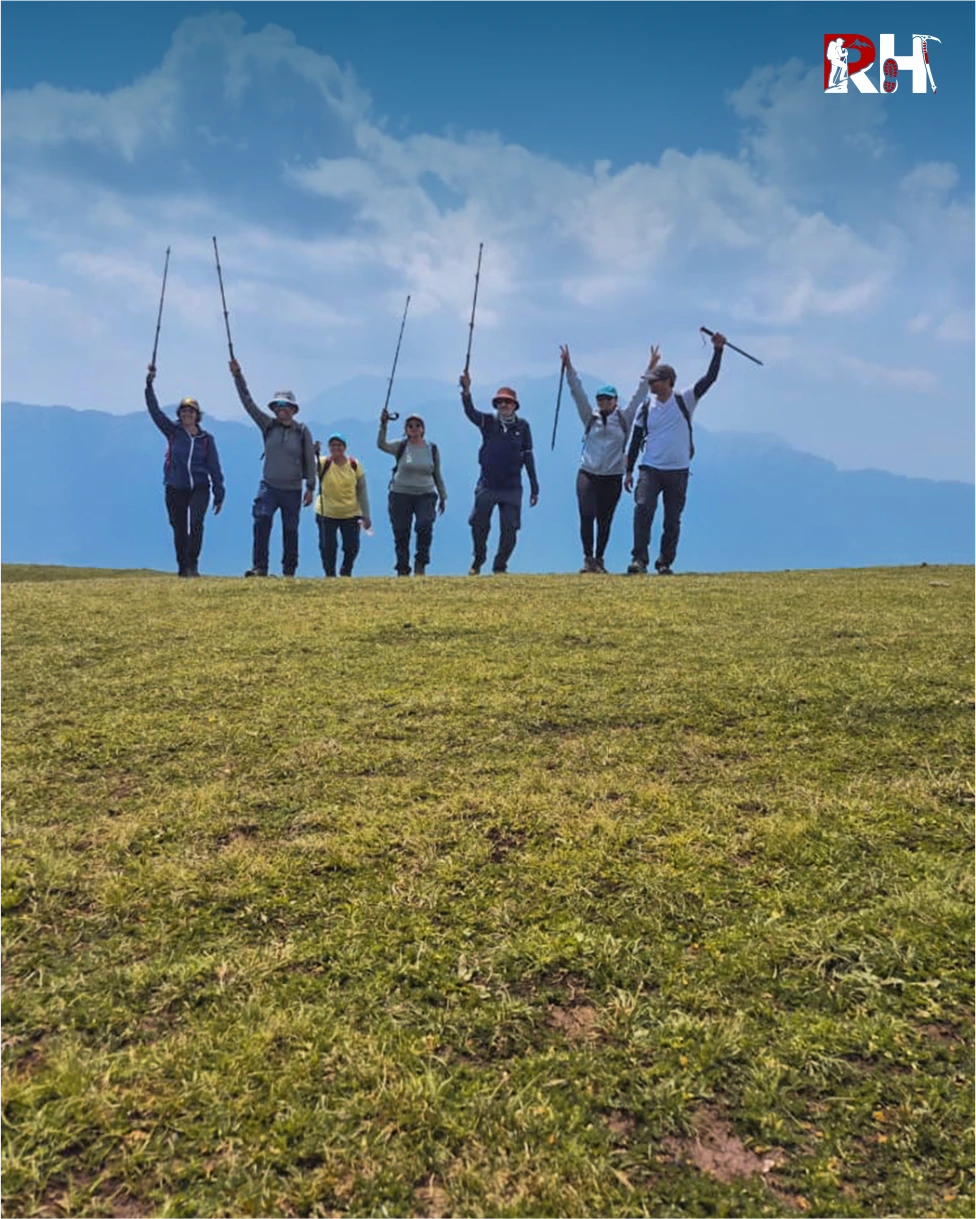
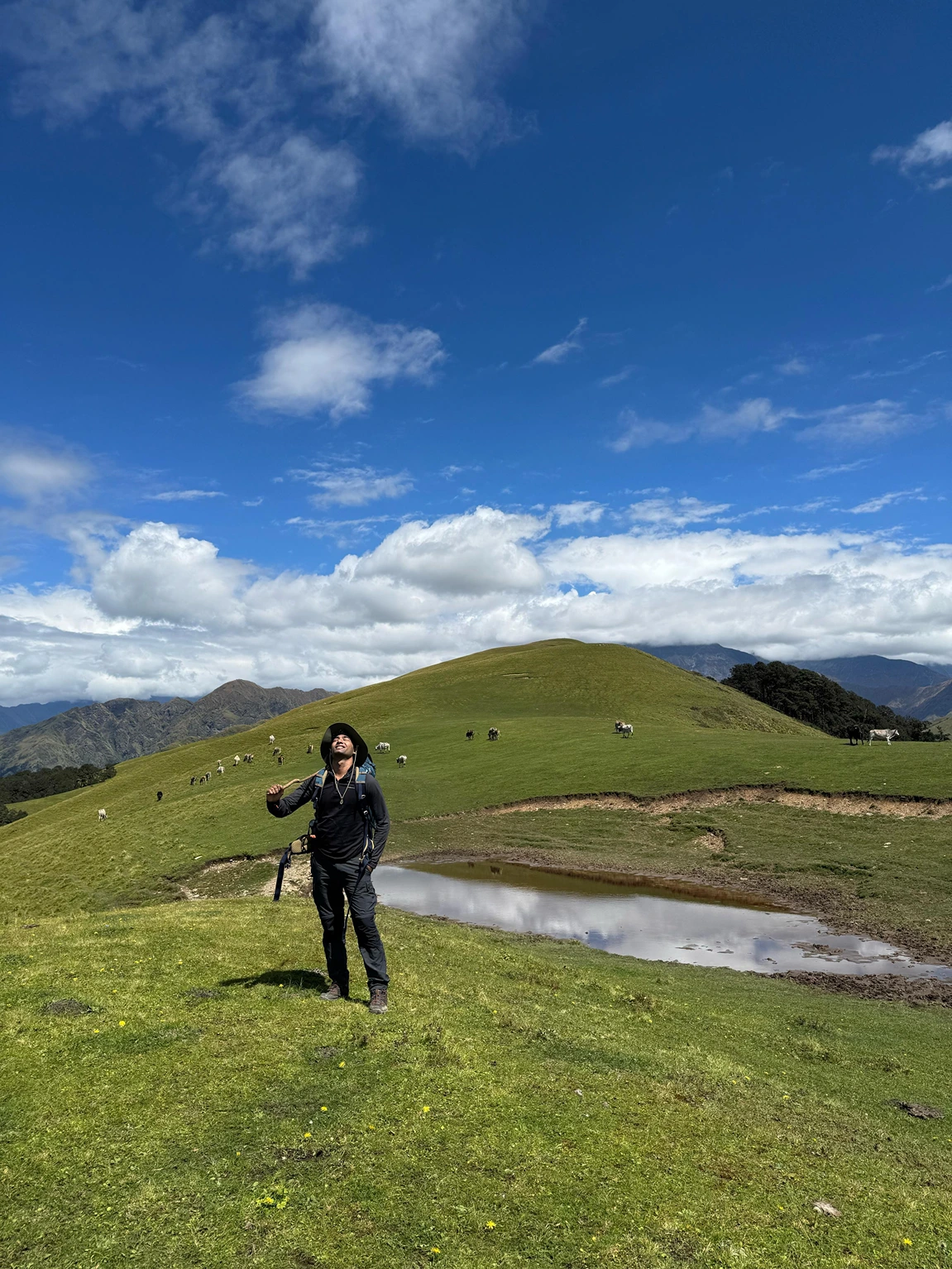
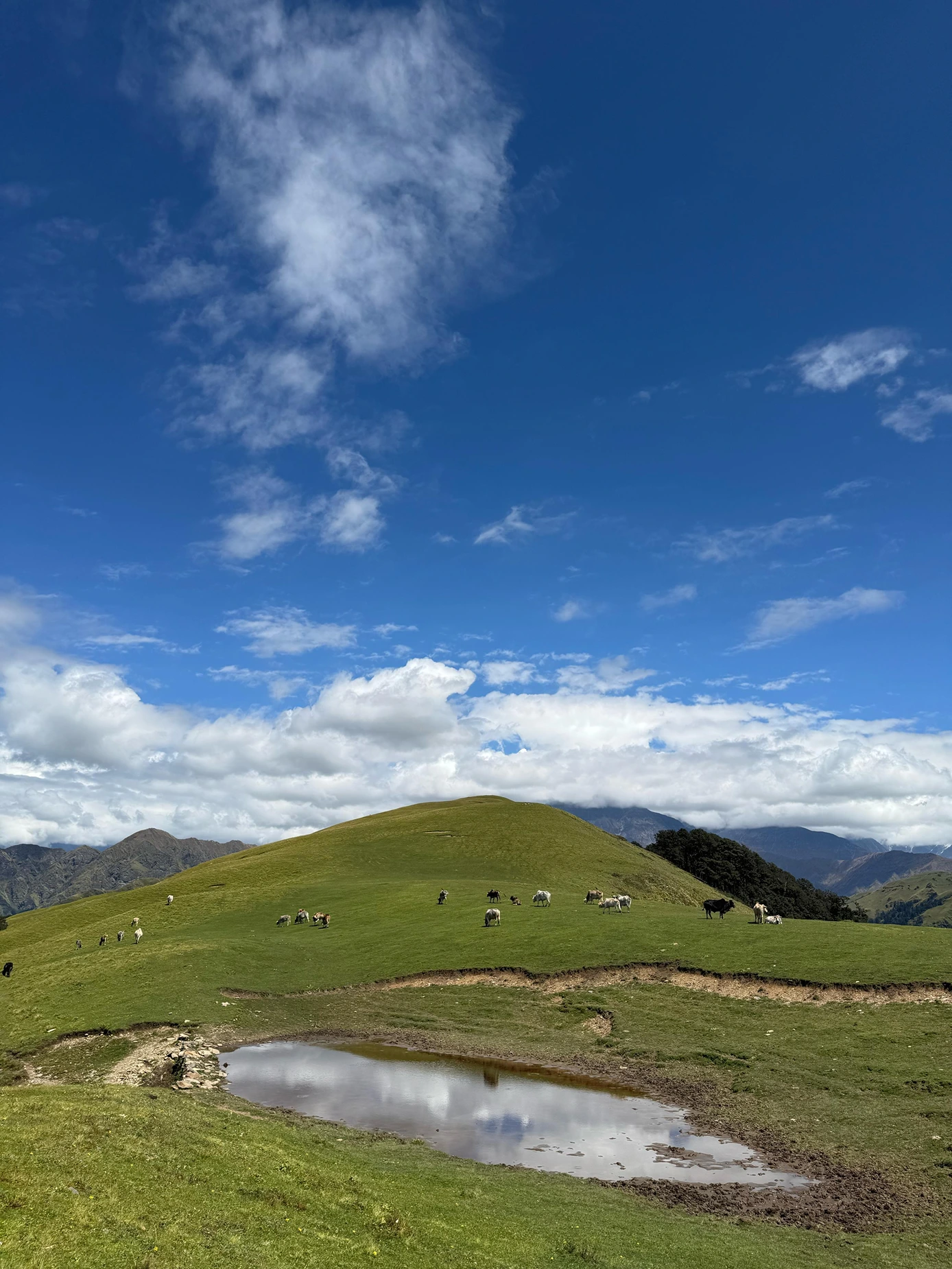
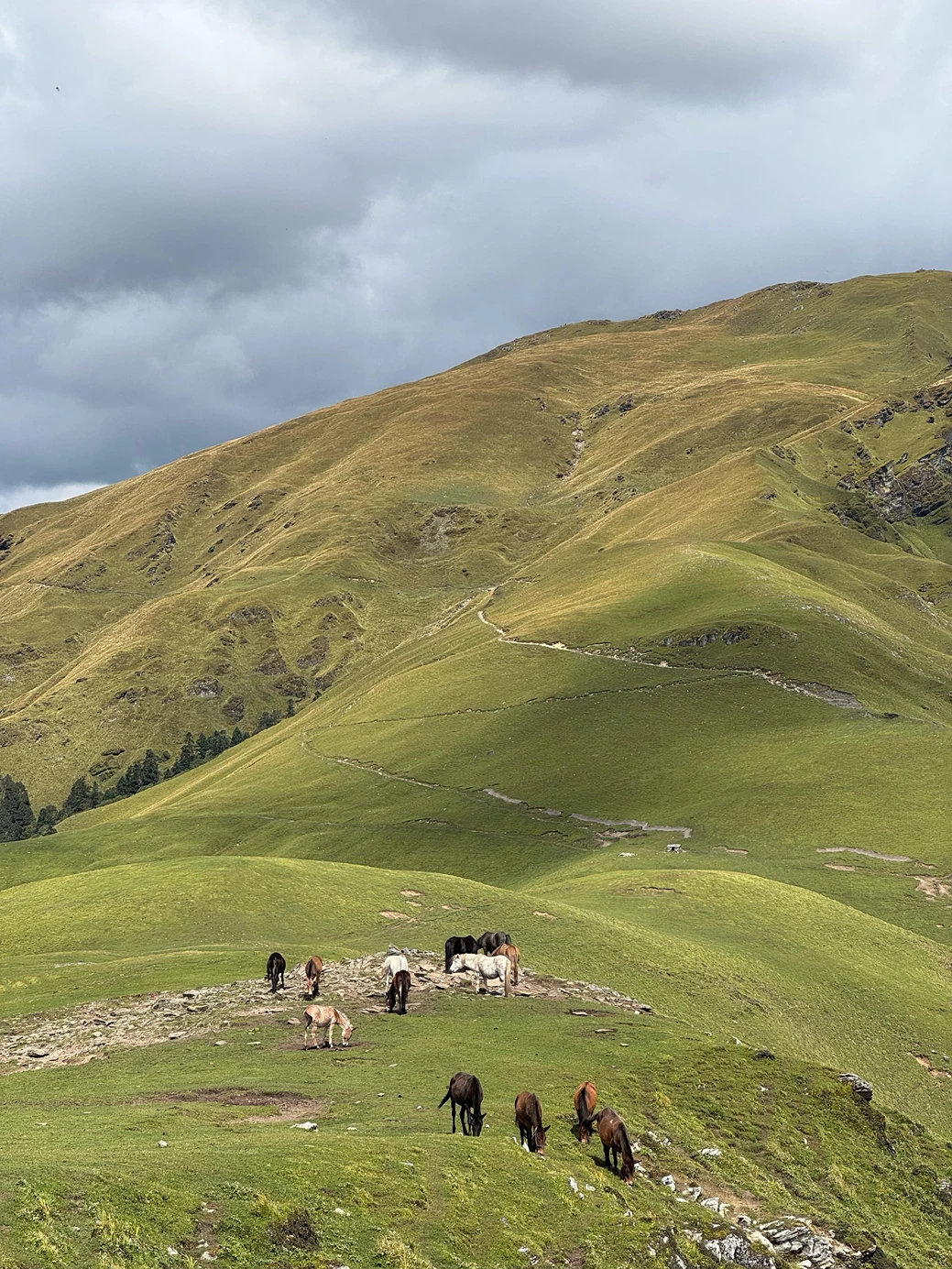
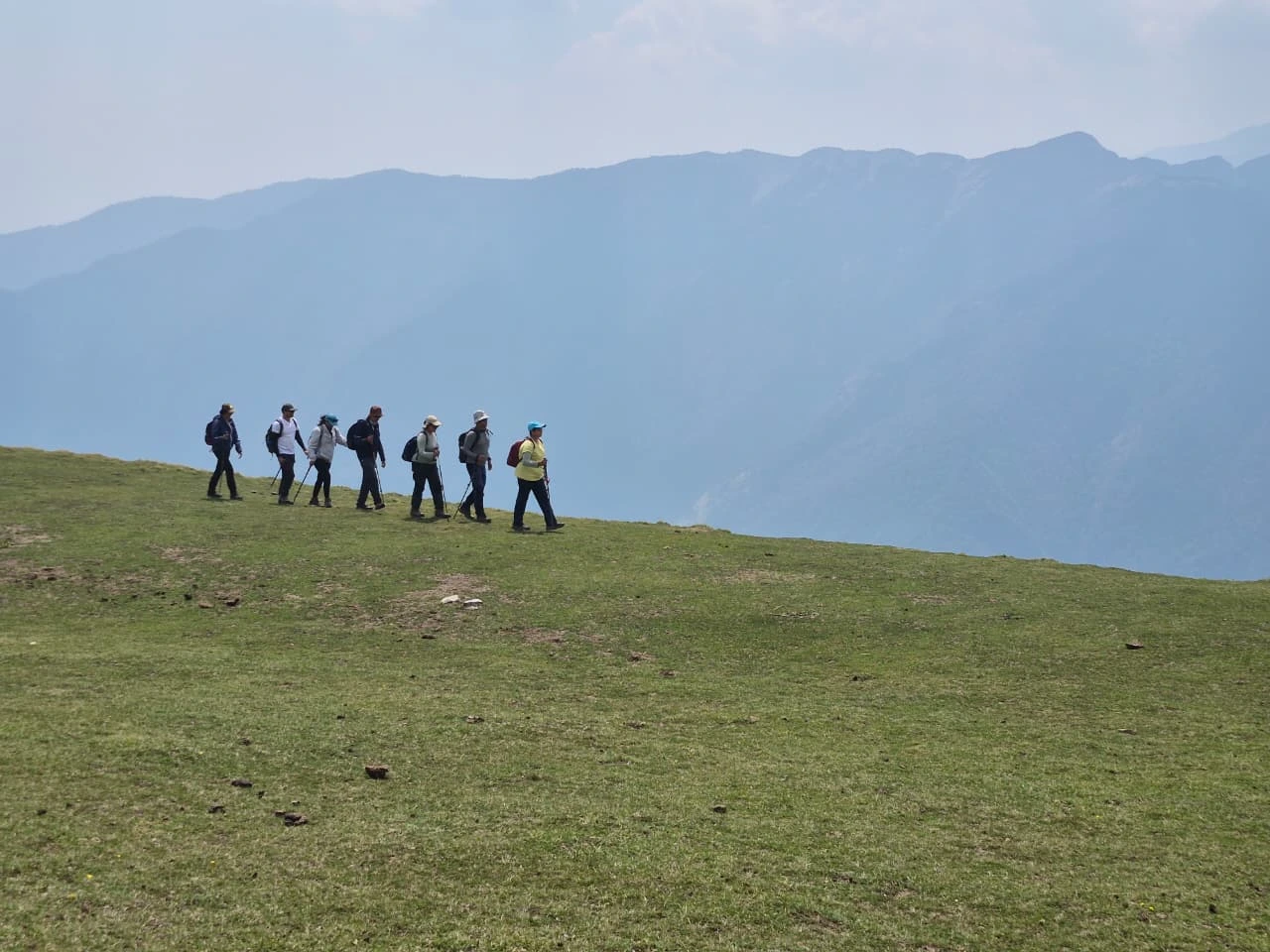
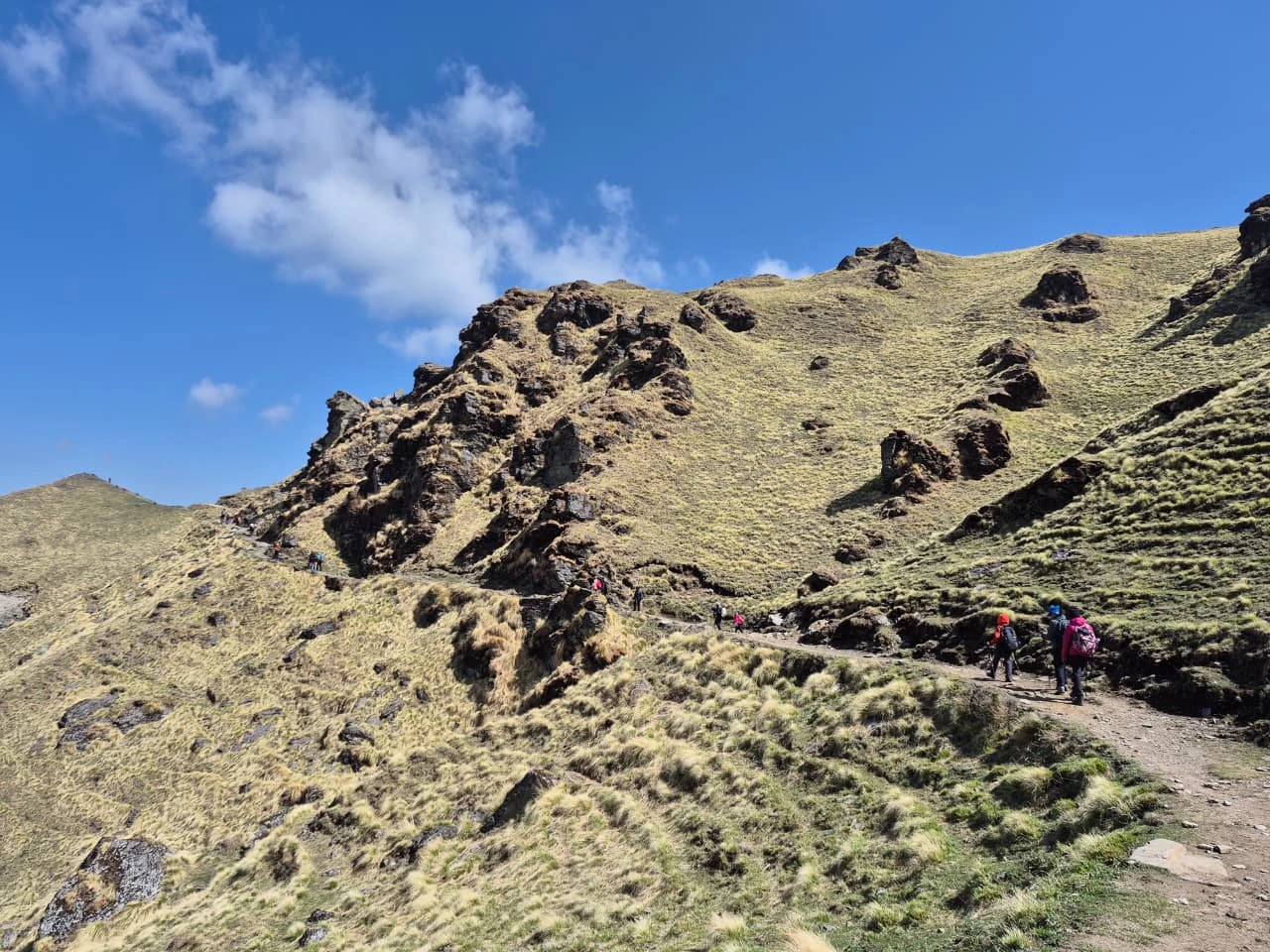
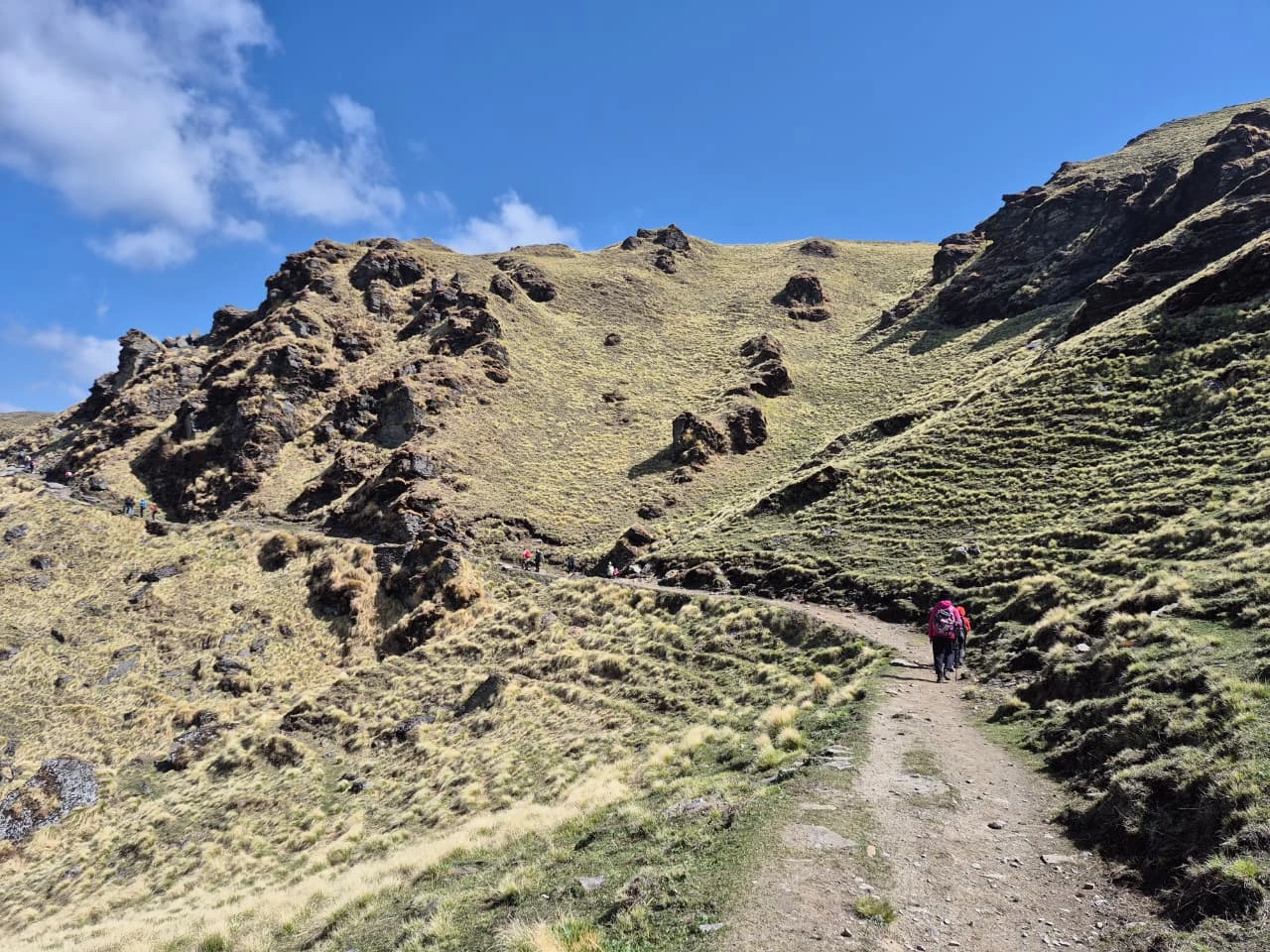
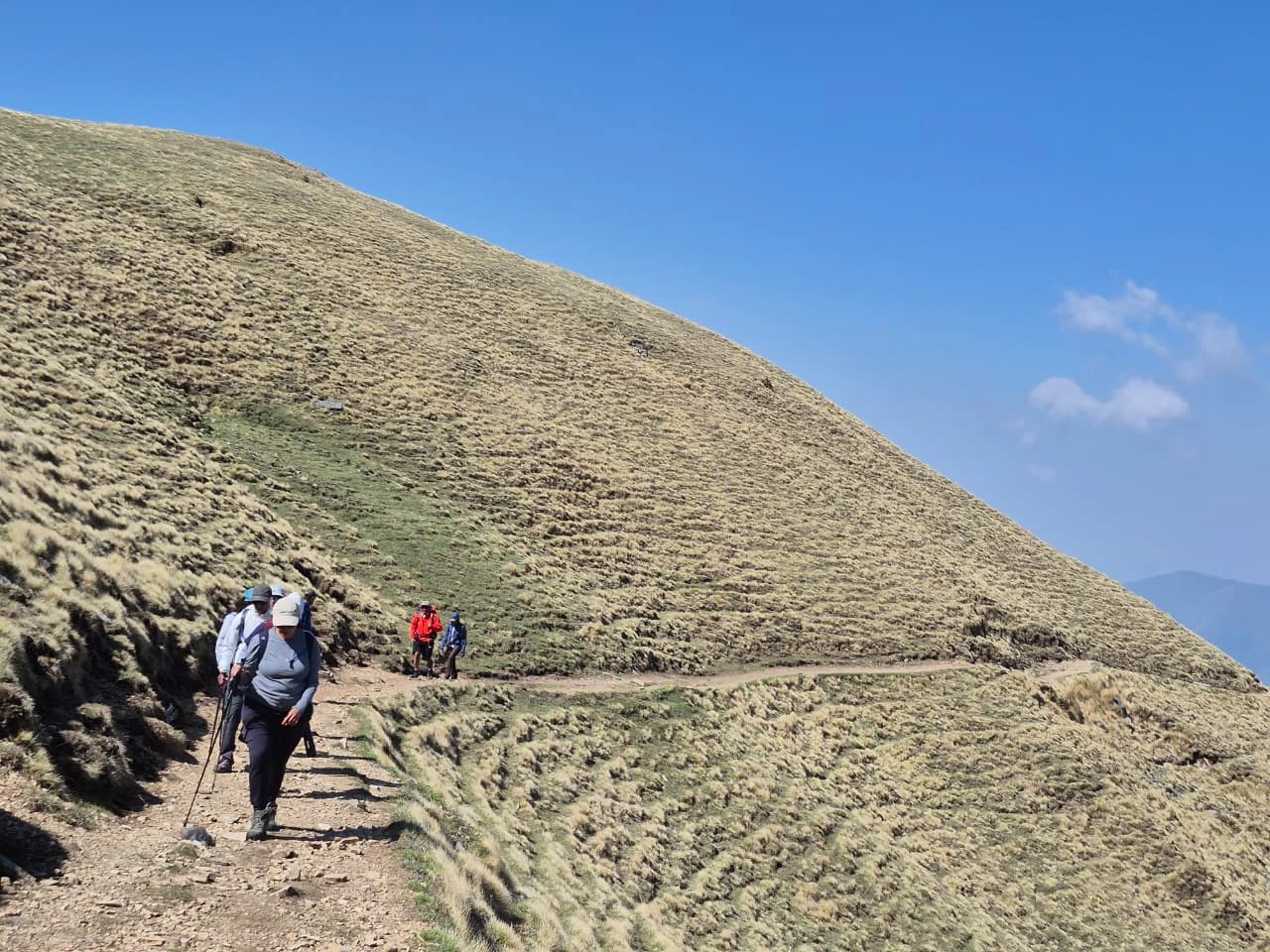
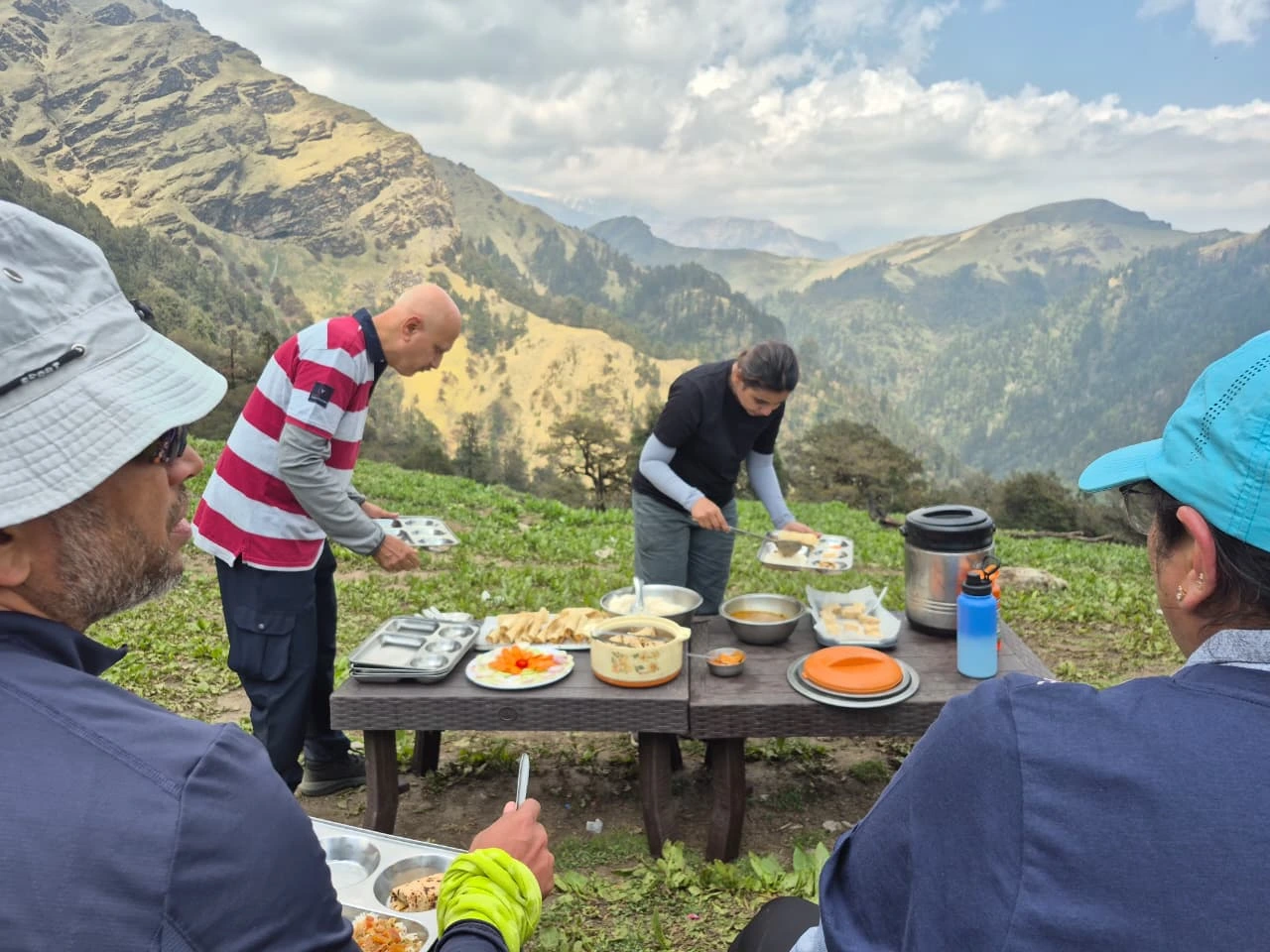
Ali Bugyal Meadows: One of the largest alpine meadows in Asia, stretching endlessly at 11,000 ft with 360-degree views of rolling grassland framed by oak forests and distant peaks
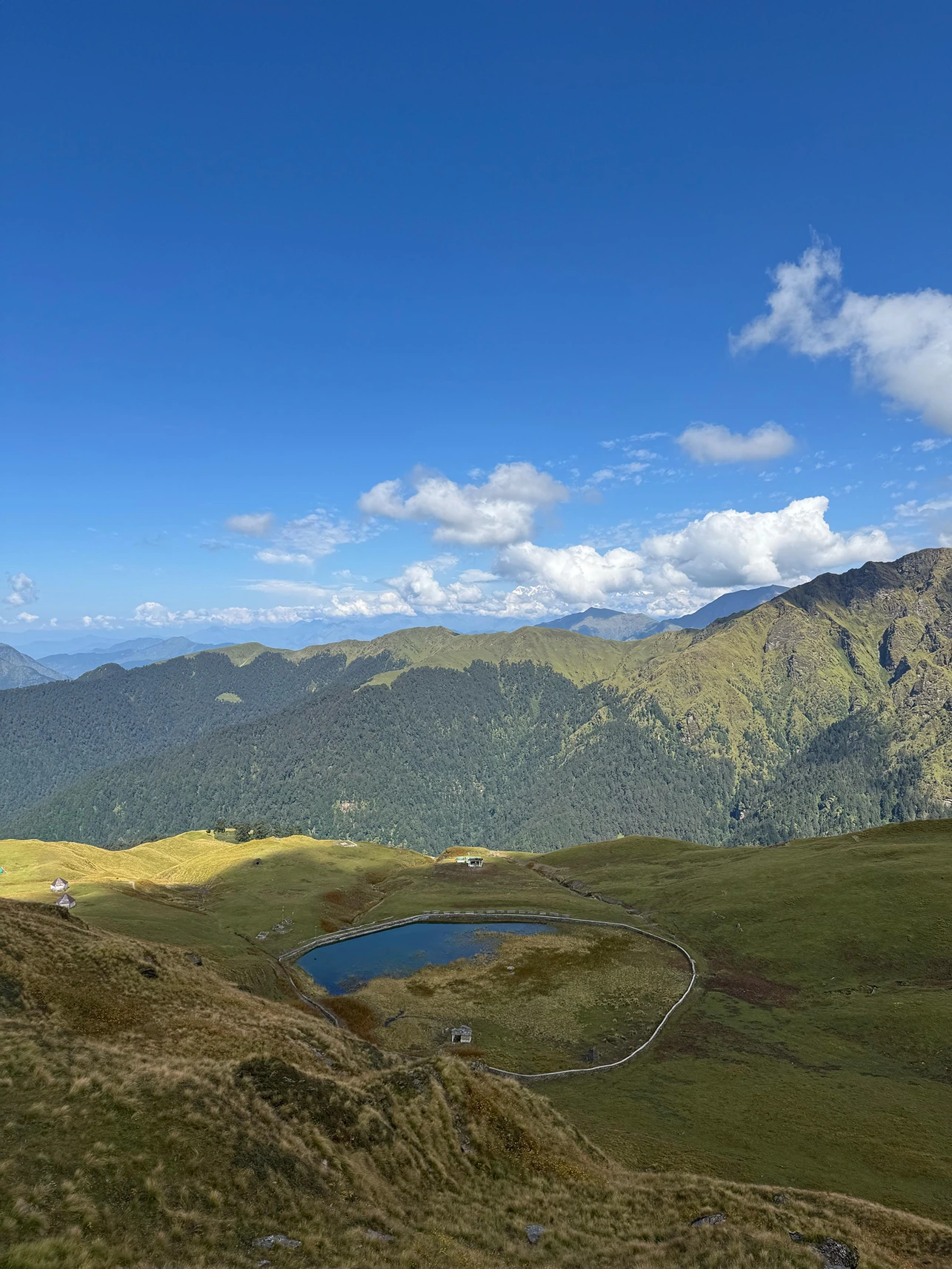
Bedni Bugyal and Bedni Kund: The second meadow, equally vast, with Bedni Kund, a sacred glacial lake at 11,200 ft where pilgrims stop during the Nanda Devi Raj Jat Yatra every 12 years
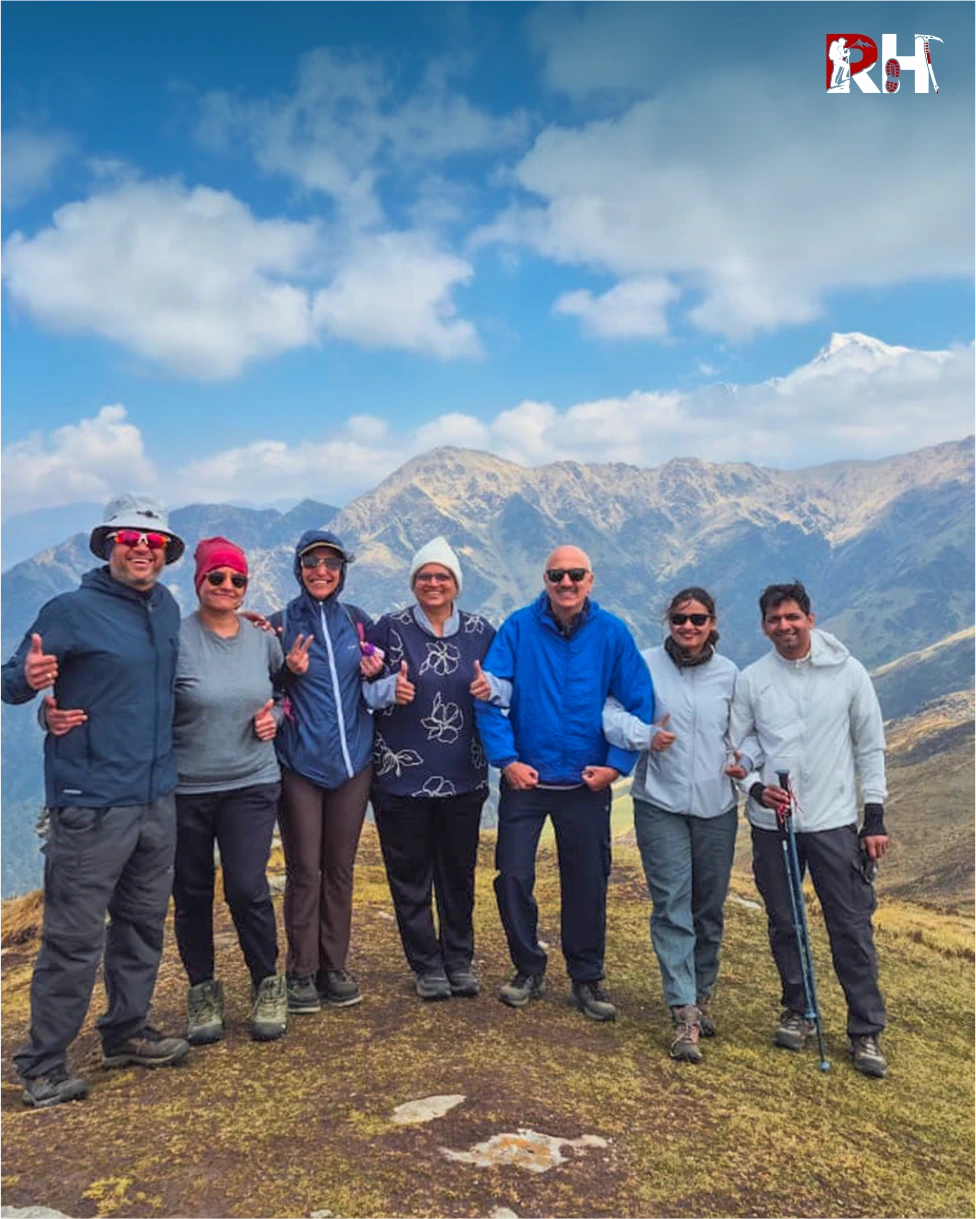
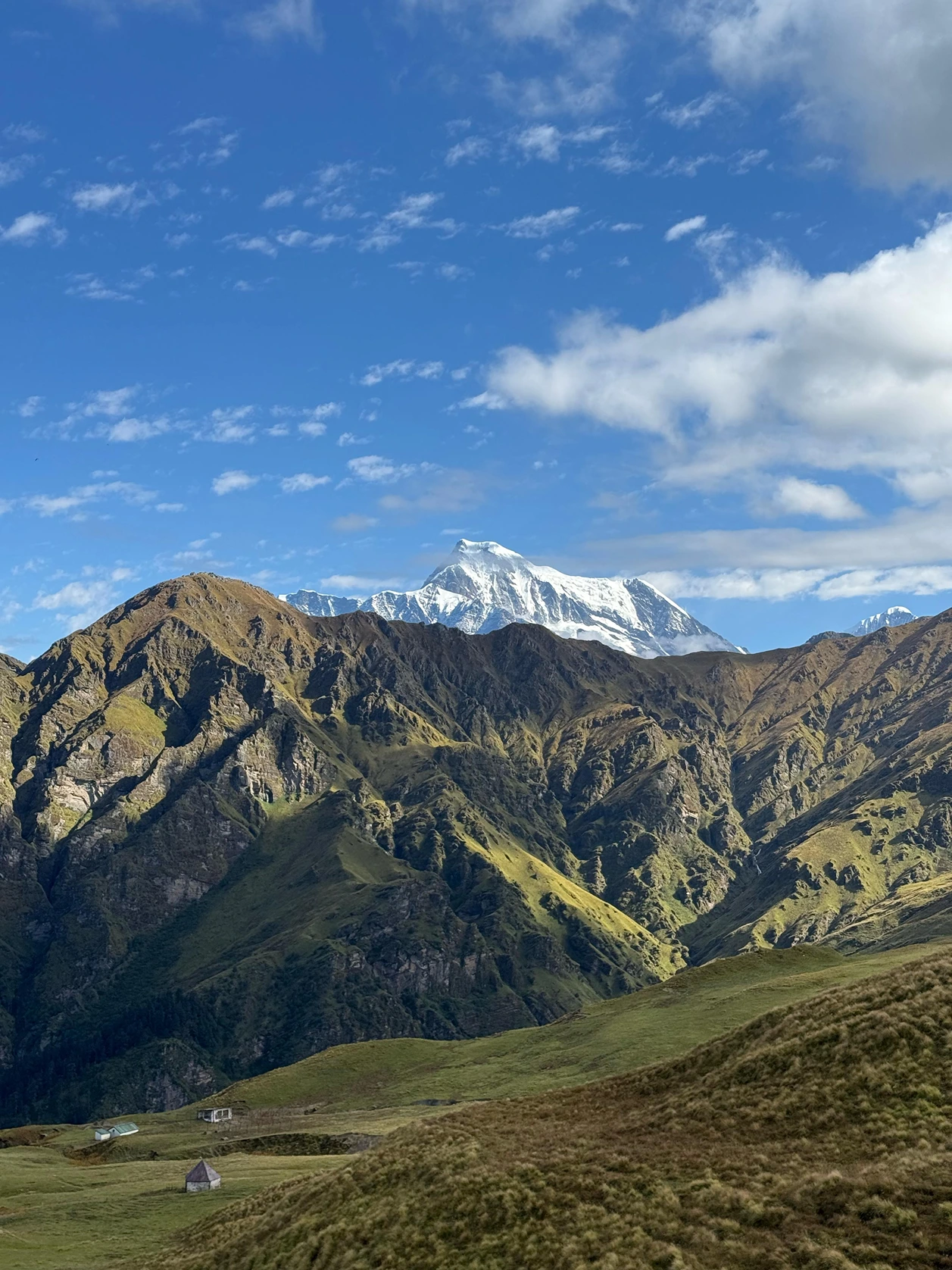
Bedni Top Summit: The highest point of the trek at 12,550 ft, offering unobstructed views of Mt. Trishul (7,120 m) and Mt. Nanda Ghunti (6,310 m) rising 6,000–7,000 vertical feet directly from the meadows
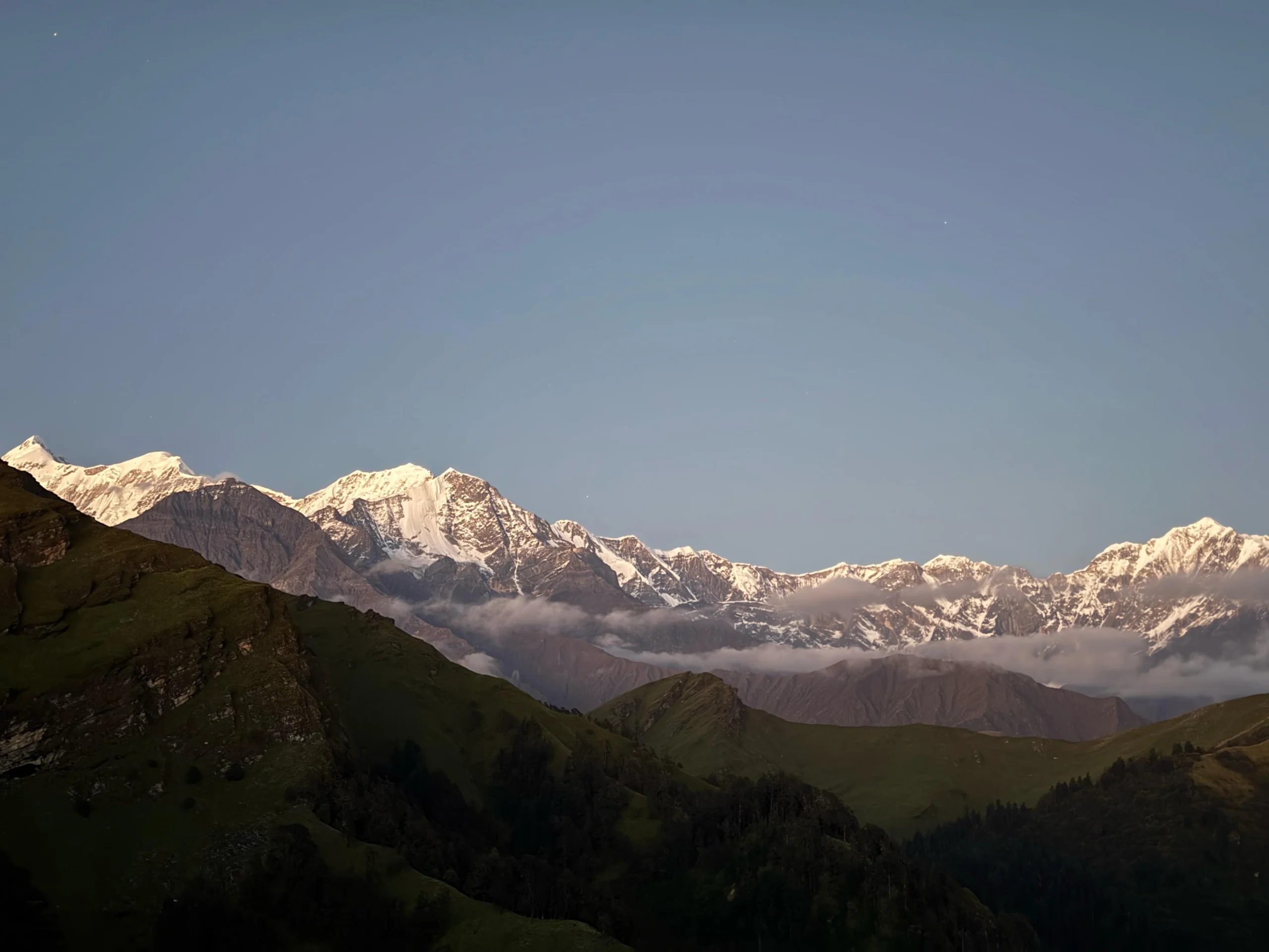
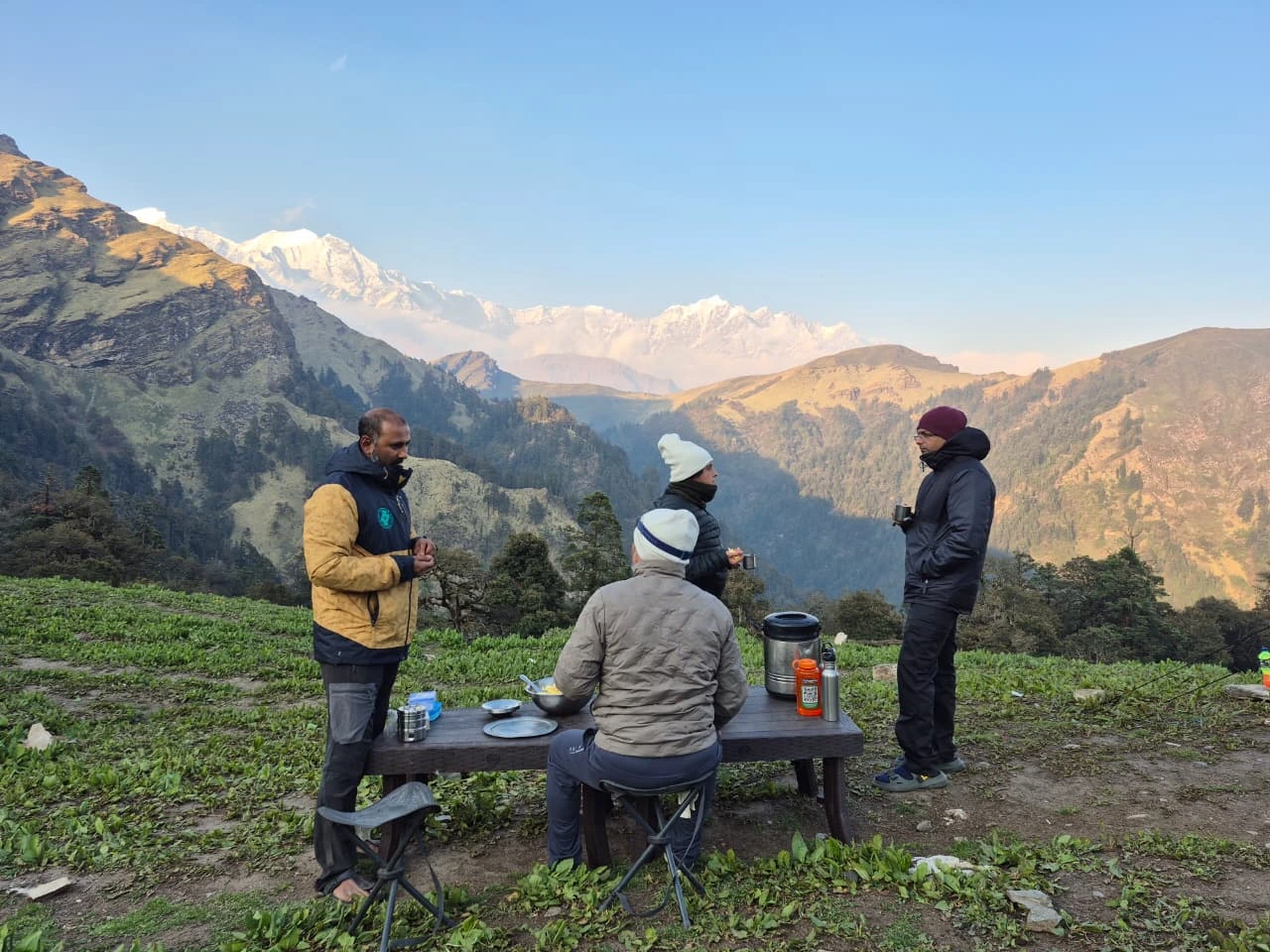
Chaukhamba Massif Views: From Bedni Top, the entire Chaukhamba range opens to the south, including Neelkanth, one of the most iconic peaks in the Garhwal Himalayas
Rhododendron Forests: The climb from Didina to Ali Bugyal passes through ancient rhododendron and oak forests that bloom bright red in May and June
Neel Ganga River Crossing: A glacial river that cuts through the valley below Lohajung, crossed on a swaying metal bridge that marks the start and end of the trek
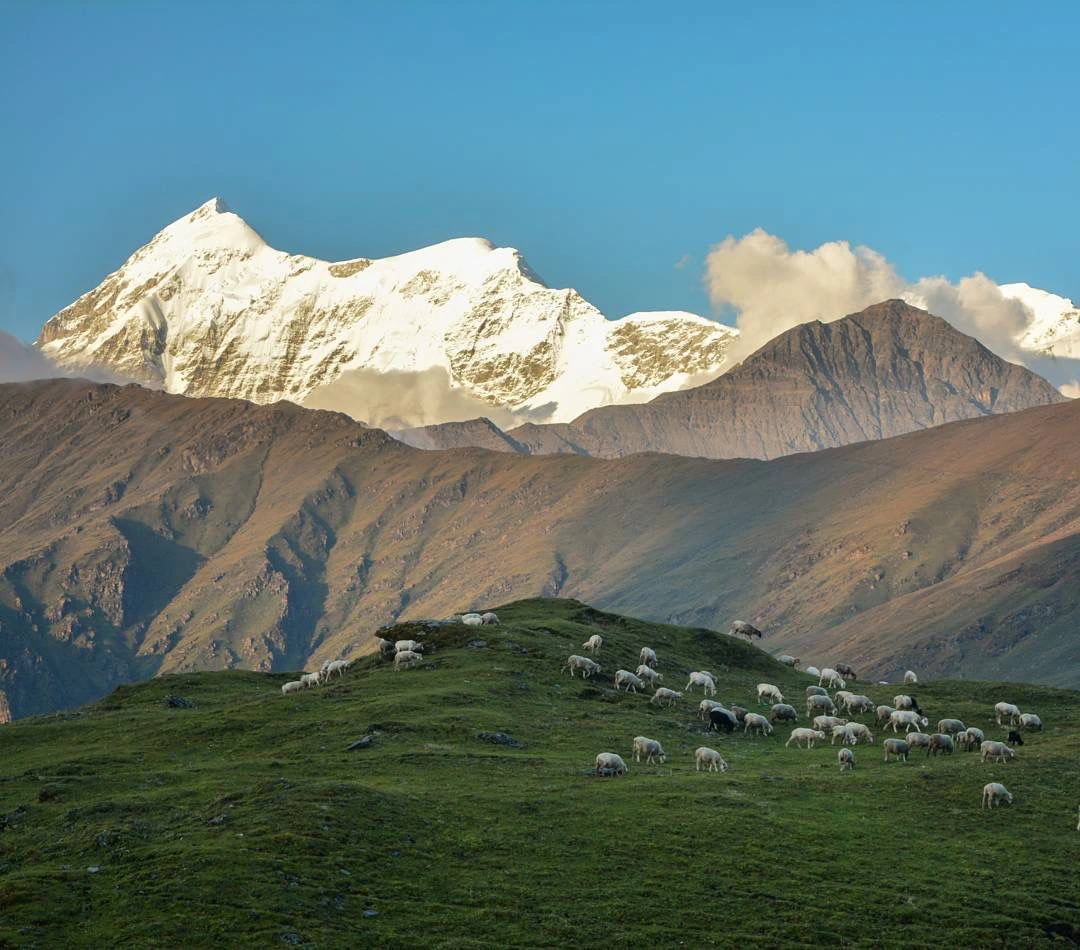
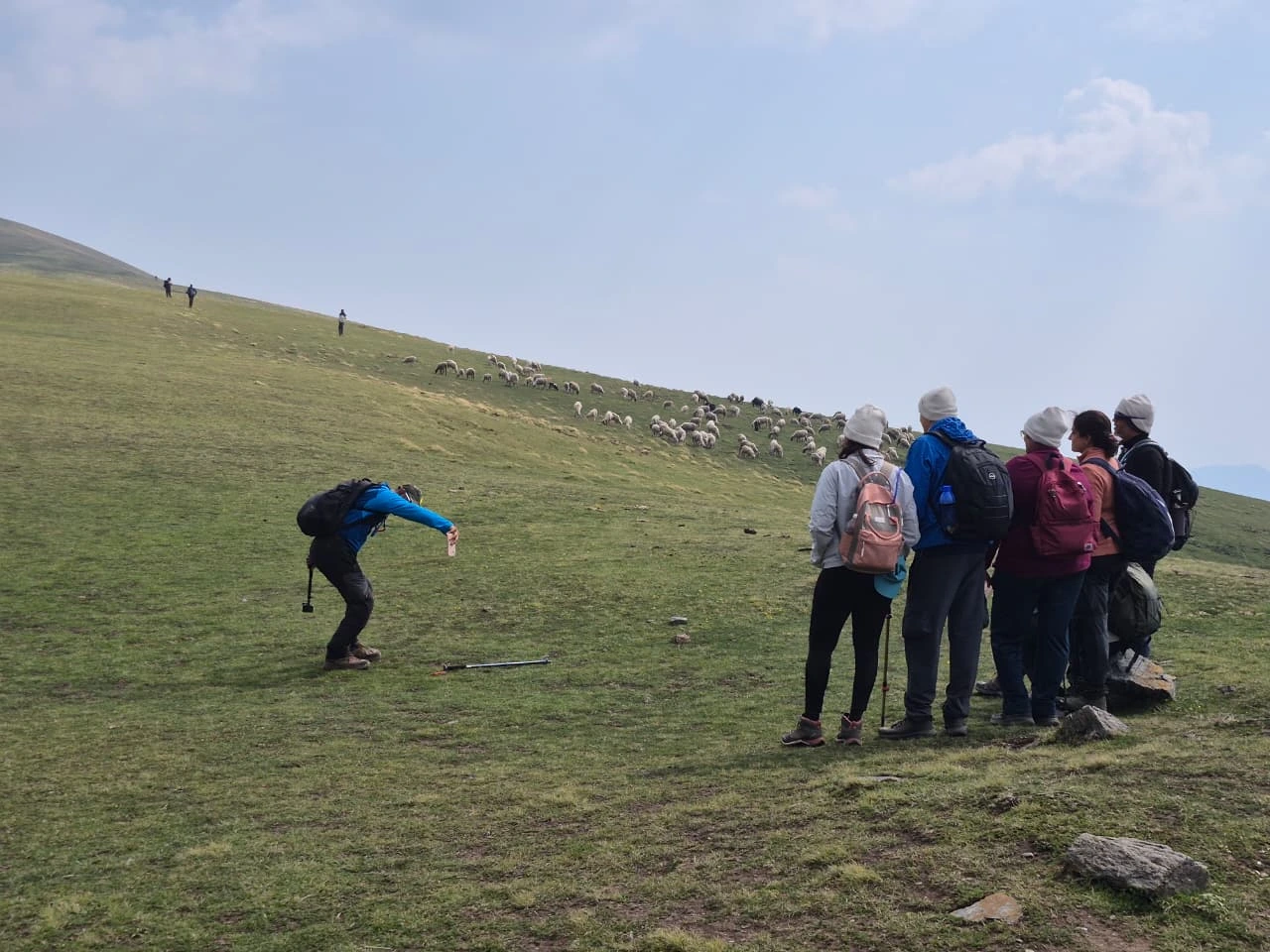
Shepherd Culture: The bugyals are summer grazing grounds for Garhwali shepherds; encountering them with their flocks of sheep and goats is part of the experience
Ali Bedni Bugyal Trek
Clear trek details, booking dates, inclusions, and rental options.
What do you want from a trek? Pass? Peak? Lake? Monastery? But the Ali Bedni Bugyal Trek takes you somewhere that should not exist at 11,000 feet above sea level: A Meadow.
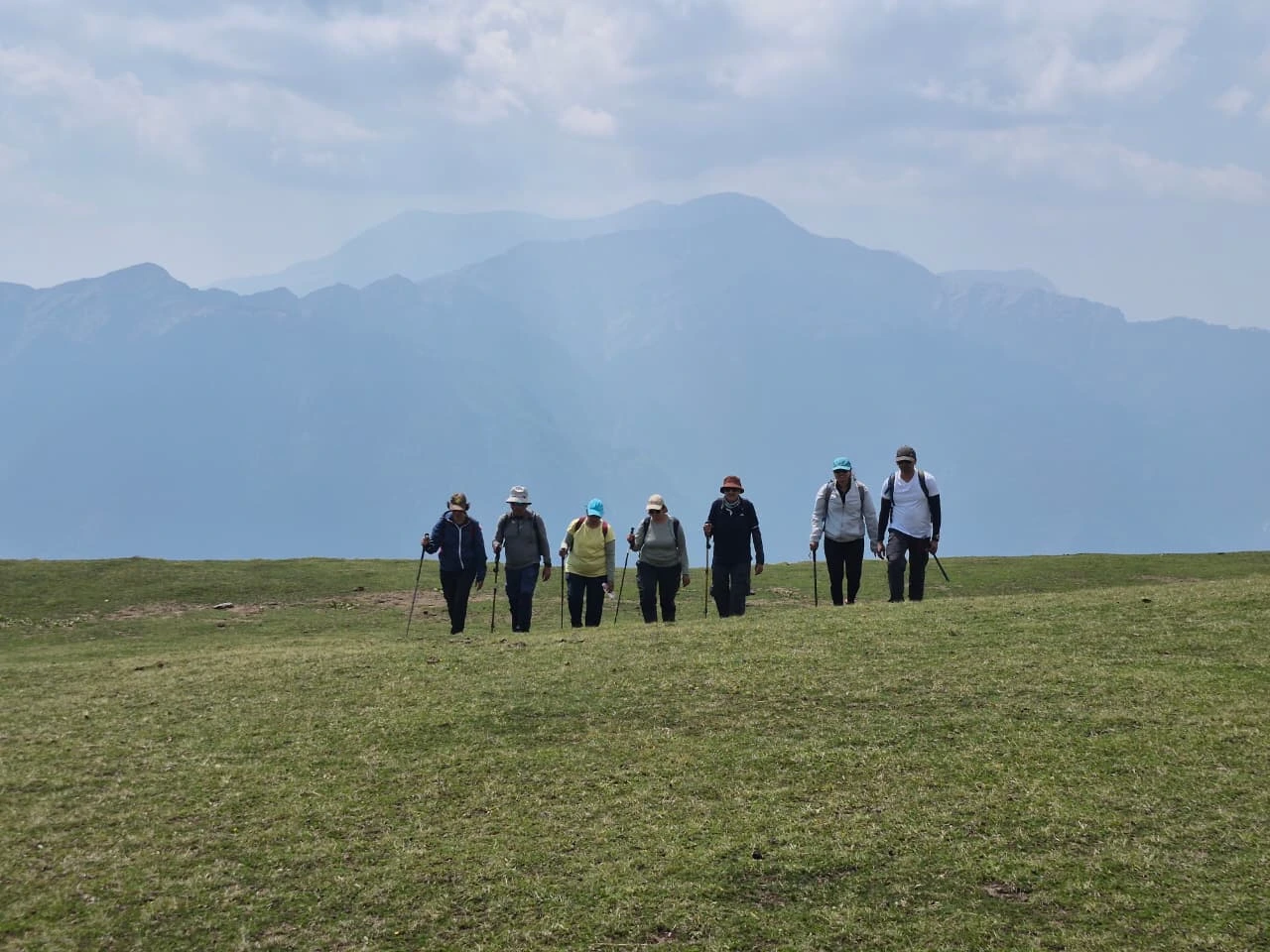
Not a clearing. Not a patch of grass between two ridgelines. An actual meadow. Rolling, endless, horizon-stretching grassland that looks like it belongs in the Scottish Highlands, except it is sitting at an altitude where most people struggle to breathe normally and the mountains around it rise another 10,000 feet higher.
Why Trekkers Love It
Ali and Bedni Bugyal are two connected alpine meadows in Uttarakhand’s Chamoli district, and together they form one of the largest high-altitude grasslands in Asia. Bugyal is the local Garhwali word for meadow, and these two sit between 10,500 and 12,000 feet, separated by a gentle ridge but part of the same sweeping landscape. They do not feel like separate places. They feel like two halves of the same impossible idea: that grass this green, this soft, this vast, can grow this high.
The Ali Bedni Bugyal Trek is a 6-day, 31-km route that starts at Lohajung village at 7,650 feet, climbs through oak and rhododendron forests to Didina, opens into the rolling meadows of Ali Bugyal at 11,000 feet, continues across to Bedni Bugyal, summits Bedni Top at 12,550 feet for the best mountain views in the Garhwal Himalayas, and descends back through Gharoli Patal to finish at Lohajung.
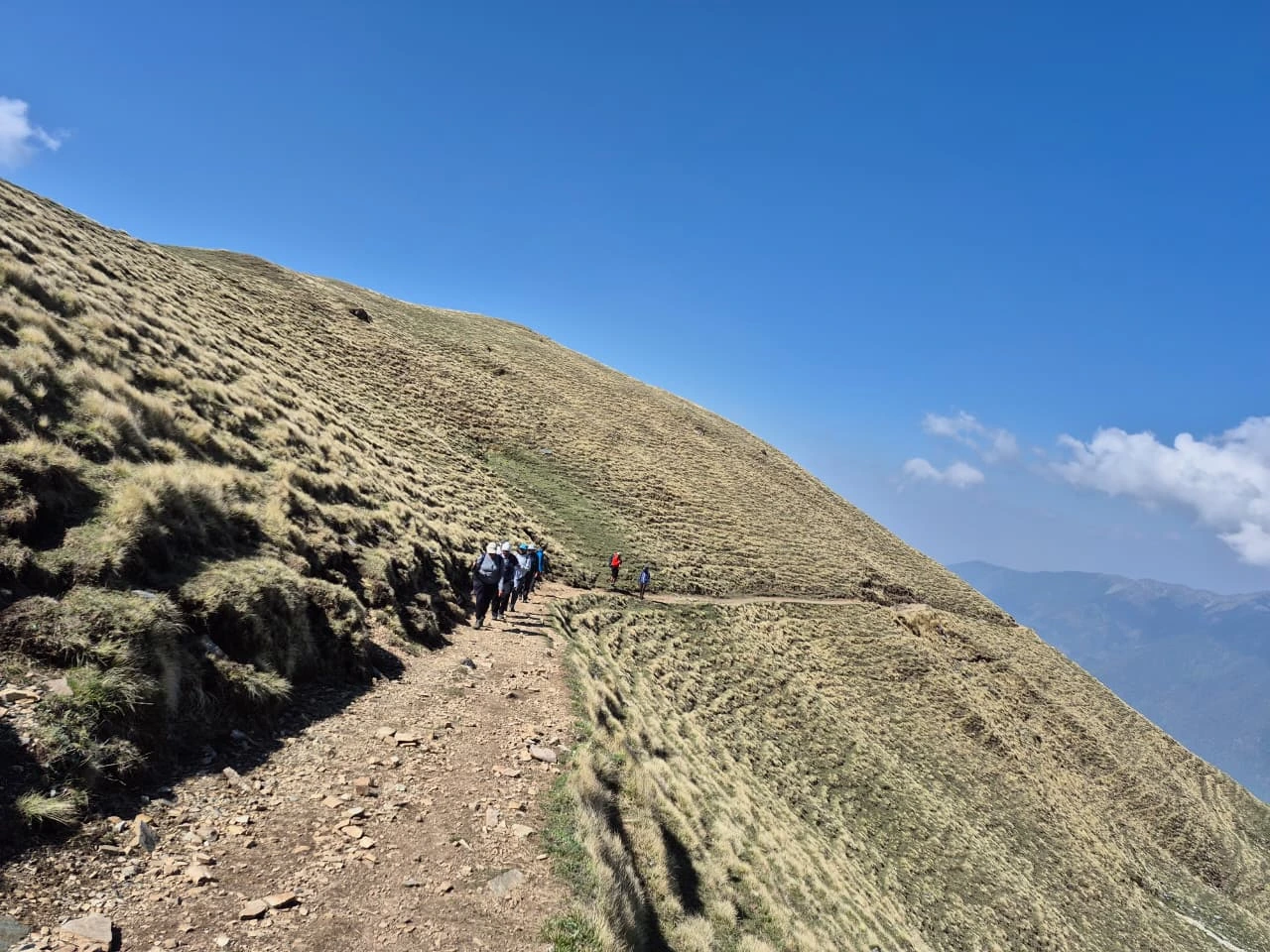
The trek does not involve any technical climbing. There are no glacier crossings, no scrambles, no fixed ropes. The trails are well-defined and have been walked by shepherds, pilgrims, and trekkers for decades. But it is not an easy trek in the sense that you can walk it without effort. You climb nearly 5,000 vertical feet over three days. You walk 6 to 8 hours daily on terrain that shifts from forest floor to rocky trail to meadow grass. And you do it at altitudes where the air holds 30% less oxygen than it does at sea level.
What makes this trek different from most others in Uttarakhand is that the reward does not wait until the end. The meadows start on Day 3 and do not stop until Day 5. You camp inside them. You wake up inside them. You walk for hours across them and the horizon never closes. Most treks give you one big moment at the summit and then it is over. Ali Bedni gives you two full days of that moment, stretched across a landscape so vast it makes you feel small in a way that mountains alone cannot.
Day 1 is the drive from Rishikesh to Lohajung, 258 kilometres through the Alaknanda Valley, crossing Devprayag, Rudraprayag, and Karnaprayag along the way. The road climbs steadily, the valley narrows, and the mountains grow taller until you arrive at Lohajung by evening, a quiet village perched on a ridge with views of Nanda Ghunti.
Day 2 is the trek from Lohajung to Didina, 7 kilometres through dense forest alongside the Neel Ganga River. The trail drops steeply at first, crosses the river on a metal bridge, then climbs steeply for the final 2 kilometres to Didina village at 8,100 feet. You camp just above the village.
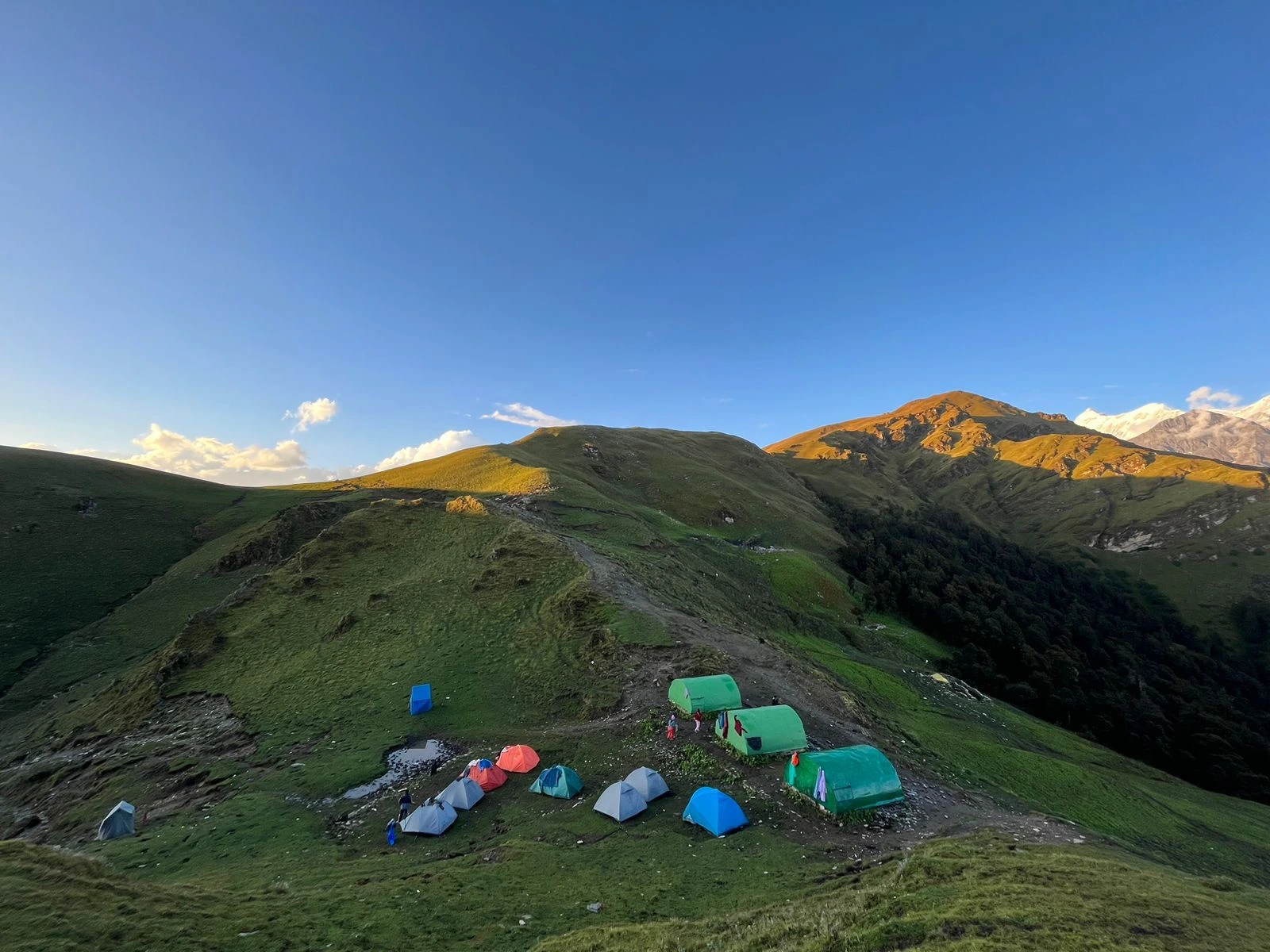
Day 3 takes you from Didina to Ali Bugyal, 8 kilometres of climbing through oak and rhododendron forest that thins gradually until the treeline ends and the meadows begin. The moment you step out of the forest onto the ridge, the entire expanse of Ali Bugyal opens in front of you, green grass rolling toward distant peaks. You camp at the edge of the meadow at 11,000 feet.
Day 4 is the walk across Ali Bugyal to Bedni Bugyal, 6 kilometres of the most visually stunning trekking in India. You cross the meadows, climb gently to Bedni Top at 12,550 feet where Trishul and Nanda Ghunti stand 6,000 vertical feet above you, descend to Bedni Kund, a glacial lake sacred to pilgrims, and return to camp at Ali Bugyal. This is the day people remember forever.
Day 5 is the descent from Ali Bugyal to Gharoli Patal and then Lohajung, 9 kilometres downhill through forest, across the Neel Ganga again, and up a final ridge to Lohajung. Day 6 is the drive back to Rishikesh.
The trek is graded easy to moderate, which means it is accessible to fit first-time trekkers but it is not trivial. If you have done Kedarkantha or Har Ki Dun, you will find this comfortable. If this is your first Himalayan trek and you are fit, you will manage it with proper preparation. If you are not fit, you will struggle, because there is no shortcut around the altitude gain and the daily distances.
The right person for this trek is someone who wants to experience the Himalayas at their most open, most spacious, and most visually overwhelming without having to be a technical mountaineer to get there. Someone who is okay camping at 11,000 feet and waking up to frost on the tent and Trishul turning gold in the sunrise. Someone who understands that the effort required to reach a place like this is exactly what makes it worth reaching.
The total distance is 31 kilometres over 6 days. Daily trekking distances range from 6 km on easier days to 9 km on the descent. The cumulative altitude gain from Lohajung to Bedni Top is nearly 5,000 feet, spread across three days, which is significant but manageable with proper acclimatization.
If you are ready to walk through a landscape that feels like it exists on a different planet, there is no reason to wait.
Day wise plan
A complete day-by-day journey through the Ali Bedni Bugyal Trek covering forest trails, alpine meadows, Bedni Top summit views, trekking distances, altitude changes, campsites, and the overall Himalayan experience from Lohajung to the vast bugyals of Uttarakhand.
The Ali Bedni Bugyal Trek begins with a long drive, and if you think that sounds like a poor start to a trekking trip, you have never driven through the Alaknanda Valley.
Leave Rishikesh by 6 AM. The road follows the Alaknanda River upstream through a valley that narrows and steepens with every kilometre. Devprayag arrives first, where the Alaknanda meets the Bhagirathi to form the Ganga. The confluence is visible from the road, two rivers merging into one, green and fast and cold.
Then Rudraprayag, where the Alaknanda meets the Mandakini. Then Karnaprayag, where it meets the Pindar. These are three of the five Panch Prayags (five confluences) that define the Garhwal region, and driving through them in a single day feels like watching the Ganga assemble itself piece by piece.
Between the confluences, the valley opens and closes. Terraced fields cling to hillsides. Small towns appear and disappear. Dhabas serve chai and aloo parathas that taste better here than anywhere else. The Alaknanda, loud and relentless, never leaves your window.
The road climbs steadily after Karnaprayag, winding through pine forests and smaller valleys until it reaches Lohajung by late afternoon. A quiet Garhwali village at 7,650 feet, perched on a ridge with views of Nanda Ghunti when the skies are clear. This is your base for the night.
Settle into your guesthouse, eat a warm meal, hydrate properly, and sleep early. Tomorrow the trekking begins, and it begins with a descent.
Tip: Withdraw cash in Rishikesh or Karnaprayag. There are no ATMs in Lohajung or anywhere on the trek. Mobile network becomes unreliable after Lohajung and disappears entirely after Didina.
Most treks start with an uphill climb. This one starts with a downhill descent, and if that sounds easier, it is not. Downhill trekking is hard on knees, hard on ankles, and harder on morale when you know you will have to climb back up every metre you lose.
The trail out of Lohajung drops steeply through forest for the first 2 kilometres. Oak, rhododendron, pine. The Neel Ganga River roars somewhere below, loud enough that you hear it before you see it. After an hour, the trail reaches the riverbank and a narrow metal bridge suspended 20 feet above the water. The bridge sways when you cross. Hold the railings. Keep moving.
On the far side of the river, the trail turns uphill. Steeply uphill. The next 2 kilometres climb nearly 1,300 feet through dense forest, stone-paved in sections, rocky and root-tangled in others. This is the hardest section of the day. Your legs are fresh but the gradient is punishing. Take it slowly. Stop when you need to. Refill water from streams whenever you can.
After 2 hours of climbing, the forest begins to thin. Didina village appears ahead, a small cluster of stone houses scattered across a sloping meadow. The campsite sits just above the village at 8,100 feet, with views down the valley you just climbed and up toward the ridgeline you will cross tomorrow.
Rest. Eat well. Tomorrow is a long day and it ends at 11,000 feet.
This is the day the trek stops being a forest walk and becomes something else entirely.
The trail out of Didina climbs steadily through oak and rhododendron forest for the first 3 kilometres. The forest is dense, cool, quiet except for birdsong and the occasional sound of streams cutting across the trail. In May and June, the rhododendrons bloom bright red, covering entire hillsides in colour. In September and October, the leaves turn gold.
After about 2 hours, you reach Tolpani, a small clearing with a stream. This is the last reliable water source before Ali Bugyal. Refill your bottles. Rest for 10 minutes. The trail continues upward, still forested but less dense now. Then, after another hour of climbing, the treeline ends. And the meadows begin.
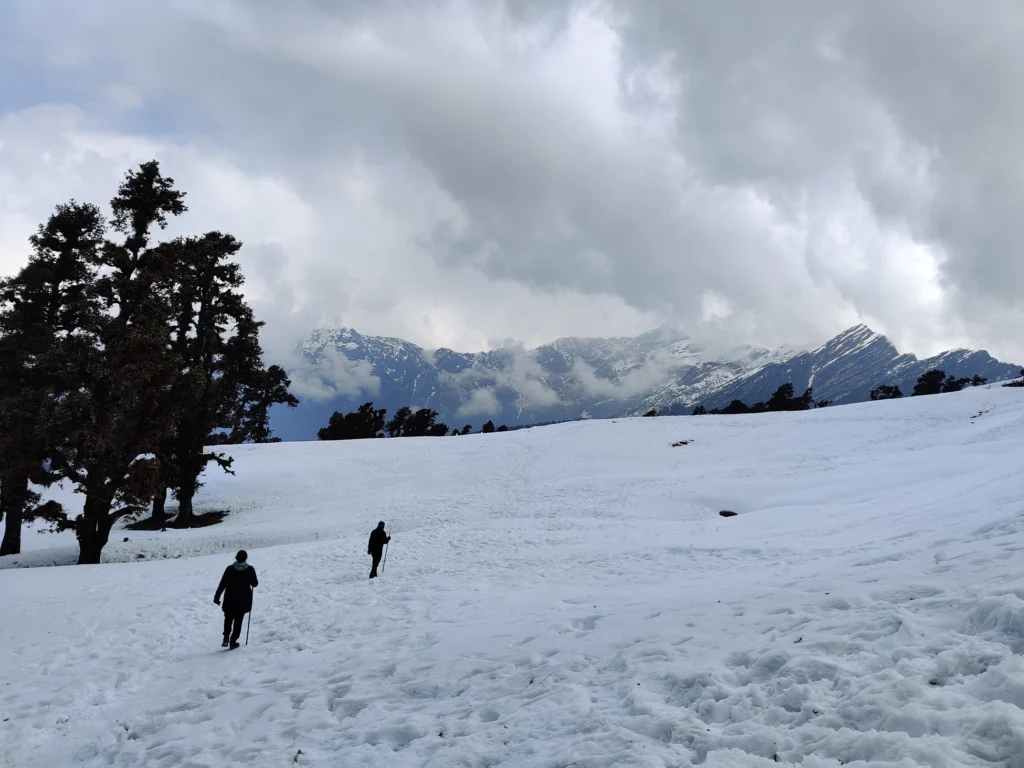
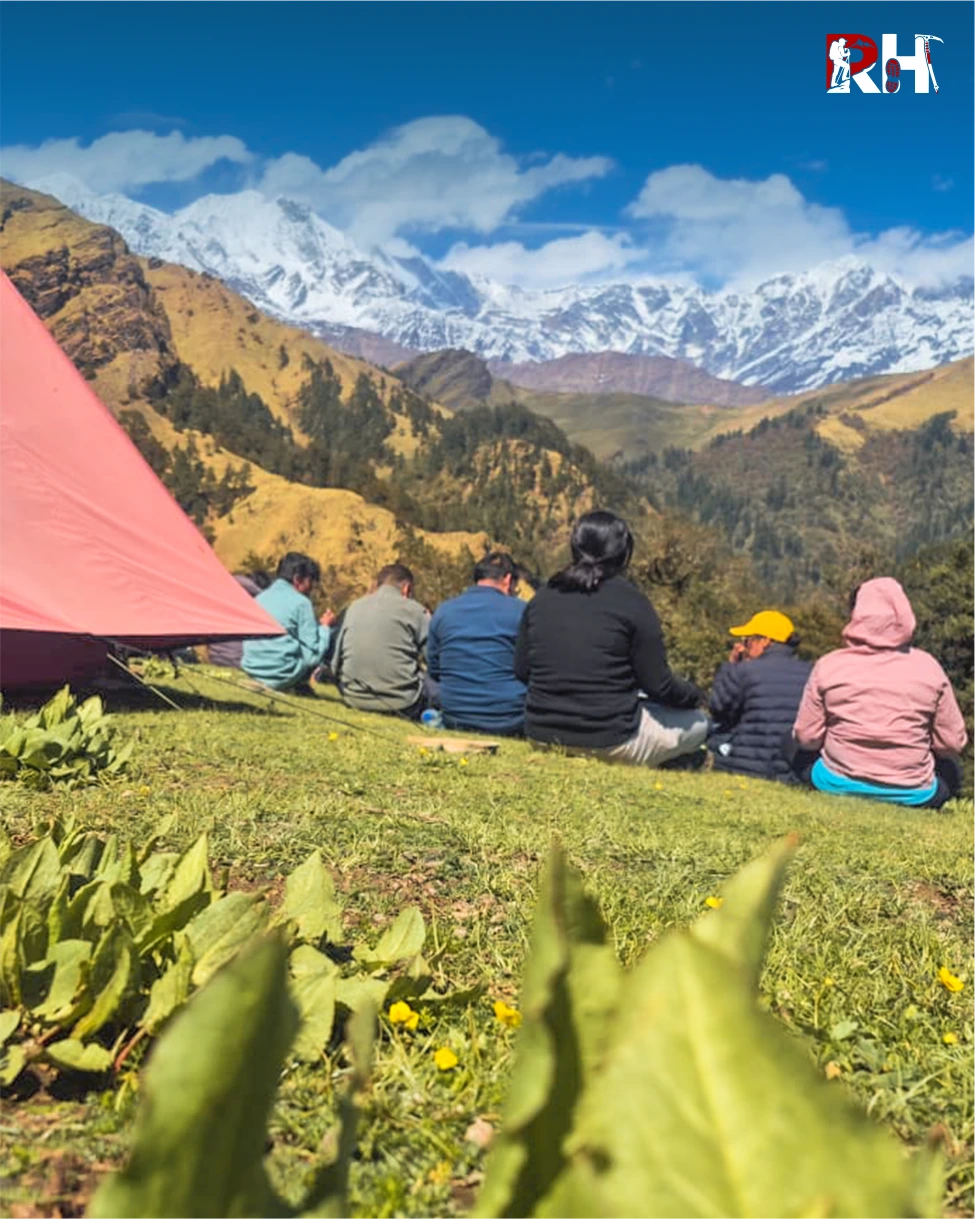
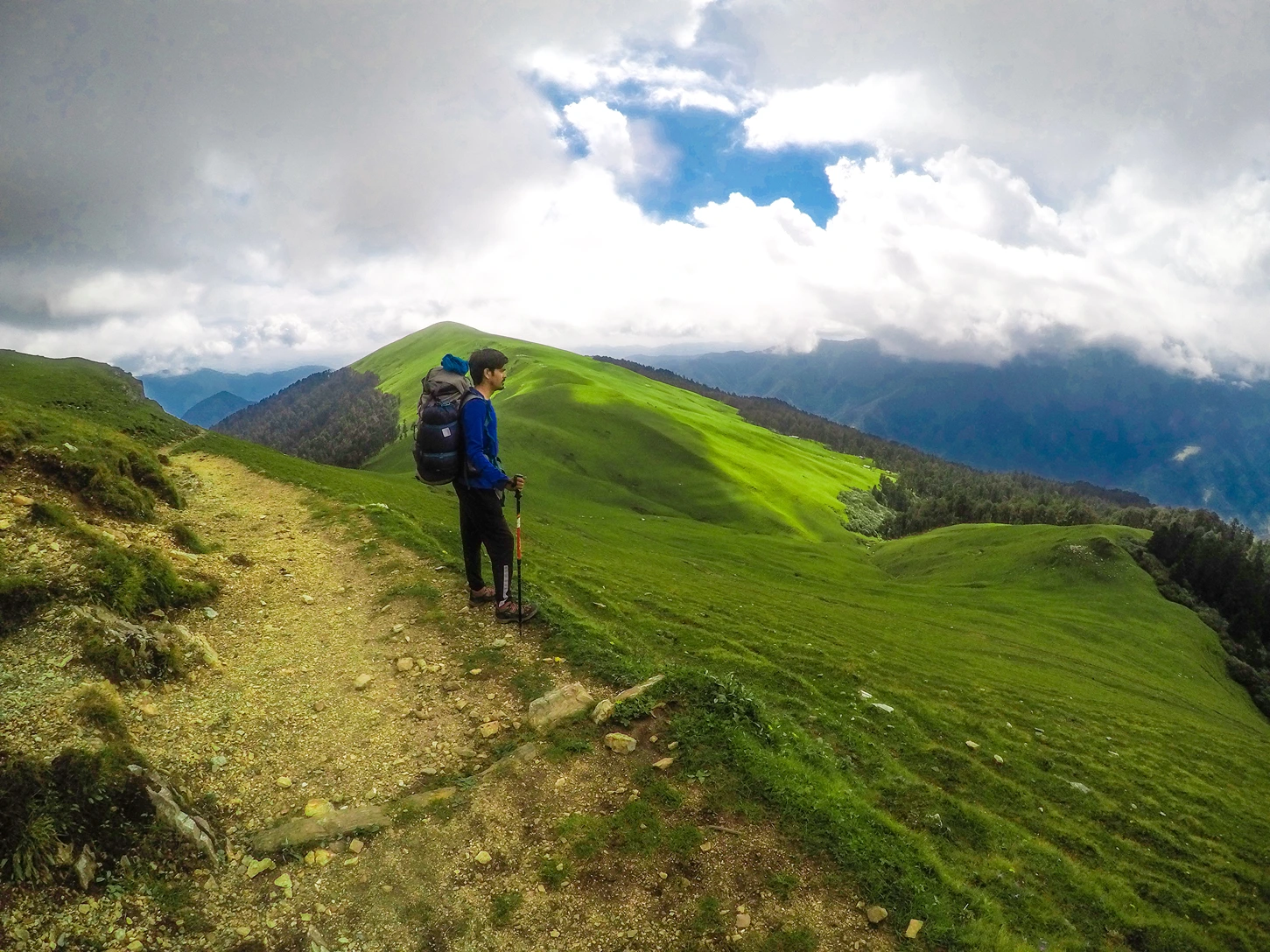
The moment you step out of the forest onto the ridge, the entire expanse of Ali Bugyal opens in front of you. Green grass rolling in every direction. No trees. No rocks. Just grass, soft and endless, stretching toward ridgelines that frame the valley on three sides. And beyond the ridgelines, peaks. Trishul. Nanda Ghunti. Neelkanth. Rising so high above the meadows that you cannot see their summits without tilting your head back.
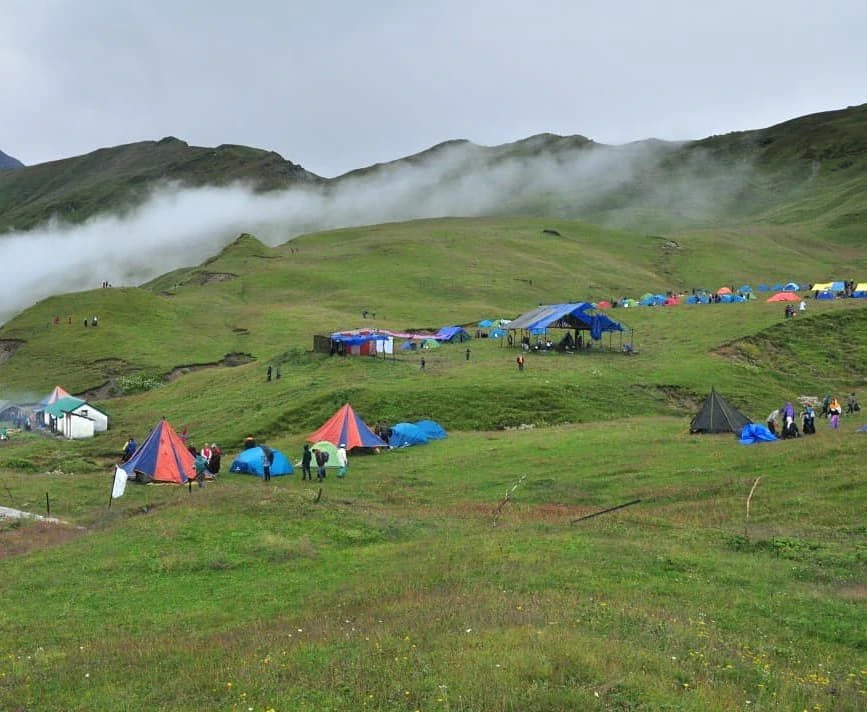
The trail crosses the meadow for the next 2 kilometres, gently uphill, until it reaches the campsite at 11,000 feet on the far side of Ali Bugyal. You camp here for two nights.
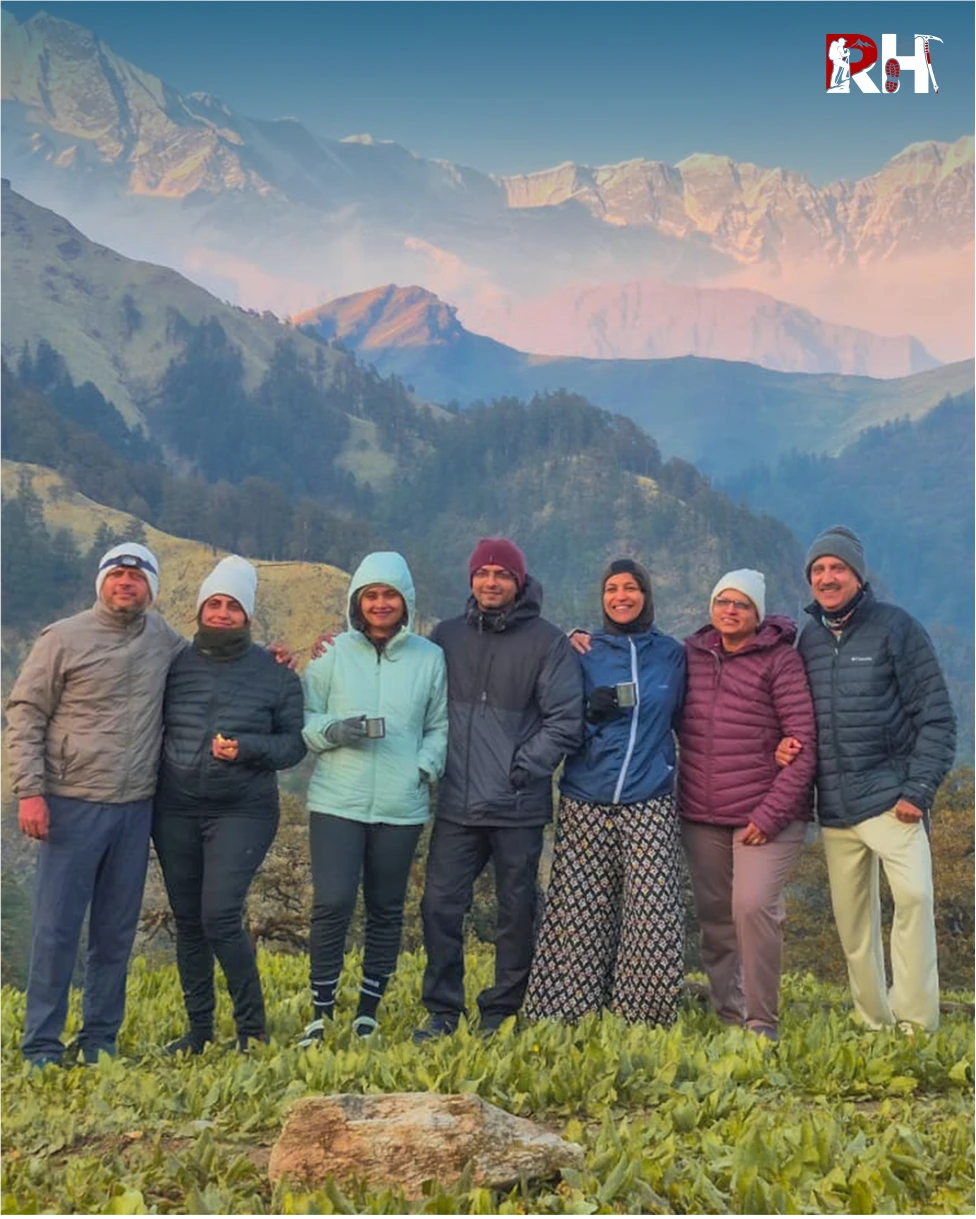
When you step out of your tent the next morning and see Trishul turning gold in the sunrise while frost covers the grass around you, you will understand why people call this one of the most beautiful treks in India.
This is the summit day. And unlike most summit days that send you back the way you came, this one takes you over the top and out the other side.
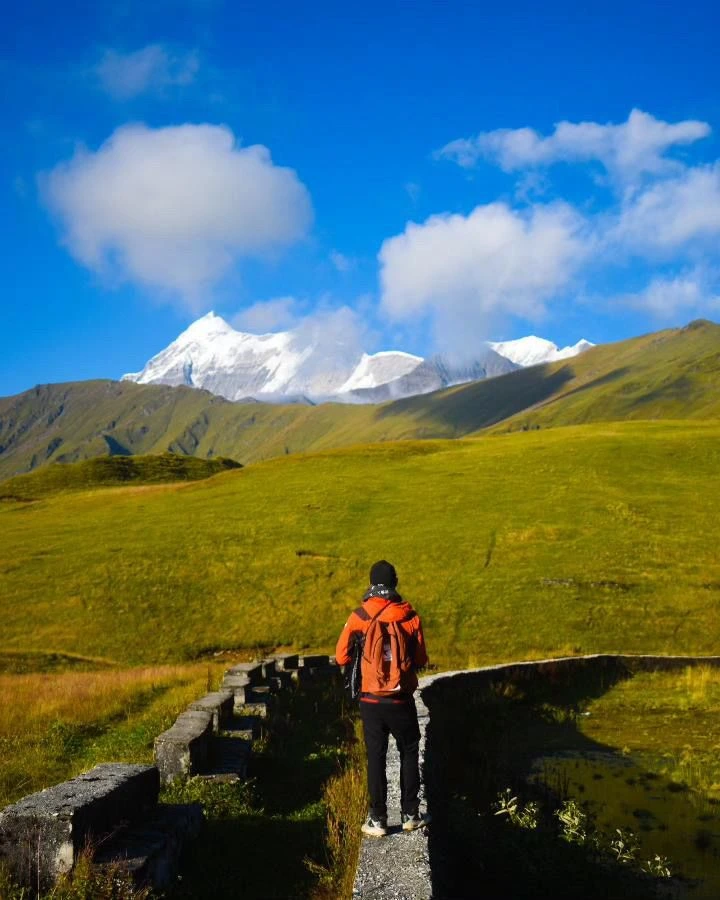
Start early, ideally by 7 AM. The trail from Ali Bugyal to Bedni Bugyal is 3 kilometres of the most visually stunning trekking you will ever do. You walk across rolling meadows with no obstructions, no trees, nothing between you and the mountains except grass and sky. Trishul and Nanda Ghunti dominate the northern horizon, their entire 6,000–7,000 foot faces visible from base to summit.
After an hour, Bedni Bugyal opens ahead. It looks like Ali Bugyal except bigger, and that should not be possible because Ali Bugyal already feels infinite. But Bedni is broader, more open, with views stretching further south toward the Chaukhamba range.
Before the climb to Bedni Top, descend briefly to Bedni Kund, a small glacial lake at 11,200 feet just below Bedni Bugyal. The lake is sacred to pilgrims who walk this route during the Nanda Devi Raj Jat Yatra every 12 years. A small temple sits beside it. The water is clear and cold, reflecting the peaks above it.
The trail then climbs toward Bedni Top, a 200-metre ascent over the final kilometre. The gradient is steep but short. After 30 minutes of hard climbing, you reach the top at 12,550 feet.
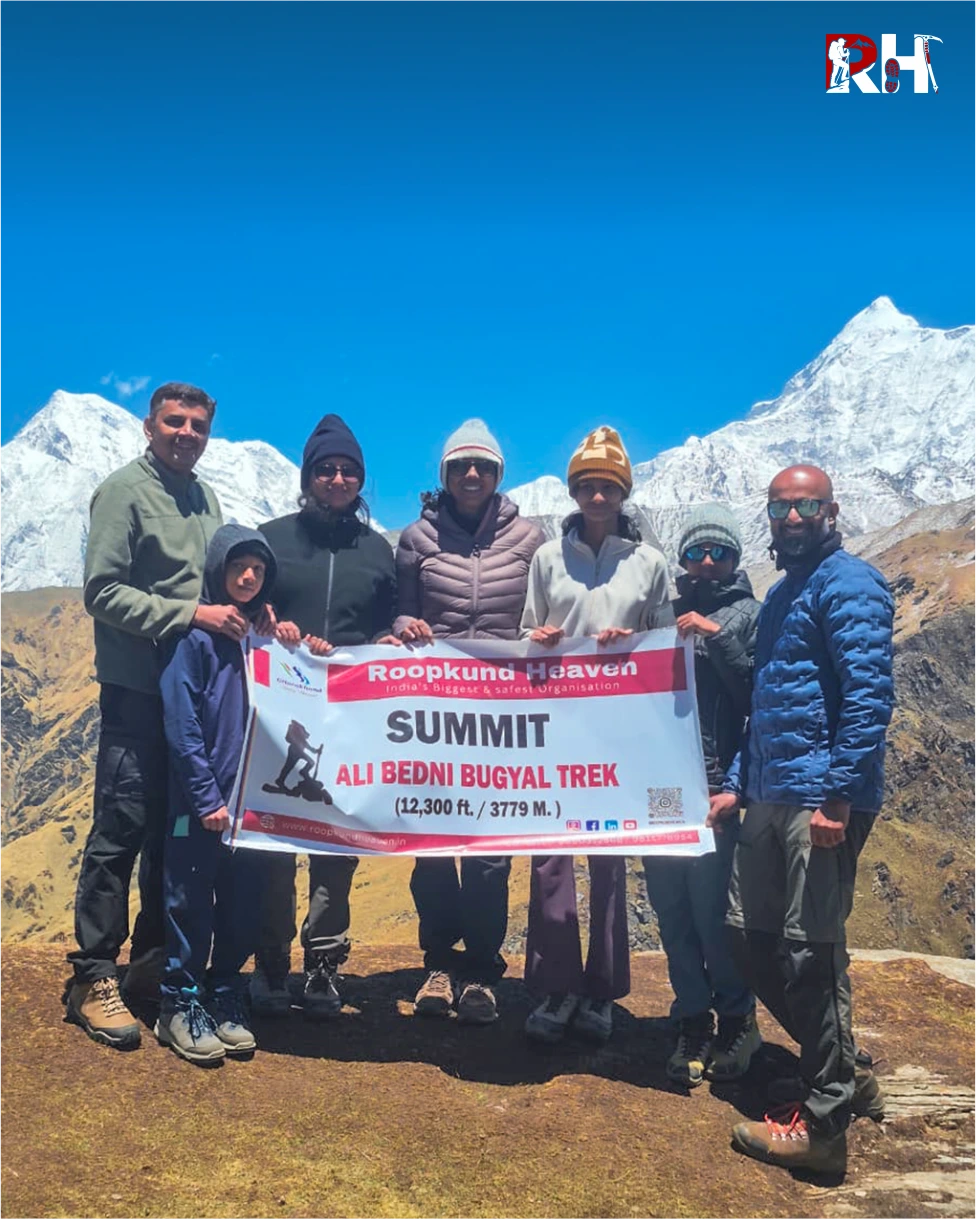
This is the highest point of the trek. Prayer flags mark the summit. And when you step up onto the ridge, the full sweep of the Garhwal Himalayas opens in every direction.
Trishul and Nanda Ghunti to the north, so close you can see individual rock faces and hanging glaciers. The Chaukhamba massif to the south, a wall of peaks stretching from Neelkanth to Kedarnath. The meadows below, green and endless. And silence. Complete silence except for wind.
Stay as long as you can. This is the moment the entire trek has been building toward.
Then begin the descent on the far side. This is not the way you came. The descent from Bedni Top toward Gharoli Patal drops into a completely different terrain: a dense, quiet forest that feels removed from the wide open meadows you have been walking through for two days. The trail is steep in the upper section, easing as you enter the tree canopy.
Gharoli Patal sits at the edge of the forest, a clearing with space for camp. The sound of the meadows and the exposed ridge above is replaced by forest sounds, wind in branches, birds, streams. A very different kind of quiet.
Rest well. Tomorrow is the final day on trail.
The final trekking day descends from Gharoli Patal through forest to Wan Village, a traditional Garhwali settlement sitting in a valley completely different from the one you entered the trek through.
This is the loop completing itself. You climbed in through the Neel Ganga Valley from Lohajung via Didina. You are exiting through the Wan Valley on the far side of the Bedni Top ridge. The two valleys are separated by the same ridge you stood on yesterday, and they look nothing like each other. Different forest, different light, different character.
Wan Village is a quiet mountain community with stone houses, terraced fields, and the unhurried pace of a place that has never needed to rush. From Wan, a vehicle drives you back to Lohajung on a road that winds through the valley, 45 minutes through mountain scenery that closes the loop entirely.
Arrive in Lohajung by early afternoon. Check into your guesthouse, shower, eat, and rest. Tomorrow is the long drive home.
The final day is all road. The same route from Day 1, but in reverse now. Lohajung to Karnaprayag, Rudraprayag, Devprayag, and into Rishikesh by evening.
Arrive in Rishikesh between 5 PM and 7 PM, depending on traffic and road conditions. Book your onward travel from Rishikesh accordingly, with at least a 2-hour buffer for delays. The Ali Bedni Bugyal Trek is over. But the memory of standing on Bedni Top while Trishul rises 20,000 feet directly in front of you stays longer than you expect.
Inclusion & exclusion
A detailed overview of everything included and excluded in the Ali Bedni Bugyal Trek package, covering accommodation, meals, camping arrangements, transportation, trek support, permits, and important cost-related information to help trekkers plan their Himalayan journey smoothly.
Inclusions
Exclusions
- Bag offloading will be charged at ₹2,000 per bag.
- Maximum weight per bag should not exceed 10 kg.
Best Time to Visit Ali Bedni Bugyal Trek
The Ali Bedni Bugyal Trek is accessible from May through October, but the experience changes dramatically depending on when you go. Timing matters more on meadow treks than on peak or pass treks because the landscape itself transforms with the seasons.
May to June: Spring and Early Summer
This is the best time to see the meadows at their greenest with wildflowers in bloom.
The snow melts completely by mid-May, leaving the bugyals soft, lush, and vibrant. By late May and early June, wildflowers begin to appear, geraniums, primulas, potentillas, Himalayan bellflowers, and in some years, carpets of yellow and purple blooms covering entire sections of Ali and Bedni Bugyal.
The rhododendron forests between Didina and Ali Bugyal are in full bloom during May, bright red flowers covering every hillside. This is the most photographed time of year on this trek.
- Daytime temperature: 12°C – 18°C
- Night temperature at Ali Bugyal: 3°C – 8°C
- Rainfall: Minimal. Pre-monsoon showers are rare.
- Crowds: Moderate. Weekdays are quieter than weekends.
July to August: Monsoon Season
The monsoon arrives in early July and continues through August. Rainfall is frequent, trails become slippery, and visibility is often poor due to clouds and mist.
Most trekking operators avoid this season entirely. If you do trek during monsoon, expect rain almost every day, leeches in the forested sections, and limited mountain views. The meadows are green, but you sacrifice visibility.
NB: Not recommended unless you specifically want a monsoon trekking experience.
September to October: Post-Monsoon and Autumn
This is the second-best time to visit, and for many trekkers, the best. The monsoon clears by mid-September. Skies are crisp, visibility is exceptional, and the mountain views from Bedni Top are at their sharpest of the entire year. Trishul, Nanda Ghunti, Chaukhamba, all of them stand in perfect clarity against blue skies.
The meadows turn from green to golden-brown in October, losing the vibrant colour of summer but gaining an austere, otherworldly beauty. The light in autumn is different, sharper and colder, and the entire trek feels quieter.
- Daytime temperature: 10°C – 15°C
- Night temperature at Ali Bugyal: 0°C – 5°C (frost common by late October)
- Rainfall: Minimal.
- Crowds: Low. September sees some trekkers, October is nearly empty.
November to April: Winter (Trek Closed)
The trek closes in November when the first snowfall makes the trails impassable. Lohajung receives heavy snowfall from December through March, and the meadows remain buried under snow until late April.
Things to Carry
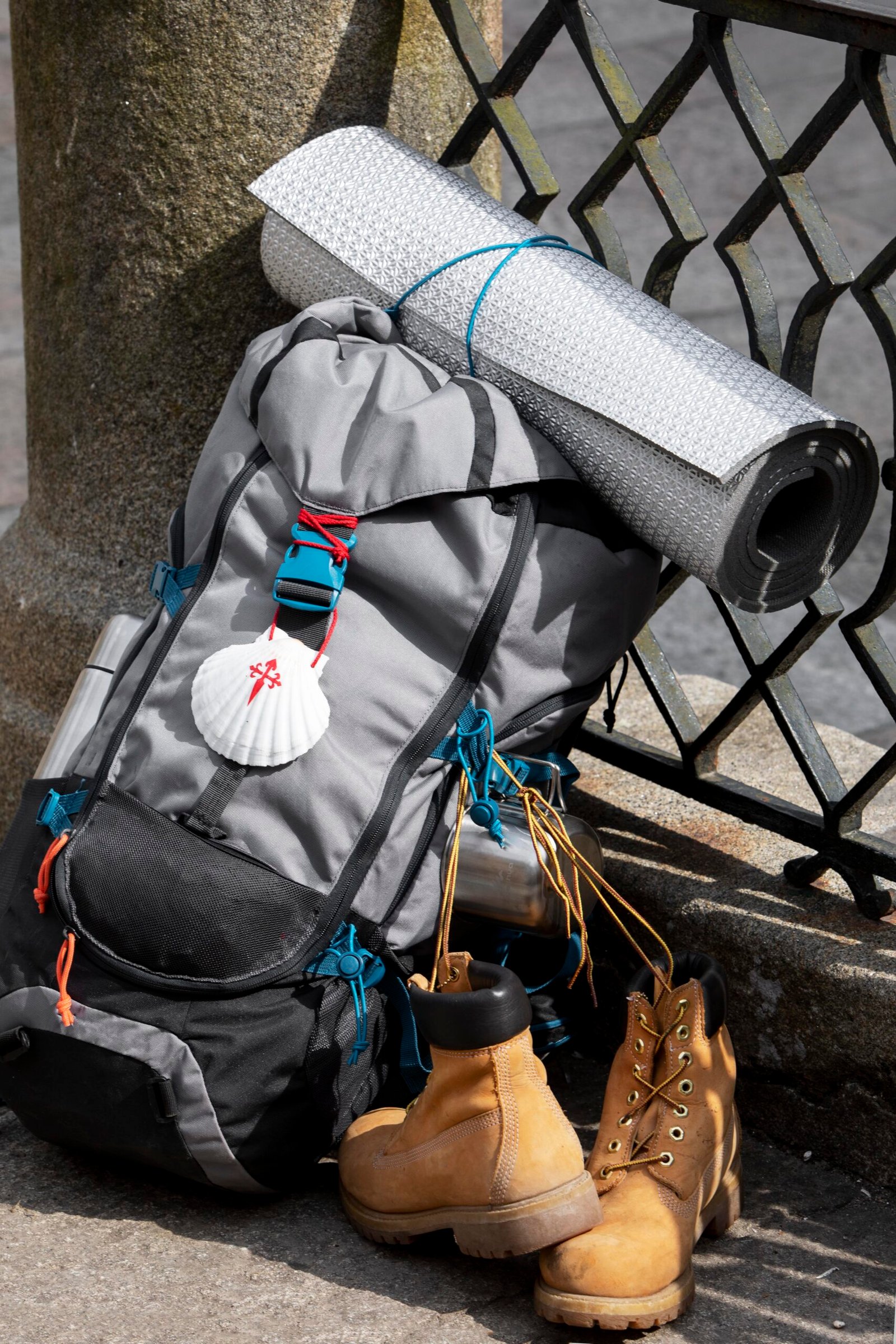
Pack for two realities: 18°C sunshine in the meadows and 0°C frost at night. Both exist within the same 24 hours at 11,000 feet. Keep your pack under 10 kg. Anything heavier compounds fatigue on uphill climbs.
Clothing
Footwear
Equipment
Health & Hygiene
Documents & Finance
Leave Behind
How to Reach Ali Bedni Bugyal Trek Base Camp
The Ali Bedni Bugyal Trek starts from Lohajung village in Uttarakhand’s Chamoli district. Rishikesh is the main transit hub.
Step 1: Reach Rishikesh
By Air: The nearest airport is Jolly Grant Airport in Dehradun, 21 km from Rishikesh. Direct flights connect Dehradun to Delhi. From the airport, take a taxi or pre-paid cab to Rishikesh (45 minutes).
By Train: Rishikesh Railway Station and Haridwar Junction (24 km from Rishikesh) are well-connected to Delhi, Mumbai, Kolkata, and other major cities. From either station, take a taxi or local bus to Rishikesh.
By Road: Direct UPSRTC and private Volvo buses connect Rishikesh to Delhi (240 km, 6-7 hours), Dehradun (45 km, 1.5 hours), and Haridwar (24 km, 1 hour).
Rishikesh to Lohajung
Lohajung is approximately 258 km from Rishikesh via the Alaknanda Valley road.
Route: Rishikesh – Devprayag – Rudraprayag – Karnaprayag – Dewal – Lohajung
Drive Time: 8-9 hours
Vehicle: Shared taxi / private cab / operator-arranged vehicle
Last ATM: Karnaprayag, withdraw enough cash for the full trek
Last Reliable Network: Lohajung, BSNL works in pockets beyond but do not rely on it
The road is well-maintained but narrow and winding. Landslides during monsoon can cause delays. Start early.
Policy
| Policy Point | Details |
|---|---|
| Booking Confirmation | Your seat is considered confirmed only after the required advance payment is received. |
| Balance Payment | The remaining amount must be cleared before departure or as per the reporting instructions shared by the team. |
| Transport Selection | Pickup from Dehradun is applicable only if that option is selected at the time of booking. |
| ID Requirement | Every participant should carry a valid government photo ID for verification and trek administration. |
| Operational Changes | In case of weather, road, or safety concerns, the itinerary may be adjusted for the well-being of the group. |
| Cancellation Window | Charge / Refund |
|---|---|
| More than 30 days before departure | Minimal processing deduction may apply; remaining amount can be refunded or adjusted as per booking terms. |
| 15 to 30 days before departure | Partial cancellation charge applicable; remaining balance may be refunded or transferred to a future batch if approved. |
| 7 to 14 days before departure | Higher cancellation charge applies because transport, permits, and staffing arrangements are usually already blocked. |
| Less than 7 days before departure | Booking is generally non-refundable due to final operational commitments. |
| No show / Trek departure missed | No refund is usually applicable once reporting is missed without prior written coordination. |
Important: Trek departures and route decisions always remain subject to weather, road access, local administration, and safety conditions. Final operational decisions are taken in the interest of the group.
FAQ's
The Ali Bedni Bugyal trek is graded easy to moderate. The trails are well-defined and do not involve technical climbing. However, you climb nearly 5,000 vertical feet from Lohajung to Bedni Top over three days, which requires good cardiovascular fitness. First-time trekkers with basic fitness complete it comfortably, but preparation is important.
Ali Bugyal sits at 11,000 ft (3,350 m) and Bedni Bugyal at 11,200 ft (3,400 m). The highest point is Bedni Top at 12,550 ft (3,825 m). Base camp at Lohajung is at 7,650 ft (2,330 m).
May to June for green meadows, wildflowers, and blooming rhododendrons. September to October for clear skies, exceptional mountain views, and autumn colours. Avoid July-August (monsoon, poor visibility) and November-April (trek closed due to snow).
6 days from Rishikesh to Rishikesh, including travel days. The actual trekking happens over 4 days (Days 2-5). Add 1-2 buffer days for potential delays due to weather or road conditions.
Starts and ends at Lohajung village, reached by road from Rishikesh via Devprayag, Rudraprayag, Karnaprayag
, and Dewal. The trek is a loop with an in-and-out section to Bedni Top.
Yes, with proper preparation. The trek does not require technical skills, but you need basic cardiovascular fitness to walk 6-7 hours daily on varied terrain with an altitude gain of 5,000 feet over three days. If you have never trekked before, train for 4-6 weeks before attempting this.
The two vast alpine meadows (Ali and Bedni Bugyal) at 11,000 ft; views of Mt. Trishul and Mt. Nanda Ghunti from Bedni Top at 12,550 ft; Bedni Kund, a sacred glacial lake; rhododendron forests in bloom (May-June); and the Chaukhamba massif views from the summit.
Lohajung and Didina nights: 5°C to 10°C. Ali Bugyal campsite nights: 0°C to 5°C (frost common). Bedni Top during the day: 5°C to 12°C. Full layering including a down jacket is essential, especially in September and October.
Mild acclimatization happens naturally as you ascend gradually from Lohajung (7,650 ft) to Didina (8,100 ft) to Ali Bugyal (11,000 ft) over two days. Bedni Top at 12,550 ft is where altitude becomes noticeable. Drink 3-4 litres of water daily. Walk slowly. Report any symptoms of AMS (headache, nausea, dizziness, breathlessness at rest) to your trek leader immediately.
BSNL works in Lohajung. Beyond that, assume no network for 4-5 days. Didina sometimes has weak BSNL signal but it is not reliable. Download offline maps before leaving Rishikesh. Inform family of your full itinerary before the trek begins.
Indian nationals: No special permits required. Forest entry fees are minimal and included in most trek packages. Foreign nationals: Check with local authorities for any Inner Line Permit requirements.
Yes. Unlike Valley of Flowers, camping is allowed and encouraged inside Ali and Bedni Bugyal. Most trekking operators camp at designated sites on the edge of the meadows.
Bedni Kund is a sacred glacial lake at 11,200 ft beside Bedni Bugyal. Hindu pilgrims stop here during the Nanda Devi Raj Jat Yatra, a religious procession held every 12 years. A small temple sits beside the lake. The water reflects the surrounding peaks and is considered holy.
Yes. The Ali Bedni meadows lie on the traditional route to Roopkund (Skeleton Lake). However, the Roopkund trek route beyond Bedni Bugyal has been restricted by forest authorities in recent years due to environmental concerns. Most operators now run Ali Bedni as a standalone trek ending at Bedni Top.
Solo trekking is not recommended. The route is remote, passes through uninhabited areas above the treeline, and has no emergency services within reach. Organised group treks with experienced leaders, proper permits, and safety equipment are the only responsible way to do this trek.
Scale. Ali and Bedni Bugyal together form one of the largest alpine meadow systems in Asia. Unlike Dayara Bugyal or Gorson Bugyal, which are single meadows, Ali Bedni gives you two full days walking across endless grassland. The views of Trishul and Nanda Ghunti from Bedni Top are among the best in the Garhwal Himalayas, with the entire 6,000–7,000 foot faces of both peaks visible from the meadows.
Rental gear for this trek