Buran Ghati Pass is an enchanting trek in Himachal Pradesh that offers a beautiful Himalayan trekking experience. The scenery keeps changing as you walk through dense forests, lush green meadows, villages and high-altitude landscapes before reaching the 15,000-ft Buran Ghati Pass.
Unlike many other treks, Buran Ghati never feels boring. Every day brings something different, from the wide meadows of Dayara and peaceful Chandranahan Lake to the famous snow wall and stunning views from the pass.
If you are wondering whether the Buran Ghati Trek is worth the effort, the answer becomes clear when you experience the route yourself. Here are some of the main reasons why this trek should definitely be on your list.
A Trek That Refuses to Be One Thing
One of the best things about the Buran Ghati Trek is that the landscape keeps changing throughout the route.
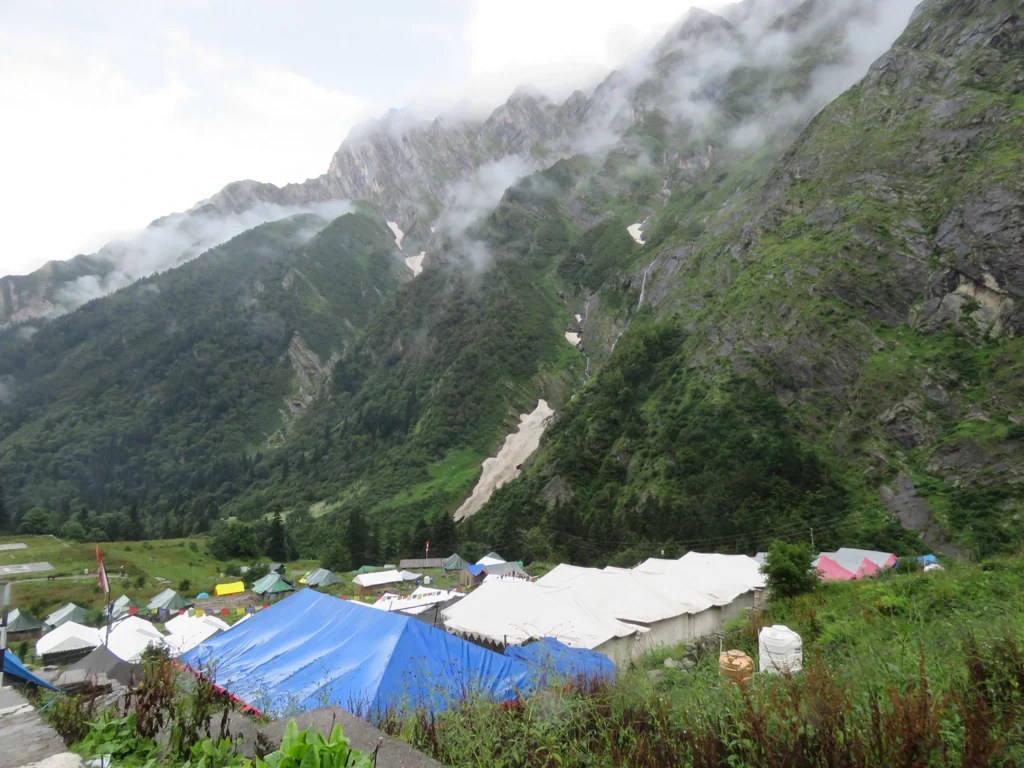
On the first trekking day, the trail around Janglik feels like a traditional Himalayan village route. You walk through forested sections, with oak, pine and rhododendron appearing around the trail. The landscape feels green, quiet and relatively gentle.
Then the forest starts opening up.
You reach the broad grasslands around Dayara, where the trail feels completely different. You get wide mountain slopes and open views.
As you move towards Litham and Chandranahan, the scenery becomes more alpine. The mountains feel closer, the vegetation gets shorter and the terrain becomes more rugged.
Then comes the high-altitude section.
From Dhunda, the trek becomes more challenging as you climb towards the 15,000-ft Buran Ghati Pass. The trail becomes rocky and more exposed before you cross the pass and descend towards the Kinnaur side.
The terrain also changes with the season. In May and June, snow can cover the higher sections and the famous snow wall may be present. In September and October, the snow usually melts, revealing more rocky and boulder sections.
This variety is what makes Buran Ghati special. On one trek, you get:
- Himalayan forests
- Large alpine meadows
- Chandranahan Lake
- High-altitude camps
- A 15,000-ft mountain pass
- Seasonal snow and ice
- Rocky terrain
- Traditional villages
- Kinnaur-side landscapes
Every day brings something different, which is why Buran Ghati Trek never feels boring.
The Ice Wall Everyone’s Talking About
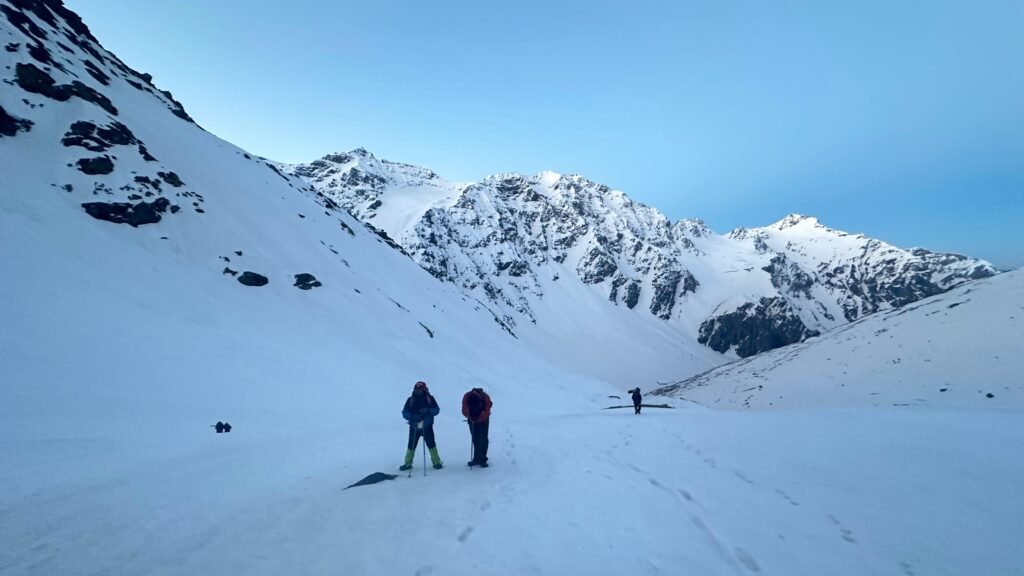
If you search for Buran Ghati Trek, the famous ice wall descent is probably one of the first things you will see. And yes, it is impressive.
But there is one important thing to know — the ice wall is seasonal.
During May and June, snow can remain on the Kinnaur side of the pass, creating the famous steep snow wall. Depending on the snow conditions, the descent may be done with harnesses and fixed ropes under trained technical staff.
You do not need previous mountaineering experience for a professionally managed descent, but you do need to stay calm and follow instructions carefully and avoid rushing.
The mental experience is often just as important as the physical one.
Standing at the top and looking down a steep snowy face can make even a confident trekker pause. The technical team guides you through the descent, while you focus on maintaining your footing and moving carefully.
The snow wall is also one of the reasons why Buran Ghati feels different in each season.
In September and October, the snow generally melts from this face, and the famous wall is replaced by a steep rocky and bouldery descent. It is still challenging, as loose rocks and scree require careful foot placement.
Choose May–June if:
- You specifically want to see the snow-covered Buran Ghati.
- You want to experience the seasonal rope-assisted snow descent.
- You are comfortable with colder and more demanding snow conditions.
Choose September–October if:
- You prefer clearer post-monsoon mountain views.
- You want to see the autumn landscape.
- You would rather deal with rocky terrain than a major snow-wall descent.
- Photography and mountain views are your main priority.
The important thing is do not book a trek in autumn expecting the same snow-wall conditions you see in June photographs. Snow and trail conditions can change from year to year.
Chandranahan Lake — The Moment That Stops You in Your Tracks
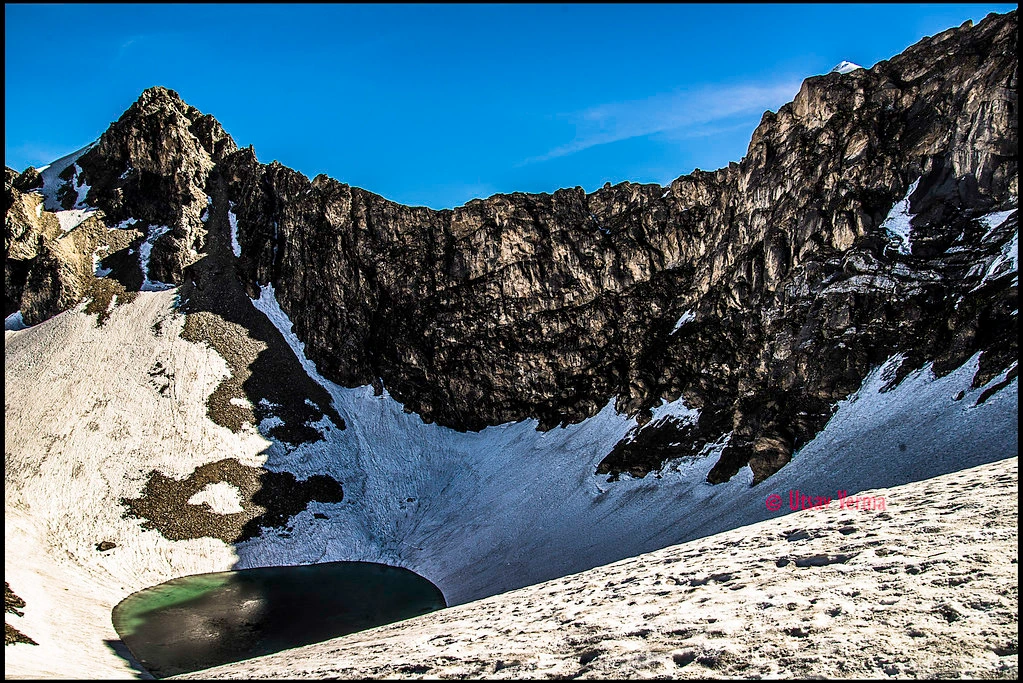
The Chandranahan Lake is one of the highlights of the Buran Ghati Trek and one of the reasons this trek feels different from a simple pass-crossing route.
The lake sits at high altitude in the Pabbar Valley and is generally visited as an excursion from the Litham side. It is surrounded by rugged mountains and high-altitude terrain, the approach to the lake feels completely different from the forests and meadows you have already crossed.
As you climb higher, the trail becomes more open and rocky. The surroundings become quieter, and the landscape starts to feel more raw and dramatic.
You have already passed through forests and meadows. Now you are deep into a high-altitude landscape shaped by snow, rocks and exposed mountain terrain.
The excursion also has a practical purpose. It gives your body another day of walking at higher elevation before the main Buran Ghati crossing. Instead of rushing directly from the lower camps towards the pass, the itinerary allows trekkers to spend time at altitude before the most demanding day.
However, altitude problems can still occur, even in fit trekkers. If you develop a persistent headache, vomiting, unusual dizziness, severe weakness or breathing difficulty, tell your trek leader immediately. rather than trying to push through.
Chandranahan is also one of the places where weather can completely change the experience.
On a clear day, the surrounding mountains can appear sharply defined. In poor weather, clouds can move in quickly and visibility can fall.
That is part of high-altitude trekking. You cannot control the weather, but you can control your preparation. Carry proper warm layers, keep rain protection accessible and follow your trek team’s instructions if conditions change.
Janglik to Barua — A Journey Through Two Living Villages
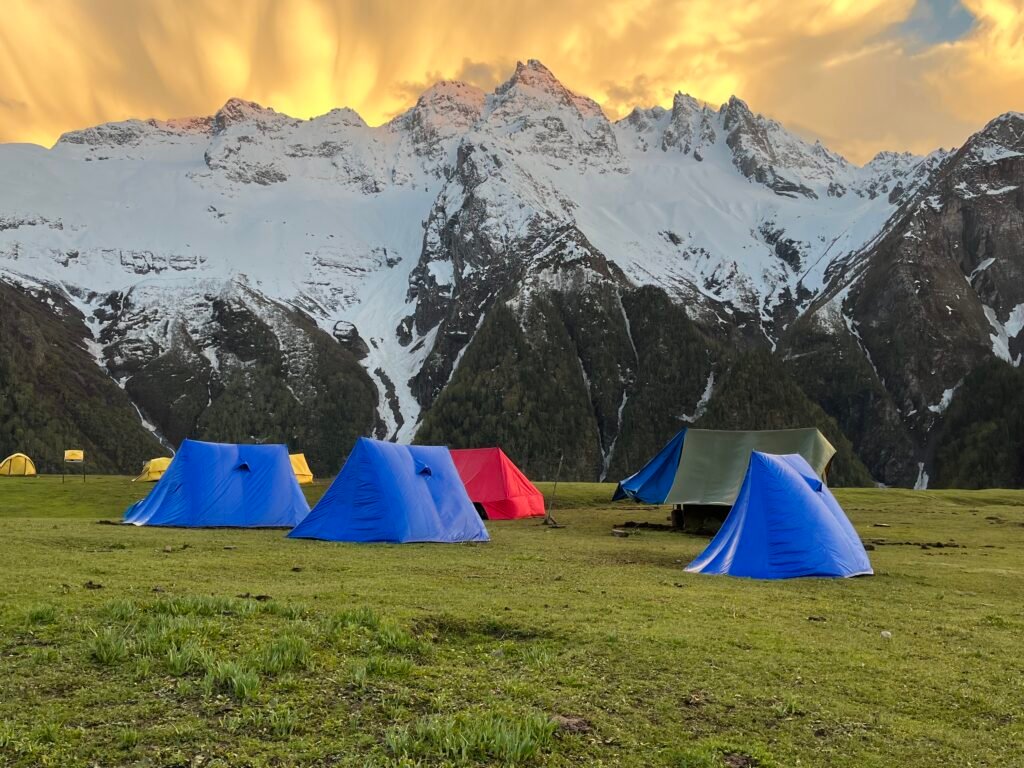
One of the best things about the Buran Ghati Trek is that you start and finish in two different mountain villages.
Janglik is the starting village on the Pabbar Valley side. It is a quiet Himalayan village with traditional houses and a peaceful atmosphere. Reaching Janglik is also part of the experience, as you move away from busy tourist places and into the mountains.
From Janglik, the trail passes through forests and green meadows before going towards Buran Ghati Pass.
After crossing the buran pass, the trail goes down towards Barua village in Kinnaur. As you walk down, the scenery changes again. You see more greenery, farms and apple orchards around the village.
This is what makes Buran Ghati a special crossover trek. You start from the Pabbar Valley and finish on the Kinnaur side instead of returning to the same village.
The villages are also a nice part of the journey. You get to see a quieter side of mountain life, where daily life is simple and mobile network can be limited.
A Simple Tip Before You Start
Do not depend on Janglik for last-minute shopping. Carry your medicines, snacks, important personal items and trekking gear before reaching the village.
Once the trek starts, you can focus on the trail, mountains and the experience.
Dayara and Litham — Campsites You Won’t Want to Leave
Some trekking memories come from summits. Others come from campsites.
Dayara Meadows is one of the first places where you can really see how wide and beautiful the mountains are. After walking through the forest, you suddenly reach large open meadows with mountains all around you.
In the right season, Dayara can be covered in green grass and wildflowers. By September and October, the colours can change to shades of yellow, gold and brown, making the meadows beautiful for photography.
Then there is the Litham campsite.
Litham is deeper into the trek and closer to the high-altitude areas. The landscape feels more rugged than Dayara, with mountains rising around the campsite.
Litham is also the base for the Chandranahan Lake excursion. You spend more time here, so there is a chance to slow down, enjoy the surroundings and prepare for the higher sections ahead.
This is also where you can clearly see how the landscape changes as you gain altitude:
- The forest is now behind you.
- The wide meadows start becoming smaller.
- The vegetation becomes shorter.
- More rocks appear.
- The mountains start to feel bigger and more rugged.
That gradual change is what makes Buran Ghati special. You do not suddenly reach a dramatic high-altitude pass. You slowly walk towards it, watching the landscape change with every step.
The View from the Top of Buran Pass
Reaching the top of Buran Pass is one of the most exciting moments of the trek. After several days of walking through forests, meadows and high-altitude trails, you finally reach the pass at around 15,000 ft.
From the top, you get wide views of the surrounding Himalayan mountains. On a clear day, you can see the towering Dhauladhar and Kinnaur ranges, along with the mountains towards the Baspa Valley.
The view feels very different from what you have seen earlier in the trek. There are no dense forests around you. Instead, you are surrounded by high mountain slopes, rocky terrain and distant snow-covered peaks.
One of the most special sights from the top can be the majestic Kinner Kailash peak. Its visibility depends on the weather and how clear the sky is, so we always recommend enjoying it as a possible highlight rather than a guaranteed view.
After crossing the pass, the Kinnaur side is especially beautiful. As you start descending, the landscape slowly changes and you get new views of the mountains and valleys.
On a clear day, the views from Buran Pass can be one of the most memorable parts of your Buran Ghati Trek.
And remember, reaching the top is only half the experience. The descent towards Kinnaur is still ahead of you.
Why This Trek Still Feels Undiscovered
Buran Ghati is not an unknown trek. It has become popular among trekkers who want to explore something beyond the more common Himalayan routes.
Still, compared with some of the busier trekking destinations in India, Buran Ghati can feel quiet and less crowded.
The trek starts from Janglik village in Himachal Pradesh, which is not a huge trekking hub. The trail passes through forests, open meadows and high-altitude camps rather than a continuous chain of busy tourist points.
However, “undiscovered” does not mean you will have the mountains all to yourself. Buran Ghati is a well-known trek, and during the main season, several trekking groups can be on the trail.
A better way to describe it is less commercial and more remote-feeling.
You should still plan properly before starting the trek. The road journey to Janglik takes time, weather can affect the itinerary, and the high-altitude crossing needs experienced trek support. Mobile networks can also be limited in some areas.
You cannot treat Buran Ghati like a weekend trip where you can easily find a shop or vehicle whenever you need one.
And that is also what makes the trek appealing.
If you want a Himalayan trek where the journey itself is part of the experience, Buran Ghati is a great choice.
It gives you enough adventure to feel rewarding without turning the entire trek into technical mountaineering.
For trekkers who have already completed easier Himalayan routes and want to take the next step, Buran Ghati offers a good balance of adventure, scenery and challenge.
The Wildlife and Wildflowers You Didn’t Expect
Here is the version I would use. I’ve kept the descriptive, nature-focused style of the reference article, but made the language simpler, more natural, and suitable for your Buran Ghati article.
The Wildlife and Wildflowers You Didn’t Expect
The Buran Ghati Trek is also known for its beautiful flora and fauna. Along the trail, you will see the landscape changing from dense forests to open meadows and high-altitude terrain.
In the lower sections, the trail passes through forests filled with oak, pine and rhododendron trees. During the summer months, rhododendrons and other seasonal wildflowers can add bright colours to the green surroundings.
As you climb higher, the trees become fewer and the wide meadows become more common. In May and June, the landscape is usually fresh and green, while September and October bring warmer shades of yellow, orange and brown.
If you are lucky, you may also spot some of the wildlife found in this region. Himalayan Monal is one of the most beautiful birds you may come across. You may also find musk deer, Bharal (blue sheep), red fox and Himalayan Tahr in the wider mountain region. Birds such as Himalayan Griffon, Golden Eagle and Red-billed Chough can also be seen around the higher sections.
Larger animals such as Himalayan black bear and Himalayan brown bear are also found in the wider Himalayan ecosystem, but seeing them on the trek is uncommon.
Wildlife sightings are never guaranteed. Sometimes you may see an animal, while at other times you may only hear a bird or notice movement in the forest. That is part of the experience.
If you do spot wildlife, keep your distance and do not try to follow or feed it for a photograph. Let the animal move freely.
The same care applies to the wildflowers. Do not pick flowers just because they look beautiful. Leave them growing in the meadow where they belong.
Also remember to carry your waste back with you. Plastic and food wrappers can stay in remote mountain areas for a long time.
The forests, colourful flowers, open meadows and wildlife are an important part of the Buran Ghati experience. When you leave them untouched, you help keep the trail beautiful for the next trekker.
So… Should You Go?
If you love beautiful mountain views, changing landscapes and a little adventure, the Buran Ghati Trek is a great choice.
The route takes you from Janglik and Dayara to Chandranahan Lake, Dhunda and the 15,000-ft Buran Pass, followed by a descent to Barua.
Choose May–June for snow and the famous snow wall. Choose September–October for clearer skies, autumn colours and better mountain views.
Buran Ghati is challenging, with long walking days, steep climbs and changing weather. Good preparation and regular walking can make the trek much easier.
Ready to experience it yourself? Book your Buran Ghati Trek with us today!