The monsoon has just withdrawn. The forests are freshly washed, the grasslands still carry shades of green, and the Himalayan peaks begin appearing against increasingly clear skies. This transition makes September and October two of the most rewarding months to experience the Ali Bedni Bugyal Trek in Uttarakhand.
Located in the Chamoli district, Ali and Bedni Bugyal are among Uttarakhand’s spectacular high-altitude meadows. The trail combines dense forests, traditional mountain villages, vast grasslands and close Himalayan views in one relatively compact trek.
According to Uttarakhand Tourism, the trek reaches approximately 3,810–3,825 metres (around 12,500–12,550 ft) and is classified as a moderate trek. The official tourism information highlights views of peaks including Trishul, Nanda Ghunti and Chaukhamba.
But what makes September and October special?
These months bring a combination that trekkers often look for: post-monsoon greenery, improving visibility, comparatively stable trekking conditions and crisp autumn mountain views.
If you are considering an Ali Bedni Bugyal Trek package during September or October, this guide explains the weather, temperature, scenery, difficulty, itinerary, distance, price and what you should realistically expect on the trail.
Quick Facts About Ali Bedni Bugyal Trek
| Trek Detail | Information |
| Location | Chamoli, Uttarakhand |
| Starting Point | Lohajung |
| Maximum Altitude | Approx. 12,500–12,550 ft |
| Difficulty Level | Moderate |
| Trip Duration | 6 Days |
| Main Attractions | Ali Bugyal, Bedni Bugyal, Bedni Top, forests and Himalayan views |
| Major Mountain Views | Trishul, Nanda Ghunti and surrounding Himalayan ranges |
| Best Autumn Period | September–October |
| Package Offer Price | ₹8,500 per person |
| Starting/Ending City | Rishikesh |
Uttarakhand Tourism describes the trekking section as approximately 27–31 km, depending on the route used. Different operators may follow slightly different trails, campsites and road-head combinations, so the advertised Ali Bedni Bugyal Trek distance should always be checked against the specific itinerary being booked.
Why September & October Are Special for Ali Bedni Bugyal Trek
September and October belong to the post-monsoon and autumn trekking season in Uttarakhand.
The landscape changes considerably between these two months.
In September, the monsoon has recently passed, which means the forests and meadows can retain their fresh green appearance. Clouds and occasional showers can still occur, particularly earlier in the month.
As September progresses into October, conditions generally become cooler and drier. The atmosphere tends to become clearer, making October particularly attractive to trekkers interested in mountain photography and long-distance Himalayan views.
This combination makes autumn one of the strongest contenders for the Ali Bedni Bugyal Trek best time.
Ali Bedni Bugyal Trek Weather in September
September is essentially a transition month.
The heavy monsoon period is ending, vegetation is refreshed and the landscape can look exceptionally vibrant.
A regional weather guide for Ali-Bedni reports approximate September temperatures of:
Maximum: around 15°C
Minimum: around 6°C
It characterises September as increasingly pleasant and clear as conditions transition away from the monsoon.
However, mountain temperatures depend heavily on altitude, time of day, wind and current weather systems. Temperatures at exposed camps and higher sections can feel substantially colder than those at lower villages.
What can you expect in September?
You may experience:
- Fresh post-monsoon greenery
- Green alpine meadows
- Moist forest sections
- Cool mornings and evenings
- Increasingly clear mountain views
- Some lingering clouds
- Occasional rainfall
- Mist moving through the valleys
- Cooler temperatures at Bedni Top
Early September can retain more monsoon influence than late September.
Therefore, trekkers travelling during this period should still carry reliable rain protection even if the weather forecast appears favourable.
How Does Ali Bedni Bugyal Look in September?
If greenery is your priority, September is difficult to ignore.
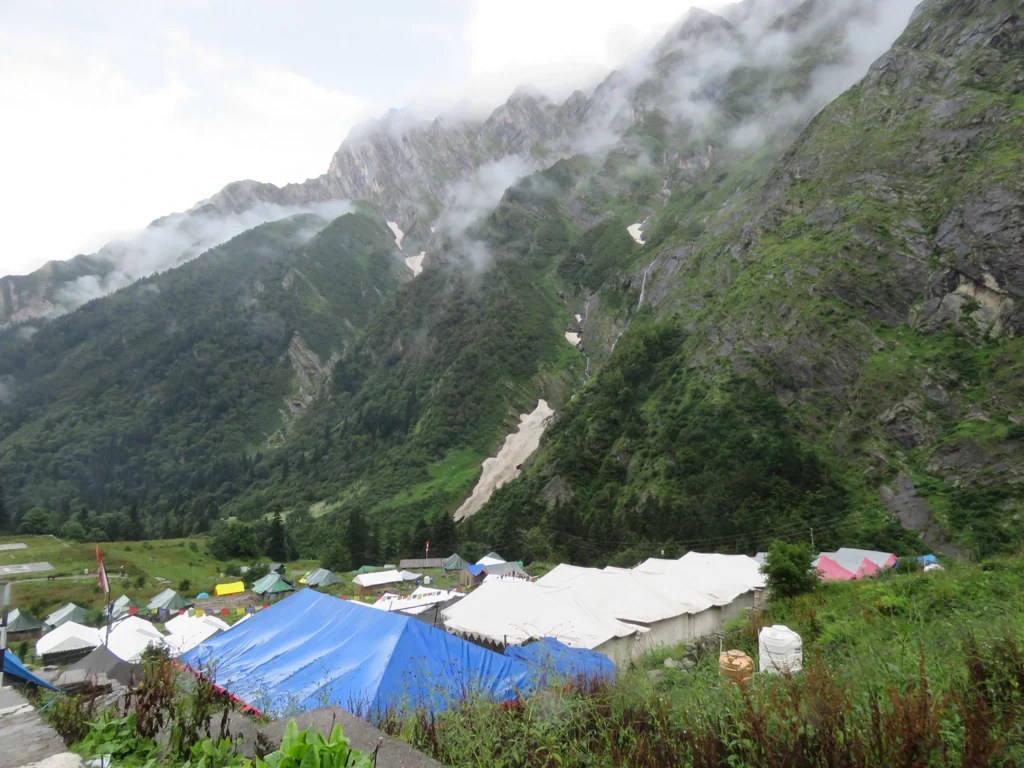
The monsoon replenishes the vegetation across the Garhwal Himalayas. By the time trekking conditions begin improving, the forests around Didina and the open landscapes towards Ali Bugyal can appear intensely green.
Walking out of the forest and seeing the enormous meadow open ahead is one of the defining experiences of this trek.
The contrast can be striking:
green meadows below + white Himalayan summits above + post-monsoon skies in the background.
September is therefore particularly appealing to landscape photographers and trekkers who prefer lush Himalayan scenery.
Ali Bedni Bugyal Trek Weather in October
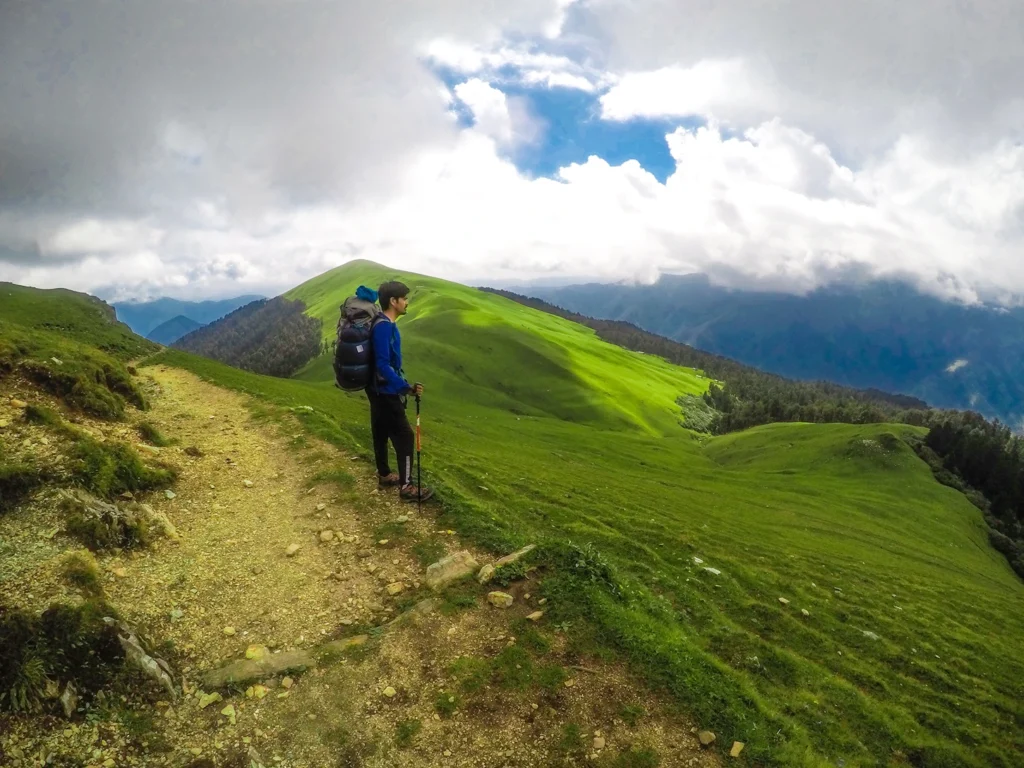
October brings a different personality to the trail.
The moisture of the monsoon reduces considerably, the air becomes colder and the skies can become much clearer.
Indicative regional figures put October temperatures around:
Maximum: approximately 12°C
Minimum: approximately 1°C
These are broad seasonal estimates rather than guaranteed temperatures for individual campsites.
At higher and exposed locations, particularly around Bedni Bugyal and Bedni Top, wind chill can make conditions feel considerably colder.
By late October, trekkers should be prepared for very cold mornings and nights.
What Makes October So Good for Mountain Views?
Visibility is one of October’s biggest advantages.
During the monsoon, moisture and clouds frequently obscure distant mountains. Once the rains withdraw, clearer atmospheric conditions can reveal the high Himalayan skyline much more dramatically.
Uttarakhand Tourism specifically identifies Trishul, Nanda Ghunti and Chaukhamba among the mountain views associated with the Ali Bedni Bugyal Trek.
Imagine starting early in the morning, walking across an open meadow and gradually watching the first sunlight illuminate the snow-covered peaks.
This is the kind of experience for which autumn trekking in Uttarakhand is famous.
October is therefore especially suitable for people whose priorities are:
clear Himalayan views, photography, cold mountain weather and autumn landscapes.
September vs October: Which Month Should You Choose?
Both months are excellent, but they provide slightly different experiences.
| Factor | September | October |
| Meadows | Greener | Green gradually shifting towards autumn shades |
| Weather | Mild to cool | Cooler and crisper |
| Rain Possibility | Higher | Generally lower |
| Mountain Visibility | Good, especially later | Often excellent |
| Nights | Cool | Cold |
| Landscape | Fresh post-monsoon | Classic autumn |
| Photography | Excellent for greenery | Excellent for mountain views |
| Warm Clothing | Necessary | More important |
Choose September if:
You want greener meadows, comparatively milder temperatures and fresh post-monsoon scenery.
Choose October if:
You prefer colder weather, crisp landscapes and clearer views of the Himalayan peaks.
For many trekkers, late September through October represents one of the most attractive windows for the Ali Bedni Bugyal Trek.
Ali Bedni Bugyal Trek Itinerary – 6 Days
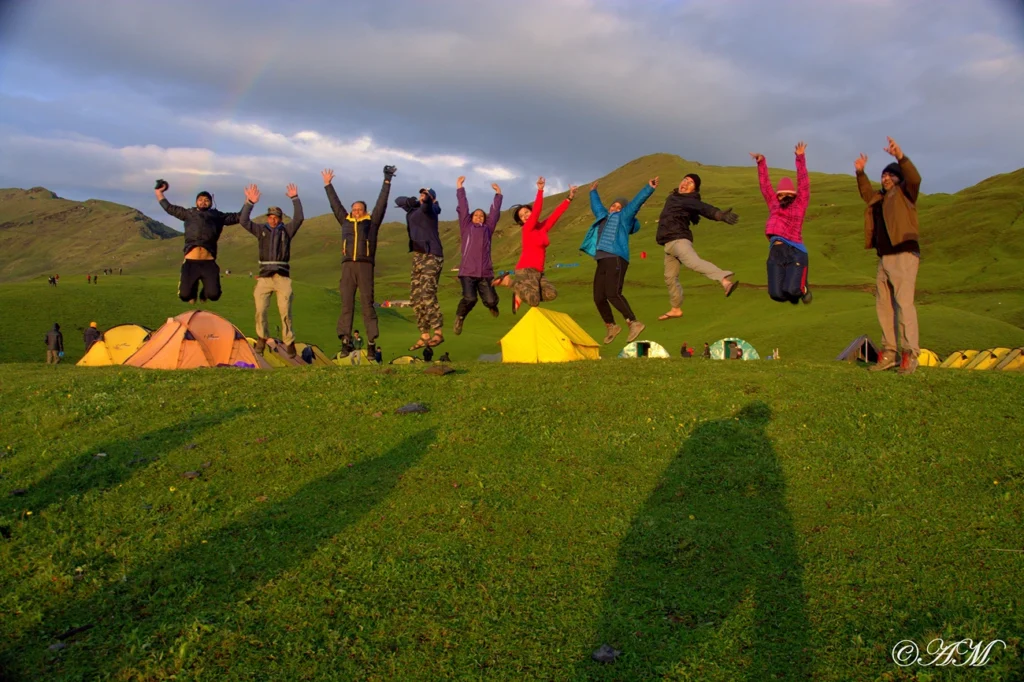
Our Ali Bedni Bugyal Trek itinerary is designed as a six-day journey starting and ending in Rishikesh.
Day 1 – Rishikesh to Lohajung
The journey begins from Rishikesh and proceeds towards Lohajung, the gateway to the trek.
Lohajung is a mountain settlement in Chamoli district and serves as a base for several trekking routes in the region.
The long drive introduces you to Uttarakhand’s mountain roads, river valleys and progressively higher Himalayan terrain.
Spend the night at Lohajung and prepare for the trekking section beginning the following day.
Day 2 – Lohajung to Didina
The actual trek begins today.
The trail takes you from Lohajung towards Didina, a traditional Himalayan village surrounded by forests and mountains.
The day helps your body adjust to walking in the terrain before you move towards the higher meadows.
As the trail enters forested sections, the environment becomes quieter and more remote.
Overnight around Didina.
Day 3 – Didina to Ali Bugyal
This is one of the most anticipated days of the entire trek.
You gradually climb from the forest towards Ali Bugyal.
For a considerable portion of the trail, trees surround you. Then the forest suddenly begins opening.
And ahead lies the enormous expanse of Ali Bugyal.
At approximately 3,350 metres, Ali Bugyal is one of the major highlights identified on the official Uttarakhand Tourism route.
During September, the grasslands can remain beautifully green after the monsoon.
In October, the same landscape begins acquiring a more distinctly autumn appearance.
Either way, this transition from dense forest to open Himalayan meadow is one of the trek’s most memorable moments.
Day 4 – Ali Bugyal to Bedni Top to Gharoli Patal
Day 4 brings another major highlight: Bedni Bugyal and Bedni Top.
Bedni Bugyal sits at approximately 3,825 metres according to Uttarakhand Tourism. The area is also known for Bedni Kund and its surrounding mountain landscape.
The open terrain provides opportunities for expansive Himalayan views when the weather is clear.
After exploring the higher sections, the route proceeds towards Gharoli Patal for the night.
This is likely to be one of the most photographically rewarding days of the trek.
Day 5 – Gharoli Patal to Wan Village and Drive to Lohajung
After spending several days in the higher mountains, you begin descending towards Wan Village.
The environment gradually changes again as the trail moves from high-altitude landscapes into forest and village terrain.
From Wan Village, drive back to Lohajung.
The evening at Lohajung provides time to rest after completing the trekking section.
Day 6 – Lohajung to Rishikesh
After breakfast, begin the return journey from Lohajung to Rishikesh.
As the mountains gradually disappear behind you, the six-day Ali Bedni Bugyal journey comes to an end.
Ali Bedni Bugyal Trek Distance
One point that often creates confusion online is the Ali Bedni Bugyal Trek distance.
Uttarakhand Tourism currently gives figures of approximately 27 km in its trek summary, while its descriptive information also refers to roughly 31 km over four to five trekking days. This difference reflects route and itinerary variations.
The six-day itinerary described here includes:
Rishikesh → Lohajung → Didina → Ali Bugyal → Bedni Top → Gharoli Patal → Wan → Lohajung → Rishikesh.
Therefore, travellers should distinguish between the actual walking distance and the much greater overall journey distance that includes road travel between Rishikesh and Lohajung.
When comparing packages, always check the exact route rather than relying on a single distance figure.
Ali Bedni Bugyal Trek Time – How Many Days Do You Need?
The Ali Bedni Bugyal Trek time depends on where the itinerary begins.
The core trekking route can be completed in fewer days, but when transportation from Rishikesh, overnight stays and a practical trekking schedule are included, a 6-day itinerary provides a convenient format.
Our itinerary includes:
2 travel days + 4 days covering the trekking route and local transfers.
Trying to compress a Himalayan trek simply to save a day is not always beneficial. Adequate time allows trekkers to walk at a comfortable pace and experience the landscape rather than treating the route as a race.
Ali Bedni Bugyal Trek Difficulty Level
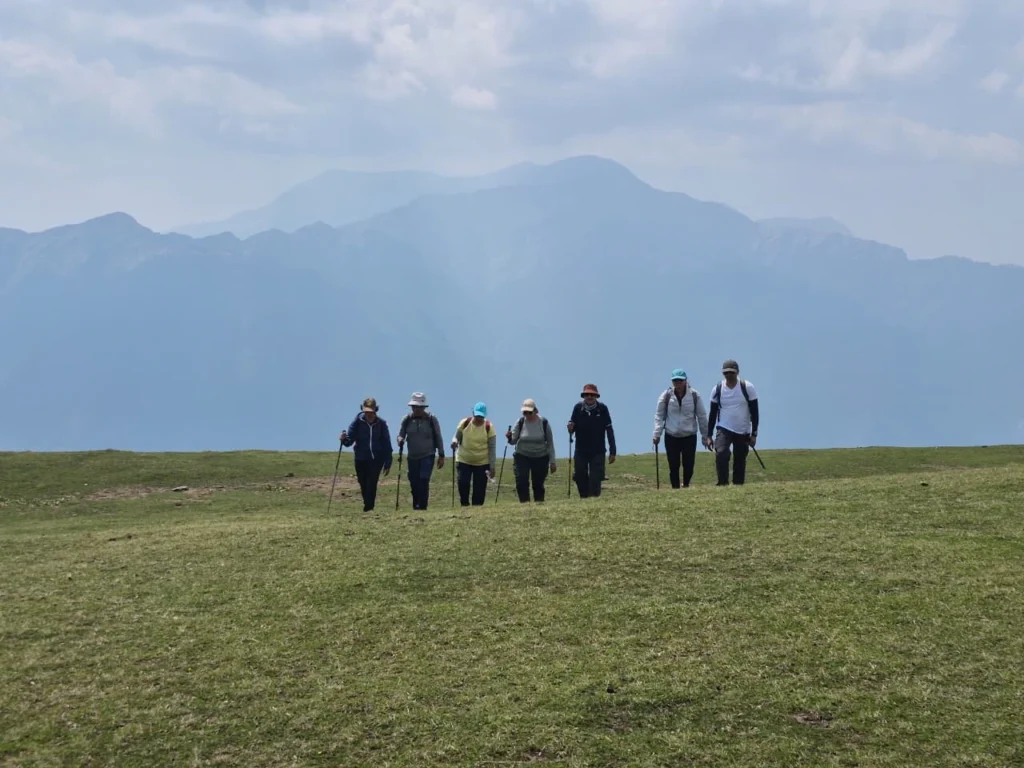
The Ali Bedni Bugyal Trek difficulty Level is generally classified as moderate.
Uttarakhand Tourism also officially lists the trek as moderate.
That does not mean no preparation is required.
Trekkers have to deal with:
- Continuous ascents and descents
- Several hours of walking
- Forest trails
- Uneven mountain terrain
- High-altitude meadows
- Cold weather
- Changing mountain conditions
- Altitude approaching 12,500 ft
A reasonably active beginner can consider this trek with appropriate preparation, but someone with a completely sedentary lifestyle should build basic cardiovascular fitness beforehand.
Regular brisk walking, stair climbing, jogging and basic leg-strength exercises in the weeks before departure can make the experience considerably more comfortable.
Is Ali Bedni Bugyal Trek Suitable for Beginners?
It can be suitable for fit beginners who prepare properly and understand that “beginner-friendly” does not mean effortless.
You don’t necessarily need previous technical mountaineering experience.
What matters more is your ability to walk for several hours on consecutive days while carrying a daypack and adapting to changing altitude and weather.
First-time trekkers should also learn basic mountain discipline:
walk at a sustainable pace, remain hydrated, follow the trek leader’s instructions and never ignore symptoms of altitude-related illness.
What Should You Pack for September?
September requires preparation for both cool weather and possible rain.
Important items include:
- Waterproof trekking shoes with good grip
- Rain jacket or poncho
- Backpack rain cover
- Quick-dry trekking pants
- Full-sleeve base layers
- Fleece jacket
- Warm insulated jacket
- Thermal layers
- Woollen cap
- Gloves
- Trekking poles
- Sunglasses
- Sunscreen
- Personal water bottle
- Headlamp
- Personal medicines
Avoid relying exclusively on cotton clothing because it dries slowly when wet.
What Should You Pack for October?
For October, insulation becomes more important.
Along with standard trekking equipment, carry proper thermal layers, a good fleece and an insulated outer jacket.
Cold mornings at altitude can feel dramatically different from afternoons in sunlight.
Layering is therefore more effective than carrying one extremely heavy garment.
A practical system is:
Base layer → fleece/mid-layer → insulated jacket → wind/water-resistant outer layer when required.
This allows you to add or remove layers as temperatures change throughout the day.
Ali Bedni Bugyal Trek Price
The Ali Bedni Bugyal Trek price varies according to transportation, accommodation, meals, trek support, group size and services included by the operator.
Our Offer Price: ₹8,500 per person
The Ali Bedni Bugyal Trek package follows the six-day route from Rishikesh to Lohajung and onwards through Didina, Ali Bugyal, Bedni Top, Gharoli Patal and Wan before returning to Rishikesh.
Before comparing packages solely on price, check exactly what is included and excluded.
Two packages with similar itineraries can differ significantly in transportation arrangements, accommodation, meals, equipment, permits, guide support and group size.
What Will You Actually See on This Trek?
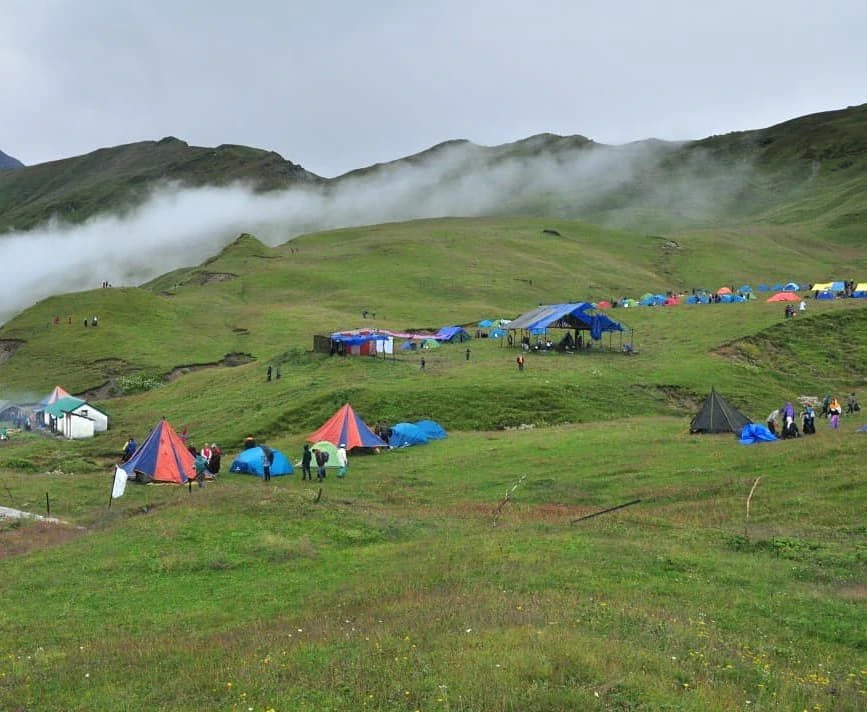
The attraction of Ali Bedni isn’t limited to a single viewpoint.
The landscape evolves almost every day.
Himalayan Villages
Lohajung, Didina and Wan introduce trekkers to settlements surrounded by the Garhwal Himalayas.
Dense Forests
Before reaching the bugyals, the route travels through beautiful forested terrain.
Ali Bugyal
A vast high-altitude meadow where the landscape suddenly opens after the forest climb.
Bedni Bugyal
Higher and more dramatic, Bedni Bugyal combines grassland with impressive mountain surroundings.
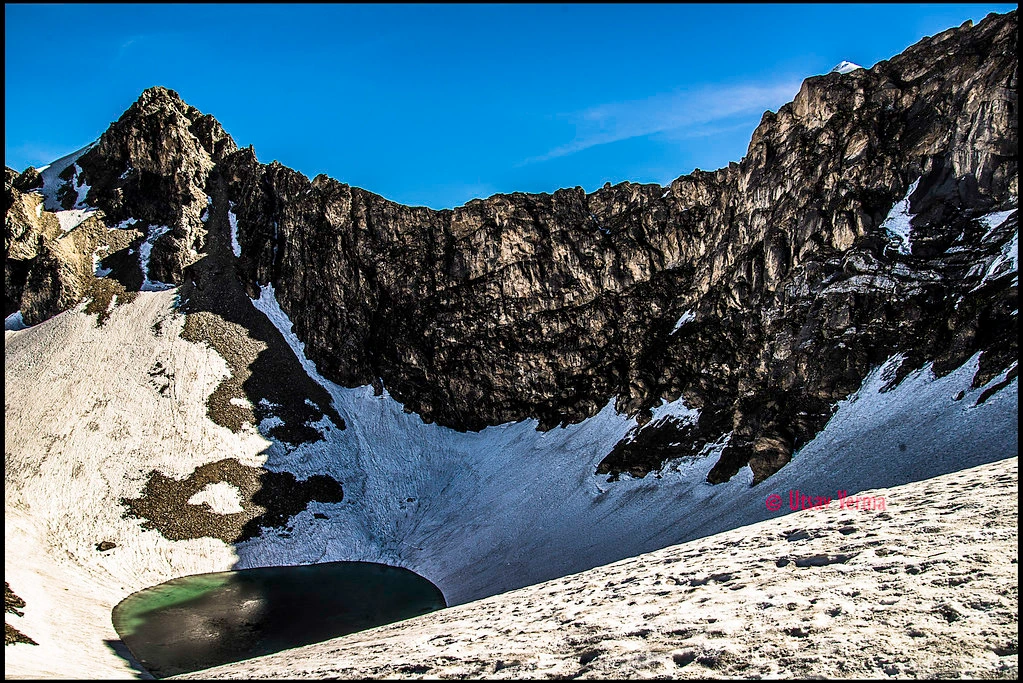
Bedni Kund
Bedni Kund adds a cultural and spiritual dimension to a trek otherwise dominated by forests and meadows.
Himalayan Peaks
On clear days, the route provides expansive views of the surrounding Himalayan ranges, including prominent peaks such as Trishul and Nanda Ghunti.
Sunrise and Sunset in September & October
Autumn light can completely transform the appearance of the mountains.
Early morning is particularly important.
When skies are clear, the first sunlight can illuminate the higher snow-covered summits while the valleys below remain comparatively dark.
Sunsets can be equally dramatic.
For photographers, this means that reaching camp is not necessarily the end of the day’s experience.
Keep your camera or phone accessible during early morning and late afternoon rather than packing everything away immediately after reaching camp.
Ali Bedni Bugyal Trek Video – What Should You Look for Before Booking?
Watching an Ali Bedni Bugyal Trek video before travelling can help you understand the terrain better than photographs alone.
Look for recent videos that show:
- The Didina forest trail
- Climb towards Ali Bugyal
- Actual size of Ali Bugyal
- Bedni Bugyal landscape
- Bedni Top
- Gharoli Patal
- Wan Village trail
- Campsites
- September or October trail conditions
However, don’t assume that a video filmed in one season represents conditions throughout the year.
A lush September meadow, a dry late-autumn landscape and a snow-covered winter bugyal can look like entirely different destinations.
Ali Bedni Bugyal Trek Best Time – Is September or October Better?
There isn’t one universal answer to the Ali Bedni Bugyal Trek best time.
It depends on what you want to see.
For greener post-monsoon landscapes, September has an advantage.
For crisper weather and clearer mountain views, October is particularly attractive.
Broadly, Uttarakhand Tourism describes Ali Bedni as a moderate high-altitude meadow trek, while seasonal weather information indicates that autumn brings cooler, drier conditions after the monsoon.
For trekkers specifically interested in autumn, September and October are both excellent choices, with the character of the landscape gradually changing as winter approaches.
Things to Know Before You Go
Mountain weather cannot be guaranteed, even during a favourable trekking season.
Keep a flexible mindset.
A perfectly clear morning can turn cloudy later in the day. Rainfall can occasionally occur after the main monsoon period, and temperatures at high altitude can drop quickly.
Most importantly, don’t choose a trekking date solely because an online forecast predicts clear skies several weeks in advance.
Himalayan weather forecasts become more useful closer to departure.
Respect the instructions of your trek leader if weather conditions require changes to the planned route or timings.
Responsible Trekking in Ali and Bedni Bugyal
Bugyals are not simply picturesque camping grounds. They are sensitive high-altitude ecosystems.
Trekkers should minimise their impact.
Carry your waste back, avoid single-use plastic wherever possible, don’t leave food wrappers on the trail, don’t damage plants, don’t play excessively loud music and follow local rules regarding camping and access.
The goal should be simple:
Leave the trail as clean as you found it—or cleaner.
A trek becomes more meaningful when experiencing the Himalayas does not come at the cost of damaging them.
Conclusion
The Ali Bedni Bugyal Trek in September and October offers two slightly different versions of the same Himalayan landscape.
September carries the freshness of the retreating monsoon—green meadows, rejuvenated forests and a landscape that still feels intensely alive.
October brings autumn—colder air, crisper mornings and clearer Himalayan panoramas.
With Ali Bugyal’s enormous grasslands, Bedni Bugyal’s high-altitude setting, forests, traditional villages and views towards peaks such as Trishul and Nanda Ghunti, the route packs considerable variety into a relatively short Himalayan trek.
For trekkers searching for an Ali Bedni Bugyal Trek package, our six-day itinerary starts from Rishikesh, travels to Lohajung and follows the route through Didina, Ali Bugyal, Bedni Top, Gharoli Patal and Wan before returning to Rishikesh.
Ali Bedni Bugyal Trek Package – ₹8,500 per person
Whether you choose September for greener landscapes or October for clearer autumn views, arrive prepared for cold temperatures, changing mountain weather and several days of trekking.
The reward is not simply reaching Bedni Top.
It is the entire transition—from roads to villages, villages to forests, forests to bugyals, and finally to a horizon dominated by the Himalayas.
Frequently Asked Questions About Ali Bedni Bugyal Trek
1. What is the Ali Bedni Bugyal Trek best time?
September and October are among the most attractive periods for post-monsoon and autumn trekking. September generally offers greener scenery, while October tends to bring colder and crisper conditions with excellent potential for clear mountain views.
2. What is the Ali Bedni Bugyal Trek difficulty Level?
The Ali Bedni Bugyal Trek difficulty Level is moderate. Uttarakhand Tourism also classifies the trek as moderate. Trekkers should have reasonable cardiovascular fitness and be comfortable walking for several hours on consecutive days.
3. What is the Ali Bedni Bugyal Trek distance?
Official Uttarakhand Tourism information lists approximately 27 km in its trek summary and also describes a roughly 31 km version of the trek. Actual walking distance varies according to the route, campsites and road head used.
4. How many days are required for Ali Bedni Bugyal Trek?
Our Ali Bedni Bugyal Trek itinerary is six days from Rishikesh to Rishikesh, including road travel and the trekking section.
5. What is the Ali Bedni Bugyal Trek price?
Our current Ali Bedni Bugyal Trek price is ₹8,500 per person for the package. Travellers should check the exact inclusions and exclusions before booking.
6. Is September a good time for Ali Bedni Bugyal Trek?
Yes. September is particularly attractive for trekkers interested in fresh post-monsoon greenery and relatively milder autumn temperatures. Some residual rain and cloud are still possible.
7. Is October a good time for Ali Bedni Bugyal Trek?
Yes. October is an excellent period for trekkers seeking cooler weather, crisp autumn scenery and potentially clearer Himalayan views.
8. How cold is Ali Bedni Bugyal in October?
Regional seasonal data indicates October temperatures of roughly 12°C maximum and 1°C minimum, but temperatures vary significantly with elevation, campsite, wind and weather. Higher locations can feel much colder.
9. Can beginners do the Ali Bedni Bugyal Trek?
Fit and properly prepared beginners can consider the trek. It does not require technical mountaineering, but trekkers should prepare for sustained walking, altitude, ascents and changing Himalayan weather.
10. Which is better for Ali Bedni Bugyal Trek: September or October?
Choose September for greener meadows and comparatively milder conditions. Choose October if your priorities are colder autumn weather and clear mountain panoramas.
11. Where does the Ali Bedni Bugyal Trek start?
Lohajung is the principal base for the trek. Our package begins from Rishikesh, from where participants travel to Lohajung before starting the trekking route.
12. What can I see during the Ali Bedni Bugyal Trek?
Major attractions include Ali Bugyal, Bedni Bugyal, Bedni Kund, Bedni Top, Himalayan forests, mountain villages and panoramic views of peaks including Trishul and Nanda Ghunti.
13. Is an Ali Bedni Bugyal Trek video useful before the trek?
Yes. A recent Ali Bedni Bugyal Trek video can help you understand trail conditions, terrain, campsites and the scale of the meadows. Try to watch footage recorded in the same season in which you plan to trek.