The Brahmatal Trek has long been associated with snow-covered forests, frozen mountain landscapes and remarkable views of the Garhwal Himalayas. For many trekkers, the possibility of walking through fresh Himalayan snow is one of the biggest reasons to choose Brahmatal during winter.
But Himalayan winters are not always predictable. One season may bring substantial snowfall early in December, while another may remain comparatively dry until January or even February. Temperatures, snowfall timing, snow depth and the duration of snow cover can vary considerably between years.
These variations raise an important question: Are changing snowfall patterns affecting the Brahmatal Trek, and what should winter trekkers expect in the coming years?
Understanding the answer requires looking beyond individual snowfall events. It involves examining western disturbances, changing winter temperatures, precipitation patterns, altitude and the broader climatic changes taking place across the Himalayas.
For travellers planning the Brahmatal Trek in winter, these factors are increasingly relevant to choosing dates, preparing equipment and setting realistic expectations.
Why Snowfall Is Central to the Brahmatal Trek Experience
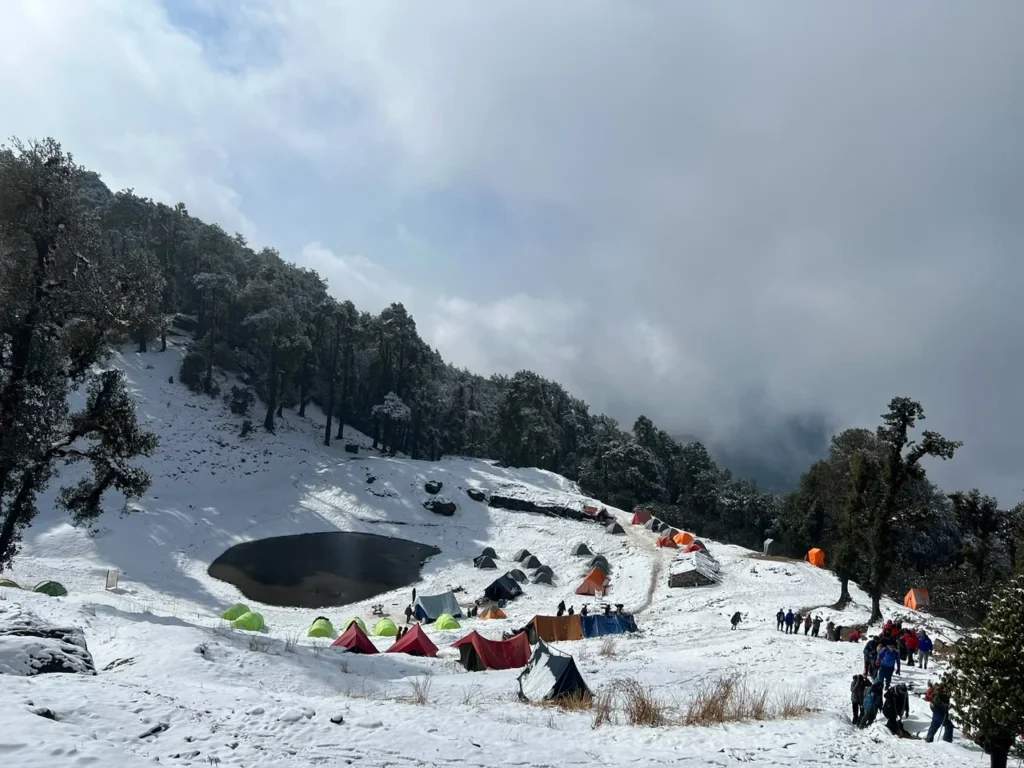
Located in the Chamoli district of Uttarakhand, Brahmatal is one of the better-known winter trekking destinations in the Garhwal Himalayas. The route commonly begins near Lohajung and passes through oak and rhododendron forests, open ridges and alpine terrain before reaching the Brahmatal area.
The trek reaches approximately 3,700 metres, depending on the route and highest point included in the itinerary.
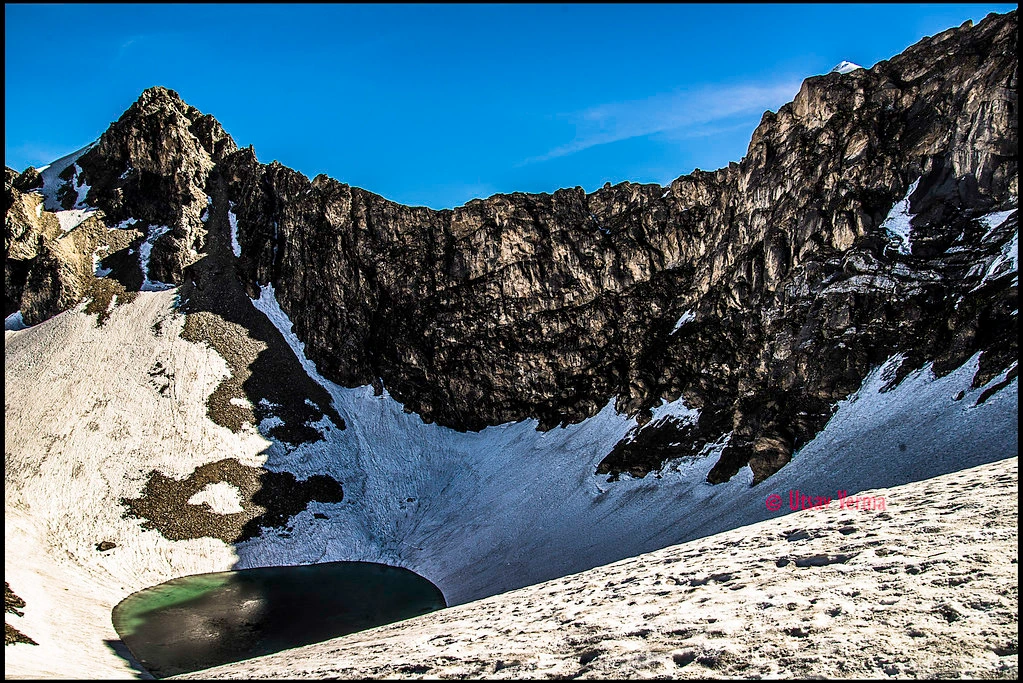
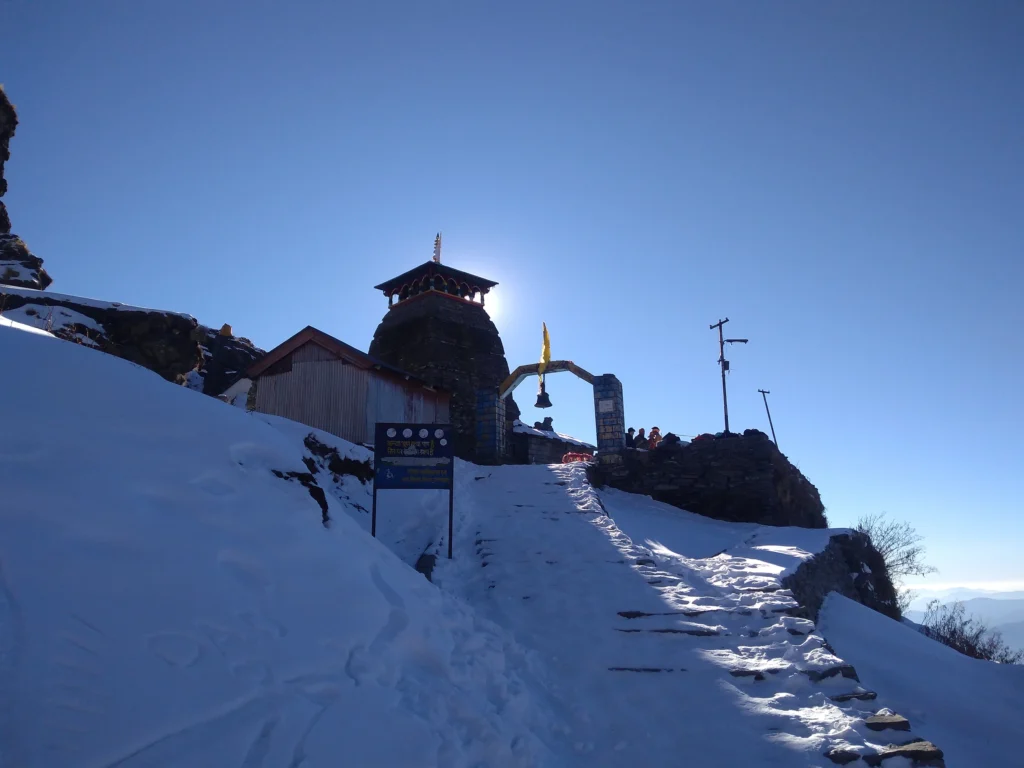
During winter, snow can transform the landscape. Forest paths become covered in white, exposed slopes develop snowfields, and mountain views acquire a different character against the winter sky.
Snowfall also affects the physical experience of trekking. Walking on snow-covered terrain requires more effort, while icy patches and reduced visibility can make familiar trails more demanding.
The attraction of Brahmatal is therefore closely connected to snow, but snowfall should never be treated as a guaranteed feature of a particular departure date.
What Controls Winter Snowfall Around Brahmatal?
Winter snowfall in the western Himalayas is strongly influenced by weather systems known as western disturbances.
These are eastward-moving atmospheric disturbances that often originate around the Mediterranean and West Asian regions before travelling towards the Indian subcontinent. When they interact with the Himalayan mountains, they can produce rain and snowfall, particularly during the winter months.
The amount of snowfall depends on several factors, including the strength of the disturbance, available atmospheric moisture, air temperature and local mountain topography.
At higher elevations, sufficiently cold conditions allow precipitation to fall as snow. At lower elevations, the same weather system may produce rain or a mixture of rain and snow.
This distinction matters for Brahmatal because the route crosses different altitude zones.
A winter storm may leave lower forest sections relatively clear while depositing significant snow near the upper ridges. Another storm may produce snowfall much farther down the trail.
The Indian Meteorological Department identifies western disturbances as an important influence on winter weather across northwestern India and the western Himalayan region.
However, the occurrence of a western disturbance does not automatically guarantee substantial snowfall around Brahmatal. The exact track, moisture content and temperature profile of each system influence the outcome.
Are Snowfall Patterns in the Himalayas Really Changing?
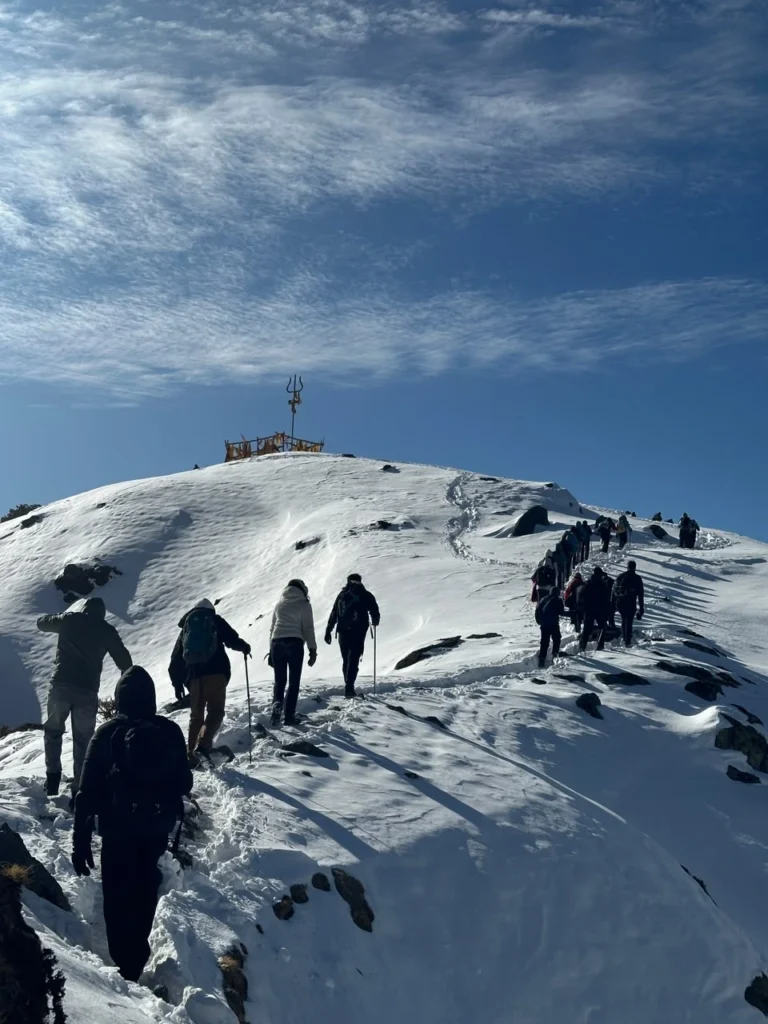
Scientific research has documented significant climate-related changes across the Hindu Kush Himalayan region, including rising temperatures and changes in snow and ice conditions.
The International Centre for Integrated Mountain Development (ICIMOD), in its Hindu Kush Himalaya Assessment, highlights the vulnerability of the region’s cryosphere—the snow, glaciers and frozen components of mountain environments—to climate change.
Warmer temperatures can influence how much precipitation falls as snow rather than rain, particularly at elevations close to the freezing threshold.
They can also affect how long snow remains on the ground after a storm.
Yet an important distinction is necessary.
Regional climate change does not mean that snowfall around Brahmatal is declining every single winter.
Snowfall is naturally variable, and some winters may still experience heavy snowstorms despite a long-term warming trend.
Furthermore, establishing a specific snowfall trend for Brahmatal requires reliable long-term observations from the trekking area itself. Regional studies and occasional photographs cannot independently prove that annual snowfall at Brahmatal has consistently decreased.
The more scientifically accurate conclusion is that changing climatic conditions can affect snowfall timing, precipitation type and snow persistence, while the exact local trends remain dependent on detailed observations.
For trekkers, this uncertainty is one of the most important realities of winter travel.
What the Latest Snow Research Reveals
The latest regional findings make the question of winter snowfall particularly relevant.
In April 2026, ICIMOD reported that snow persistence across the Hindu Kush Himalaya was 27.8% below the long-term average, marking the fourth consecutive year of below-normal conditions.
Snow persistence measures how long snow remains on the ground during a particular period. It is not the same as the total amount of snowfall.
The previous 2025 assessment had already recorded snow persistence 23.6% below normal, with the Ganges basin showing a particularly significant deficit of 24.1%.
These figures point to important regional changes, but they should not be presented as measurements taken directly at Brahmatal.
For the Brahmatal trekking region, the findings reinforce the importance of monitoring actual snow conditions rather than relying exclusively on historical seasonal expectations.
Why December, January and February Can Feel So Different
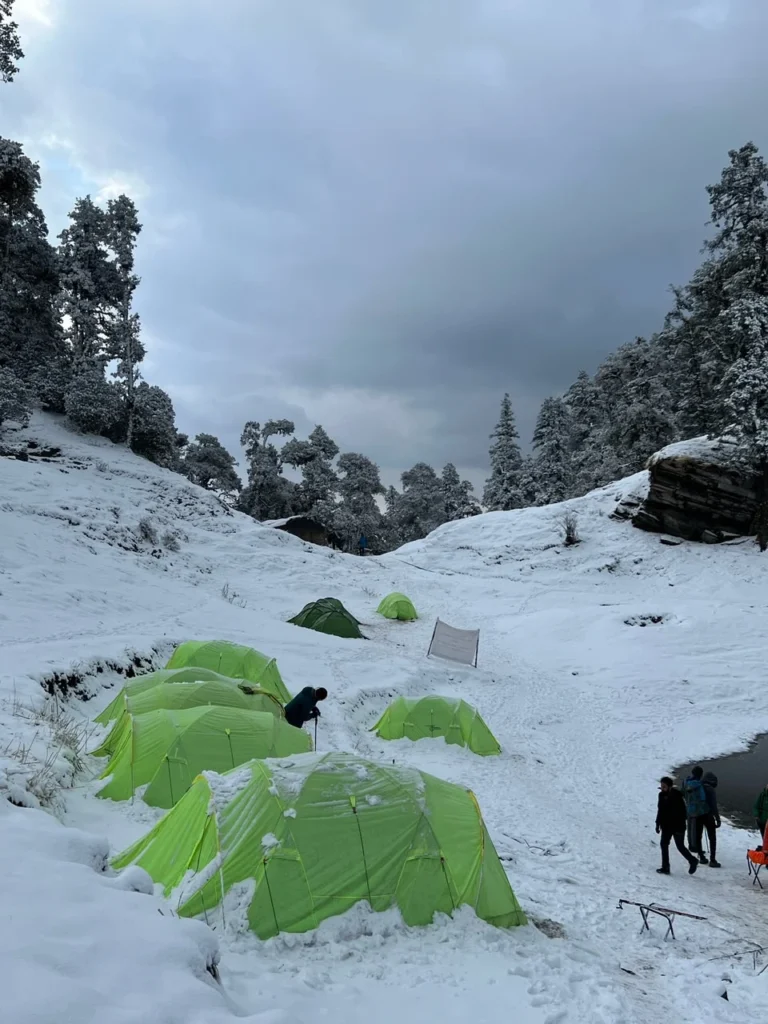
December, January and February are traditionally associated with winter trekking around Brahmatal, but each month can produce different conditions.
December marks the transition into deeper winter. Temperatures decline, and snowfall becomes possible when suitable weather systems reach the region. However, early December does not necessarily guarantee continuous snow cover along the trekking route.
January often offers opportunities for established winter snow conditions, particularly after successive snowfall events. Nevertheless, a relatively dry winter may leave sections of the trail with less snow than expected.
February can also bring significant snowfall. Fresh storms may create deep snow, while sunny periods between disturbances can produce melting and refreezing, resulting in slippery or icy sections.
There is no universally reliable month that guarantees fresh snowfall at Brahmatal.
For someone planning a winter trek, the more useful distinction is between fresh snowfall, accumulated snow cover and safe trail conditions.
Fresh snowfall creates the familiar white landscape but may also reduce visibility and make trail-breaking difficult. Older accumulated snow can remain for weeks in shaded locations, even without recent storms.
A trail may therefore offer a snowy trekking experience without receiving fresh snowfall during the actual expedition.
How Altitude and Terrain Influence Snow Conditions
One reason snowfall conditions vary across Brahmatal is the changing elevation and terrain along the route.
The lower sections near Lohajung experience different temperatures from the upper ridges. As elevation increases, air temperatures generally decrease, making snow more likely to accumulate and persist.
Forest cover also influences conditions.
Shaded sections may retain snow and ice longer than open slopes exposed to direct sunlight. Meanwhile, wind can redistribute snow across exposed ridges, leaving some areas relatively bare and others with deeper deposits.
Slope orientation matters as well. North-facing slopes in the Northern Hemisphere often receive less direct winter sunlight than south-facing slopes, which can influence snow retention.
These differences explain why photographs taken at different points along the same trek may show dramatically different winter conditions.
They also demonstrate why a single photograph or social media update cannot reliably describe the entire Brahmatal route.
What Changing Snowfall Means for Trekking Safety
Changing snow conditions can affect both the difficulty and safety of winter trekking.
Deep fresh snow increases physical effort and may obscure established trails. Hard-packed snow and ice can reduce traction, particularly on steep or exposed sections.
Weather disturbances may also bring strong winds, poor visibility and sudden temperature changes.
The absence of snow does not automatically make a winter trek easy. Frozen ground, loose stones, cold winds and exposed terrain can still create demanding conditions.
Similarly, heavy snowfall should not automatically be considered desirable. Accumulated snow can conceal hazards and increase the difficulty of route navigation.
Avalanche exposure depends on terrain, snowpack structure and weather history, not simply on whether a location has received snowfall. Trek leaders must assess local conditions rather than assume that a familiar route is always safe.
For winter trekkers, suitable footwear, insulating clothing, weather protection and experienced local guidance remain essential.
It is equally important to accept that an itinerary may need to change when conditions become unsafe.
Reaching a particular viewpoint or campsite should never take priority over the safety of the group.
Could Brahmatal’s Winter Trekking Season Change in the Future?
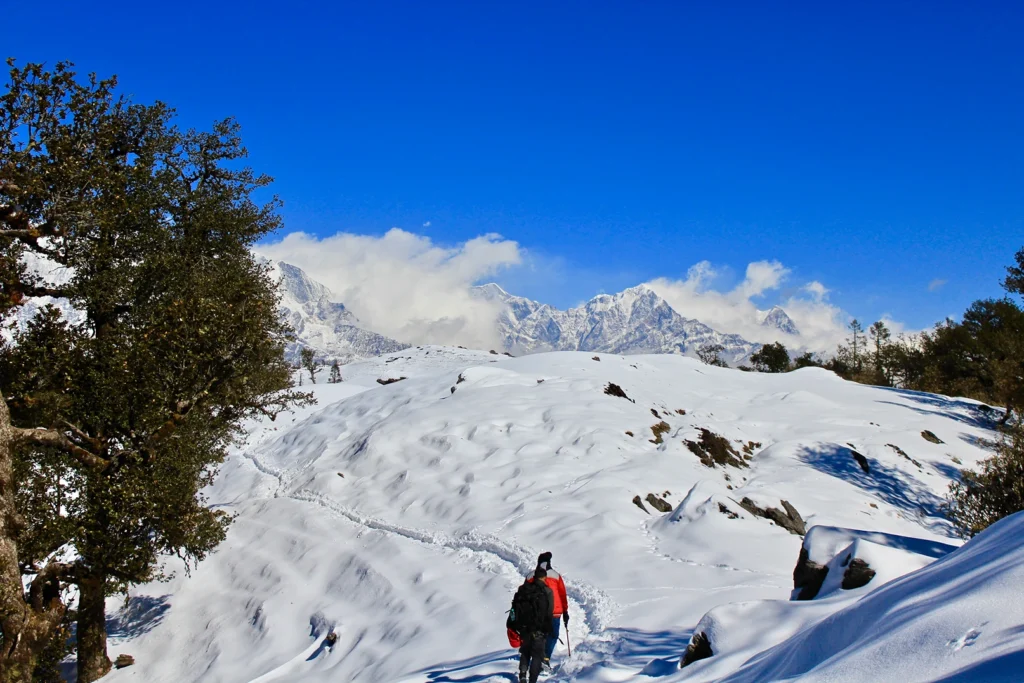
If regional warming continues, the timing and duration of snow cover at some Himalayan elevations may change.
Warmer conditions can raise the elevation at which precipitation falls as snow and increase melting during relatively mild periods.
However, future snowfall at Brahmatal cannot be predicted accurately from regional climate trends alone.
Individual winters will continue to be influenced by atmospheric circulation, western disturbances and local weather conditions.
The 2023 ICIMOD HI-WISE assessment describes substantial changes in Himalayan snow and ice systems, including more erratic snowfall patterns and declining snow cover in parts of the region.
For trekking destinations such as Brahmatal, these findings suggest that tourism planning should become more adaptable.
Rather than promoting fixed dates as guaranteed snow experiences, operators can communicate typical seasonal conditions while providing updated information as departures approach.
This approach helps travellers make informed decisions without creating unrealistic expectations.
Kuari Pass Trek in February: Another Perspective on Changing Himalayan Snowfall
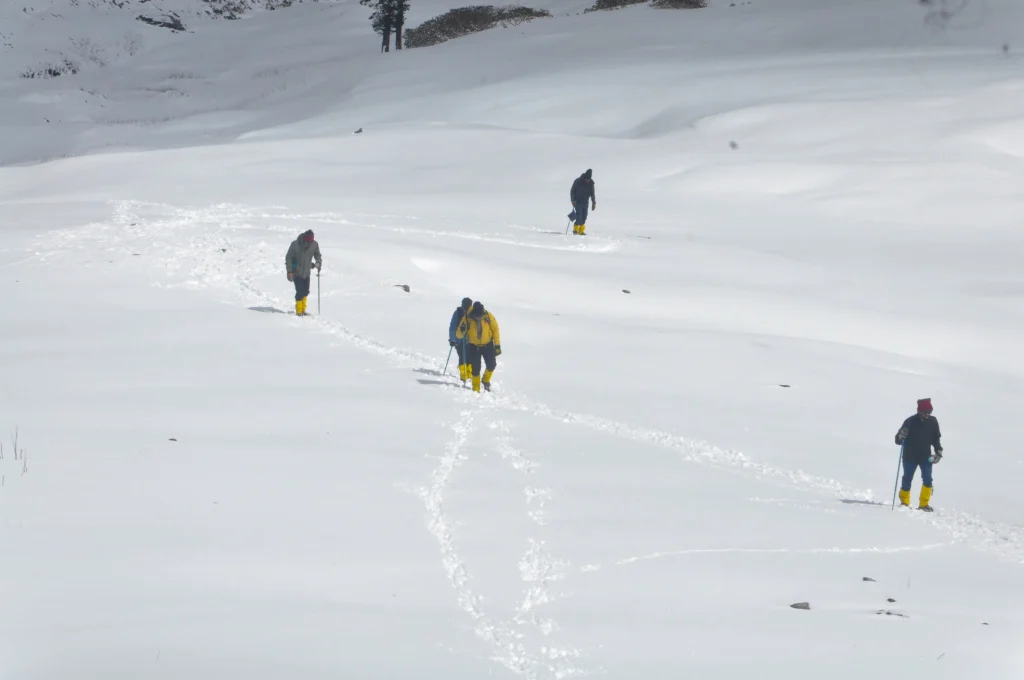
The Kuari Pass Trek in February offers another opportunity to understand how winter snowfall patterns influence trekking conditions across the Garhwal Himalayas. Located in the Chamoli district of Uttarakhand, Kuari Pass Trek is known for its snow-covered forest trails, open ridges and spectacular views of Himalayan peaks, including Nanda Devi, Dronagiri and Hathi Parbat.
February is traditionally considered a favourable month for experiencing winter snow on this route, but actual conditions depend on western disturbances, temperature variations and accumulated snowfall from earlier months. Similar to Brahmatal, some sections of the Kuari Pass trail may retain substantial snow while others remain comparatively dry or icy.
These variations highlight why trekkers should monitor current weather conditions rather than rely entirely on historical snowfall expectations. For those comparing Brahmatal and Kuari Pass winter treks, understanding changing snow conditions can help with selecting suitable dates, preparing equipment and planning a safer Himalayan adventure.
The Role of Local Guides and Trekking Operators
Local guides play an important role in understanding changing winter conditions.
Their experience with trail surfaces, seasonal weather, water availability and exposed mountain sections provides valuable practical information for trekking groups.
However, local observations are most useful when combined with reliable weather forecasts and established safety procedures.
Trekking companies can improve winter planning by monitoring forecasts, maintaining flexible itineraries, preparing suitable equipment and communicating changes promptly.
At Roopkund Heaven, we believe that understanding mountain conditions is an essential part of responsible trekking.
A winter expedition should not be judged solely by how much snow appears in photographs. The quality of the experience also depends on preparation, safety, environmental awareness and respect for the mountains.
How Should You Plan a Brahmatal Winter Trek in 2026–27?
For trekkers planning Brahmatal during the 2026–27 winter season, flexibility is particularly important.
Choose travel dates based on your overall availability, fitness and tolerance for cold weather rather than expecting guaranteed snowfall on a specific day.
Check recent weather forecasts as the departure approaches, but remember that forecasts become less reliable farther into the future.
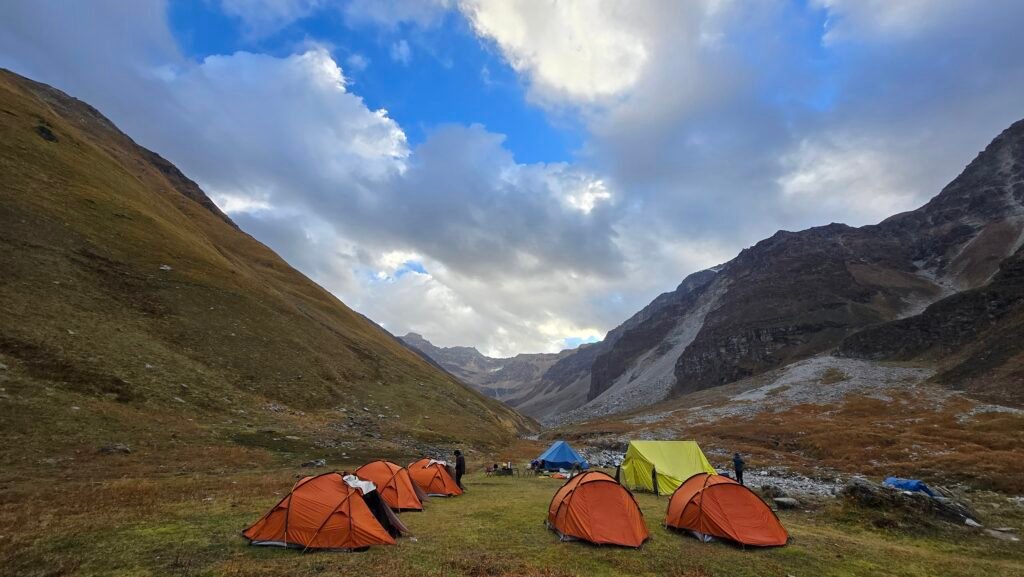
Prepare for a range of possible conditions, including dry trails, snow-covered forests, icy sections and cold nights.
It is also sensible to ask your trekking operator about current route conditions, available equipment, contingency arrangements and the experience of the accompanying guides.
A well-prepared trekker can appreciate Brahmatal in several different winter conditions.
Fresh snow may create an extraordinary landscape, but clear weather, open mountain views and the quiet atmosphere of Himalayan forests can be equally memorable.
Conclusion: Brahmatal’s Winter Beauty Is Becoming a Story of Adaptation
Brahmatal remains an exceptional winter trekking destination, but the wider Himalayan environment is undergoing significant changes.
Research into snow persistence and regional warming demonstrates why traditional assumptions about winter conditions deserve closer examination.
These findings do not establish that Brahmatal will stop receiving snowfall or that its winter trekking season is disappearing. They show why snowfall expectations must be informed by current observations, scientific evidence and an understanding of natural variability.
For trekkers, the message is straightforward: plan for the mountain conditions that actually exist, not only the winter landscape you hope to encounter.
For trekking operators, the responsibility is to provide accurate information, maintain flexible plans and prioritise safety.
The future of Brahmatal winter trekking will depend not simply on the amount of snow that falls, but on how effectively travellers and operators adapt to the changing Himalayan environment.