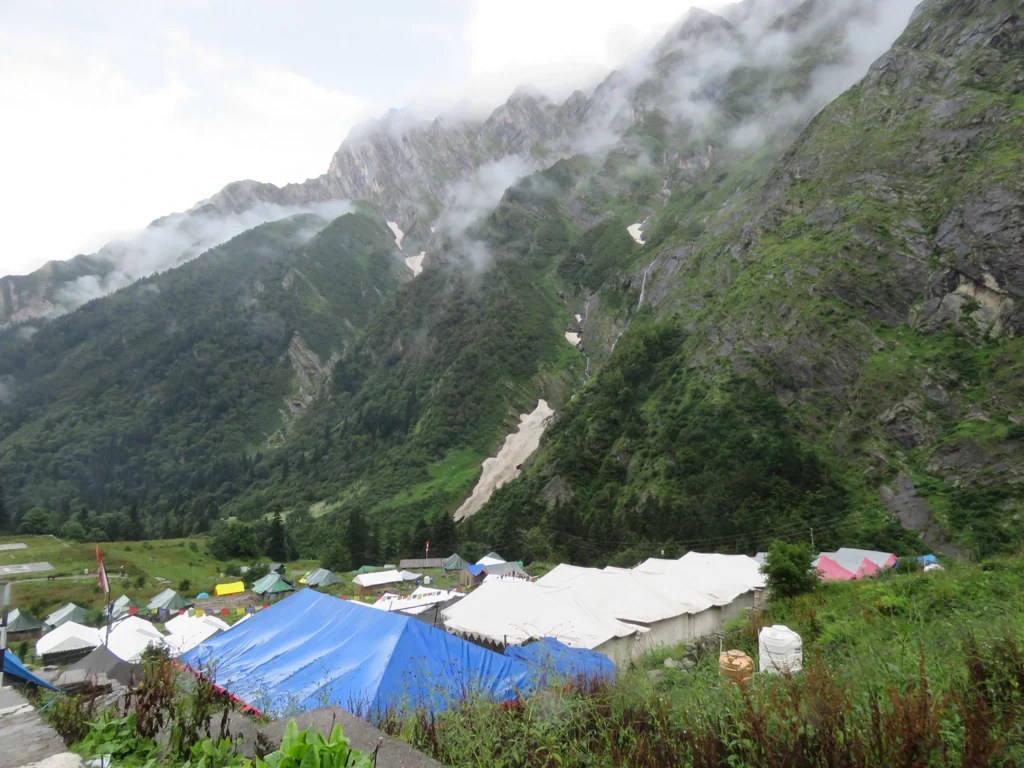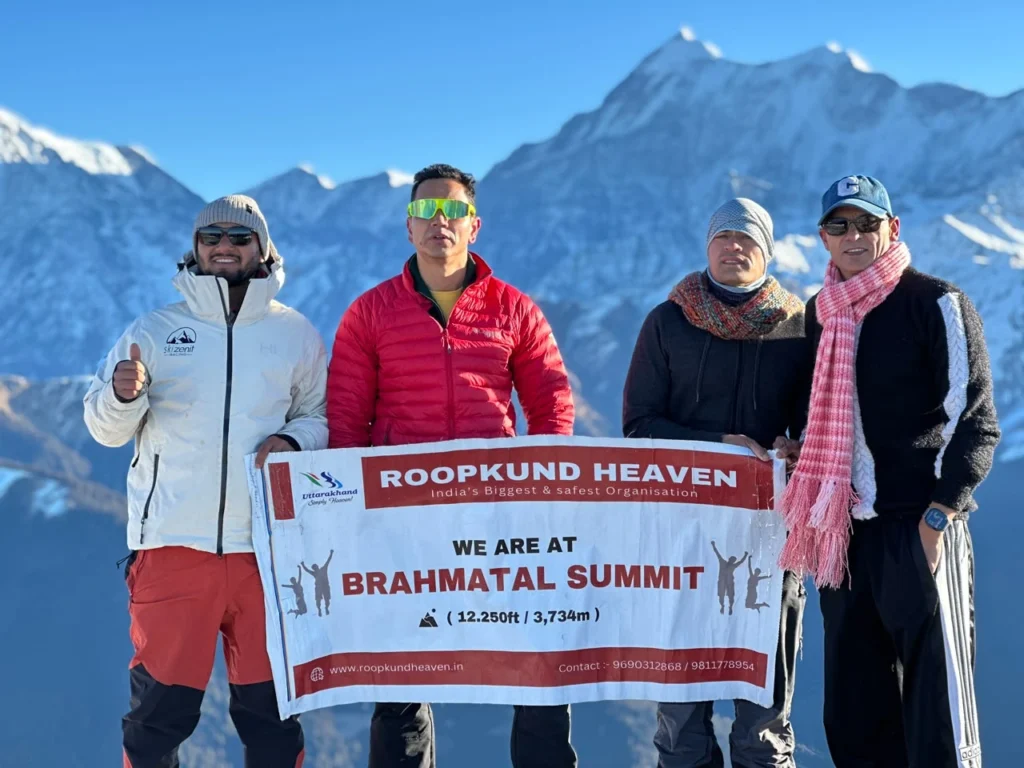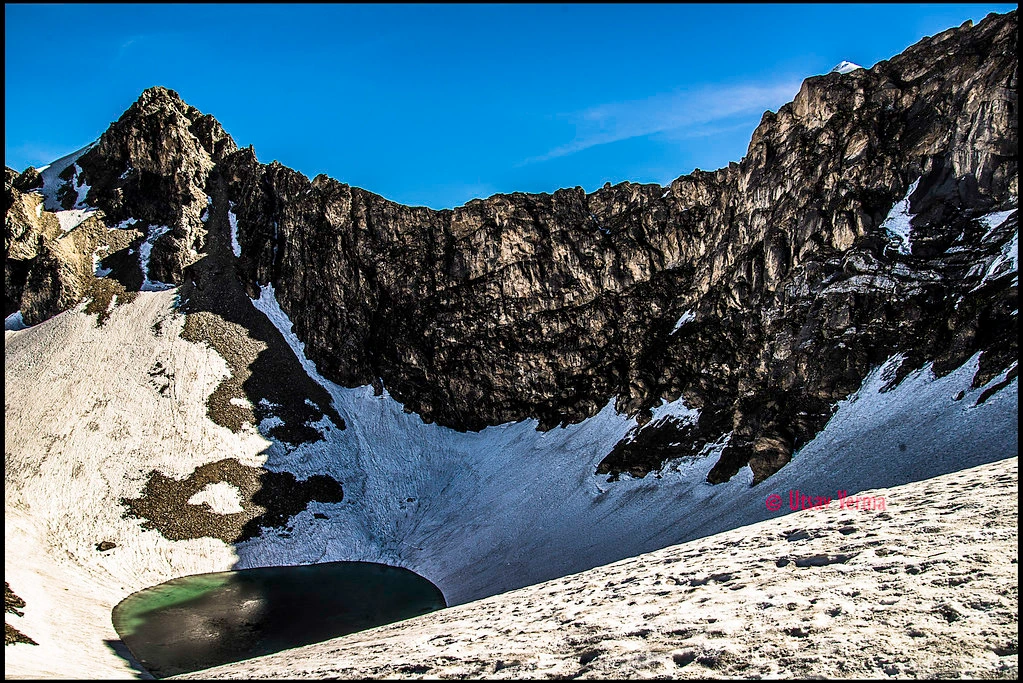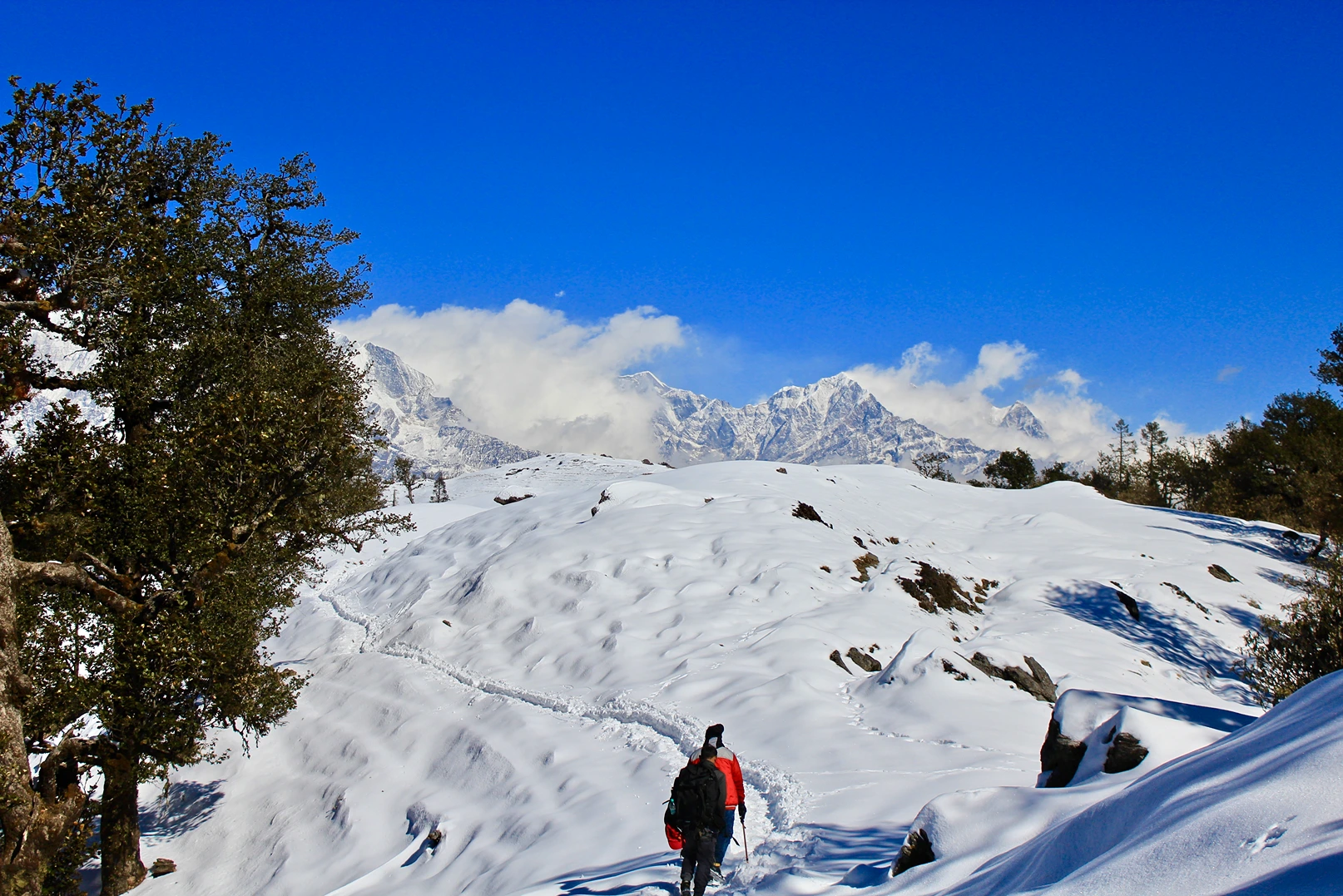
Imagine walking through a quiet Himalayan forest where snow covers the trail, branches carry a thin layer of frost, and every step takes you deeper into a white winter landscape. After hours of trekking, you finally reach one of the highlights of the Brahmatal Trek—Brahmatal Lake.
In winter, the surroundings of Brahmatal can transform dramatically. Snow-covered slopes, frozen ground, cold winds and the possibility of a frozen or partially frozen lake create an experience completely different from trekking here during warmer months.
But does Brahmatal Lake actually freeze completely? When can you see snow? What does the lake look like in December, January and February? And is the trek difficult when the trail is covered with snow?
This guide explains what you can realistically expect from Brahmatal Lake in winter, along with the Brahmatal Trek itinerary, distance, difficulty level, best time, duration and package price.
Brahmatal Trek at a Glance
| Trek Detail | Information |
| Trek | Brahmatal Trek |
| Location | Chamoli, Uttarakhand |
| Base | Lohajung |
| Duration | 6 Days |
| Main Attractions | Bekaltal, Brahmatal, snow trails, forests and Himalayan views |
| Season Covered | Winter |
| Difficulty Level | Moderate |
| Starting/Ending Point | Rishikesh |
| Offer Price | ₹4,500 per person |
The Brahmatal Trek has become particularly popular as a winter trek because trekkers can experience high-altitude landscapes without attempting a technical mountaineering expedition.
Its combination of forests, alpine lakes, snowy trails, open ridges and Himalayan panoramas makes it an attractive choice for people looking for a multi-day winter trek in Uttarakhand.
What Does Brahmatal Lake Look Like in Winter?
The appearance of Brahmatal Lake depends heavily on the weather.
During sufficiently cold periods, the surface can freeze, while snow may accumulate around the lake and across the surrounding slopes.
Instead of expecting a bright blue alpine lake surrounded by greenery, winter trekkers should picture a much quieter landscape.
The lake may appear as a pale frozen surface surrounded by white snow and brown or snow-covered vegetation. During periods of fresh snowfall, the boundary between the lake and surrounding ground can become less obvious from a distance.
On clearer days, blue winter skies create a striking contrast with the white landscape.
But there is an important point every trekker should understand:
A completely frozen Brahmatal Lake cannot be guaranteed for a specific date.
Freezing depends on recent temperatures, snowfall, sunlight and changing mountain weather.
That uncertainty is part of experiencing the Himalayas in winter.
Does Brahmatal Lake Completely Freeze?
It can freeze significantly during periods of sustained sub-zero temperatures, particularly in peak winter.
However, the degree of freezing changes throughout the season.
One week may bring extensive ice and snow, while changing temperatures during another period can alter the surface.
Therefore, photographs and a Brahmatal Trek video from someone else’s trip should be treated as an example of conditions on those particular dates—not a guarantee of what you will encounter.
This is particularly important when choosing winter treks primarily to experience snow.
Mountain weather is dynamic.
Can You Walk on Frozen Brahmatal Lake?
You should not walk onto the frozen lake unless local authorities or qualified trek leaders explicitly determine that access is permitted and safe.
A frozen surface can look solid while sections underneath remain weak.
Ice thickness can vary considerably across the same lake because of sunlight, temperature, water movement and other environmental factors.
The safest way to experience Brahmatal is from the established trail and designated viewing areas.
A photograph is never worth taking an unnecessary risk on uncertain ice.
When Does Brahmatal Lake Freeze?
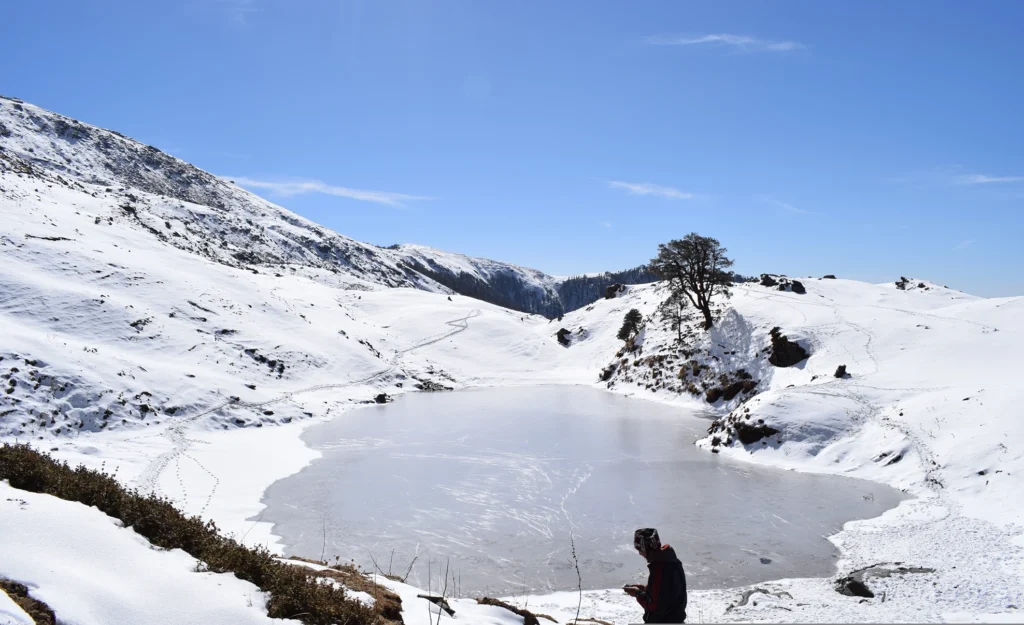
There is no fixed date on which Brahmatal Lake freezes every year.
Winter conditions usually strengthen as temperatures fall from December into January.
December
December marks the beginning of the main winter experience.
Early December conditions can vary considerably from year to year. As winter progresses, temperatures become colder and snowfall can transform the higher trail.
January
January is generally one of the coldest periods.
When sustained cold conditions occur, trekkers have a stronger possibility of experiencing extensive snow and frozen landscapes.
February
Winter conditions can continue through February, although the amount and condition of snow depend on that year’s weather.
Sunny sections may begin changing faster while shaded areas can retain snow and ice for longer.
March
March represents a transition towards spring.
Snow can remain at higher elevations, but conditions become increasingly variable as temperatures gradually rise.
For trekkers whose primary objective is winter scenery, late December through February is generally the period of greatest interest, although snowfall and lake freezing should never be promised for an exact departure.
Brahmatal Trek Best Time for a Frozen Lake Experience
When people search for the Brahmatal Trek best time, the correct answer depends on the experience they want.
For snow and winter landscapes, the core winter months are the obvious choice.
If your main priorities are:
Snow-covered trails: winter
Cold weather: winter
Frozen or partially frozen lake conditions: peak cold periods
Winter photography: December to February
Green landscapes: choose a non-winter season instead
January can be particularly attractive for people seeking deeper winter conditions, but it also means dealing with colder nights and potentially more demanding trail conditions.
There is a trade-off.
More snow can make the landscape spectacular, but it can also make trekking slower and more strenuous.
Brahmatal Trek in December
December is popular among winter trekkers because the landscape begins changing rapidly.
The forests around Lohajung and Bekaltal can provide a beautiful transition towards the higher snow-covered terrain.
Early winter may offer a mixture of dry trail, frost and snow depending on recent weather.
Later in the month, the probability of stronger winter conditions generally increases.
Christmas and New Year departures are consequently popular, but trekkers should book for the overall Brahmatal experience rather than expecting snowfall on a particular day.
Fresh snowfall is a weather event—not a scheduled attraction.
Brahmatal Trek in January
January brings more intense winter conditions.
Cold mornings, freezing nights, snow-covered sections and icy trails can all become part of the experience.
For many trekkers, this is exactly what makes the Brahmatal Trek special.
The forest becomes quieter under snow, the landscape changes almost completely, and clear weather can reveal dramatic Himalayan panoramas.
However, January also demands better preparation.
Proper winter clothing, waterproof trekking shoes, gloves, warm socks, thermals and multiple layers become essential rather than optional.
Brahmatal Trek in February
February can provide a balance between winter scenery and gradually changing seasonal conditions.
Snow may remain across significant parts of the higher trail, particularly after recent snowfall.
At the same time, stronger daytime sunshine can begin altering exposed sections.
The result can be a combination of snow, ice and occasionally muddy patches depending on temperature and altitude.
Trekkers should therefore prepare for mixed terrain rather than assuming every kilometre will be covered with soft snow.
What Is Special About the Brahmatal Trek Beyond the Lake?
It would be a mistake to think that the entire trek revolves around one frozen lake.
Brahmatal offers much more.
Bekaltal
Bekaltal is another important lake encountered during the trek and provides a very different setting surrounded by forest.
Winter Forests
The trail passes through beautiful Himalayan forest sections.
Fresh snow can completely change their appearance, creating some of the trek’s most atmospheric sections.
Open Ridge Walks
As the trail climbs higher, dense forest gives way to more open terrain.
This change provides wider views of the surrounding mountains.
Himalayan Views
Clear winter weather can provide impressive views of the surrounding Garhwal Himalayan ranges.
Brahmatal Summit Day
The summit day is one of the biggest experiences of the entire itinerary.
It combines climbing, open mountain terrain and panoramic viewpoints, making Day 4 much more than simply another day of walking.
Brahmatal Trek Itinerary – 6 Days
Our Brahmatal Trek itinerary follows a six-day journey starting and ending in Rishikesh.
Day 1 – Rishikesh to Lohajung
The journey begins from Rishikesh and continues towards Lohajung, the base for the Brahmatal Trek.
It is a long mountain drive through Uttarakhand, so this day is primarily dedicated to reaching the trek base and preparing for the journey ahead.
After reaching Lohajung, rest and prepare your equipment for the next day’s trek.
Day 2 – Lohajung to Bekaltal
The trekking portion begins from Lohajung.
The route gradually enters forested mountain terrain while climbing towards Bekaltal.
During winter, snow and ice conditions depend on recent weather. Forest sections can be particularly beautiful after fresh snowfall.
Bekaltal becomes the major highlight of the day.
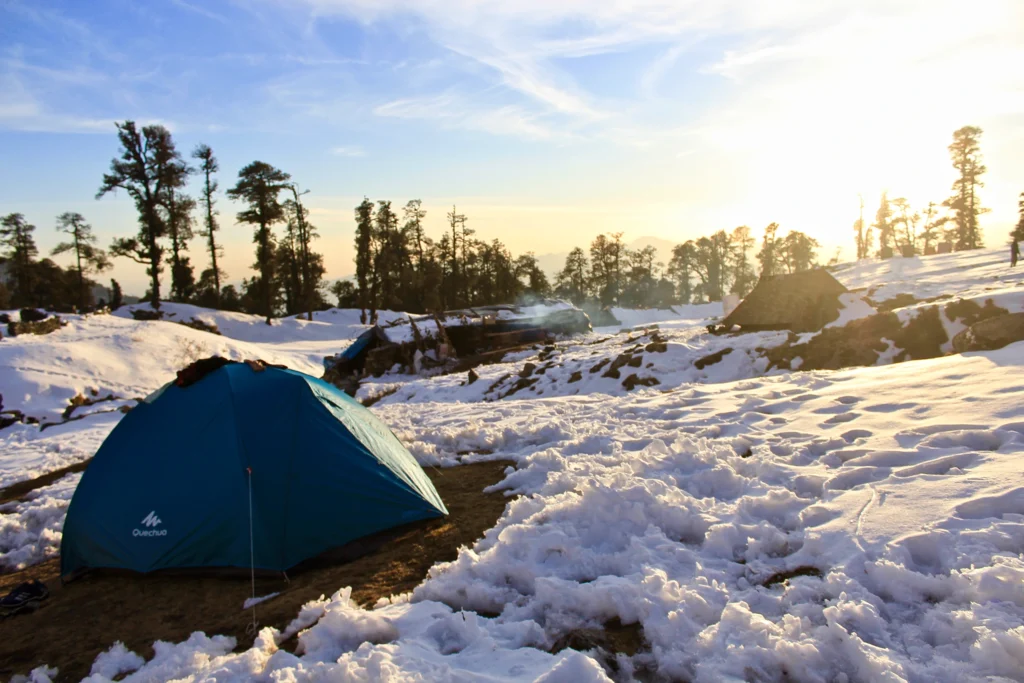
After reaching the campsite area, settle in and prepare for colder temperatures as evening approaches.
Day 3 – Bekaltal to Brahmatal
Today the trek continues towards Brahmatal.
As you gain altitude, the landscape gradually changes.
Depending on winter conditions, trekkers may encounter snow-covered sections, frozen ground and icy patches.
Reaching the Brahmatal area is one of the defining moments of the journey.
If temperatures have remained sufficiently low, the lake and surrounding landscape may provide the frozen winter scenery for which the trek is famous.
Day 4 – Brahmatal to Summit and Back – Summit Day
This is the most important and potentially demanding day of the itinerary.
Start early and climb towards the summit viewpoint.
As you move above the forest and onto more exposed terrain, the views become wider.
Snow conditions can make the climb more strenuous than walking the same route on dry ground.
The reward is the expansive Himalayan landscape from the higher viewpoints.
After spending appropriate time at the summit area, descend back towards Brahmatal.
Day 5 – Brahmatal to Lohajung
The descent begins towards Lohajung.
Descending through snow and ice still requires concentration. Slippery sections can sometimes make downhill walking more challenging than expected.
As altitude decreases, the trail gradually returns towards thicker forest and eventually Lohajung.
Spend the final night at Lohajung.
Day 6 – Lohajung to Rishikesh
After breakfast, begin the road journey back to Rishikesh.
The six-day Brahmatal Trek itinerary concludes after reaching Rishikesh.
Brahmatal Trek Distance
The Brahmatal Trek distance varies according to the exact trail, campsites and summit route followed.
Most itineraries involve several days of trekking between Lohajung, Bekaltal, Brahmatal and the higher viewpoint before returning to Lohajung.
When researching the distance, don’t confuse the walking distance with the complete Rishikesh-to-Rishikesh journey.
Road transportation from Rishikesh to Lohajung and back accounts for a substantial portion of the overall travel.
More importantly, distance alone does not determine difficulty.
Walking a relatively short distance through deep snow can require considerably more energy than covering the same distance on a dry trail.
Brahmatal Trek Time – How Many Days Are Required?
Our Brahmatal Trek time is 6 days from Rishikesh to Rishikesh.
The itinerary includes:
Day 1: Rishikesh → Lohajung
Day 2: Lohajung → Bekaltal
Day 3: Bekaltal → Brahmatal
Day 4: Brahmatal → Summit → Brahmatal
Day 5: Brahmatal → Lohajung
Day 6: Lohajung → Rishikesh
This provides a structured schedule covering transportation as well as the primary trekking route.
Brahmatal Trek Difficulty Level
The Brahmatal Trek difficulty Level is generally considered moderate.
It does not normally require technical mountaineering skills, but winter conditions can substantially increase the physical challenge.
Trekkers should prepare for:
- Several hours of walking
- Continuous ascents and descents
- Snow-covered trails
- Slippery or icy sections
- Cold nights
- Sub-zero conditions at higher camps
- Changing weather
- Summit-day climbing
- Consecutive trekking days
Someone who exercises regularly and prepares before departure can find Brahmatal manageable.
Someone with no physical preparation may find the same trail considerably more demanding.
Is Brahmatal Trek Suitable for Beginners?
Brahmatal is frequently chosen by people attempting their first Himalayan winter trek.
However, beginners should not interpret that as meaning the trek requires no preparation.
A first-time trekker should ideally begin preparing several weeks beforehand.
Useful exercises include:
- Brisk walking
- Jogging
- Stair climbing
- Squats
- Lunges
- Core exercises
- Regular stretching
Your objective isn’t to become an athlete.
It is to develop enough cardiovascular endurance and leg strength to comfortably walk for several hours on consecutive days.
Is Trekking Through Snow Difficult?
Snow changes the way you walk.
Soft snow can cause your feet to sink, requiring additional energy with every step.
Hard-packed snow can become slippery.
Frozen sections can become icy.
This is why the same Brahmatal Trek distance can feel substantially more difficult during peak winter than during dry conditions.
Trekking poles can provide additional stability, while proper footwear becomes particularly important.
Always follow your trek leader’s instructions regarding traction equipment and safe movement over snow or ice.
What Should You Pack for Brahmatal Trek in Winter?
Winter packing requires more attention than a typical warm-weather trek.
Clothing
Carry thermal base layers, fleece or insulated mid-layers, a warm jacket, trekking pants and an appropriate weather-resistant outer layer.
Trekking Shoes
Use proper trekking shoes with strong grip.
Avoid attempting a winter Himalayan trek in casual sports shoes.
Gloves
Carry warm gloves, preferably with protection against moisture.
Socks
Pack multiple pairs of warm trekking socks.
Head Protection
A woollen cap or beanie and appropriate sun protection are important.
Sunglasses
Snow reflects intense sunlight, making UV-protective sunglasses essential.
Sunscreen
Cold temperatures don’t eliminate UV exposure.
Use sunscreen on exposed skin.
Trekking Poles
Poles provide additional stability on ascents, descents and slippery terrain.
Headlamp
Always carry a personal headlamp with spare batteries.
Brahmatal Trek Price
The Brahmatal Trek price varies between operators according to transportation, accommodation, meals, trek support, equipment, permits and other inclusions.
Our Brahmatal Trek Offer Price: ₹4,500 per person
The Brahmatal Trek package follows a six-day Rishikesh-to-Rishikesh itinerary covering Lohajung, Bekaltal, Brahmatal and the summit day.
When comparing packages, don’t select one based solely on the lowest advertised price.
Check what the quoted amount actually includes.
Transportation, meals, accommodation, trekking equipment, guide support, permits and other services can differ considerably between operators.
Brahmatal Trek Video: What Should You Watch Before Going?
Watching a recent Brahmatal Trek video can help you understand the actual terrain.
Look specifically for videos showing:
- Lohajung in winter
- Lohajung to Bekaltal trail
- Bekaltal
- Snow conditions between Bekaltal and Brahmatal
- Brahmatal Lake
- Summit trail
- Campsites
- Ridge sections
- Winter clothing used by trekkers
Check when the video was recorded.
A Brahmatal video from January may show deep snow, while footage from another month—or even another January—may show very different conditions.
Never use one viral video as a reliable forecast for your departure.
What Does Fresh Snowfall at Brahmatal Feel Like?
Fresh snowfall can completely change the atmosphere of the trek.
The trail becomes quieter.
Forest branches begin collecting snow.
Footprints gradually disappear.
The landscape loses much of its colour and becomes dominated by white, grey and dark forest tones.
But snowfall also creates practical challenges.
Visibility can decrease, trails can become harder to identify and walking can become slower.
This is why trekkers should always stay with their group and follow the trek leader rather than wandering away for photographs.
Frozen Lake vs Snowfall: Understand the Difference
Many first-time winter trekkers assume a frozen lake automatically means fresh snowfall.
They are different phenomena.
A lake can remain frozen because of prolonged cold temperatures even when it hasn’t snowed recently.
Similarly, fresh snowfall can occur when the lake isn’t completely frozen.
Therefore, when booking a Brahmatal Trek package, avoid choosing an exact date based on promises of “100% snowfall.”
No responsible operator can control when snow falls.
Photography at Brahmatal Lake in Winter
Brahmatal can be extremely photogenic during winter.
Snow-covered surroundings and a frozen or partially frozen lake provide excellent opportunities for landscape photography.
Early mornings can produce particularly dramatic conditions.
However, protect your equipment from cold and moisture.
Phone and camera batteries can drain more quickly in low temperatures, so keep spare batteries or a power bank protected inside your backpack or jacket.
And never move onto uncertain ice merely to get a different photograph.
Why Brahmatal Is a Complete Winter Trek Experience
The attraction of Brahmatal isn’t simply “seeing snow.”
The trek combines several distinct Himalayan environments within one journey:
Mountain village → forest → Bekaltal → snow trail → Brahmatal → open ridge → summit viewpoint → Himalayan panorama.
That variety is one of its biggest strengths.
A frozen Brahmatal Lake can become one of the highlights, but it shouldn’t be the only reason you undertake the trek.
The forests, changing terrain, summit day and winter mountain environment collectively create the experience.
Responsible Winter Trekking at Brahmatal
Snow can hide litter temporarily, but it doesn’t make the waste disappear.
Every trekker has a responsibility to protect the trail.
Avoid leaving plastic wrappers, tissues, bottles or food waste behind.
Do not damage vegetation for photographs or campfires.
Stay on established trails whenever instructed.
Respect local communities around Lohajung and other settlements.
And around Brahmatal Lake, avoid disturbing the natural environment simply to create social-media photographs or videos.
The Himalayas should look just as beautiful for the next group arriving after you.
Conclusion
So, what does Brahmatal Lake really look like in winter?
Sometimes it can appear dramatically frozen, surrounded by snow and framed by an almost completely white landscape.
At other times, conditions may be more mixed—partially frozen surfaces, exposed vegetation and varying amounts of snow.
That variability is precisely why photographs from two Brahmatal trips can look completely different.
The Brahmatal Trek should therefore be experienced as a winter Himalayan journey rather than simply a trip to photograph a frozen lake.
Over six days, the route takes you from Rishikesh to Lohajung, through the forests towards Bekaltal, onwards to Brahmatal and up towards the summit before descending back to Lohajung and Rishikesh.
With an offer price of ₹4,500 per person, our Brahmatal Trek package follows this complete six-day itinerary.
Come prepared for snow, cold temperatures, long trekking days and unpredictable Himalayan weather.
If the lake is completely frozen when you arrive, enjoy the extraordinary sight.
If conditions are different, look around.
The forests, ridges, snow trails and Himalayan skyline are reminders that Brahmatal was never just about one lake.
Frequently Asked Questions About Brahmatal Trek
1. Does Brahmatal Lake freeze in winter?
Brahmatal Lake can freeze significantly during sustained cold winter conditions. However, whether it is completely or partially frozen depends on recent temperatures and weather, so a fully frozen lake cannot be guaranteed for a particular date.
2. Which month is best to see frozen Brahmatal Lake?
Late December, January and February are generally the main periods associated with peak winter conditions. January is particularly popular among trekkers seeking a strong winter experience, although actual conditions vary every year.
3. What is the Brahmatal Trek best time for snow?
December through February is generally preferred for a winter and snow-oriented Brahmatal experience. Snowfall timing and accumulation vary each season.
4. Is Brahmatal Trek difficult?
The Brahmatal Trek difficulty Level is generally considered moderate. Snow, ice, cold temperatures, ascents and summit-day walking can make winter departures more demanding.
5. Can beginners do Brahmatal Trek?
Yes, physically fit and properly prepared beginners can consider Brahmatal. Previous technical mountaineering experience is generally not necessary, but good cardiovascular fitness and appropriate winter preparation are important.
6. What is the Brahmatal Trek distance?
The exact Brahmatal Trek distance varies according to the campsites, summit route and itinerary followed. Always check the operator’s exact route rather than relying on a generic distance figure.
7. How much time is required for Brahmatal Trek?
Our Brahmatal Trek time is six days from Rishikesh to Rishikesh, including transportation to and from Lohajung.
8. What is the Brahmatal Trek price?
Our current Brahmatal Trek price is ₹4,500 per person for the six-day package. Check the exact package inclusions and exclusions before booking.
9. What is the Brahmatal Trek itinerary?
Our six-day Brahmatal Trek itinerary is Rishikesh → Lohajung → Bekaltal → Brahmatal → Summit → Brahmatal → Lohajung → Rishikesh.
10. Is Brahmatal Lake safe to walk on when frozen?
Do not assume frozen ice is safe to walk on. Ice thickness and strength can vary significantly. Stay on the established route and follow instructions from local authorities and qualified trek leaders.
11. Can I experience fresh snowfall during Brahmatal Trek?
It is possible during winter, but fresh snowfall cannot be guaranteed for any specific trekking date. Snow already present on the trail and active snowfall during your trip are two different things.
12. Is December or January better for Brahmatal Trek?
December can provide early-to-peak winter landscapes, while January generally brings colder conditions. If experiencing stronger winter conditions is your priority, January can be attractive, but it also requires better cold-weather preparation.
13. Is watching a Brahmatal Trek video useful before booking?
Yes. A recent Brahmatal Trek video can show the trail, campsites, snow terrain and lake surroundings. Look for videos recorded during the same month you intend to travel, while remembering that conditions vary from year to year.
14. Is the Brahmatal Trek package suitable for a first winter trek?
It can be a good option for fit beginners seeking their first multi-day Himalayan winter trek. Preparation, appropriate clothing, good trekking shoes and following your trek leader’s instructions remain essential.