In this guide, we’ll compare Brahmatal Trek vs Roopkund Trek based on difficulty, altitude, distance, scenery, best season, fitness requirements, and overall trekking experience, helping you decide whether Brahmatal is the perfect alternative or if it’s worth waiting for the Roopkund Trek to reopen.
Why Compare Brahmatal to Roopkund in the First Place
At first glance, Brahmatal Trek and Roopkund Trek may seem completely different. Roopkund is famous for its mysterious Skeleton Lake, while Brahmatal is known for its frozen lake, snow-covered forests, and spectacular winter landscapes. So why are they so often compared?
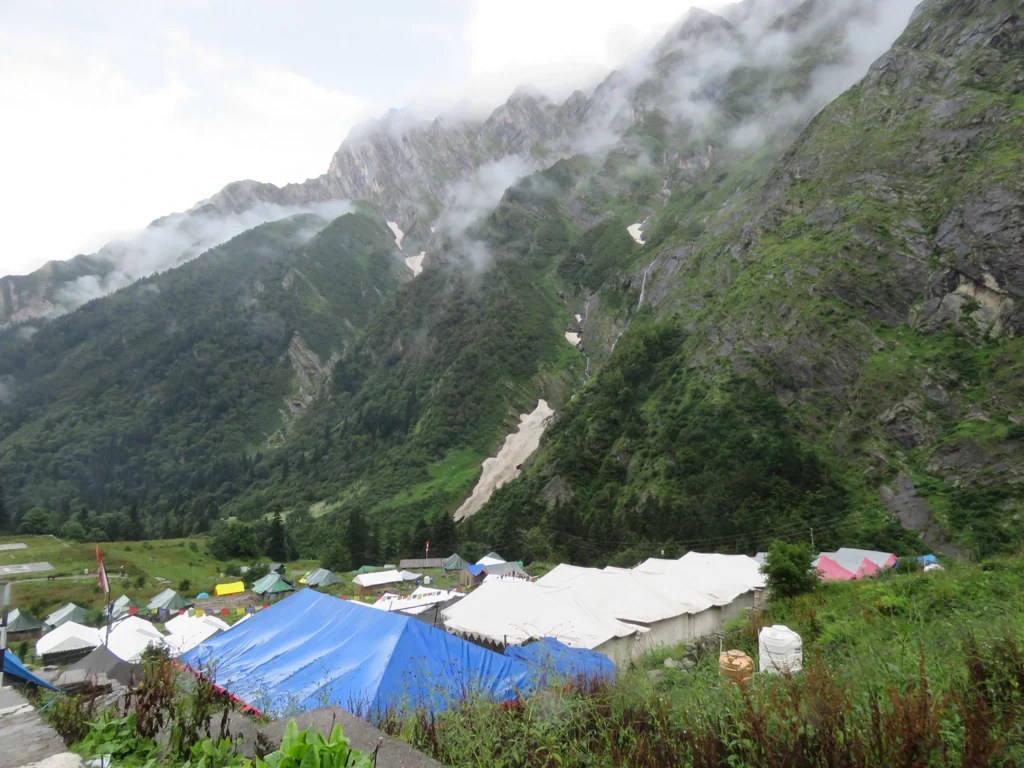
The biggest reason is that both treks begin from Lohajung, a small village in Chamoli, Uttarakhand. They share similar forests, alpine meadows, and breathtaking Himalayan scenery during the initial stages of the journey, making them two of the most popular trekking routes in the region.
Another reason is that Brahmatal has become one of the best alternatives to the Roopkund Trek. Roopkund is operated only during its recommended trekking seasons—May to June and September to November. It is not operated during the monsoon (July–August) or winter (December–March) due to weather and safety concerns. In addition, overnight camping is no longer permitted in the protected alpine meadows (bugyals) under current environmental regulations, which has changed how the Roopkund Trek is conducted.
On the other hand, Brahmatal Trek remains one of India’s best winter treks, offering snow-covered trails, a frozen alpine lake, and magnificent views of Mount Trishul and Nanda Ghunti. It is also less physically demanding than Roopkund, making it an excellent choice for beginners, winter trekking enthusiasts, and anyone looking to experience the Himalayas without the challenges of a high-altitude expedition.
Brahmatal Trek Overview
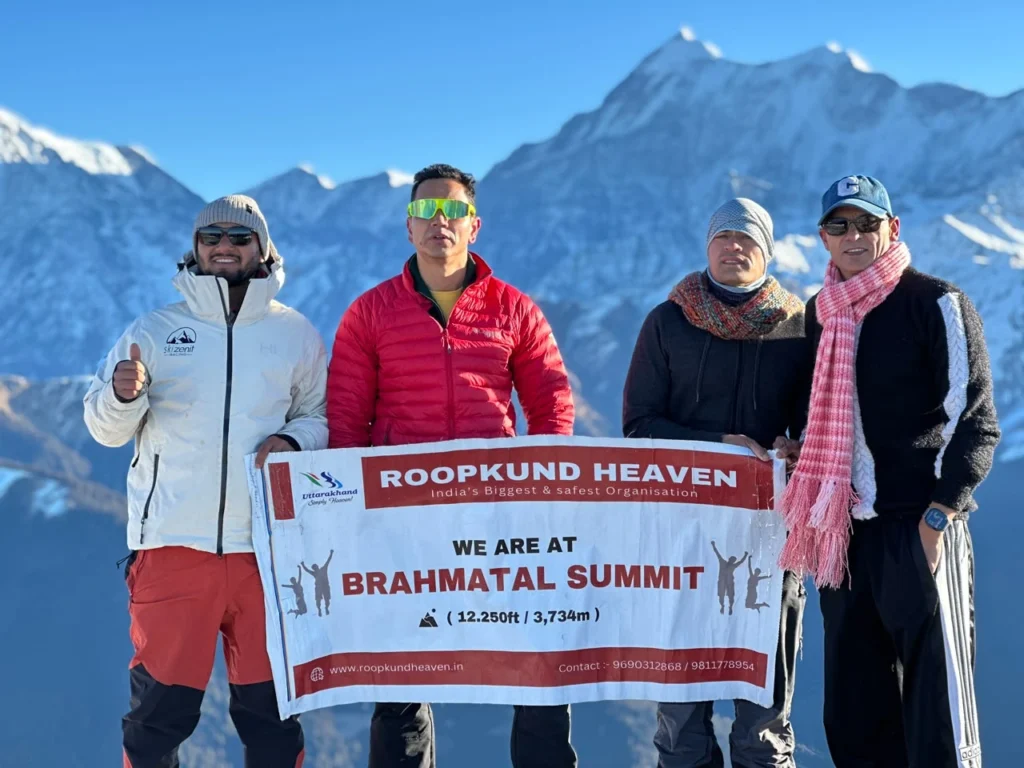
The Brahmatal Trek is a moderate-grade Himalayan trek located in the Chamoli district of Uttarakhand. Starting from Lohajung, the same base village as the Roopkund Trek, this trail passes through dense oak and rhododendron forests, scenic alpine meadows, and snow-covered ridgelines before reaching the beautiful Brahmatal Lake at an altitude of approximately 12,250 ft (3,735 m).
According to local legends, Lord Brahma is believed to have meditated at Brahmatal Lake, giving the lake both spiritual and natural significance. During the winter months, the lake freezes completely, creating a spectacular sight surrounded by snow-covered mountains.
The total trekking distance is around 24–26 km, usually completed over 5–6 days, including the drive from and back to Rishikesh. Compared to many high-altitude Himalayan treks, Brahmatal is shorter and involves gradual ascents, making it an excellent choice for beginners as well as experienced trekkers looking for a winter Himalayan adventure.
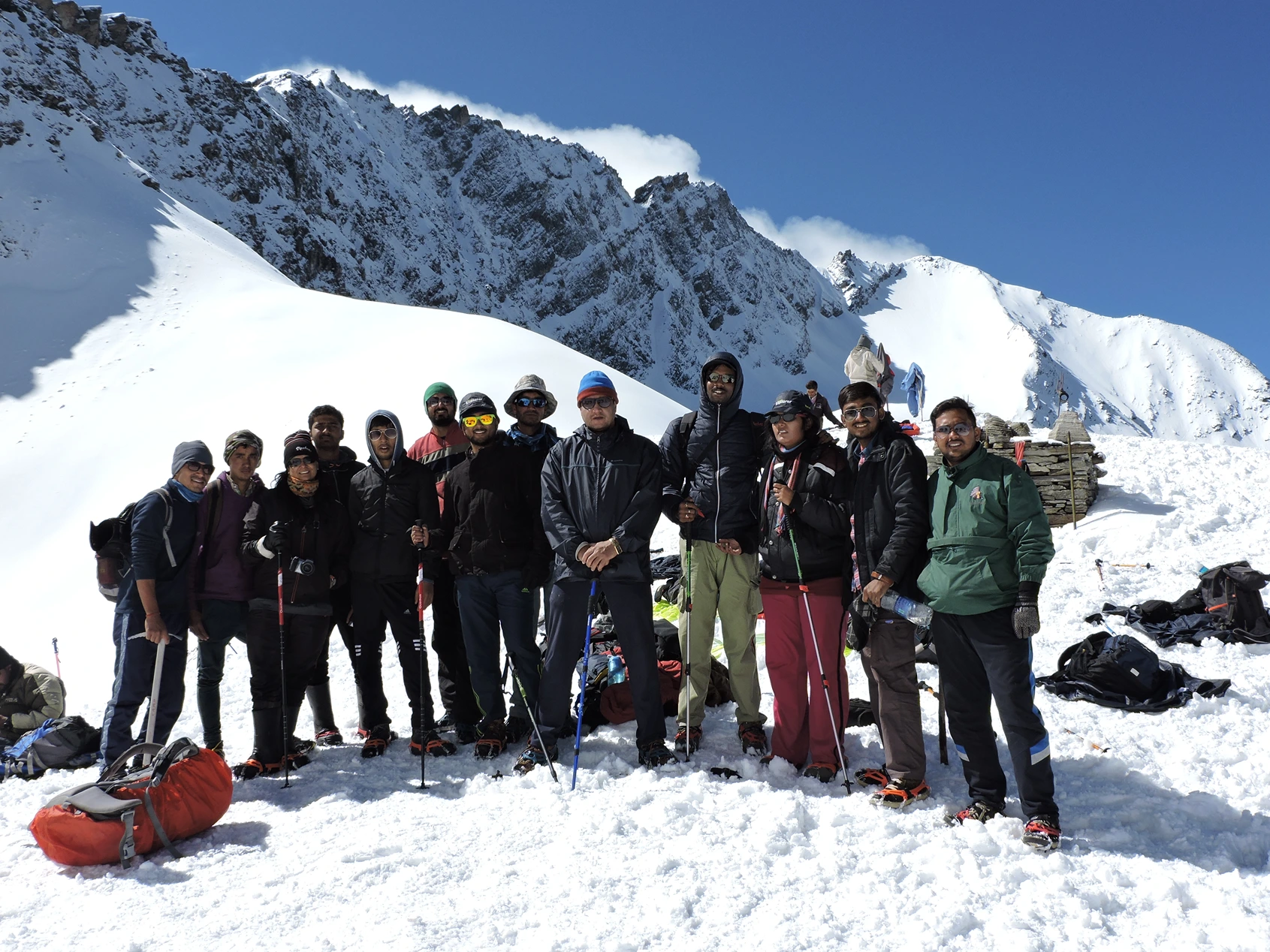
What makes Brahmatal truly special is its winter season. While many Himalayan treks close because of heavy snowfall, Brahmatal is at its best between December and March. The trail is covered with fresh snow, the forests transform into a winter landscape, and trekkers enjoy stunning views of Mount Trishul, Nanda Ghunti, Mrigthuni, and several other Himalayan peaks.
The trek also passes Bekaltal Lake, a peaceful forest lake surrounded by oak trees, before reaching the frozen Brahmatal Lake. Together, these two lakes make the journey even more scenic and memorable.
Roopkund Trek Overview
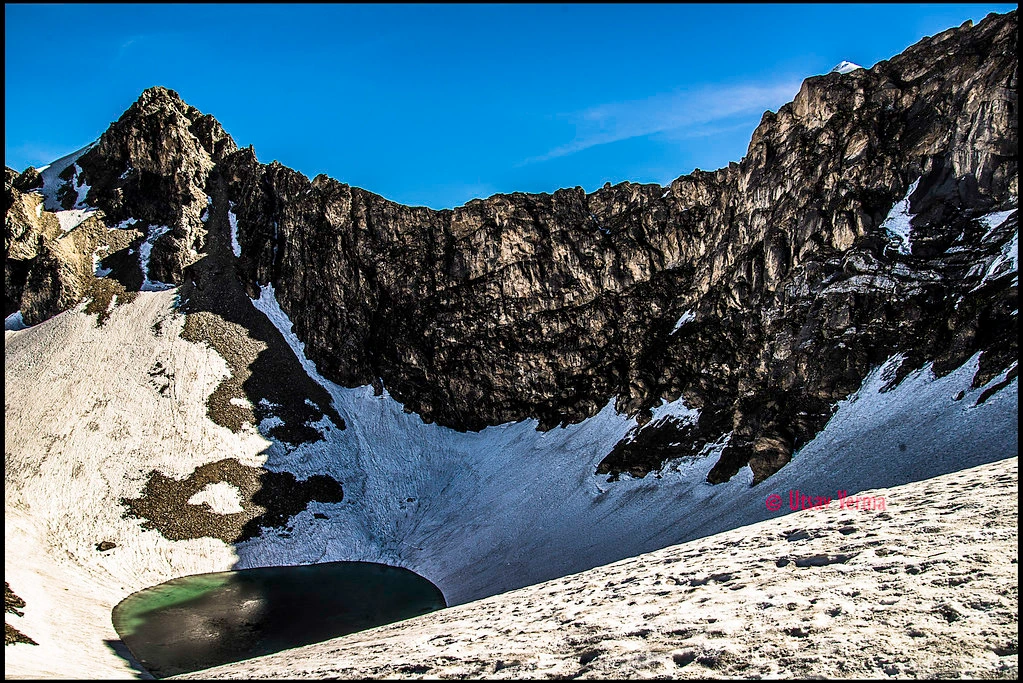
The Roopkund Trek is one of India’s most iconic high-altitude Himalayan treks, famous for the mysterious Skeleton Lake, where hundreds of ancient human skeletons were discovered around a glacial lake at an altitude of approximately 15,750 ft (4,800 m).
Starting from Lohajung in Chamoli, Uttarakhand, the trek passes through dense oak and rhododendron forests, the spectacular Ali Bugyal and Bedni Bugyal, and rugged Himalayan terrain before reaching Roopkund Lake. The total trekking distance is around 45–53 km, usually completed over 7–9 days, including travel from and back to Rishikesh.
Roopkund is a moderate to difficult trek that requires good physical fitness and proper acclimatisation due to its high altitude and long trekking days. Along the route, trekkers enjoy magnificent views of Mount Trishul, Nanda Ghunti, and the surrounding Himalayan peaks.
Brahmatal vs Roopkund Trek: Key Differences at a Glance
Sometimes, a quick comparison makes the choice much easier.
| Factor | Brahmatal Trek | Roopkund Trek |
| Maximum Altitude | ~12,250 ft | ~15,750 ft |
| Total Trek Distance | 24–26 km | 45–53 km |
| Duration | 5–6 Days | 7–8 Days |
| Difficulty | Moderate | Moderate to Difficult |
| Best Time to Visit | December–March | May–June & September–November |
| Ideal For | Beginners, snow lovers, winter trekkers | Experienced trekkers and high-altitude enthusiasts |
| Main Attraction | Frozen Brahmatal Lake, snow trails, Trishul views | Roopkund Lake, Ali & Bedni Bugyal, high-altitude adventure |
| Fitness Requirement | Basic to moderate fitness | Good physical fitness and acclimatisation |
| Snow Experience | Excellent (Winter) | Limited (Spring & Autumn) |
The Famous Lakes on Trek
Brahmatal Trek – Bekaltal & Brahmatal Lake
On the Brahmatal Trek, you’ll visit two scenic lakes during the journey.
- Bekaltal Lake is usually reached on Day 2. Nestled within dense oak and rhododendron forests, it is a peaceful alpine lake that offers beautiful reflections of the surrounding landscape. During winter, the lake is often partially frozen and covered in snow.
- Brahmatal Lake is visited on Day 3 or Day 4, depending on the itinerary. Located at around 12,250 ft, the lake is believed to be the meditation site of Lord Brahma. During December to February, it freezes completely, creating one of the most beautiful winter landscapes in Uttarakhand.
Roopkund Trek – The Famous Skeleton Lake
On the Roopkund Trek, the main attraction is Roopkund Lake, commonly known as the Skeleton Lake. Trekkers usually reach the lake on Day 5.
The Roopkund Lake situated at an altitude of approximately 15,750 ft, It is one of the highest glacial lakes in India. It became famous after hundreds of ancient human skeletons were discovered around its shores and beneath its icy waters. During the post-monsoon season (September–October), when the snow melts, trekkers have the best chance of seeing these mysterious remains.
If you’re curious about the history, scientific discoveries, and legends behind the lake, read our detailed guide: “Why Is Roopkund Called Skeleton Lake? The Full Story”, where we explain everything you need to know about one of the Himalayas’ greatest mysteries.
Summit View Offers: Brahmatal vs Roopkund
Brahmatal Trek – Jhandi Top
The best viewpoint on the Brahmatal Trek is Jhandi Top, usually visited on Day 4. After a short but steep climb from the campsite, you’ll be greeted with one of the finest panoramic views in the Garhwal Himalayas.
On a clear day, you can see Mount Trishul, Nanda Ghunti, Mrigthuni, Maiktoli, Chaukhamba, Neelkanth, Hathi Parvat, Ghoda Parvat, Kamet, and several other snow-covered Himalayan peaks. What makes Jhandi Top special is how close these mountains appear despite the trek’s relatively moderate altitude. During winter, the snow-covered landscape and sunrise views make this one of the most memorable highlights of the trek.
Roopkund Trek – Kalu Vinayak & Roopkund Lake
The most spectacular mountain views on the Roopkund Trek are experienced from Kalu Vinayak and the final approach to Roopkund Lake, usually on Day 5. At over 14,000 ft, the higher altitude offers an even more dramatic Himalayan panorama.
From this section of the trek, you can enjoy breathtaking views of Mount Trishul, Nanda Ghunti, Mrigthuni, Chaukhamba, Neelkanth, Nanda Devi, Nanda Kot, Hathi Parvat, Ghoda Parvat, Kamet, and many other peaks of the Garhwal and Kumaon Himalayas. The combination of vast alpine meadows, rugged ridgelines, glaciers, and towering snow-covered mountains makes this one of the most spectacular viewpoints in Uttarakhand.
Difficulty Level & Fitness Requirements
The biggest difference between these two treks is the fitness and endurance they demand.
Brahmatal Trek – Moderate Difficulty
The Brahmatal Trek is graded moderate, making it suitable for beginners with a reasonable fitness level. The daily altitude gain is gradual, there are no extremely steep summit pushes, and the maximum altitude of 12,250 ft is generally comfortable for most healthy trekkers.
To prepare for Brahmatal, 2–3 weeks of regular walking, light jogging, stair climbing, and basic leg exercises is usually enough. If you can comfortably walk 4–5 km without getting exhausted, you’re likely ready for the trek.
Roopkund Trek – Moderate to Difficult
The Roopkund Trek is graded moderate to difficult and requires much better physical preparation. At 15,750 ft, oxygen levels are significantly lower, making every climb more demanding and increasing the risk of Acute Mountain Sickness (AMS) if you don’t acclimatise properly.
The summit day is the toughest part of the trek, often involving 7–9 hours of continuous trekking over rocky, steep, and sometimes snow-covered terrain, starting before sunrise.
For Roopkund, it’s recommended to train for 6–8 weeks before the trek. Your preparation should include:
- Running 5 km comfortably in about 30 minutes.
- Regular stair climbing with a 5 kg backpack.
- Leg and core strengthening exercises.
- Cardio workouts and breathing exercises such as pranayama to improve endurance at high altitude.
Best Time to Visit: Brahmatal vs Roopkund
Brahmatal Trek – Best in Winter
The Brahmatal Trek is best experienced from December to March. Unlike many Himalayan treks that close during winter, Brahmatal becomes even more beautiful as fresh snowfall transforms the forests, trails, and lakes into a winter wonderland.
- December–February: Peak snow season with frozen Brahmatal Lake and snow-covered trails.
- March: Snow starts melting, but many sections still remain covered, offering a mix of snow and pleasant weather.
Roopkund Trek – Best in Summer & Autumn
The Roopkund Trek is typically operated during May–June and September–November, when weather and trail conditions are most suitable.
- May–June: Pleasant weather, green alpine meadows, and clear mountain views.
- September–November: Post-monsoon season with crisp skies, golden bugyals, and the best chance to see the famous Skeleton Lake after the snow has melted.
Roopkund is not operated during July–August (monsoon) because of landslides and slippery trails, or during December–March (winter) due to heavy snowfall and unsafe conditions.
Month-by-Month Comparison
| Month | Brahmatal Trek | Roopkund Trek |
| December – February | ✅ Best time (Peak snow season) | ❌ Closed |
| March | ✅ Good (Snow & pleasant weather) | ❌ Closed |
| April | ❌ Not recommended | ❌ Usually Closed |
| May – June | ⚠️ Limited snow | ✅ Best time |
| July – August | ❌ Not recommended (Monsoon) | ❌ Closed (Monsoon) |
| September – November | ❌ Off season | ✅ Best time |
Which Trek Should You Choose?
- Choose Brahmatal Trek if you want a snow trek, frozen lakes, and a beginner-friendly winter adventure.
- Choose Roopkund Trek if you want a challenging high-altitude trek, stunning bugyals, and the unique experience of visiting the famous Skeleton Lake during its operating season.
Safety, Permits & Environmental Restrictions (Why Roopkund Access Has Tightened)
This section deserves honesty rather than vague reassurance, because it directly affects your booking decision.
In recent years, the Uttarakhand High Court issued directives restricting commercial camping activity on certain high-altitude bugyals (alpine meadows) across the state, citing ecological damage from overtourism — litter accumulation, soil erosion, and disturbance to fragile grassland ecosystems that take years to recover once damaged. Since Roopkund’s route passes directly through some of these protected bugyal zones (notably sections of Ali Bugyal and Bedni Bugyal), several trekking operators have had to pause, restructure, or seek fresh clearances for their Roopkund batches.
Practically, this means:
- Availability isn’t guaranteed even during the traditional May–June or September–October windows
- Permits may require additional documentation or route adjustments depending on current forest department guidelines
- Some operators have shifted campsite locations away from restricted meadow zones to comply with the order
Brahmatal, by contrast, has not faced these restrictions, since its camping zones fall largely outside the specifically regulated bugyal areas. This is a major reason it has become the reliable “go-to” trek for operators and trekkers alike whenever Roopkund’s status is uncertain.
Before booking Roopkund specifically, always confirm current operational status directly with your operator rather than relying on older blog content — regulations and clearances can change season to season.
Cultural & Mythological Significance: Brahmatal vs Roopkund
Brahmatal Trek – Associated with Lord Brahma
According to local tradition, Brahmatal Lake is believed to be the place where Lord Brahma meditated, which is how the lake got its name. While this belief is part of local folklore rather than historical evidence, it gives the lake cultural and spiritual importance for the people of the region.
Roopkund Trek – Skeleton Lake & Nanda Devi Raj Jat
Roopkund Trek is famous for Skeleton Lake, where hundreds of ancient human skeletons were discovered around the glacial lake. Scientific research has shown that many of these remains are around 1,000 years old, although their exact origins are still being studied.
The Roopkund route also lies along the traditional Nanda Devi Raj Jat Yatra, one of Uttarakhand’s most important pilgrimages, held approximately every 12 years. For centuries, this route has held deep cultural and religious significance for local communities, making Roopkund an important destination for both trekkers and pilgrims.
Why You Should Book Your Trek With Roopkund Heaven
Roopkund Heaven is one of India’s trusted trekking and adventure travel companies, offering professionally organised treks across the Himalayas. While our roots are in Uttarakhand, we operate trekking expeditions all over India, including Uttarakhand, Himachal Pradesh, Kashmir, Ladakh, Sikkim, and other popular trekking destinations.
Here’s why trekkers choose us:
- Treks Across India – From Himalayan winter treks to high-altitude expeditions, we organise adventures across multiple states.
- Experienced Trek Leaders – Certified and knowledgeable leaders who prioritise safety and deliver a well-managed trekking experience.
- Complete Trek Management – We take care of permits, transportation, accommodation, camping, meals, and all trek logistics.
- Safety First – First-aid-trained staff, high-altitude safety protocols, and emergency support throughout the trek.
- Quality Camping & Equipment – Comfortable camps, nutritious meals, and reliable trekking gear for a better outdoor experience.
- Transparent Pricing – No hidden charges, with clear package inclusions and dedicated customer support.
- Customised Group Departures – Planning a trip with 5 or more people? We can organise a private trek on your preferred dates.
- Local Expertise – Our experienced team provides accurate advice on weather, trail conditions, fitness preparation, and the best time to visit.
Visit our website to explore upcoming batch dates, choose the perfect trek package, and book your dream Himalayan adventure today.
Frequently Asked Questions (FAQs)
1. Is Brahmatal Trek easier than Roopkund Trek?
Yes. Brahmatal is a moderate trek suitable for beginners, while Roopkund is a moderate to difficult high-altitude trek that requires better fitness and endurance.
2. Which trek is better for beginners?
Brahmatal Trek is the better choice for beginners because of its moderate difficulty, shorter distance, and lower altitude.
3. What is the best time to visit Brahmatal Trek?
The best time is December to March, when the trail is covered in snow and Brahmatal Lake is usually frozen.
4. What is the best time to visit Roopkund Trek?
The best time is May to June and September to November, when weather and trail conditions are most favourable.
5. Which trek offers better mountain views?
Both treks offer spectacular Himalayan views. Brahmatal is known for Jhandi Top, while Roopkund offers breathtaking views from Kalu Vinayak and the route to Skeleton Lake.
6. Which trek has snow?
For a reliable snow experience, Brahmatal Trek is the better choice during December to March. Roopkund may have snow in some sections during early summer, but it is not a dedicated winter trek.
7. Why is Roopkund called Skeleton Lake?
Roopkund Lake became famous after hundreds of ancient human skeletons were discovered around its shores. To learn the complete history and mystery behind them, read our guide: “Why Is Roopkund Called Skeleton Lake? The Full Story.”
8. How many days do these treks take?
Brahmatal Trek usually takes 5–6 days, while Roopkund Trek generally takes 7–9 days, including travel.
9. Should I do Brahmatal before Roopkund?
Yes. Many trekkers choose Brahmatal as their first Himalayan trek before attempting the more challenging Roopkund Trek.
10. Which trek should I choose?
Choose Brahmatal if you want a beginner-friendly winter trek with snow and frozen lakes. Choose Roopkund if you’re looking for a challenging high-altitude adventure, alpine meadows, and the famous Skeleton Lake.