If you’re wondering whether the Roopkund Trek is possible during the monsoon, the honest answer is that it’s best to avoid this season. In this guide, you’ll learn why monsoon trekking to Roopkund is risky, when the trail is usually suitable for trekking, and the best alternatives if July or August is your only time to travel.
Can You Do the Roopkund Trek During the Monsoon?
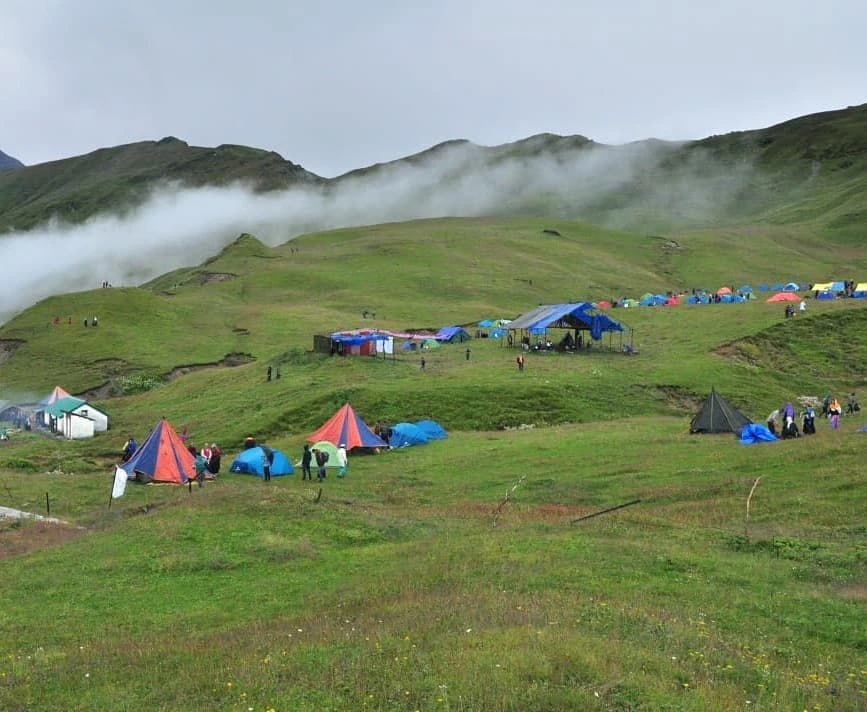
Technically, yes—the Roopkund Trek can be attempted during the monsoon. However, just because it’s possible doesn’t mean it’s advisable. July and August bring heavy rainfall to the region, making the trail significantly more challenging and increasing the overall risk.
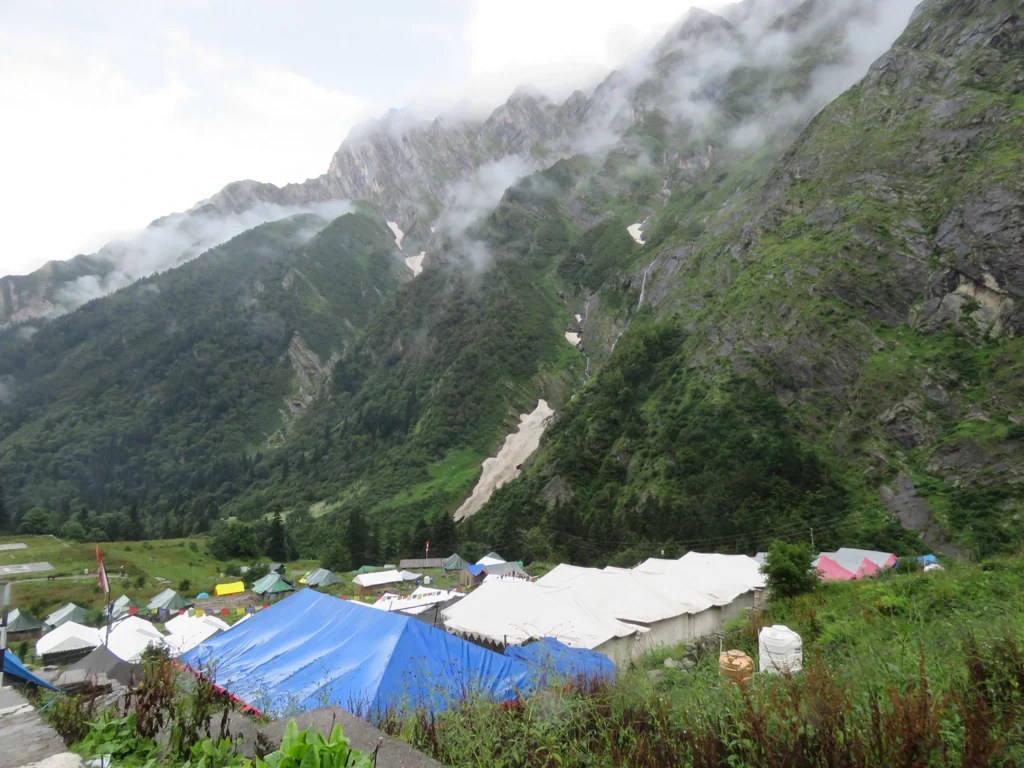
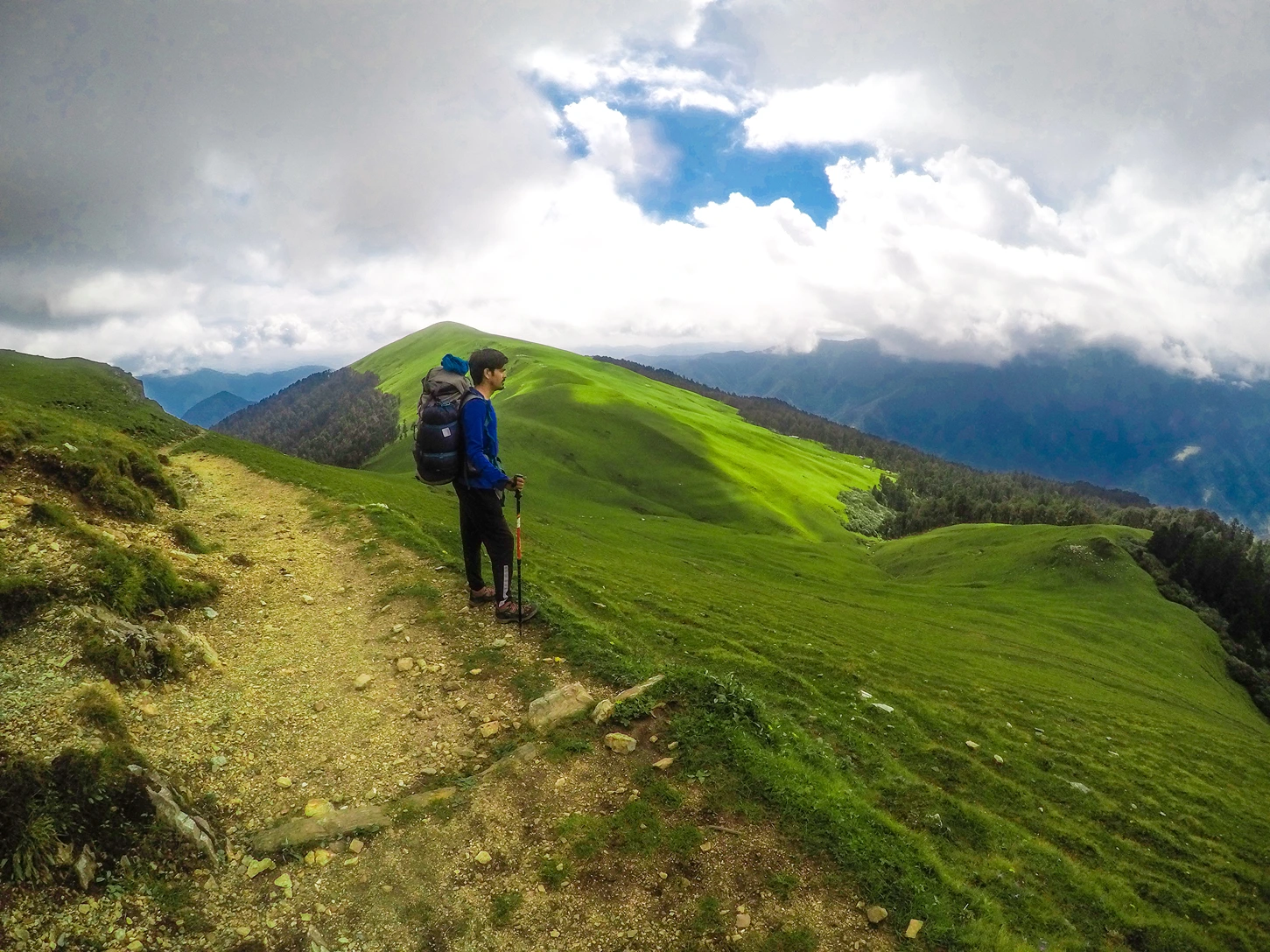
The route passes through dense forests, steep ascents, rocky sections, and alpine meadows. During the monsoon, these trails become muddy and slippery, while mountain roads leading to the trek are prone to landslides and temporary closures. Even if the trail remains open, trekking in such conditions can be physically demanding and less enjoyable.
Unpredictable weather is another major concern. Rain, fog, and low visibility can make navigation difficult, while swollen streams and waterlogged sections may slow your progress or force changes to the itinerary.
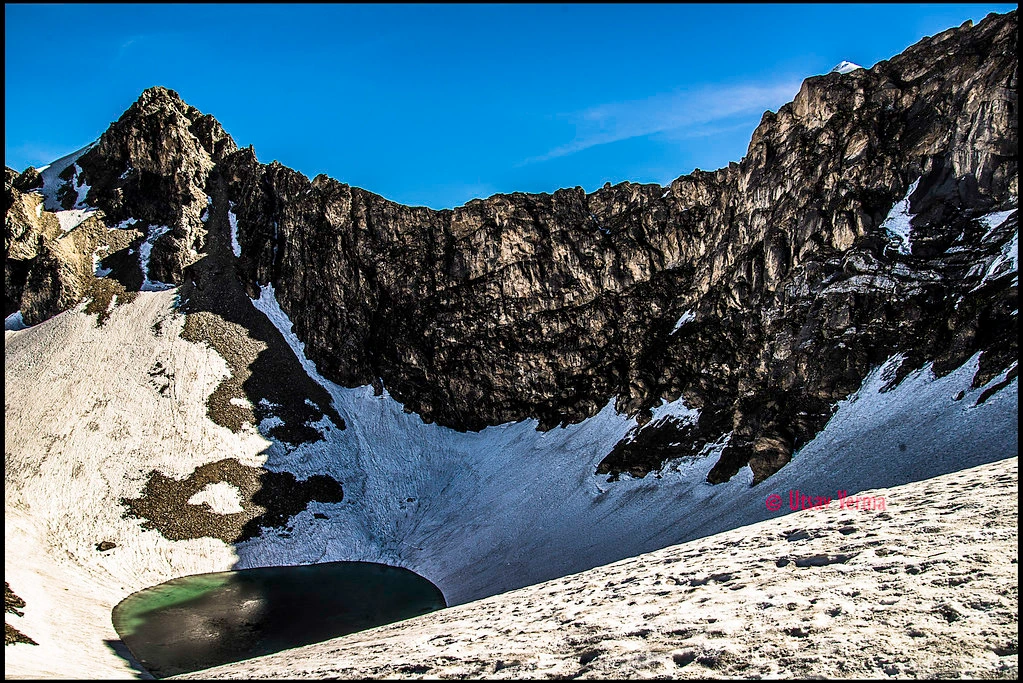
For these reasons, the Roopkund Trek is not recommended during the monsoon season. If you want clear Himalayan views, safer trail conditions, and the best chance to see the famous Roopkund skeletons, plan your trek during the recommended seasons instead.
To choose the right season based on what you want to experience, read our guide on Best Time to do Roopkund Trek, where we’ve covered the weather, trail conditions, and highlights of each season in detail.
Why Late June Through August is the Riskiest Window
Late June through August is when Uttarakhand receives its heaviest, most unpredictable rainfall, and the Roopkund route sits right in the middle of terrain that reacts badly to this kind of weather.
Landslide Risk on the Lohajung Approach Road
Before you even start trekking, you need to reach Lohajung by road, making the drive to Lohajung one of the biggest challenges. Heavy rain often triggers landslides and road blockages, which can delay your journey by several hours or even days. During peak monsoon, travel disruptions are common, so reaching or returning from the trek becomes unpredictable.
Slippery and Unsafe Trail Conditions
Continuous rainfall turns the Roopkund trail muddy and slippery, especially on steep sections between Didna and Ali Bugyal. Wet rocks, loose soil, and reduced traction increase the risk of slips, falls, and ankle injuries, making an already demanding trek much more difficult.
These challenging road and trail conditions are the main reasons late June to August is considered the riskiest period for the Roopkund Trek.
Specific Monsoon Hazards on the Roopkund Route
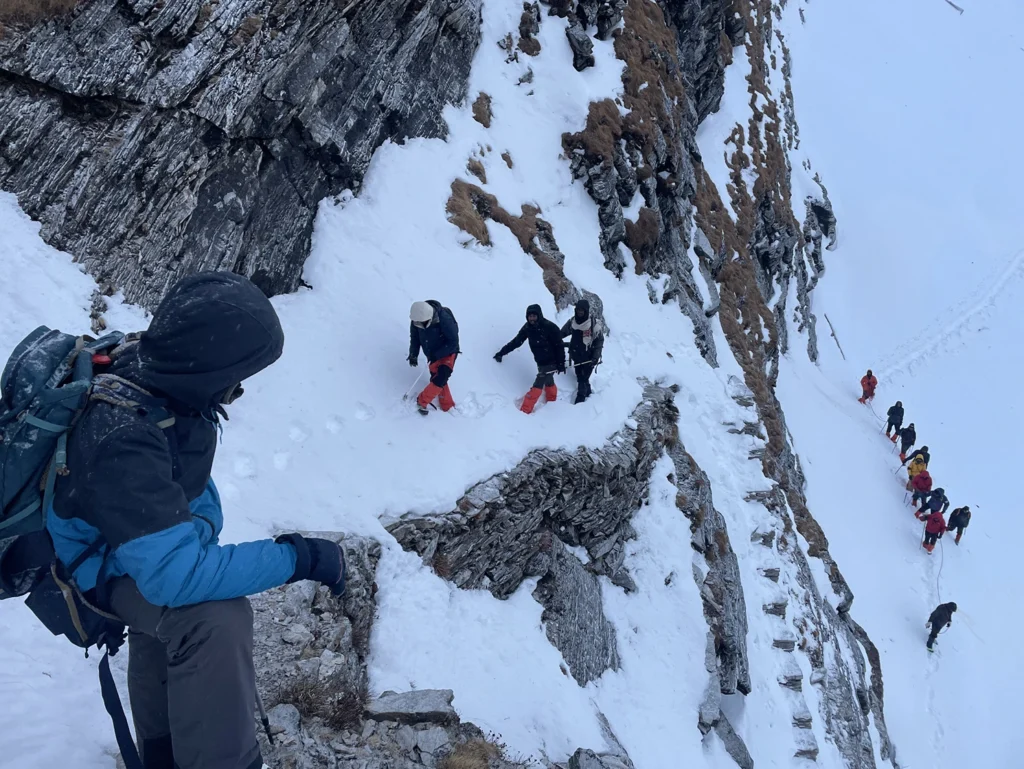
Beyond general slipperiness and road risk, monsoon brings a handful of specific problems that trekkers genuinely need to know about before deciding to go.
Fast-Flowing, Freezing Stream Crossings
Several points along the route require crossing small streams, and these completely change character during monsoon. What’s normally a gentle trickle can turn into a fast-moving, ice-cold stream within a single day of heavy rain higher up the mountain.
Crossing a swollen stream is genuinely risky, especially for beginners who aren’t used to judging water depth and current strength. Even experienced trekkers sometimes choose to wait rather than cross when water levels rise unexpectedly, and that’s exactly the kind of judgment monsoon trekking forces you into.
Hailstorms on the Higher Sections
As you gain altitude, monsoon weather can turn from rain to sudden hailstorms with very little warning. These storms are more common on the higher, more exposed sections of the trail, where there’s little natural shelter available.
Getting caught in a hailstorm at altitude isn’t just uncomfortable — it genuinely increases your risk of hypothermia if you’re not dressed for it, and it can reduce visibility so much that continuing safely becomes genuinely difficult. This is one of the least predictable monsoon risks on this route, since hailstorms can appear even on days that started out looking clear.
Leeches in the Lohajung-to-Ali Bugyal Forest Stretch
The forested stretch between Lohajung and Ali Bugyal becomes genuinely leech-prone during monsoon months. This isn’t dangerous in a life-threatening sense, but it’s uncomfortable, distracting, and something most trekkers would rather avoid entirely.
Constantly checking your ankles and legs for leeches adds a mental burden on top of the physical effort of trekking, and it’s exactly the kind of small, annoying problem that adds up over a long trekking day and makes the whole experience less enjoyable.
Zero Visibility – Losing the Point of the Trek
Perhaps the most disappointing monsoon hazard isn’t dangerous at all — it’s simply disappointing. Thick monsoon clouds can reduce visibility to just a few metres, completely hiding the mountain views that make this trek worth doing in the first place.
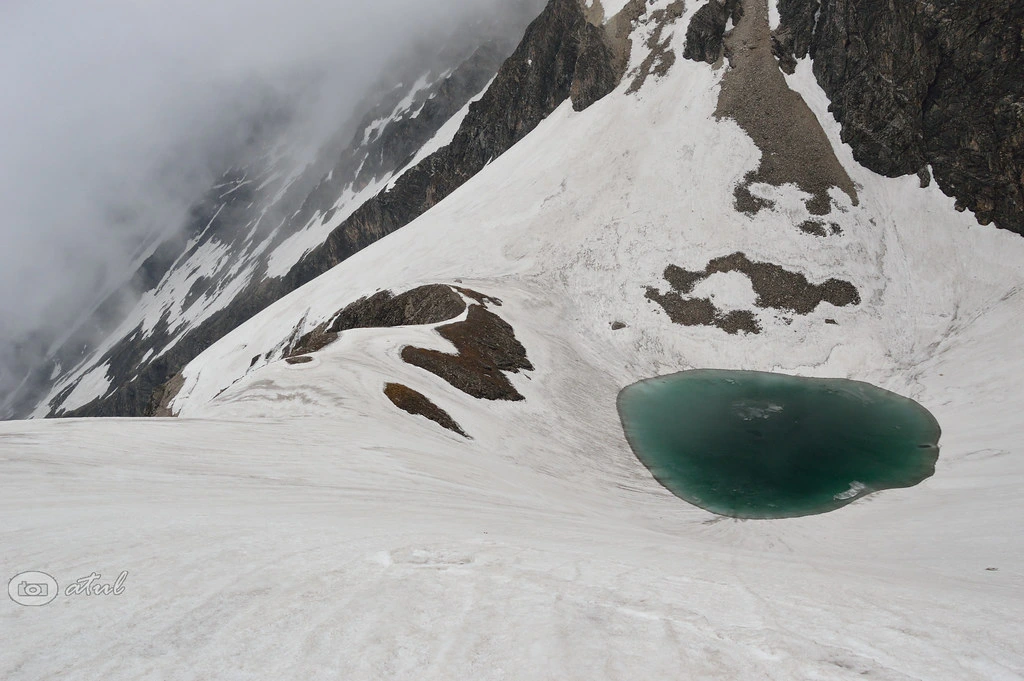
You could complete the entire trek, reach Roopkund Lake, and still miss out on seeing Mount Trishul or the wider Himalayan panorama that draws most people to this trek. Given how much effort this trek demands, trekking through thick cloud cover with zero views is a genuinely frustrating outcome to risk.
But Isn’t It Sunny Sometimes During Monsoon?
Yes, there can be sunny and pleasant days during the monsoon. However, a few hours of clear weather don’t make the Roopkund Trek safe. Weather in the Himalayas changes rapidly, and rain, fog, or hail can arrive with little warning.
Unlike some rain-shadow regions of Himachal or Kashmir, Roopkund in Uttarakhand receives heavy monsoon rainfall. Even on a sunny morning, the risks of landslides, slippery trails, and swollen streams remain.
While you might get lucky with clear skies, trek planning should be based on overall safety rather than chance. That’s why we do not operate Roopkund Trek batches during the monsoon season. We prioritize the safety of our trekkers and only conduct departures when trail and weather conditions are suitable for a safe and enjoyable trekking experience.
When Do We Actually Close Roopkund for the Season?
At Roopkund Heaven, we usually conclude our Roopkund Trek batches by the last week of June, before the monsoon becomes active in Uttarakhand. We do not operate batches during July and August because of heavy rainfall, landslides, slippery trails, and unpredictable weather conditions.
We also do not conduct Roopkund Trek departures during the winter months, from November to March, when heavy snowfall makes the trail inaccessible and unsafe.
These decisions are based on years of experience and our commitment to trekker safety. We resume our Roopkund Trek batches only when weather, trail conditions, and forest department regulations allow for a safe trekking experience.
For upcoming Batches visit our website or check our Roopkund Trek page.
Is the end of June or Last Week of August ever okay?
This is one of the most common questions we receive, and the honest answer is it depends on that year’s weather.
The last week of June falls right at the beginning of the monsoon. In some years, the rains arrive late and trekking may still be possible, while in others, the monsoon begins early, making the trail unsafe. Similarly, the last week of August may see improving weather, but rainfall can still be unpredictable.
Because these periods vary from year to year, we do not schedule Roopkund Trek batches based on calendar dates alone. At Roopkund Heaven, every departure is planned only after carefully assessing weather forecasts, trail conditions, and safety.
When Does Roopkund Reopen After Monsoon?
At Roopkund Heaven, we typically resume our Roopkund Trek batches from mid-September, once the monsoon has largely withdrawn and weather conditions become more stable. Before reopening the trek, we carefully assess road conditions, trail safety, and the latest forest department guidelines.
The September to November season is considered one of the best times to visit Roopkund. The skies are usually clear, the trails are more stable, and trekkers can enjoy spectacular Himalayan views along with a better chance of seeing the famous Roopkund skeletons after the snow has melted.
If your travel dates are flexible, we strongly recommend planning your trek after the monsoon instead of during July or August. It offers a much safer, more comfortable, and far more rewarding trekking experience.
What to Do If You Can Only Travel in Monsoon Season
We understand that not everyone has flexible dates. If monsoon genuinely is your only available window, here’s how to handle it sensibly.
Better Monsoon Trek Alternatives
- Valley of Flowers Trek – The best monsoon trek in Uttarakhand, with vibrant alpine flowers in full bloom during July and August.
- Hampta Pass Trek – Crosses into the rain-shadow region of Lahaul, where rainfall is much lower.
- Kashmir Great Lakes Trek – Receives significantly less monsoon rainfall than Uttarakhand and offers stunning alpine lakes.
- Pin Bhaba Pass Trek – Passes through the Spiti rain-shadow region, making it a good option during the monsoon.
- Ali Bedni Bugyal Trek – A great choice if your main goal is to experience Roopkund’s beautiful meadows without trekking all the way to the lake.
If You Still Plan a Monsoon Trek
If you decide to trek during the monsoon, make safety your top priority:
- Carry a waterproof jacket, backpack rain cover, and quick-dry clothing.
- Prepare with extra fitness training, as wet trails require more effort.
- Check the weather forecast daily before your departure.
- Trek only with an experienced operator that has proper safety protocols and emergency plans.
At Roopkund Heaven, we do not operate Roopkund Trek batches during the monsoon season because your safety is always our highest priority. If you need help choosing the best trek for your travel dates, our team will be happy to recommend a suitable alternative.
Why Choose Roopkund Heaven for Booking Roopkund Trek Package
At Roopkund Heaven, your safety comes first. We carefully schedule our Roopkund Trek departures only during the best trekking seasons—May to June and September to November—when weather and trail conditions are most suitable.
Our experienced trek leaders know the Roopkund route well and are trained to handle changing mountain conditions. We take care of permits, transportation, accommodation, meals, camping arrangements, experienced guides, and complete trek logistics, so you can focus on enjoying your adventure.
If you are Planning Roopkund Trek, visit our website to explore upcoming departures, check detailed trek information, and book online. If you’re travelling with a group of 5 or more trekkers, we also offer customized departures, allowing you to choose your preferred trekking dates based on your group’s convenience, subject to availability.
Frequently Asked Questions
H3: Is Roopkund trek safe in July?
No, July falls within the highest-risk monsoon window, with genuine landslide risk on the approach road and slippery, unstable trail conditions. We recommend avoiding this month entirely and shifting to September or October if your schedule allows.
H3: Is the last week of August good for Roopkund?
It’s inconsistent. Some years see monsoon intensity ease slightly by late August, but this varies significantly year to year, so we wouldn’t recommend fixed, non-flexible plans around this exact window without checking real-time conditions first.
H3: Is it possible to trek in end of June?
It’s on the edge of the risk window and depends on how early monsoon arrives that particular year. We typically close our own batches by the last week of June specifically because this timing becomes unreliable.
H3: Are there leeches on the Roopkund trail during monsoon?
Yes, particularly in the forested stretch between Lohajung and Ali Bugyal. This isn’t dangerous but is genuinely uncomfortable, and it’s one more reason most operators avoid running this trek during peak monsoon months.
H3: What’s the landslide risk specifically on this route?
The Lohajung approach road is the most vulnerable stretch, since heavy rain softens hillsides along this steep terrain, sometimes blocking the road for hours or days. This risk peaks during late June through August.
H3: Is Roopkund Trek safe during the monsoon?
Generally, no. Between landslide risk, slippery trails, swollen streams, and reduced visibility, monsoon conditions genuinely increase the risk profile of this trek beyond what most trekkers should accept for a recreational trip.
H3: Can beginners do the Roopkund Trek in July?
We’d strongly advise against it. This trek is already physically demanding for beginners in ideal conditions, and adding monsoon-specific hazards on top of that makes it a genuinely poor choice for a first-timer’s July attempt.
H3: Does it rain every day during the monsoon?
No, not every single day, but rainfall is frequent and unpredictable enough that planning around occasional clear days isn’t a reliable strategy. The underlying risks remain even on days that start out sunny.
H3: Why do We avoid Roopkund in monsoon?
We avoid it because the combination of landslide-prone roads, slippery trails, swollen stream crossings, and reduced visibility genuinely increases risk without adding any real benefit to the trekking experience.
H3: Which month is best for the Roopkund Trek?
June, right before monsoon intensifies, and September through October, after monsoon eases, are genuinely the best windows, offering the most stable weather and clearest mountain views.
H3: Is the Roopkund Trek currently open?
This depends on the season — check directly with your operator, since availability shifts based on current weather patterns and forest department regulations, particularly around the monsoon closure and reopening windows.
H3: What is the biggest risk during the monsoon trek?
Landslide risk on the Lohajung approach road is generally considered the single biggest concern, since it can strand trekkers before they even begin the actual trail, or block their return journey afterward.
H3: What should I pack for a monsoon trek?
A proper waterproof jacket, backpack rain cover, quick-dry synthetic clothing, and grip-focused trekking shoes are essential. Avoid cotton clothing entirely, since it stays wet and cold for extended periods once soaked.
H3: Which treks are better than Roopkund during the monsoon?
Valley of Flowers, Hampta Pass, Kashmir Great Lakes, and Pin Bhaba Pass are all genuinely better suited to monsoon conditions, either because they need the rain (Valley of Flowers) or sit in rain-shadow regions with lighter monsoon impact.
H3: Can roads to Lohajung get blocked during the rainy season?
Yes, this happens regularly during peak monsoon months, sometimes for several hours and occasionally for days, due to landslide debris on the approach road. This is one of the core reasons we close our Roopkund batches before this risk window begins.