Your Complete Travel Guide to India’s Most Beautiful Monsoon Trek
Valley of Flowers Trek 2026 is one of India’s most beautiful Himalayan adventures and the perfect choice for nature lovers, photographers, and first-time trekkers. This complete guide covers everything you need to know, including the best time to visit, Valley of Flowers Cost, trek distance, weather, itinerary, permits, packing list, and travel tips before planning your journey.
Nestled in the Chamoli district of Uttarakhand, this UNESCO World Heritage Site transforms into a colourful paradise every monsoon, attracting thousands of trekkers, photographers, botanists, and nature lovers from around the world. Unlike many Himalayan treks that focus solely on reaching a summit, the Valley of Flowers rewards visitors with breathtaking alpine meadows, rare Himalayan flora, crystal-clear streams, waterfalls, glaciers, and snow-clad mountains throughout the journey.
If you’re planning your Valley of Flowers 2026 adventure, proper preparation can make all the difference. From understanding the trekking route and weather conditions to estimating your budget and selecting the right travel dates, every small decision contributes to a smoother and more enjoyable experience.
This comprehensive guide covers everything you need to know before planning your Valley of Flowers Trek in 2026.
Why Plan Your Valley of Flowers Trek in 2026?
Every year, thousands of travellers visit the Valley of Flowers during its short blooming season. However, each season offers a unique experience because the flowering patterns, weather conditions, and landscapes change naturally.
Planning your Valley of Flowers 2026 trip in advance provides several advantages.
- Better hotel availability in Govindghat and Ghangaria.
- Easier booking of transport from Rishikesh or Haridwar.
- More options when selecting a reliable trekking company.
- Lower travel costs through early reservations.
- Better flexibility in choosing the peak flowering period.
The Valley of Flowers remains open only for a limited period each year, usually from June until late September or early October, depending on weather conditions. Since accommodation and transportation become limited during July and August, early planning is highly recommended.
Whether you’re travelling independently or booking a Valley of Flowers Trek Package, preparing well in advance helps you enjoy the journey without unnecessary stress.
About Valley of Flowers National Park
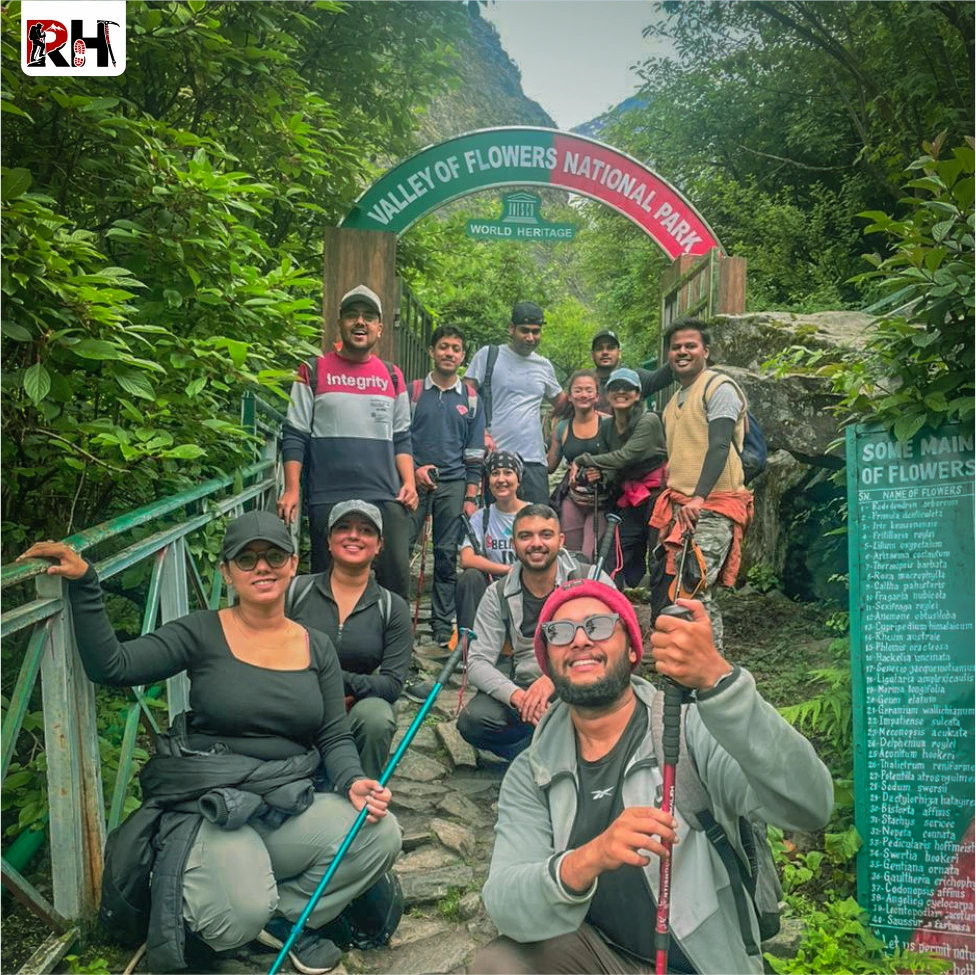
The Valley of Flowers National Park is one of India’s most ecologically important protected areas. Located within the Nanda Devi Biosphere Reserve, it was declared a National Park in 1982 and later recognised as a UNESCO World Heritage Site due to its exceptional biodiversity.
Spread across approximately 88 square kilometres, the valley lies at an altitude ranging from 3,250 metres to 3,650 metres above sea level. During winter, heavy snowfall completely covers the landscape. As temperatures rise in early summer, the snow melts, allowing hundreds of alpine flower species to bloom across the valley.
The park is home to more than 600 species of flowering plants, including:
- Himalayan Blue Poppy
- Cobra Lily
- Himalayan Bellflower
- Primula
- Marsh Marigold
- Geranium
- Anemone
- Pedicularis
- Potentilla
- Himalayan Balsam
Besides flowers, the national park also supports remarkable wildlife.
Some species found here include:
- Himalayan Black Bear
- Musk Deer
- Bharal (Blue Sheep)
- Red Fox
- Himalayan Tahr
- Snow Leopard (rare)
- Himalayan Monal
- Griffon Vulture
Strict conservation rules help preserve this fragile ecosystem. Visitors are not allowed to camp inside the park, pick flowers, litter, or disturb wildlife.
These regulations ensure that future generations can continue to enjoy this extraordinary natural treasure.
Phoolon Ki Ghati Uttarakhand – The Valley of Legends
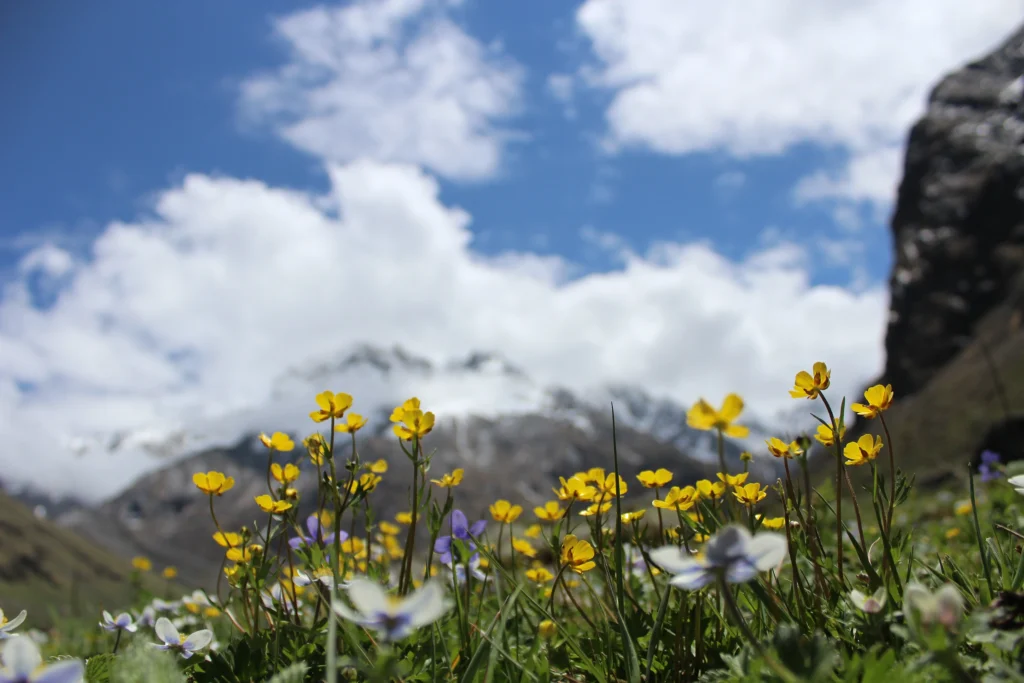
Long before the Valley of Flowers gained international recognition, local communities knew it as Phoolon Ki Ghati Uttarakhand.
The name translates to “Valley of Flowers,” and the region has long been associated with local folklore and spiritual beliefs.
According to popular legends, the valley was believed to be the garden of celestial fairies. Local villagers considered it sacred and often avoided wandering deep into the valley after sunset.
The region also lies close to the famous Sikh pilgrimage site of Hemkund Sahib, making it an important destination for both nature lovers and pilgrims.
In 1931, British mountaineer Frank S. Smythe accidentally discovered the valley while returning from a successful expedition to Mount Kamet. Captivated by its incredible beauty, he introduced the destination to the world through his book The Valley of Flowers.
Today, the valley is internationally recognised as one of the most beautiful alpine landscapes on Earth.
Valley of Flowers Trek Overview
The Valley of Flowers trek is considered one of the most rewarding monsoon treks in India.
Unlike summit-focused expeditions, this trek combines beautiful mountain landscapes, lush forests, waterfalls, rivers, suspension bridges, alpine meadows, and colourful flower fields throughout the journey.
Quick Trek Facts
| Trek Information | Details |
| Location | Chamoli District, Uttarakhand |
| State | Uttarakhand |
| Trek Type | Easy to Moderate |
| Maximum Altitude | Approximately 3,650 metres |
| Trek Duration | 5–6 Days |
| Trek Season | June to September |
| UNESCO Site | Yes |
| Famous For | Alpine flowers, biodiversity, photography |
One of the best features of this trek is that every day offers different scenery.
The journey begins with dense forests and mountain rivers before gradually opening into vast alpine meadows filled with colourful flowers.
Every few hundred metres, the landscape changes dramatically.
Valley of Flowers Trek Distance Explained
One of the most common questions asked by first-time visitors is:
“What is the Valley of Flowers Trek Distance?”
Although many people think it is simply a one-day hike, the complete journey includes both road travel and trekking.
Here’s the complete breakdown.
Delhi to Rishikesh
Approximate Distance:
240 km
Travel Time: 5–6 Hours
Rishikesh to Govindghat
Approximate Distance:
270 km
Travel Time: 9–10 Hours
This scenic drive passes through several famous Himalayan towns, including:
- Devprayag
- Srinagar
- Rudraprayag
- Karnaprayag
- Joshimath
Govindghat to Pulna
Distance:
4 km
Mode: Shared Jeep
Since the construction of the motor road to Pulna Village, trekkers no longer need to walk this section.
Pulna to Ghangaria
Distance: 9 km
Walking Time: 5–7 Hours
This is the main trekking day.
The trail passes through:
- Mountain streams
- Forests
- Tea stalls
- Wooden bridges
- Beautiful waterfalls
Ghangaria to Valley of Flowers
Distance: 4 km (One Way)
Round Trip: 8 km
Visitors generally spend several hours exploring the valley before returning to Ghangaria for the night.
Total Valley of Flowers Trek Distance
Pulna → Ghangaria
9 km
Ghangaria → Valley of Flowers → Ghangaria
8 km
Ghangaria → Pulna
9 km
Approximately 26 kilometres of trekking
If you also visit Hemkund Sahib, add approximately another 12 km (one way) round-trip trekking distance over a steeper trail.
How Difficult Is the Valley of Flowers Trek?
The Valley of Flowers is generally classified as an Easy to Moderate Himalayan trek.
It doesn’t involve:
- Technical climbing
- Ropes
- Glacier crossings
- Ice climbing
- Rock climbing
However, it still requires reasonable fitness because you’ll walk several kilometres every day on mountain trails.
The altitude and gradual ascents can feel tiring, particularly for people who are not physically active.
Difficulty Factors
- Daily walking of 8–10 km
- Gradual uphill sections
- High altitude
- Monsoon weather
- Slippery trails after rainfall
Fortunately, the well-maintained path makes the trek achievable for most healthy individuals.
Who Can Do the Valley of Flowers Trek?
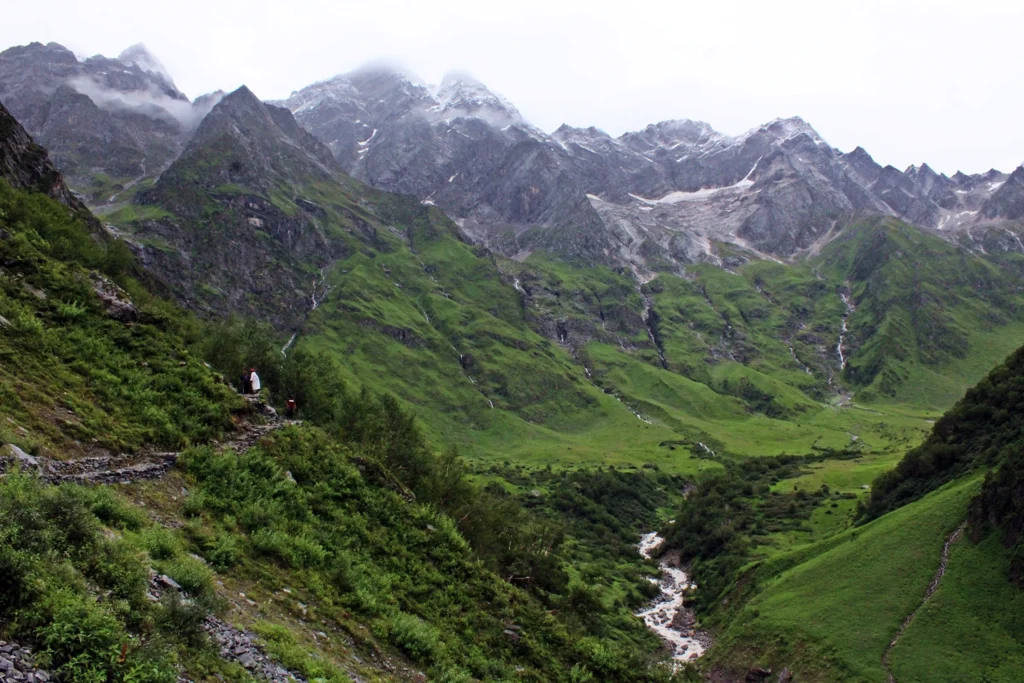
One reason behind the popularity of the Valley of Flowers is that it is suitable for a wide range of travellers.
This trek is ideal for:
First-Time Trekkers
If you’ve never trekked in the Himalayas before, this is one of the best places to begin.
Families
Families travelling with teenagers or active senior citizens often choose this trek because of its manageable difficulty level.
Solo Travellers
The trail remains busy throughout the season, making it one of the safer Himalayan treks for solo travellers.
Nature Lovers
If your primary goal is to experience Himalayan biodiversity rather than conquer difficult peaks, few destinations can match the Valley of Flowers
Photographers
The changing colours, misty landscapes, waterfalls, rivers, and flower-filled meadows provide endless photography opportunities.
Bird Watchers
The national park is home to numerous Himalayan bird species, making it a rewarding destination for wildlife enthusiasts.
Do You Need Previous Trekking Experience?
No.
Previous trekking experience is not mandatory.
However, preparing your body before the trek will make your experience much more enjoyable.
Aim to practise for at least 3–4 weeks before departure.
Simple preparation includes:
- Walking 5–6 km daily.
- Climbing stairs regularly.
- Light jogging or cycling.
- Basic strength exercises.
- Stretching to improve flexibility.
Even moderate preparation significantly reduces fatigue during the trek.
Why This Trek Is Different from Other Himalayan Treks
Many Himalayan treks focus on reaching a summit, a high-altitude lake, or a mountain pass.
The Valley of Flowers offers something completely different.
Instead of one final viewpoint, the entire trail is filled with breathtaking scenery.
You’ll experience:
- Colourful alpine meadows.
- Hundreds of flower species.
- Glacier-fed rivers.
- Wooden bridges.
- Dense forests.
- Snow-covered peaks.
- Waterfalls.
- Peaceful mountain villages.
- Rich biodiversity.
Every step reveals another spectacular landscape, making the journey just as memorable as the destination itself.
Valley of Flowers Uttarakhand Best Time to Visit
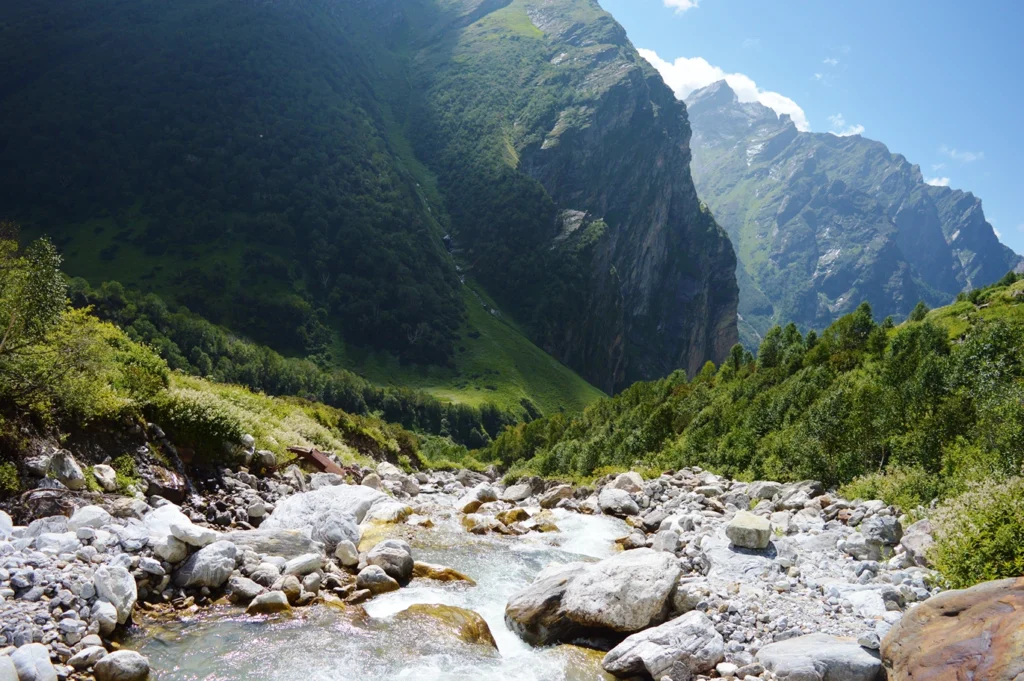
One of the most important decisions while planning your Valley of Flowers 2026 trip is choosing the right time to visit.
Unlike many Himalayan treks that remain open for several months, the Valley of Flowers National Park welcomes visitors for only a short period each year. The valley undergoes a dramatic transformation throughout the season, meaning your experience can vary significantly depending on when you arrive.
Some travellers visit to witness endless carpets of blooming flowers, while others prefer fewer crowds, pleasant weather, or clearer mountain views.
So, what is the Valley of Flowers Uttarakhand best time to visit?
The answer depends on what you’re looking for.
Valley of Flowers Trek Best Time (Month-Wise Guide)
June – Fresh Beginnings
The trekking season usually begins in early June after the winter snow starts melting.
During this time, the valley is waking up after several months under snow.
You’ll notice:
- Fresh green grass covering the meadows.
- Snow lingering on nearby peaks.
- Crystal-clear rivers flowing with glacial melt.
- Small patches of early alpine flowers.
- Cool and pleasant weather.
June is ideal for trekkers who prefer quieter trails and don’t mind seeing fewer flowers.
Advantages
- Less crowded trails.
- Easier accommodation availability.
- Pleasant daytime temperatures.
- Excellent mountain views.
- Snow-covered Himalayan peaks.
Things to Consider
- Flower bloom is still developing.
- Some sections may remain muddy due to melting snow.
July – The Valley Starts Blooming
By July, the landscape changes dramatically.
The arrival of the monsoon awakens hundreds of flower species, turning green meadows into colourful alpine gardens.
Visitors can expect:
- Large flowering patches.
- Lush green forests.
- Powerful waterfalls.
- Misty mountain landscapes.
- Comfortable trekking temperatures.
July marks the beginning of the peak flowering season.
It is one of the best months for photographers looking to capture vibrant colours without encountering the largest crowds of the year.
August – Peak Blooming Season
If your goal is to witness the Valley of Flowers at its absolute best, August is widely considered the Valley of Flowers Trek Best Time.
This is when nature reaches its peak.
The valley becomes covered with countless species of alpine flowers blooming simultaneously.
Popular flowers visible during this period include:
- Himalayan Blue Poppy
- Balsam
- Cobra Lily
- Primula
- Marsh Marigold
- Geranium
- Anemone
- Bellflowers
- Himalayan Daisy
The landscape appears almost surreal.
Every section of the trail reveals different colours and flower species.
However, because August attracts the highest number of visitors, hotels in Govindghat and Ghangaria often sell out weeks in advance.
If you’re planning your Valley of Flowers 2026 trip during August, book accommodation and transportation well ahead of time.
September – Peaceful and Scenic
By September, the flowering season gradually comes to an end.
Although fewer flowers remain, the valley takes on a different kind of beauty.
Advantages include:
- Fewer tourists.
- Peaceful trekking experience.
- Clear mountain views after the monsoon.
- Comfortable weather.
- Better photography conditions for landscapes.
Nature lovers who prefer solitude often choose September over the busier July and August period.
Which Month Should You Choose?
| Month | Flower Bloom | Crowd | Photography | Overall Experience |
| June | Early Bloom | Low | Excellent Mountain Views | Quiet Trek |
| July | Good Bloom | Moderate | Excellent | Highly Recommended |
| August | Peak Bloom | High | Outstanding | Best Overall |
| September | Late Bloom | Low | Clear Landscapes | Peaceful Experience |
For most travellers, late July to mid-August remains the Valley of Flowers Uttarakhand Best Time to Visit, offering the greatest variety of blooming flowers.
Valley of Flowers Weather
Mountain weather changes quickly, and understanding the Valley of Flowers Weather is essential before packing your bags.
Even on sunny mornings, rain showers can arrive unexpectedly during the afternoon.
Because the trek takes place during the monsoon season, trekkers should always prepare for changing conditions.
Average Weather
| Month | Day Temperature | Night Temperature | Rainfall |
| June | 15–20°C | 7–10°C | Low to Moderate |
| July | 12–18°C | 8–10°C | Moderate |
| August | 10–18°C | 7–9°C | High |
| September | 10–17°C | 5–8°C | Low to Moderate |
Weather During the Day
During daytime trekking, temperatures usually remain pleasant.
Expect:
- Comfortable walking conditions.
- Cool mountain breeze.
- Frequent cloud movement.
- Occasional sunshine.
- Sudden rain showers.
A lightweight waterproof jacket becomes one of your most valuable pieces of equipment.
Weather at Night
Even during summer, nights can become surprisingly cold.
Temperatures often fall below 10°C.
Warm clothing is essential, particularly in Ghangaria.
Carry:
- Fleece jacket.
- Thermal layers.
- Woollen cap.
- Gloves.
Rainfall During the Trek
Rain is responsible for the valley’s incredible flower bloom.
While showers can occasionally interrupt trekking, they also create:
- Lush green landscapes.
- Powerful waterfalls.
- Fresh mountain air.
- Spectacular photography conditions.
Always pack:
- Waterproof backpack cover.
- Poncho or rain jacket.
- Waterproof trekking shoes.
- Dry bags for electronics.
Flowers You Can Expect During Different Months
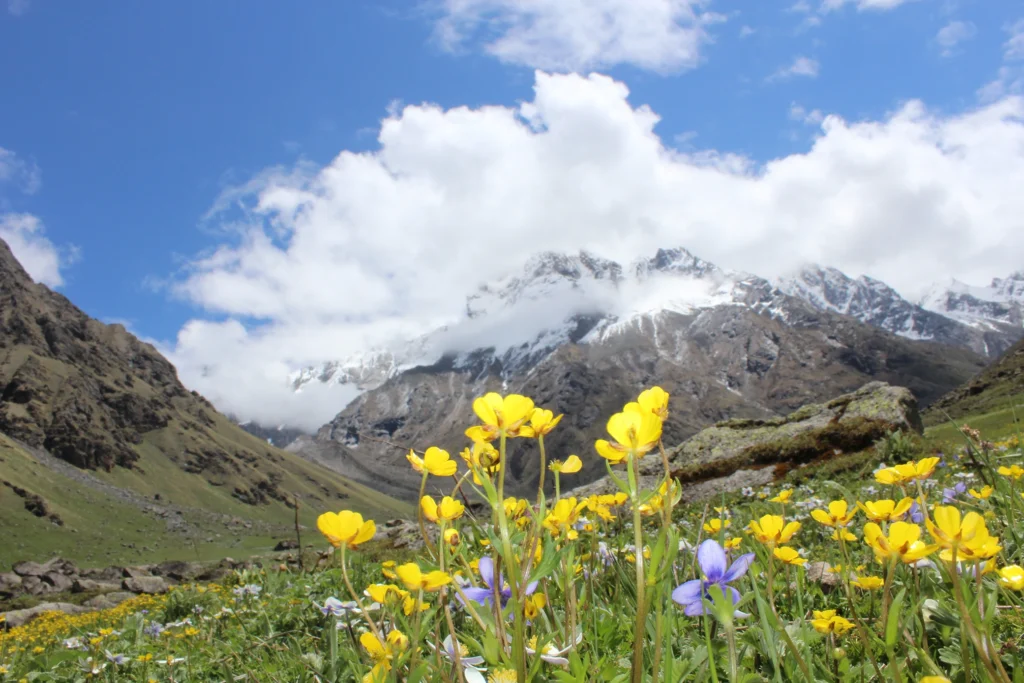
One reason the Valley of Flowers attracts botanists from around the world is the constantly changing bloom cycle.
June
- Buttercups
- Primulas
- Early Anemones
July
- Himalayan Balsam
- Bellflowers
- Geraniums
- Orchids
August
- Blue Poppies
- Cobra Lilies
- Daisies
- Himalayan Bellflowers
- Marsh Marigolds
September
- Late-season alpine flowers.
- Golden grasslands.
- Autumn vegetation.
Every visit offers something unique.
No two flowering seasons are exactly the same.
Sample Valley of Flowers Trek Itinerary (6 Days)
Planning your schedule in advance makes the journey much smoother.
Here’s a commonly followed itinerary for Valley of Flowers 2026.
Day 1 – Rishikesh to Govindghat
- Drive approximately 270 km.
- Scenic journey along the Alaknanda River.
- Pass Devprayag, Rudraprayag, Karnaprayag, and Joshimath.
- Overnight stay in Govindghat.
Day 2 – Govindghat to Ghangaria
- Shared jeep to Pulna.
- Trek approximately 9 km.
- Walk alongside the Pushpawati River.
- Overnight stay in Ghangaria.
Day 3 – Explore Valley of Flowers National Park
- Early morning entry into the park.
- Spend several hours exploring flower meadows.
- Photography.
- Wildlife observation.
- Return to Ghangaria.
Day 4 – Optional Trek to Hemkund Sahib
Many visitors combine the Valley of Flowers with a visit to Hemkund Sahib.
Highlights include:
- High-altitude glacial lake.
- Historic Sikh shrine.
- Panoramic Himalayan views.
Return to Ghangaria.
Day 5 – Trek Back to Pulna
- Descend to Pulna.
- Drive back to Govindghat.
- Continue towards Joshimath or Pipalkoti depending on your travel plan.
Day 6 – Return to Rishikesh
Enjoy one final scenic drive through Uttarakhand before returning home with unforgettable memories.
How to Reach Valley of Flowers from Delhi
Another frequently searched query is “How to Reach Valley of Flowers from Delhi?”
Fortunately, reaching the Valley of Flowers is straightforward, though it involves multiple stages of travel.
By Air
The nearest airport is Jolly Grant Airport, Dehradun.
After landing:
- Travel to Rishikesh.
- Continue by road to Govindghat.
- Take a shared jeep to Pulna.
- Trek to Ghangaria.
- Visit the Valley of Flowers.
Flying is the fastest option for travellers coming from distant cities.
By Train
The nearest railway stations are:
- Haridwar Junction
- Rishikesh
- Dehradun
Popular trains from Delhi include:
- Dehradun Shatabdi
- Mussoorie Express
- Nanda Devi Express
From the railway station, taxis and buses regularly operate towards Govindghat.
By Road
Many trekkers choose to travel by road because of the breathtaking Himalayan scenery.
Route
Delhi
↓
Haridwar
↓
Rishikesh
↓
Devprayag
↓
Rudraprayag
↓
Karnaprayag
↓
Joshimath
↓
Govindghat
↓
Pulna
↓
Ghangaria
↓
Valley of Flowers
The road journey takes approximately 12–14 hours from Delhi to Govindghat, depending on traffic and weather conditions.
Many travellers break the journey with an overnight stay in Joshimath or Pipalkoti for a more comfortable experience.
Travel Tips for Valley of Flowers 2026
To make your trip smoother, keep these tips in mind:
- Book hotels and transport at least 1–2 months in advance for July and August.
- Start trekking early each morning to avoid afternoon rain.
- Carry waterproof clothing and backpack covers.
- Keep cash, as digital payments may not work everywhere.
- Respect park rules and avoid littering.
- Stay hydrated throughout the trek.
- Wear proper trekking shoes with good grip.
- Check the latest weather forecast before departure.
Proper planning will help you enjoy every moment of your Valley of Flowers 2026 adventure.
Valley of Flowers Cost (2026 Complete Budget Guide)
One of the first questions travellers ask while planning their trip is:
“What is the Valley of Flowers Cost?”
The answer depends on your travel style. Whether you’re a backpacker, travelling with family, or booking a professionally organised Valley of Flowers Trek Package, there are options to suit almost every budget.
The good news is that compared to many Himalayan destinations, the Valley of Flowers offers excellent value for money. Since the trek is non-technical and the route is well-developed, you don’t need expensive mountaineering equipment or specialised guides.
Below is a realistic cost estimate for Valley of Flowers 2026.
Transportation Cost
Your travel expenses will depend on how you reach Uttarakhand.
Delhi to Haridwar / Rishikesh
By Train
Approximate Cost: ₹300–₹2,000
Depending on the class of travel.
By Bus
Approximate Cost: ₹600–₹1,500
Volvo buses are generally more comfortable for overnight journeys.
By Flight
Delhi → Dehradun
Approximate Cost: ₹2,500–₹8,000
Flight fares vary based on the booking date and travel season.
Rishikesh to Govindghat
This scenic mountain drive covers approximately 270 km.
Government Bus
₹700–₹900
Shared Taxi
₹800–₹1,500
Private Taxi
₹6,000–₹10,000
Private vehicles are ideal for families or groups looking for flexibility.
Govindghat to Pulna
A shared jeep service connects Govindghat to Pulna Village.
Approximate Fare:
₹50–₹100 per person
This short drive saves around 4 km of trekking compared to the older route.
Accommodation Cost
Accommodation is available mainly at Govindghat and Ghangaria.
Govindghat
Budget Hotel
₹800–₹1,500
Comfort Hotel
₹2,000–₹4,000
Premium Stay
₹4,000+
Ghangaria
Budget Guest House
₹1,200–₹2,000
Comfort Hotel
₹2,500–₹4,500
Premium Hotel
₹5,000+
During July and August, prices usually increase due to high demand.
Booking early is strongly recommended for Valley of Flowers 2026.
Food Expenses
Food is available throughout the trekking route.
Most restaurants serve:
- Dal
- Rice
- Chapati
- Vegetables
- Noodles
- Tea
- Coffee
- Maggi
- Paratha
Daily Food Budget:
₹700–₹1,200
Since the trek passes through eco-sensitive areas, expect simple but fresh meals rather than elaborate menus.
Entry Permit Charges
Every visitor entering the Valley of Flowers National Park must purchase an official entry permit.
Permit charges differ for:
- Indian Nationals
- Foreign Nationals
The permit generally remains valid for a limited period.
Since government fees can change, always verify the latest charges before your trip.
Porter Charges
Hiring a porter is optional but extremely helpful if you prefer trekking without carrying a heavy backpack.
Approximate Cost: ₹1,000–₹1,500 per day
Mule Charges
Mules are available for carrying luggage.
Approximate Cost: ₹2,000–₹3,500 per day
Rates vary depending on weight and distance.
Trekking Equipment Rental
If you don’t own trekking gear, basic equipment can be rented from Rishikesh or Joshimath.
Common rental items include:
- Trekking poles
- Rain ponchos
- Jackets
- Backpack
- Sleeping bags (if required)
Rental charges are generally affordable and ideal for first-time trekkers.
Miscellaneous Expenses
Always keep a small emergency budget.
Include expenses for:
- Snacks
- Water bottles
- Tea
- Souvenirs
- Charging electronic devices
- Personal medicines
- Emergency transport
Suggested Budget: ₹2,000–₹3,000
Estimated Valley of Flowers Cost
| Travel Style | Estimated Budget |
| Backpacker | ₹8,000–₹12,000 |
| Budget Traveller | ₹12,000–₹16,000 |
| Comfortable Traveller | ₹16,000–₹22,000 |
| Premium Traveller | ₹22,000–₹35,000+ |
Overall, the Valley of Flowers Cost remains reasonable considering the breathtaking landscapes, UNESCO status, and unforgettable trekking experience.
Should You Book a Valley of Flowers Trek Package?
Many travellers face one important question:
Should I travel independently or book a Valley of Flowers Trek Package?
The answer depends on your trekking experience, available time, and comfort level.
Let’s compare both options.
Independent Travel
Advantages
- Flexible schedule
- Complete freedom
- Budget-friendly
- Explore at your own pace
Disadvantages
- Multiple transport bookings
- Hotel reservations
- Route planning
- Managing permits
- Weather-related challenges
- Limited local support during emergencies
Valley of Flowers Trek Package
A professionally organised Valley of Flowers Trek Package takes care of almost every logistical aspect.
Most packages include:
- Accommodation
- Transportation
- Meals
- Trek Leader
- Local Guide
- Forest Permits
- Medical Support
- Group Coordination
This allows you to focus entirely on enjoying the journey.
Why Many Travellers Prefer Trek Packages
1. Professional Trek Leaders
Experienced trek leaders monitor:
- Group safety
- Weather conditions
- Trekking pace
- Emergency situations
Their experience becomes particularly valuable in mountain environments.
2. Local Expertise
Local guides know:
- Flower species
- Wildlife
- Safe trekking routes
- Local history
- Cultural significance
Their insights greatly enrich the overall experience.
3. Medical Assistance
Most reputed trekking companies carry:
- First Aid Kit
- Oxygen Cylinder
- Oximeter
- Basic emergency medicines
This is reassuring for first-time trekkers and families.
4. Pre-Arranged Accommodation
Hotels in Ghangaria become fully booked during peak bloom.
Package bookings eliminate the stress of searching for rooms after arriving.
5. Better Time Management
Since transportation, permits, and accommodation are organised in advance, you spend less time managing logistics and more time enjoying nature.
Accommodation During the Trek
Accommodation remains fairly simple throughout the route.
Govindghat
Available Options:
- Hotels
- Lodges
- Guest Houses
Facilities generally include:
- Attached bathrooms
- Hot water (subject to availability)
- Restaurants
- Parking
Ghangaria
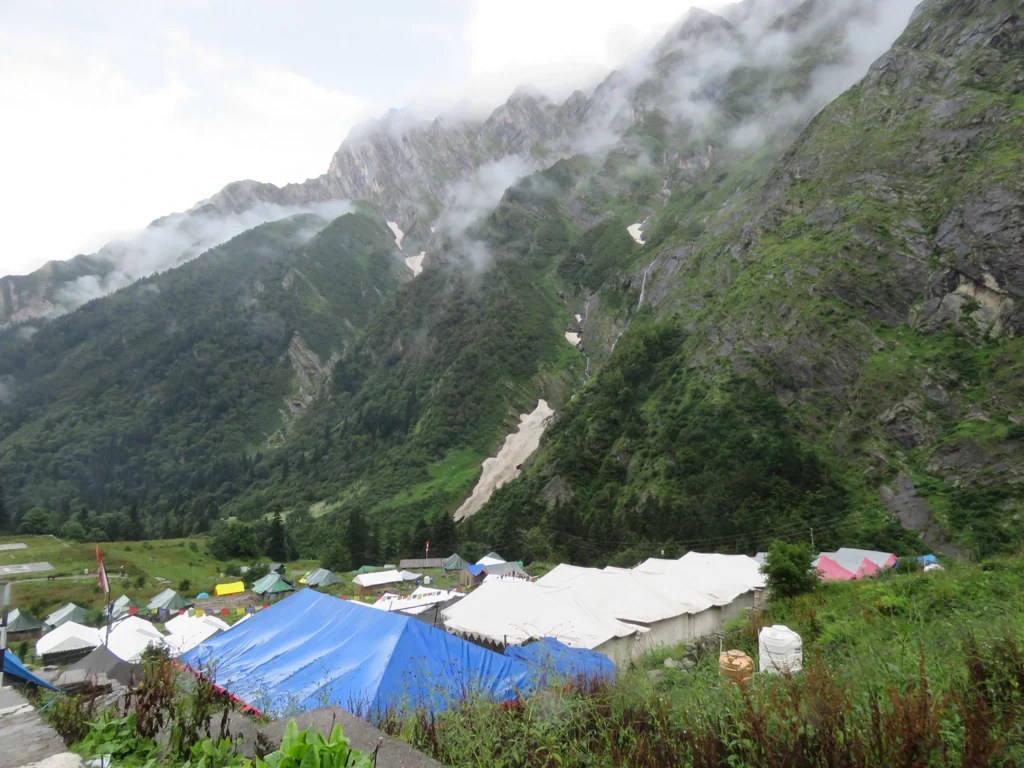
Since Ghangaria serves as the base village for both Valley of Flowers and Hemkund Sahib, it offers:
- Hotels
- Guest Houses
- Budget Lodges
Luxury accommodation is limited because of the remote mountain location.
What to Pack for Valley of Flowers
Packing correctly can significantly improve your trekking experience.
Clothing
Carry:
- Waterproof Jacket
- Rain Poncho
- Thermal Innerwear
- Fleece Jacket
- Down Jacket (late season)
- Quick Dry T-Shirts
- Trek Pants
- Woollen Cap
- Sun Cap
- Gloves
Avoid cotton clothing as it takes longer to dry.
Footwear
Good trekking shoes are essential.
Choose shoes with:
- Excellent grip
- Waterproof protection
- Proper ankle support
Also carry:
- Extra socks
- Lightweight slippers
Trekking Essentials
- Backpack (30–40 L)
- Rain Cover
- Trekking Pole
- Water Bottle
- Dry Bags
- Head Torch
Personal Essentials
- Sunscreen SPF 50+
- Sunglasses
- Lip Balm
- Moisturiser
- Personal Medicines
- Power Bank
- Identity Card
- Cash
Energy Snacks
Carry lightweight snacks such as:
- Dry Fruits
- Protein Bars
- Chocolates
- Energy Gels
- Trail Mix
- Biscuits
These provide quick energy during long trekking days.
Fitness Preparation
Although the Valley of Flowers is beginner-friendly, preparation makes the trek much more enjoyable.
Begin training 4–6 weeks before your trip.
Walking
Walk at least: 5–6 km daily
Increase your pace gradually.
Stair Climbing
Climb stairs for 20–30 minutes several times a week.
This improves endurance for uphill sections.
Cardio Exercises
Choose activities like:
- Jogging
- Cycling
- Swimming
- Brisk Walking
Aim for 30–45 minutes, four or five days each week.
Strength Training
Focus on:
- Squats
- Lunges
- Step-ups
- Core exercises
Strong leg muscles make long trekking days much easier.
Stretching
Regular stretching improves flexibility and reduces muscle soreness.
Include:
- Hamstring stretches
- Hip mobility
- Calf stretches
- Shoulder mobility
Essential Planning Checklist
Before leaving for your Valley of Flowers 2026 adventure, confirm the following:
✔ Book accommodation in advance.
✔ Reserve transportation.
✔ Check the latest Valley of Flowers Weather forecast.
✔ Purchase travel insurance (recommended).
✔ Keep enough cash.
✔ Carry valid identity proof.
✔ Pack waterproof clothing.
✔ Wear proper trekking shoes.
✔ Charge your power bank.
✔ Inform family members about limited mobile connectivity.
✔ Download offline maps.
✔ Carry a reusable water bottle.
✔ Keep emergency contact numbers handy.
✔ Avoid carrying unnecessary luggage.
A well-planned trip ensures you can focus on the stunning landscapes instead of worrying about logistics.
Common Mistakes First-Time Trekkers Should Avoid
The Valley of Flowers is considered one of the easiest Himalayan treks, but that doesn’t mean you should underestimate it. Every year, many trekkers face avoidable difficulties simply because they overlook basic planning.
Avoiding these common mistakes will make your Valley of Flowers 2026 experience safer, more comfortable, and far more enjoyable.
1. Booking at the Last Minute
The Valley of Flowers trekking season is short, and July and August are the busiest months. Hotels in Govindghat and Ghangaria, along with transport services, often sell out well in advance.
Book your:
- Accommodation
- Transportation
- Trek package
- Train or flight tickets
at least 4–8 weeks before your departure.
2. Wearing Regular Sports Shoes
Many first-time trekkers assume running shoes are enough.
They’re not.
The trail becomes slippery during the monsoon due to mud, rocks, and flowing water.
Invest in proper trekking shoes with:
- Good grip
- Waterproof protection
- Ankle support
Your feet will thank you after walking nearly 26 km during the trek.
3. Ignoring Weather Forecasts
The Valley of Flowers Weather can change within minutes.
A bright sunny morning can quickly turn into heavy rainfall.
Always carry:
- Rain jacket
- Poncho
- Backpack rain cover
- Waterproof pouch for electronics
Mountain weather should never be underestimated.
4. Carrying Too Much Luggage
Heavy backpacks are one of the biggest reasons trekkers become exhausted.
Carry only essentials.
A 30–40 litre backpack is usually sufficient for this trek.
Avoid unnecessary items that increase your load.
5. Starting the Trek Late
Afternoon rainfall is common during the monsoon.
Starting early allows you to:
- Trek comfortably.
- Enjoy clearer views.
- Avoid walking in heavy rain.
- Return safely before evening.
An early start also provides the best opportunities for photography.
6. Not Drinking Enough Water
Cool weather often makes trekkers forget to stay hydrated.
Even at moderate altitude, dehydration can cause fatigue and headaches.
Drink water regularly throughout the trek.
Carry reusable water bottles to minimise plastic waste.
7. Ignoring Fitness Preparation
The Valley of Flowers trek doesn’t require mountaineering skills, but it still involves several hours of walking each day.
Preparing your body before the trek significantly improves your experience.
Even a month of regular walking and stair climbing can make a noticeable difference.
8. Littering the Mountains
The Valley of Flowers National Park is one of India’s most fragile ecosystems.
Leave nothing behind except footprints.
Carry your waste back whenever possible.
Respect nature so future generations can enjoy the same beauty.
Responsible Tourism at Valley of Flowers National Park
The Valley of Flowers isn’t just another tourist destination.
It is a globally recognised biodiversity hotspot.
Every visitor plays an important role in protecting this delicate ecosystem.
Follow Park Rules
- Stay on marked trails.
- Do not enter restricted areas.
- Respect park timings.
Never Pick Flowers
Many flower species found inside the valley are rare and protected.
Picking flowers damages the ecosystem and is strictly prohibited.
Enjoy them through photographs instead.
Avoid Plastic Waste
Carry reusable:
- Water bottles
- Food containers
- Cloth bags
Take all waste back with you.
Respect Wildlife
If you encounter wildlife:
- Observe quietly.
- Maintain distance.
- Never feed animals.
- Avoid loud noises.
Remember, you’re visiting their home.
Support Local Communities
Choose local:
- Homestays
- Hotels
- Guides
- Shops
- Restaurants
Responsible tourism directly benefits mountain communities and encourages conservation.
Is Valley of Flowers Worth Visiting in 2026?
Absolutely.
If you’ve been dreaming of experiencing the Himalayas without attempting a difficult expedition, Valley of Flowers 2026 is one of the best opportunities.
Here’s why.
Spectacular Flower Bloom
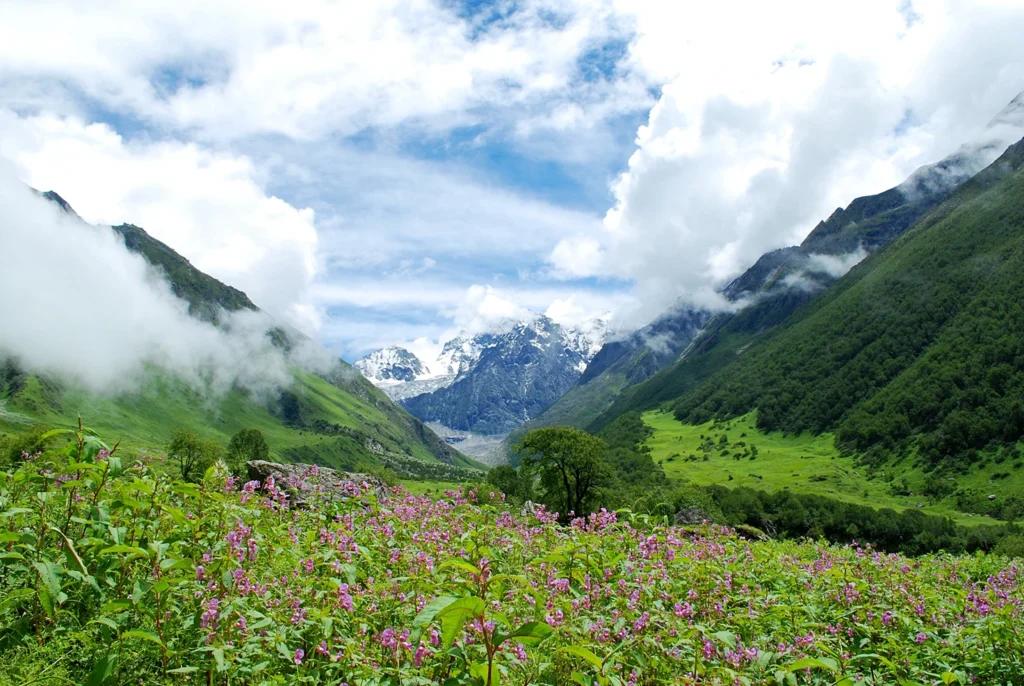
The valley comes alive with hundreds of species of alpine flowers, creating one of the most colourful natural landscapes in the world.
Beginner-Friendly Trek
Unlike technical mountain expeditions, this trek is suitable for most healthy travellers with basic fitness.
UNESCO World Heritage Site
Very few trekking destinations combine such extraordinary biodiversity with international recognition.
Incredible Photography
Every section of the trail offers stunning scenery:
- Colourful meadows
- Waterfalls
- Snow-capped mountains
- Rivers
- Forests
- Clouds rolling through valleys
Perfect Escape from City Life
The Valley of Flowers provides something increasingly rare—silence.
Away from traffic, crowds, and constant digital distractions, you’ll experience the peaceful rhythm of the Himalayas.
A Journey You’ll Never Forget
Many trekkers return home saying the Valley of Flowers wasn’t just another holiday—it changed the way they look at nature.
The fresh mountain air, colourful landscapes, and peaceful atmosphere create memories that stay with you long after the trek ends.
Final Thoughts
The Valley of Flowers is much more than a trekking destination.
It is a celebration of nature at its finest.
Whether you’re drawn by the colourful alpine flowers, the peaceful Himalayan landscapes, or the opportunity to experience one of India’s most remarkable UNESCO World Heritage Sites, this trek offers something truly unforgettable.
From understanding the Valley of Flowers Cost and choosing the Valley of Flowers Trek Best Time to planning your itinerary, estimating your budget, and learning How to Reach Valley of Flowers from Delhi, careful preparation ensures a smooth and memorable adventure.
If you’re planning your Valley of Flowers 2026 journey, start preparing early, book your accommodation or Valley of Flowers Trek Package in advance, and pack wisely.
Most importantly, travel responsibly.
Protect the mountains, respect local communities, and help preserve the natural beauty of Phoolon Ki Ghati Uttarakhand for future generations.
One visit is often enough to make you fall in love with the Himalayas forever.
Frequently Asked Questions (FAQs)
1. What is the best time to visit Valley of Flowers?
The Valley of Flowers Uttarakhand best time to visit is from late July to mid-August, when the valley is covered with the highest variety of blooming alpine flowers. June offers fresh greenery, while September provides fewer crowds and clearer mountain views.
2. What is the Valley of Flowers Cost for a complete trip?
The Valley of Flowers Cost generally ranges from ₹8,000 to ₹35,000+, depending on your mode of travel, accommodation, and whether you choose an organised trek package or travel independently.
3. How difficult is the Valley of Flowers trek?
The trek is considered easy to moderate. It is suitable for beginners with reasonable fitness and does not require technical climbing or previous trekking experience.
4. What is the Valley of Flowers Trek Distance?
The total Valley of Flowers Trek Distance is approximately 26 km, including the trek from Pulna to Ghangaria and the return visit to the Valley of Flowers. An optional trek to Hemkund Sahib adds extra distance.
5. How many days are required for the Valley of Flowers trek?
A 5 to 6-day itinerary is ideal for completing the trek comfortably. If you plan to visit Hemkund Sahib, consider adding an extra day.
6. Is Valley of Flowers suitable for beginners?
Yes. It is one of India’s best Himalayan treks for beginners due to its well-marked trail, moderate altitude, and manageable difficulty level.
7. What is the Valley of Flowers Weather like?
The Valley of Flowers Weather during the trekking season is cool and pleasant, with daytime temperatures between 10°C and 20°C. Rainfall is common during July and August, so waterproof clothing is essential.
8. How do I reach Valley of Flowers from Delhi?
If you’re wondering How to Reach Valley of Flowers from Delhi, you can travel by train, bus, or flight to Haridwar, Rishikesh, or Dehradun. From there, continue by road to Govindghat, take a shared jeep to Pulna, and then trek to Ghangaria before entering the national park.
9. Is a permit required for Valley of Flowers National Park?
Yes. Every visitor must purchase an entry permit before entering the Valley of Flowers National Park. Entry fees vary for Indian and foreign nationals.
10. Can I visit Hemkund Sahib during the same trip?
Yes. Most trekkers combine the Valley of Flowers with a visit to Hemkund Sahib, which is around 6 km uphill from Ghangaria.
11. Are mobile networks available during the trek?
Mobile connectivity is limited. Some networks may work intermittently in Govindghat and Ghangaria, but coverage inside the valley is generally unavailable.
12. What kind of accommodation is available?
Accommodation mainly includes hotels, guest houses, and lodges in Govindghat and Ghangaria. Luxury options are limited due to the remote mountain location.
13. Should I book a Valley of Flowers Trek Package?
If it’s your first Himalayan trek, booking a Valley of Flowers Trek Package is recommended. Packages usually include accommodation, meals, transportation, permits, trek leaders, and basic medical support, making the journey more convenient.
14. Can children and senior citizens do this trek?
Yes, provided they are medically fit and comfortable walking several kilometres each day. Many families complete the trek successfully with proper preparation.
15. What should I pack for the Valley of Flowers trek?
Essential items include waterproof trekking shoes, a rain jacket, warm clothing, a backpack with a rain cover, trekking pole, reusable water bottle, sunscreen, sunglasses, personal medicines, and energy snacks.
16. Is camping allowed inside Valley of Flowers National Park?
No. Camping is strictly prohibited inside the national park to protect its fragile ecosystem. Trekkers stay overnight in Ghangaria.
17. Which flowers can I see during the trek?
Depending on the month, you may see Himalayan Blue Poppies, Cobra Lilies, Primulas, Bellflowers, Marsh Marigolds, Geraniums, Himalayan Balsam, Daisies, and many other alpine species.
18. Is Valley of Flowers worth visiting in 2026?
Without a doubt. Valley of Flowers 2026 promises an unforgettable experience with breathtaking Himalayan landscapes, vibrant flower meadows, rich biodiversity, and one of India’s most scenic beginner-friendly treks. Planning early will help you secure the best travel dates and accommodation.