The Valley of Flowers is one Himalayan trek that’s best experienced during the monsoon. In July and August, the valley is covered with colourful wildflowers, lush greenery, and beautiful waterfalls. This guide explains why these are the best months to visit and how to prepare for the trek.
Valley of Flowers — A Quick Overview
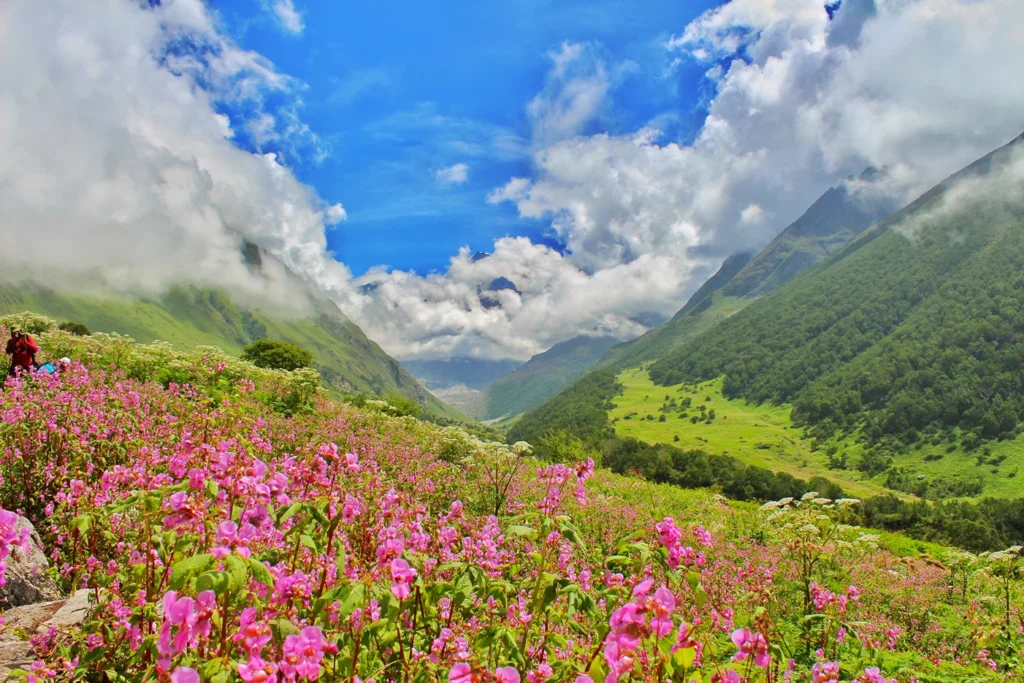
The Valley of Flowers is one of the most beautiful trekking destinations in Uttarakhand. Located in the Chamoli district of the Garhwal Himalayas, this UNESCO World Heritage Site sits at an altitude of around 3,600 metres (11,800 feet), surrounded by peaks rising above 6,000 meters. The Pushpawati River runs straight through the middle, fed by melting ice from the Tipra Glacier above.
The valley became famous in 1931 when British mountaineer Frank S. Smythe discovered it while returning from an expedition to Mount Kamet. He was amazed by the colourful flowers covering the entire valley and later named it the “Valley of Flowers.” Before that, local villagers largely avoided entering the valley, believing it was home to fairies who could trap visitors forever.
The Valley of Flowers trek is considered an easy-to-moderate Himalayan trek, making it suitable for beginners, families, and first-time trekkers. The trek usually takes 5 to 6 days and covers around 35–40 kilometres, depending on the itinerary. Most trekkers stay in Ghangaria, the base village for both Valley of Flowers and Hemkund Sahib, and make a day visit to the valley because overnight camping inside the national park is not allowed.
What makes this trek truly special is that its best season falls during the monsoon months of July and August. While many Himalayan treks are avoided during the rainy season, the Valley of Flowers comes alive because of the rain. Thousands of rare alpine flowers bloom during these months, turning the entire valley into a colourful natural garden. This is why July and August are widely considered the best time to visit the Valley of Flowers and experience its famous peak bloom season.
Why Monsoon Is Actually the Best Season for Trekking Valley of flowers
We know monsoon trekking sounds intimidating on paper, but for this specific trek, it’s actually the complete opposite of what most general trekking advice suggests
Debunking the Monsoon Trekking Myth
Many people think that trekking during the monsoon means walking through deep mud, heavy rain all day, and dangerous trails. While this can be true on some days when it rains continuously, that’s not what you’ll usually experience on the Valley of Flowers trek.
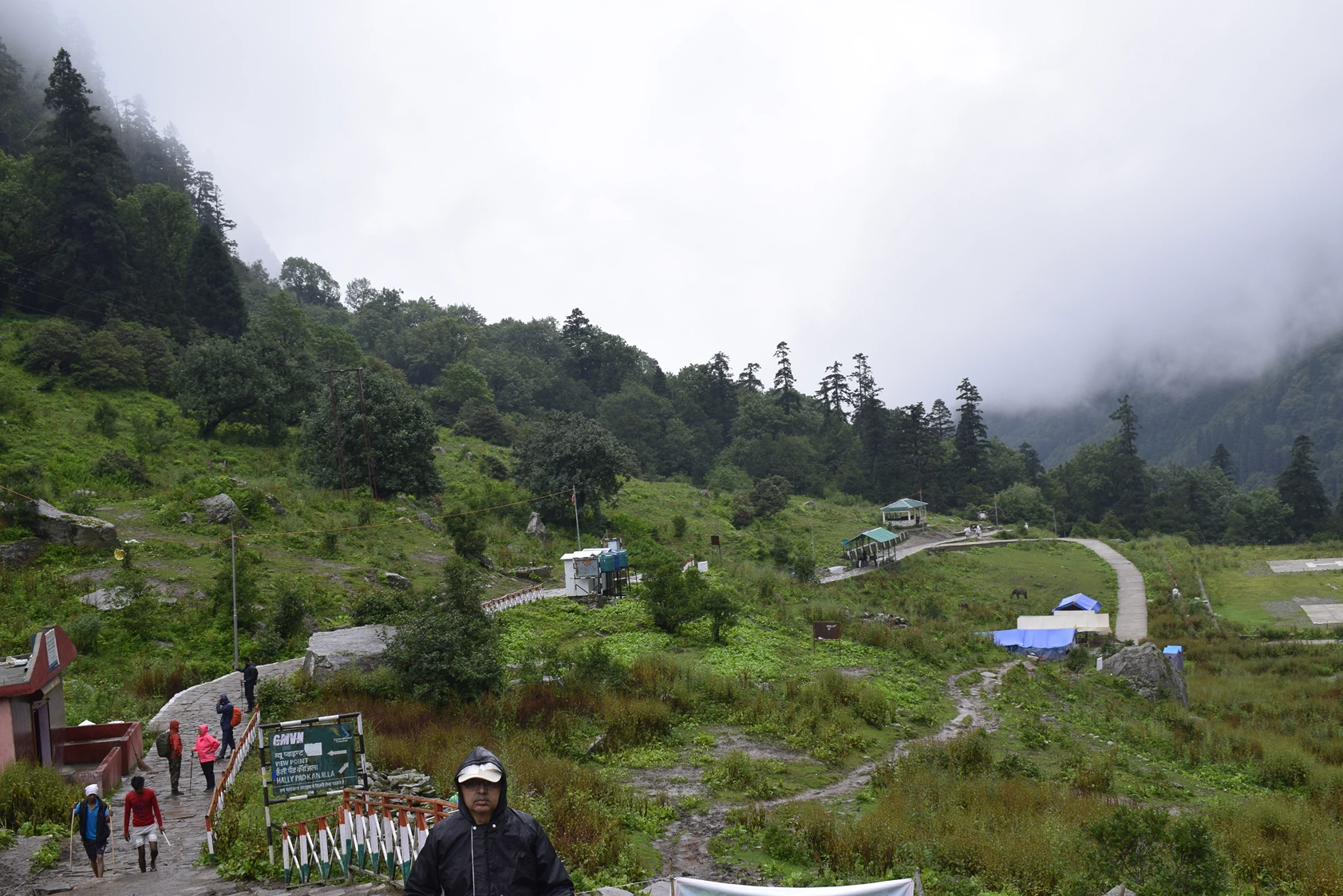
The trail does become wet and slightly slippery in some sections, but it remains well-maintained and easy to walk with proper trekking shoes and a steady pace. You won’t be crossing waist-deep water or navigating dangerous landslide zones. The route to Ghangaria and into the Valley of Flowers is well-established and used by thousands of trekkers and pilgrims throughout the season.
What actually happens is quite different from what many people imagine. You may get light to moderate rain on some days, while other days remain partly cloudy or completely clear. The rain is what transforms the valley into a colourful paradise filled with blooming flowers, lush green meadows, and countless waterfalls. In fact, the flowers that make this valley world-famous simply wouldn’t bloom without the monsoon.
The advice to avoid monsoon trekking is more suitable for steep, high-altitude passes where heavy rain can make trekking risky. The Valley of Flowers trek, however, is specifically known for its monsoon beauty and follows a well-maintained trail, making it one of the best Himalayan treks to do during July and August.
How Much It Actually Rains (and When)
One of the biggest myths about the Valley of Flowers trek is that it rains all day, every day. In reality, that’s rarely the case.
During July and August, you can usually expect 1–2 days of moderate rainfall during a typical 5–6 day trek. On the remaining days, you may experience light showers, cloudy skies, or even bright sunshine. Mountain weather changes quickly, so it’s common to see rain, sunshine, and mist all in the same day.
Rain generally falls in the afternoon or evening, while mornings are often clearer and ideal for trekking. Daytime temperatures usually range between 12°C and 20°C, making the weather cool and comfortable for walking.
With a good rain jacket, waterproof trekking shoes, and a backpack rain cover, occasional showers become part of the experience rather than a problem. In fact, this rainfall is exactly what keeps the valley green and helps thousands of rare alpine flowers bloom during their peak season.
Read our complete guide on What to Pack for a Monsoon Trek to know exactly what clothing, footwear, rain gear, and essentials you should carry for a safe and comfortable journey.
The Flowers You Can Only See in July and August
This is genuinely the heart of why this trek exists, and why timing your visit correctly matters so much more here than on almost any other Himalayan route.
The Himalayan Blue Poppy
The Himalayan Blue Poppy (Meconopsis) is one of the most famous flowers found in the valley. Its beautiful blue petals and bright yellow centre make it easy to recognize. It usually grows above 3,400 metres in rocky alpine areas.
The best chance to see this rare flower is during July and August. Since it blooms for only a short period, many trekkers who visit before or after the monsoon miss it completely. Walk slowly and keep your eyes on the trail edges, as Blue Poppies often grow in small patches rather than covering large areas.
Cobra Lily and Other Rare Blooms
The Cobra Lily is one of the valley’s strangest and most memorable flowers, genuinely resembling a cobra with its hood flared open, appearing in shades of green, deep purple, and striped brown. Rather than typical petals, it has a hood-shaped structure that traps insects for pollination.
Beyond the Cobra Lily, July specifically brings a wave of other rare blooms into view — various orchid species, Morina Longifolia with its white-to-pink flower spikes that fill the air with fragrance, and countless smaller wildflowers that grow close to the ground and are easy to walk past if you’re not paying attention.
July genuinely rewards trekkers who want to see these rarer species before the more common, showier flowers take over the landscape in August. If specific, unusual blooms matter more to you than sheer volume of color, July deserves serious consideration over August.
Peak Bloom Density in August
If you want to see the valley covered in flowers from end to end, August is the best month. This is when the valley reaches what we’d call peak bloom density — thousands of flowers blooming simultaneously across the meadows in overlapping shades of pink, purple, yellow, blue, and white.
Flowers like Balsams, Blue Poppy, Morina Longifolia, Cobra Lily, Anemones, and Potentillas are all commonly visible together during this window, creating the kind of overwhelming, carpet-like flower coverage that makes this trek famous in photographs.
Although August attracts more trekkers and receives more rainfall, it offers the richest flower display of the entire season.
👉 Want to know every flower that blooms here? Read our detailed guide: Flowers You Can Only See in the Valley of Flowers Trek. It includes a complete reference table of the major flower species, their blooming months, colours, and where you’re most likely to spot them during the trek.
July vs August — Which Month Should You Choose
Both July and August are excellent months for the Valley of Flowers trek, but the better choice depends on what you want to experience.
Choose July if:
- You want to see rare flowers like the Himalayan Blue Poppy and Cobra Lily.
- You prefer fewer crowds and a quieter trekking experience.
- You enjoy watching the valley slowly come alive as different flowers begin to bloom.
- You want fresh greenery and pleasant weather after the early monsoon rains.
Choose August if:
- You want to see the valley at its peak bloom, with thousands of flowers covering the meadows.
- You love colourful landscapes and photography.
- You don’t mind larger crowds and a slightly higher chance of rain.
- You want the classic “carpet of flowers” views that make the valley famous.
If you’re still unsure, the first three weeks of August (1st–20th August) are often considered the best time to visit. During this period, the valley is at its most colourful, and many flower species are blooming together.
The most important thing to remember is that there is no single perfect date. The Valley of Flowers changes every week during the monsoon. Some flowers bloom early, while others bloom later, so every visit offers a unique experience. Choose the month that matches your interests, and you’ll have an unforgettable trek.
Beyond the Flowers — The Landscape and Views
While the flowers are the biggest attraction, they’re not the only thing that makes the Valley of Flowers trek so special. The surrounding landscape is just as breathtaking and deserves equal attention.
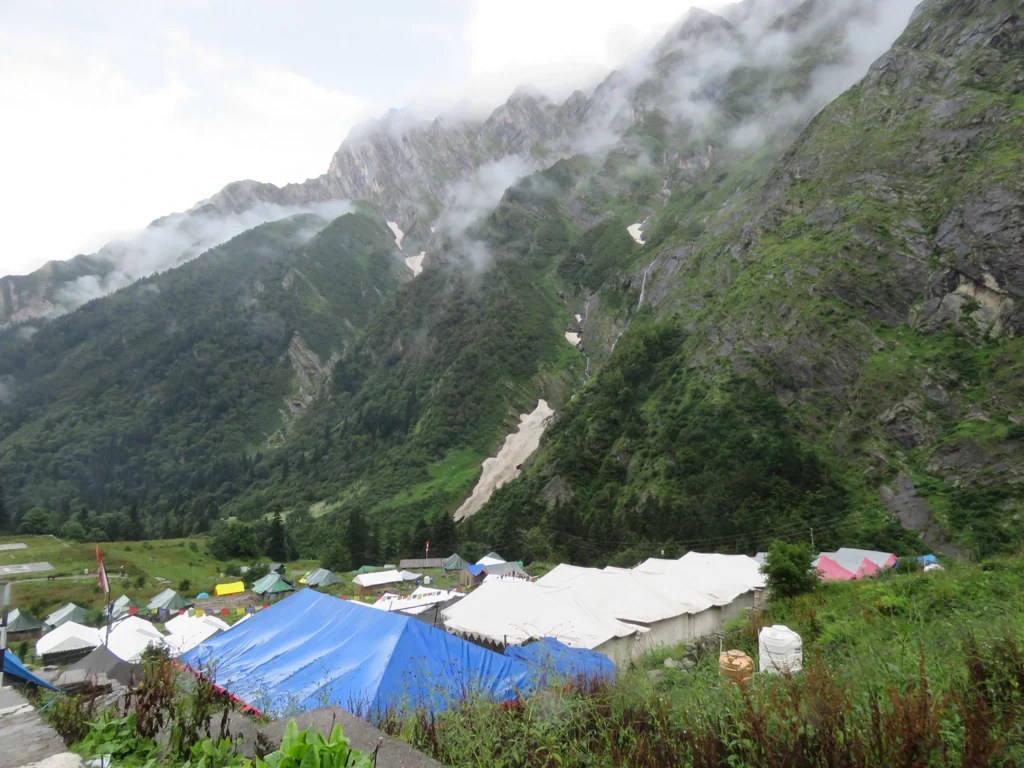
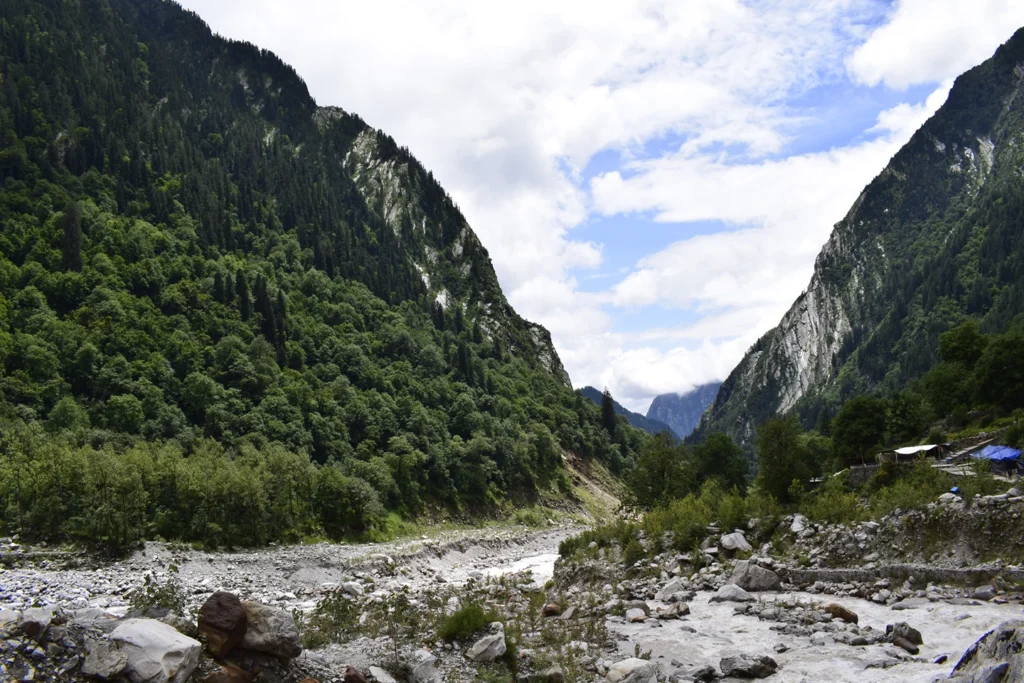
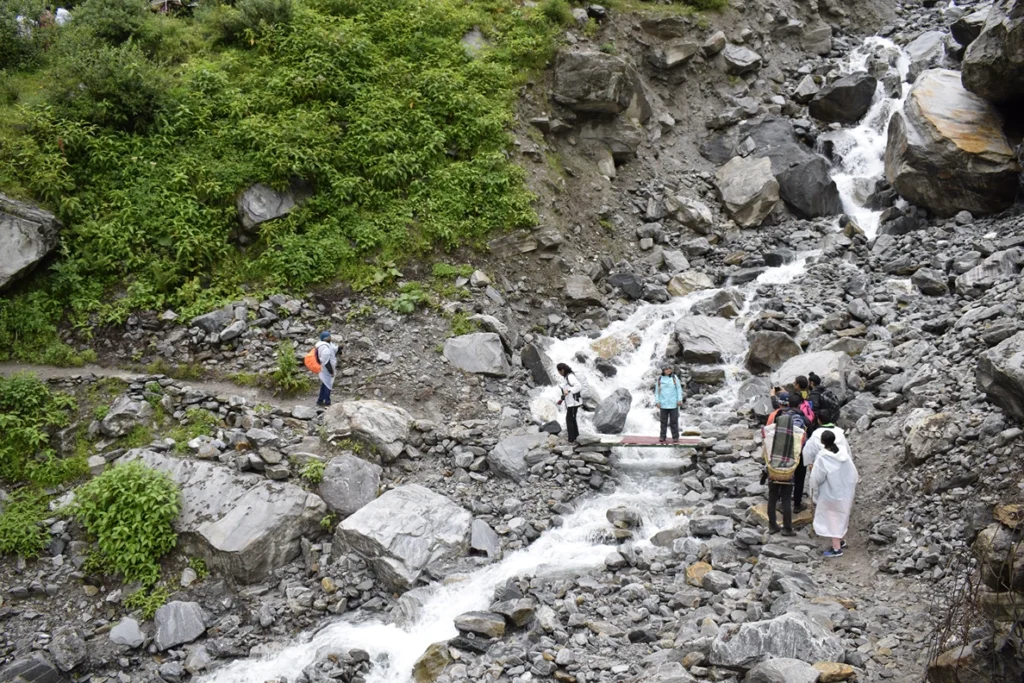
The trail to the valley takes you through dense forests, alongside the crystal-clear Pushpawati River, and across wooden bridges before opening into the vast alpine meadows. As you gain altitude, you’ll be surrounded by mist-covered mountains, flowing waterfalls, and fresh green slopes that change their appearance throughout the day as clouds drift across the valley.
The valley itself has a bowl-shaped landscape formed by ancient glaciers. snow-capped peaks rising above 6,000 metres surround the colourful meadows, creating a beautiful contrast between rugged Himalayan mountains and delicate wildflowers. This unique combination is what makes the Valley of Flowers unlike any other trek in the Himalayas.
The monsoon weather adds even more beauty to the experience. Sunlight often breaks through moving clouds, creating dramatic light and shadow across the valley. One moment the mountains are hidden in mist, and the next they appear under bright sunshine. This ever-changing scenery makes every hour on the trail feel different, and many trekkers describe it as one of the most magical parts of the journey.
The Spiritual Detour — Hemkund Sahib
Many trekkers choose to extend their Valley of Flowers trek by visiting Hemkund Sahib and Badrinath Temple, making the journey a perfect mix of nature and spirituality.
Hemkund Sahib, located at an altitude of about 4,632 metres, is one of the highest Sikh Gurudwaras in the world. The trek from Ghangaria to Hemkund Sahib is steep and more challenging than the Valley of Flowers trail, but the reward is unforgettable. You’ll reach a peaceful glacial lake surrounded by snow-covered peaks, creating a truly spiritual atmosphere.
If you visit Hemkund Sahib during July and August, you may also spot the Brahma Kamal, Uttarakhand’s state flower. This rare alpine flower grows at higher elevations near Hemkund Sahib and is considered sacred in Hindu tradition.
Many trekkers also continue their journey to Badrinath Temple, one of the four sacred Char Dham shrines. Located about 25 km from Govindghat, the temple is dedicated to Lord Vishnu and attracts thousands of pilgrims every year. Visiting Badrinath after completing the trek adds a meaningful spiritual ending to your Himalayan adventure.
We recommend keeping an extra day in your itinerary if you plan to visit Hemkund Sahib and Badrinath. Trying to fit everything into one day can be tiring, while an extra day allows you to enjoy each destination at a comfortable pace.
A Paradise for Photographers
If photography is part of why you’re drawn to this trek, July and August genuinely offer conditions you won’t find during any other season here.
The combination of vibrant flower colors, mist rolling through the valley, and dramatic mountain backdrops creates compositions that work well regardless of your experience level. Early morning light, before crowds arrive and while mist still lingers over the meadows, tends to produce the most striking results.
Beyond wide landscape shots, this trek rewards macro photography specifically. Many of the valley’s rarest flowers — the Cobra Lily, various orchid species, smaller wildflowers like Primulas and Forget-Me-Nots — are genuinely easy to miss unless you’re walking slowly and looking closely, which also happens to be exactly the pace that produces the best close-up shots.
A few simple tips can make a big difference. Keep your camera or phone protected with a waterproof cover, carry a microfiber cloth to wipe away raindrops, and avoid rushing through the valley just to capture wide-angle views. Some of the most memorable photos come from patiently photographing a single flower, a butterfly, or a dew-covered leaf rather than only the grand landscapes.
How to Prepare Mentally and Physically for a Monsoon Trek
Preparing for the Valley of Flowers trek in July and August is a little different from preparing for a summer or winter trek. If you know what to expect, you’ll enjoy the journey much more.
Trail Conditions — What Monsoon Trekking Really Feels Like
Let’s set realistic expectations. The trail does become muddy and slippery in some places, especially on rocky sections and near streams. However, it is well-maintained and easy to walk if you wear good trekking shoes with proper grip and take your time.
You should expect your shoes and lower legs to get wet at some point during the trek. That’s completely normal during the monsoon. Instead of trying to stay perfectly dry, focus on staying comfortable.
A few things that help are:
- Wear quick-dry clothes instead of cotton.
- Use trekking shoes with good grip.
- Walk slowly on wet rocks and muddy patches.
- Accept that a little rain is part of what makes this trek so beautiful.
With the right mindset, the rain becomes part of the adventure rather than a problem.
Staying Dry — Poncho vs Raincoat
One of the most common questions trekkers ask is whether to carry a poncho or a raincoat.
For the Valley of Flowers trek, we recommend carrying a good-quality poncho. It covers both you and your backpack, keeping your clothes and gear dry in one layer. A raincoat protects only your body, so you’ll also need a separate backpack rain cover.
Ponchos are also lightweight, easy to pack, and quick to wear whenever the weather changes. Since rain during July and August often comes in short spells, this makes them very convenient.
Our recommendation is simple:
- Carry a poncho as your main rain protection.
- Use a backpack rain cover as extra protection.
- Keep your phone, camera, and important documents inside waterproof zip-lock bags or dry bags.
👉 Read our complete guide: What to Pack for a Monsoon Trek – Complete Packing List, where we’ve explained exactly what to carry, what to avoid, and how to keep yourself and your gear dry throughout the trek.
What to Pack for Monsoon Trek
Packing well can make your Trek much more comfortable. Since you’ll be trekking during the monsoon, choose gear that dries quickly, keeps you comfortable, and helps you walk safely on wet trails.
Footwear
Your shoes are the most important part of your packing list.
- Trekking shoes with good grip – Choose shoes with strong traction to prevent slipping on wet rocks and muddy trails. Good grip is more important than waterproofing.
- Extra pair of trekking socks – Carry at least one or two extra pairs so you can change into dry socks if your feet get wet.
Clothing
Wear clothes that dry fast and keep you comfortable.
- Quick-dry T-shirts and trekking pants – Avoid cotton, as it stays wet for a long time and can make you feel cold.
- Poncho or rain protection – A poncho covers both you and your backpack, making it the best choice for this trek.
- Warm layer – Carry a light fleece or jacket for chilly mornings and evenings.
Protect Your Gear
Rain can arrive anytime, so keep your valuables safe.
- Dry bags or zip-lock bags – Protect your phone, camera, power bank, wallet, and important documents.
- Backpack rain cover – Adds an extra layer of protection during heavy showers.
- Trekking poles – Very helpful for balance on slippery trails and stream crossings while reducing pressure on your knees.
Other Essentials
Don’t forget these useful items:
- Basic first-aid kit and blister patches
- Reusable water bottle
- Sunglasses and sunscreen (UV rays are still strong at high altitude)
- Cap, personal medicines, and energy snacks
Need a complete packing checklist? Read our detailed guide: What to Pack for a Monsoon Trek – A Complete Guide by Roopkund Heaven, where we’ve explained every item in detail and why it matters for trekking during the rainy season.
Responsible Trekking — Why You Shouldn’t Touch the Flowers
The Valley of Flowers is a protected UNESCO World Heritage Site and National Park. Every trekker has a responsibility to help protect this beautiful place for future generations.
Picking, touching, or plucking flowers is strictly prohibited. Many of the flowers found here bloom for only a short time each year, and damaging them affects their natural growth and seed production. Some species are also rare and found only in the Himalayas.
It’s equally important to stay on the marked trail. Walking into the flower meadows for photos may seem harmless, but it can crush delicate plants and damage the soil, making it harder for flowers to bloom again.
To trek responsibly, always remember to:
- Stay on the designated trail.
- Never pick or touch the flowers.
- Carry all your waste back with you.
- Avoid loud noise and respect wildlife.
- Follow your trek leader and Forest Department guidelines.
By following these simple rules, we can all help preserve its beauty and ensure future trekkers experience the same colourful Himalayan paradise.
Why Book Your Valley of Flowers Trek with Roopkund Heaven
Planning the Valley of Flowers trek on your own is possible, but it involves arranging permits, transport, accommodation, and keeping track of changing weather and trail conditions. That’s where we make your journey simple and stress-free.
At Roopkund Heaven, our experienced trek leaders know the Valley of Flowers and Hemkund Sahib routes well. Because we operate daily trek batches throughout the season, we closely monitor the flowering cycle every week. If you’re hoping to see the valley at its peak bloom, simply ask us before booking. We’ll help you choose the departure date that offers the best chance of experiencing the valley at its most colourful.
We also keep our groups manageable, so every trekker receives personal attention on the trail. From Forest Department permits, accommodation, meals, and transportation to trained trek leaders, first-aid kits, oxygen cylinders, and oximeters, we take care of everything so you can focus on enjoying the trek.
Contact our team before booking, and we’ll help you choose the best departure date for the best flower bloom experience.
FAQs
1. What is the best month to visit the Valley of Flowers?
The best time to visit the Valley of Flowers trek is July and August. July offers rare flowers like the Himalayan Blue Poppy with fewer crowds, while August brings the valley to peak bloom with thousands of flowers covering the meadows.
2. Is the Valley of Flowers trek difficult for beginners?
No. The trek is considered easy to moderate and is suitable for beginners with basic fitness. Regular walking or light cardio for 3–4 weeks before the trek is usually enough to prepare.
3. How much does it rain during the Valley of Flowers trek?
Rainfall varies every year, but expect light to moderate showers, mostly in the afternoon or evening. It does not usually rain all day, and mornings are often clear for trekking.
4. Can I see the Himalayan Blue Poppy in Valley of Flowers?
Yes. The Himalayan Blue Poppy usually blooms during July and early August. Since it grows in limited areas, spotting it depends on the season, weather, and flowering cycle.
5. Should I visit Valley of Flowers in July or August?
Choose July if you prefer fewer crowds and want to see rare flowers. Choose August if you want the valley at its most colourful with the highest flower density. Both months offer an unforgettable experience.
6. Is it safe to trek to Valley of Flowers during the monsoon?
Yes. The Valley of Flowers is one of the few Himalayan treks that is best experienced during the monsoon. The trail is well-defined, but proper trekking shoes, rain gear, and careful walking are essential.
7. Can I combine Valley of Flowers with Hemkund Sahib?
Yes. Most trekkers visit Hemkund Sahib during the same trip from Ghangaria. It requires a steeper climb than the Valley of Flowers, so be prepared for a more challenging day.
8. What should I pack for the Valley of Flowers trek?
Carry trekking shoes with good grip, quick-dry clothes, a poncho, warm layers, extra socks, trekking poles, waterproof bags for electronics, personal medicines, sunscreen, and a reusable water bottle. Proper packing makes the trek much more comfortable.
9. Are the flowers in Valley of Flowers poisonous?
Some Himalayan plants can be poisonous, while many are harmless. Since the area is a protected National Park, you should never touch or pluck any flowers. Enjoy them from the marked trail.
10. Do I need a permit for the Valley of Flowers trek?
Yes. Every visitor needs a Forest Department entry permit to enter the Valley of Flowers National Park. If you book your trek with Roopkund Heaven, we arrange all the required permits, allowing you to enjoy a hassle-free trekking experience.