Valley of Flowers Trek Overview
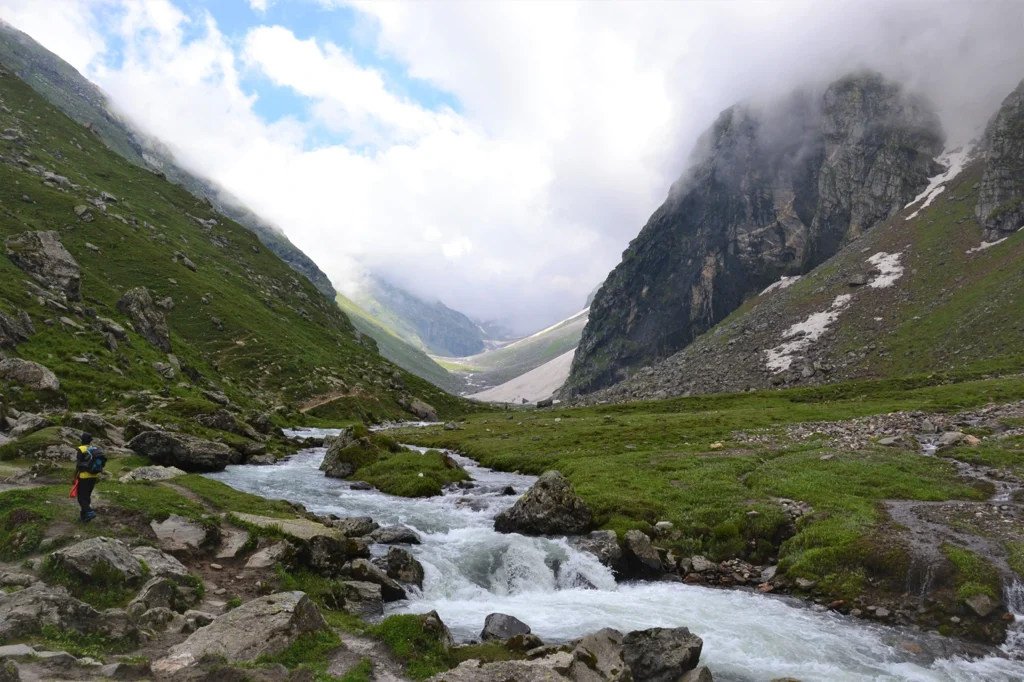
The Valley of Flowers is one of the most beautiful places in the Indian Himalayas. Located in Chamoli district, Uttarakhand, this UNESCO World Heritage Site is famous for its colourful alpine meadows, snow-covered peaks, waterfalls, and hundreds of rare Himalayan flowers that bloom during the monsoon season.
The story behind its discovery is genuinely interesting. In 1931, when British mountaineer Frank S. Smythe, along with his companions Eric Shipton and R.L. Holdsworth, lost their way while coming back from climbing Mount Kamet. They accidentally walked into this valley and found it so full of flowers that they simply named it the “Valley of Flowers.” and later introduced it to the world through his book. Before that, local villagers knew the valley existed but rarely went inside, since old stories said fairies (called Apsaras) lived there and could keep visitors trapped forever.
The valley sits at an altitude of around 3,600 metres (11,800 ft), while the surrounding mountains rise above 6,000 metres. The Pushpawati River flows right through the middle, fed by melting ice from the Tipra Glacier above. Because it’s shaped like a bowl carved out by old glaciers, the valley traps just the right amount of moisture and sunlight for flowers to grow — not too hot, not too dry.
In 2005, the Valley of Flowers was declared a UNESCO World Heritage Site because of its incredible biodiversity and rare Himalayan plants. To protect this fragile ecosystem, visitors are allowed to explore the valley only during the day. You must enter from Ghangaria and return before the park closes, as overnight stays inside the national park are not permitted. These rules help keep the valley clean, preserve its unique flowers, and protect its natural beauty for future generations.
Flowers You Can Only See in the Valley of Flowers Uttarakhand
While plenty of flowers here also grow elsewhere in the Himalayas, a handful of “celebrity” blooms are either found only in this valley or reach their most perfect form right here.
The Himalayan Blue Poppy: The Elusive Queen of the Valley
The Himalayan Blue Poppy is the most famous flower in the Valley of Flowers. Known by its scientific name Meconopsis aculeata, its striking sky-blue petals with a bright yellow centre make it one of the rarest and most beautiful flowers in the Himalayas. It usually grows in rocky, well-drained areas above 3,400 metres (11,000 feet) and is most commonly seen during July and August.
Because it blooms for only a short time and in limited locations, spotting a Blue Poppy is considered a special moment for many trekkers and photographers.
Cobra Lilies and Arisaema: The Alien-Like Residents
The Cobra Lily (scientific name Arisaema jacquemontii) is one of the valley’s most unusual flowers. These plants genuinely look like a cobra snake with its hood flared open, coming in shades of green, deep purple, and striped brown.
What’s fascinating is that these plants can actually change their sex from one year to the next, depending on growing conditions. They grow best in shaded, damp patches, especially closer to the valley’s entrance. Instead of normal petals, they have a hood-shaped part called a spathe, which is specially shaped to trap insects inside for pollination.
Morina Longifolia and the Fragrance of the Alpine Meadows
Morina Longifolia, also known as Long-leaved Morina, is one of the most beautiful and fragrant flowers found in the Valley of Flowers. It grows in tall spikes with blossoms arranged in circular layers around the stem. As the flowers mature, their colour gradually changes from white to soft pink, creating a beautiful contrast across the alpine meadows.
During the peak flowering season in July and August, these flowers fill the valley with a sweet natural fragrance that many trekkers remember long after their journey. They are commonly seen in open grassy meadows and remain standing even after heavy monsoon rain, making them one of the most eye-catching flowers along the trail. Walking through fields of blooming Morina Longifolia is one of the most memorable experiences in the Valley of Flowers.
Himalayan Slipper Orchid (Cypripedium himalaicum)
The Himalayan Slipper Orchid is one of the rarest orchids found in the Valley of Flowers. It gets its name from its pouch-shaped flower, which looks like a tiny slipper.
These orchids grow in limited numbers in moist forest areas and are often missed because of their small size. Walking slowly and observing the vegetation carefully increases your chances of spotting one.
Marsh Marigold (Caltha palustris)
The bright yellow Marsh Marigold grows near streams, wetlands, and marshy patches throughout the valley. It is among the earliest flowers to bloom after the snow melts and adds vibrant golden colour to the landscape.
These flowers are easy to identify and are commonly seen during the early weeks of the flowering season.
Brahma Kamal (Saussurea obvallata)
Although Brahma Kamal is not commonly found inside the main Valley of Flowers, it grows at higher altitudes around Hemkund Sahib, which many trekkers visit during the same trip. It is the state flower of Uttarakhand and is considered sacred in Hindu culture.
If you include the Hemkund Sahib trek in your itinerary, you may get the chance to see this rare Himalayan flower blooming during the monsoon.
Lesser-Known Rare Flowers Trekkers Often Miss
Apart from the famous flowers, the Valley of Flowers is also home to many small and rare wildflowers that are easy to miss. Flowers like Anemones, Potentillas, Himalayan Daisies, Primulas, Bistorta, and Forget-Me-Nots often grow close to the ground or blend into the grass.
If you walk slowly and look carefully around the trail instead of only focusing on the larger flowers, you’ll discover many hidden blooms that make the trek even more special.
Where to Spot These Flowers on the Trek
Different parts of the Valley of Flowers are known for different flower species:
- Near the Entrance: Cobra Lily, ferns, and early-blooming wildflowers.
- Middle Meadows: Large patches of Balsams, Anemones, Morina Longifolia, and Himalayan Daisies.
- Around the Smythe Memorial: One of the best places to spot the rare Himalayan Blue Poppy and Potentilla.
- Along the Pushpawati River: Marsh Marigolds, Epilobium (Willow Herb), and other moisture-loving flowers.
- Higher Rocky Slopes (towards Tipra Glacier): Edelweiss, Saxifrages, and other hardy alpine flowers that grow at higher elevations.
Complete List of Flowers Found in the Valley of Flowers
Here’s a full reference table listing the flowers found across the valley, along with their local names, typical height, plant family, and how long they live.
| Scientific Name | Local Name | Height | Family | Lifespan |
| Aconitum balfourii | Meetha Vish | 1-2 feet | Ranunculaceae | Perennial |
| Aconitum violaceum | Mitha telia | 3-4 feet | Ranunculaceae | Perennial |
| Aconogonum rumicifolium | Khyak Jari | 1-3 feet | Polygonaceae | Perennial |
| Ainsliaea aptera | Khad-jhari | 2-3 feet | Asteraceae | Perennial |
| Aletris pauciflora | Khasi | Up to 12 inches | Melanthiaceae | Perennial |
| Allium humile | Jangli lahsun | 10-15 cm | Amaryllidaceae | Perennial |
| Allium wallichii | Doona | 15-30 cm | Amaryllidaceae | Perennial |
| Anaphalis royleana | Sugandhi booti, Kapasi | 30-90 cm | Asteraceae | Perennial |
| Androsace (Rock Jasmine) | Not specified | 5-15 cm | Primulaceae | Perennial |
| Anemone obtusiloba (Four Petal Anemone) | Not specified | 6-12 inches | Ranunculaceae | Perennial |
| Anemone vitifolia | Mudeela, Agali | 12-18 inches | Ranunculaceae | Perennial |
| Aquilegia pubiflora | Not specified | 1-2 feet | Ranunculaceae | Perennial |
| Arisaema jacquemontii | Not specified | 1-2 feet | Araceae | Perennial (10-15 yrs) |
| Arisaema propinquum | Not specified | 1-2 feet | Araceae | Perennial |
| Arisaema tortuosum | Arum lily, Varuna, Bagh Jandhra | 1-2 feet | Araceae | Perennial |
| Aruncus dioicus | Not specified | 3-6 feet | Rosaceae | Perennial |
| Aster albescens | Not specified | 1-2 feet | Asteraceae | Perennial |
| Diplostephium diplostephioides | Not commonly known | ~20-40 cm | Asteraceae | Perennial |
| Berberis aristata | Daruhaldi | 2-3 metres | Berberidaceae | Perennial |
| Berberis jaeschkeana | Not specified | 2-3 metres | Berberidaceae | Perennial |
| Bistorta affinis | Indian Bistort | 30-60 cm | Polygonaceae | Perennial |
| Bistorta vaccinifolia | Not specified | 10-20 cm | Polygonaceae | Perennial |
| Meconopsis betonicifolia (Blue Poppy) | Neela Posta | 2-4 feet | Papaveraceae | Perennial |
| Saussurea obvallata | Brahma Kamal | 30-40 cm | Asteraceae | Perennial |
| Caltha palustris | Marsh Marigold | 30-90 cm | Ranunculaceae | Perennial |
| Campanula latifolia | Not specified | 2-4 feet | Campanulaceae | Perennial |
| Campanula pallida | Not specified | 30-60 cm | Campanulaceae | Perennial |
| Cicerbita macrorhiza | Not specified | 1-2 metres | Asteraceae | Biennial |
| Clematis barbellata | Not specified | Up to 1.5 metres | Ranunculaceae | Perennial |
| Clematis montana | Not specified | 10-15 feet | Ranunculaceae | Perennial |
| Codonopsis rotundifolia | Gokhru | 30-60 cm | Campanulaceae | Perennial |
| Colquhounia coccinea | Lal Hinsal | 1-2 metres | Lamiaceae | Perennial |
| Corydalis cashmeriana | Kasboora | 20-30 cm | Papaveraceae | Perennial |
| Corydalis meifolia | Not specified | 30-60 cm | Papaveraceae | Perennial |
| Cotoneaster microphyllus | Not specified | 60-90 cm | Rosaceae | Perennial |
| Cremanthodium arnicoides | Not specified | 30-60 cm | Asteraceae | Perennial |
| Cuscuta europaea | Not specified | Parasitic vine | Convolvulaceae | Annual |
| Cuscuta reflexa | Amar bel, Akash bel | Several metres | Convolvulaceae | Annual/Perennial |
| Cyananthus lobatus | Not specified | 20-30 cm | Campanulaceae | Not specified |
| Cyananthus microphyllus | Not specified | 30-60 cm | Asteraceae | Perennial |
| Dactylorhiza hatagirea | Panchaule | 20-60 cm | Orchidaceae | Perennial |
| Dipsacus inermis | Not specified | 1.5-2 metres | Caprifoliaceae | Biennial |
| Epilobium latifolium | Not specified | 1.5 metres | Onagraceae | Perennial |
| Epilobium laxum | Not specified | 1-2 metres | Onagraceae | Perennial |
| Erigeron bellidioides | Not specified | 10-30 cm | Asteraceae | Perennial |
| Erigeron multiradiatus | Not specified | 10-20 cm | Asteraceae | Perennial |
| Eritrichium canum | Not specified | 10-30 cm | Boraginaceae | Perennial |
| Erysimum hieraciifolium | Not specified | 30-60 cm | Brassicaceae | Perennial |
| Euphorbia pilosa | Not specified | 30-60 cm | Euphorbiaceae | Perennial |
| Fritillaria roylei | Kashmir Fritillary | 30-60 cm | Liliaceae | Perennial |
| Gagea lutea | Not specified | 10-30 cm | Liliaceae | Perennial |
| Gaultheria trichophylla | Khasi Patta | 15-30 cm | Ericaceae | Perennial |
| Gentiana pedicellata | Not specified | 10-30 cm | Gentianaceae | Perennial |
| Gentiana phyllocalyx | Not specified | 10-40 cm | Gentianaceae | Perennial |
| Geranium robertianum | Herb-Robert | 10-50 cm | Geraniaceae | Perennial |
| Geranium wallichianum | Himalayan Geranium | 30-60 cm | Geraniaceae | Perennial |
| Gymnadenia orchidis | Not specified | 20-60 cm | Orchidaceae | Perennial |
| Halenia elliptica | Not specified | 20-60 cm | Gentianaceae | Perennial |
| Heracleum candicans | Not specified | 2-3 metres | Apiaceae | Biennial |
| Paphiopedilum wardii | Himalayan Slipper Orchid | 30-40 cm | Orchidaceae | Perennial (15-20 yrs) |
| Hypericum oblongifolium | Not specified | 1-3 feet | Hypericaceae | Perennial |
| Impatiens sulcata | Not specified | 1-2 feet | Balsaminaceae | 1-2 years |
| Inula grandiflora | Not specified | 2-4 feet | Asteraceae | 3-5 years |
| Ipomoea purpurea | Vishnukranti, Kailash Pushp | 6-10 feet | Convolvulaceae | Annual |
| Iris kaemaonensis | Kaemaon Lily | 30-45 cm | Iridaceae | Perennial |
| Juncus himalensis | Not specified | 60-90 cm | Juncaceae | Perennial |
| Juncus thomsonii | Not specified | 1-2 feet | Juncaceae | Perennial |
| Leontopodium brachyactis | Edelweiss | 10-20 cm | Asteraceae | Perennial |
| Ligularia amplexicaulis | Not specified | 1-2 metres | Asteraceae | Perennial |
| Lilium oxypetalum | Surya Pushpam / Brahma Kamal | 1-2 metres | Liliaceae | Perennial |
| Mianthemum purpureum | Not specified | 30-60 cm | Asparagaceae | Perennial |
| Morina longifolia | Not specified | 1.5-2 metres | Caprifoliaceae | Perennial |
| Nepeta erecta | Not specified | 30-60 cm | Lamiaceae | Perennial |
| Nepeta laevigata | Not specified | 30-60 cm | Lamiaceae | Perennial |
| Origanum vulgare | Patta Ajwain | 20-80 cm | Lamiaceae | Perennial |
| Oxyria digyna | Not specified | 10-30 cm | Polygonaceae | Perennial |
| Oxytropis lapponica | Not specified | 10-20 cm | Fabaceae | Perennial |
| Parnassia nubicola | Not specified | 10-25 cm | Celastraceae | Perennial |
| Pedicularis hoffmeisteri | Not specified | 30-60 cm | Scrophulariaceae | Perennial |
| Pedicularis porrecta | Not specified | 30-60 cm | Orobanchaceae | Perennial |
| Pedicularis punctata | Not specified | 20-60 cm | Orobanchaceae | Perennial |
| Peristrophe paniculata | Vanjaramani, Keela Nelli | 1-2 metres | Acanthaceae | Perennial |
| Phlomis bracteosa | Bhootkeshi | 2-3 feet | Lamiaceae | Perennial |
| Phytolacca acinosa | Kharphul | 2-3 metres | Phytolaccaceae | Perennial |
| Pleurospermum candollei | Not specified | 2-4 feet | Apiaceae | Perennial |
| Podophyllum hexandrum | Bankakri, Ban Kakri | 30-60 cm | Berberidaceae | Perennial |
| Polemonium caeruleum | Not specified | 1-3 feet | Polemoniaceae | Perennial |
| Polygonatum verticillatum | Not specified | 30-90 cm | Asparagaceae | Perennial |
| Polygonum amplexicaule | Not specified | Up to 1 metre | Polygonaceae | Perennial |
| Polygonum capitatum | Not specified | Up to 20-30 cm | Polygonaceae | Perennial |
| Polygonum polystachyum | Not specified | 1.5 metres | Polygonaceae | Perennial |
| Potentilla rigida | Not specified | 10-30 cm | Rosaceae | Perennial |
| Potentilla (general) | Vajardanti | 30-90 cm | Rosaceae | Perennial |
| Prenanthes brunoniana | Not specified | 1-2 metres | Asteraceae | Perennial |
| Primula denticulata | Drumstick Primrose | 12-24 inches | Primulaceae | Perennial |
| Primula macrophylla | Not specified | 20-40 cm | Primulaceae | Perennial |
| Primula macrophylla var. moorcroftiana | Not specified | 2-3 cm | Primulaceae | Perennial |
| Primula reidii | Not specified | 15-30 cm | Primulaceae | Perennial |
| Prunus cornuta | Not specified | 15-30 feet | Rosaceae | Perennial (20-25 yrs) |
| Ranunculus laetus | Not specified | 3-5 cm | Ranunculaceae | Perennial |
| Reinwardtia indica | Yellow Bells | Up to 2 metres | Linaceae | Perennial |
| Rhodiola heterodonta | Not specified | 10-15 cm | Crassulaceae | Perennial |
| Rhodiola imbricata | Lali Gurans | 30-50 cm | Crassulaceae | Perennial |
| Rhododendron campanulatum | Buras | 2-5 metres | Ericaceae | 50-100 years |
| Rhododendron lepidotum | Buras | 2-4 metres | Ericaceae | 30-50 years |
| Rosa macrophylla | Indian Rose | 10-20 feet | Rosaceae | 5-10 years |
| Roscoea alpina | Not specified | 1-2 feet | Zingiberaceae | Perennial |
| Rubus niveus | Kavanda | 1-2 cm | Rosaceae | Perennial |
| Rumex acetosa | Chukka | 30-90 cm | Polygonaceae | Perennial |
| Salvia nubicola | Not specified | 1-2 feet | Lamiaceae | Perennial |
| Saussurea costus | Kuth, Kuth Root | 1-2 metres | Asteraceae | Perennial |
| Saussurea gossypiphora | Kapasru | 1-2 feet | Asteraceae | Perennial |
| Saussurea piptathera | Jangli Baduli | 20-40 cm | Asteraceae | Perennial |
| Saussurea simpsoniana | Not specified | 30-60 cm | Asteraceae | Perennial |
| Saxifraga brunonis | Not specified | 10-15 cm | Saxifragaceae | Perennial |
| Saxifraga cernua | Not specified | 10-30 cm | Saxifragaceae | Perennial |
| Saxifraga parnassifolia | Not specified | 10-20 cm | Saxifragaceae | Perennial |
| Selinum wallichianum | Not specified | 60-90 cm | Apiaceae | Perennial |
| Senecio graciliflorus | Not specified | 1-2 feet | Asteraceae | Perennial (short-lived) |
| Senecio laetus | Not specified | 1-2 feet | Asteraceae | Perennial |
| Silene indica | Bhatkayi, Khursani | 30-60 cm | Caryophyllaceae | Perennial |
| Silene vulgaris | Not specified | 30-60 cm | Caryophyllaceae | Perennial |
| Solidago virgaurea | Not specified | 1-3 feet | Asteraceae | 2-5 years |
| Sorbaria tomentosa | Not specified | 6-10 feet | Rosaceae | 10-15 years |
| Spiraea bella | Not specified | 2-3 feet | Rosaceae | 3-10 years |
| Spiraea canescens | Not specified | 3-5 feet | Rosaceae | 5-10 years |
| Spiranthes sinensis | Not specified | 20-30 cm | Orchidaceae | Perennial |
| Stellaria semivestita | Not specified | 15-30 cm | Caryophyllaceae | Perennial |
| Taraxacum officinale | Dudhi, Simhadanti | 15-45 cm | Asteraceae | 2-5 years |
| Thalictrum cultratum | Not specified | 3-4 feet | Ranunculaceae | 2-5 years |
| Thermopsis barbata | Not specified | 2-4 feet | Fabaceae | Perennial |
| Thymus linearis | Not specified | 10-20 cm | Lamiaceae | Perennial |
| Trichosanthes tricuspidata | Padwal, Paddu | Up to 6 metres | Cucurbitaceae | Perennial vine |
| Valeriana hardwickii | Tagar | 1-1.5 metres | Caprifoliaceae | Perennial |
| Verbascum thapsus | Gidar tamaku | 1-2 metres | Scrophulariaceae | Short-lived perennial |
| Vigna vexillata | Dalchini Kandi | Up to 2 metres | Fabaceae | Variable |
| Viola biflora | Not specified | 10-20 cm | Violaceae | Perennial |
| Viola pilosa | Not specified | 10-20 cm | Violaceae | 2-3 years |
| Anemone rivularis | Not specified | 30-60 cm | Ranunculaceae | Perennial |
| Delphinium vestitum | Not specified | 30-90 cm | Ranunculaceae | Perennial |
| Rheum australe | Himalayan Rhubarb, Dolu | 1-1.5 metres | Polygonaceae | Perennial |
| Trillium govanianum | Nag Chhatri | 20-40 cm | Melanthiaceae | Perennial |
| Potentilla atrosanguinea | Not specified | 20-40 cm | Rosaceae | Perennial |
This list covers most of the commonly documented species in and around the valley.
The Floral Calendar: Understanding the Best Time to Visit Valley of Flowers Trek
One of the biggest mistakes trekkers make is thinking the valley looks exactly the same all summer. In reality, the flowers you see change every couple of weeks.
June: Melting Snow and the First Primulas
The valley begins to come alive as the snow melts. Early flowers like Primulas, Marsh Marigolds, and Anemones start blooming, while patches of snow can still be seen. The trails are quieter, making it a peaceful time to visit.
July: The Monsoon Awakening and the Arrival of the Blue Poppy
With the arrival of the monsoon, the valley becomes lush green and more flowers begin to bloom. This is one of the best times to spot the Himalayan Blue Poppy, Cobra Lily, Orchids, and Morina Longifolia. The valley looks fresh, colourful, and full of life. Crowds are moderate here, and if you want to see rare species before the more common Balsams take over, this is genuinely a great window.
August: The Peak Bloom and Maximal Color Density
August is the best month to visit the Valley of Flowers if you want to see the valley at its most colourful. Thousands of flowers bloom together, covering the meadows in shades of pink, purple, yellow, blue, and white. Popular flowers like Balsam, Blue Poppy, Morina Longifolia, Cobra Lily, Anemones, and Potentillas are commonly seen during this time.
This is also the busiest month for trekkers. Expect rain almost daily. If you’re also visiting Hemkund Sahib, this is the best time to see the sacred Brahma Kamal blooming near the higher-altitude trail.
September: The Golden Hour of Autumnal Hues
By September, the rains start easing off. Flowers begin turning to seed, and the valley shifts into shades of gold, brown, and bronze. The air clears up noticeably, giving you the best mountain views of the whole season, even though flower numbers are lower than August.
Best Time to Visit Valley of Flowers for Maximum Flower Variety
If you want to see the maximum variety of flowers, plan your visit between 1st August and 20th August. During this period, the valley is at its peak bloom, with early-season flowers still visible and many new species flowering together. This is also one of the best times to spot the famous Himalayan Blue Poppy.
Since August falls during the monsoon, you should be prepared for regular rainfall and possible road delays on the way to Govindghat. If you prefer clearer weather and fewer crowds, early September is a good alternative, though the number of blooming flowers will be lower than in August.
How Weather and Altitude Affect Flower Bloom in the Valley
The Role of the Indian Monsoon in Triggering Germination
The Indian monsoon is the main reason the Valley of Flowers comes to life every year. After remaining covered under snow for several months, the first monsoon rains provide the moisture that seeds need to grow. The regular rainfall, cool temperatures, and melting snow create the perfect conditions for flowers to bloom.
The clouds also help by reducing strong sunlight at high altitudes, protecting young plants while they grow. This is why the valley is covered with colourful flowers from late June to early September.
Vertical Distribution: How Flora Changes from Ghangaria to the Tipra Glacier
As you walk higher into the valley, the flowers and plants keep changing.
- Ghangaria (around 3,000 m): Forests of birch, maple, and rhododendron.
- Valley Floor (around 3,500–3,700 m): Colourful meadows filled with Blue Poppy, Balsam, Cobra Lily, Anemones, and many other wildflowers.
- Higher Slopes (above 4,000 m): Hardy alpine plants such as Brahma Kamal, mosses, and lichens grow in the colder conditions.
The Impact of Global Warming on the Bloom Cycles
Changing weather patterns are slowly affecting the Valley of Flowers. In some years, flowers start blooming a little earlier because of warmer temperatures. Since the blooming season depends on snowfall and monsoon rainfall, it’s always best to check the latest local updates before planning your trek.
Common Mistakes Trekkers Make While Expecting Flower Blooms
Many trekkers visit at the wrong time and expect to see the valley covered in flowers. The best flowering season is from July to August, while June has fewer blooms.
Another common mistake is expecting flowers everywhere. Different flowers bloom at different times and in different parts of the valley, so keep walking to explore more.
Finally, don’t rush your trek. Walk slowly, especially in foggy weather, as many rare flowers are small and easy to miss. Taking your time helps you enjoy the true beauty of the Valley of Flowers.
Responsible Trekking: Why You Should Never Touch or Pluck Flowers
The Valley of Flowers is a protected UNESCO World Heritage Site, so every visitor should help preserve its natural beauty.
- Do not pluck or touch flowers. Picking flowers is strictly prohibited and can lead to fines under national park rules.
- Stay on the marked trail. Walking into the flower meadows damages delicate plants and makes it harder for them to grow again.
- Leave no waste behind. Carry back all plastic bottles, wrappers, and other waste to help keep the valley clean.
- Respect nature. Avoid making loud noise, do not disturb wildlife, and enjoy the valley without harming its fragile ecosystem.
By following these simple rules, you help protect the Valley of Flowers so future generations can enjoy its beauty too.
Backpacking guide for monsoon trekking
Packing the right gear makes your monsoon trek safer and more comfortable. Here are the essentials:
Choose Shoes with Good Grip
Wear trekking shoes with a strong grip to walk safely on wet rocks and muddy trails. Waterproof shoes are helpful, but good traction is even more important.
Wear Quick-Dry Clothes
Choose synthetic, quick-dry clothes instead of cotton. Cotton stays wet for a long time, making you feel cold and uncomfortable during the trek.
Keep Electronics Dry
Store your phone, camera, power bank, and other valuables in dry bags or ziplock bags. This protects them from rain and moisture.
Carry Essential Trekking Gear
Bring a poncho or waterproof rain jacket, trekking poles, and dry bags to keep yourself and your backpack protected. Trekking poles also provide better balance on slippery trails.
Want the complete packing checklist? Read our detailed guide: “What to Pack for a Monsoon Trek: A Complete Guide by Roopkund Heaven.”
Why Prefer Booking Valley of Flowers Trek Package with Roopkund Heaven
Planning a Valley of Flowers Trek on your own can be challenging, especially if it’s your first Himalayan trek. At Roopkund Heaven, we take care of everything so you can enjoy the journey without worrying about transport, permits, accommodation, or trek planning.
Our experienced trek leaders and certified guides know the Valley of Flowers and Hemkund Sahib routes well. They help you maintain a comfortable pace, share insights about the region, and ensure your safety throughout the trek. We keep our group sizes small, giving every trekker a better experience with more personal attention and plenty of time to enjoy the stunning landscapes and colourful alpine flowers.
Your safety is our top priority. Our team carries first-aid kits, oxygen cylinders, and oximeters, and our guides are trained to handle high-altitude situations. From your arrival to the end of the trek, we manage transport, accommodation, meals, permits, and all trek logistics, making your journey completely hassle-free.
Our 6 Days / 5 Nights Valley of Flowers Trek Package starts from ₹8,200 per person (Triple Sharing) and includes:
- Experienced Trek Leader & Local Guide
- Accommodation throughout the trek
- Nutritious Meals
- Forest Entry Permits
- Trek Support & Safety Equipment
- All necessary local arrangements
Optional Add-ons
You can customise your trek by adding the following optional services during booking:
| Add-on | Price |
| Transport (Rishikesh ↔ Govindghat) | ₹1,600 per person |
| Backpack Offloading | ₹1,600 per bag |
| Double Sharing Room Upgrade | ₹1,000 per person |
| Travel Insurance | ₹210 per person |
| Jumbo Bag (Duffle Bag) Rental | ₹2,500 |
Booking is simple. Select your preferred trek date, choose your package, add any optional services you need, and review the final price before checkout. You can pay the full amount for instant confirmation or reserve your seat by paying just a 30% advance, with the remaining balance payable before the trek.
Whether you’re a first-time trekker or an experienced hiker, Roopkund Heaven offers a safe, well-organised, and memorable Valley of Flowers experience, so you can focus on enjoying one of India’s most beautiful Himalayan treks.
Frequently Asked Questions (FAQs)
1. What types of flowers are found in the Valley of Flowers?
The Valley of Flowers is home to more than 500 species of wildflowers. Some of the most famous include the Himalayan Blue Poppy, Cobra Lily, Brahma Kamal, Marsh Marigold, Himalayan Slipper Orchid, Balsams, Anemones, and Primulas.
2. Which rare flowers are found in the Valley of Flowers, Uttarakhand?
Some of the rarest flowers found here are the Himalayan Blue Poppy, Brahma Kamal, Himalayan Slipper Orchid, and Cobra Lily. These flowers grow only in specific Himalayan conditions and are a major attraction of the trek.
3. What is the best month to see flowers in the Valley of Flowers?
August is the best month to visit, especially from 1st to 20th August, when the valley is covered with colourful flowers and the maximum number of species are in bloom.
4. Are the flowers in the Valley of Flowers poisonous?
Most flowers are harmless to look at, but some Himalayan plants can be poisonous if touched or eaten. It is best not to pluck or handle any flowers and simply enjoy them from the marked trail.
5. Is the Valley of Flowers trek difficult?
The trek is considered Easy to Moderate. It is suitable for beginners with basic fitness, but the gradual climb and high altitude require good preparation.
6. Can I see flowers in June?
Yes, but only the early-blooming flowers appear in June. For the widest variety and the most colourful views, July and August are much better months to visit.
7. How many days are needed for the Valley of Flowers trek?
A 6 Days / 5 Nights itinerary is ideal. It gives you enough time for travel, trekking to Ghangaria, exploring the Valley of Flowers, and visiting Hemkund Sahib if you wish.
8. Do I need a permit to enter the Valley of Flowers?
Yes. A Forest Department entry permit is mandatory for all visitors. If you book your trek with Roopkund Heaven, we arrange all the required permits for you.
9. Is mobile network available during the trek?
Mobile connectivity is limited. BSNL and Jio usually work in Govindghat and Ghangaria, but there is no reliable network inside the Valley of Flowers.
10. Can beginners do the Valley of Flowers trek without a guide?
Yes, but going with an experienced guide is recommended. A guided trek makes the journey safer, helps you understand the local flora and wildlife, and takes care of permits, accommodation, and other logistics, allowing you to enjoy the trek without any hassle.