Road travel is unavoidable at some point in this journey regardless of how you start, so understanding your options here matters more than for almost any other leg.
Bus Services
Government and private buses operate regularly from Delhi, Haridwar, and Rishikesh to Joshimath, with onward transport available to Govindghat.
- Delhi to Joshimath: Overnight buses available during the season.
- Haridwar/Rishikesh to Joshimath: Regular Uttarakhand Roadways and private buses.
- Joshimath to Govindghat: Shared taxis and local buses are easily available.
Buses are the most economical option, but the mountain journey is long and involves winding roads. If you’re prone to motion sickness, carrying medication is recommended.
Shared Taxi
Shared taxis are a popular and budget-friendly way to travel to Govindghat, especially for solo travellers and small groups. They are easily available from Rishikesh, Joshimath, and Govindghat during the trekking season.
Most shared taxis operate on a fill-and-depart basis rather than a fixed timetable, so you may need to wait until all seats are occupied before the vehicle leaves.
This option offers a good balance between cost and convenience, making it ideal for travellers who want a faster journey than a bus without paying for a private taxi. For the final stretch, shared taxis also run between Govindghat and Pulna, the last motorable village before the trek to Ghangaria begins.
City-Wise Route to Valley of Flowers
No matter which city you start from, every journey to the Valley of Flowers eventually follows the same Himalayan route through Haridwar or Rishikesh, Joshimath, Govindghat, Pulna, and Ghangaria. The only difference is how you reach Uttarakhand before beginning the mountain drive.
Delhi to Valley of Flowers
Delhi is the most popular starting point for the Valley of Flowers trek due to its excellent air, rail, and road connectivity. The usual route is Delhi → Haridwar/Rishikesh → Joshimath → Govindghat → Pulna → Ghangaria → Valley of Flowers. The road distance from Delhi to Govindghat is approximately 520–540 km, which takes around 12–14 hours of driving. Since the journey involves long mountain roads, most travellers divide it into two days by staying overnight in Haridwar, Rishikesh, or Joshimath. This makes the trip more comfortable and allows you to begin the trek feeling well-rested.
Bangalore to Valley of Flowers
Travellers from Bangalore are advised to fly to Dehradun or Delhi, as travelling entirely by train or road can take several days. After reaching Uttarakhand, the route continues through Rishikesh, Joshimath, Govindghat, Pulna, and Ghangaria before reaching the Valley of Flowers. Because the journey involves both flights and long mountain drives, it is a good idea to include an extra buffer day in your itinerary to accommodate possible flight delays or weather-related disruptions during the monsoon season.
Haridwar to Valley of Flowers
Haridwar serves as one of the main gateways to the Garhwal Himalayas. From here, the route passes through Rishikesh, Devprayag, Rudraprayag, Karnaprayag, Joshimath, Govindghat, Pulna, and Ghangaria before reaching the Valley of Flowers. The distance from Haridwar to Govindghat is approximately 290–300 km, and the drive usually takes 10–11 hours, depending on road conditions and traffic. Many travellers choose to stay overnight in Joshimath before continuing to Govindghat the following morning.
Rishikesh to Valley of Flowers
Rishikesh is one of the most convenient starting points for the Valley of Flowers trek. The route follows Rishikesh → Devprayag → Rudraprayag → Karnaprayag → Joshimath → Govindghat → Pulna → Ghangaria → Valley of Flowers. The road distance to Govindghat is around 270–280 km, and the journey generally takes 9–10 hours. From Rishikesh, travellers can easily find buses, shared taxis, and private cabs during the trekking season, making it a preferred departure point for many visitors.
Dehradun to Valley of Flowers
Dehradun is the nearest major city for travellers arriving by air. The route follows Dehradun → Rishikesh → Devprayag → Rudraprayag → Karnaprayag → Joshimath → Govindghat → Pulna → Ghangaria → Valley of Flowers. The road distance to Govindghat is approximately 290 km, with a travel time of around 9–10 hours. Since the route merges with the standard pilgrimage highway soon after leaving Dehradun, it is an ideal starting point for visitors flying into Uttarakhand before continuing their journey into the Himalayas.
Govindghat to Ghangaria – Your Travel Options
This is the stretch where the road genuinely ends, and choosing the right option here matters for both your comfort and your overall trek experience.
Trek from Govindghat to Ghangaria
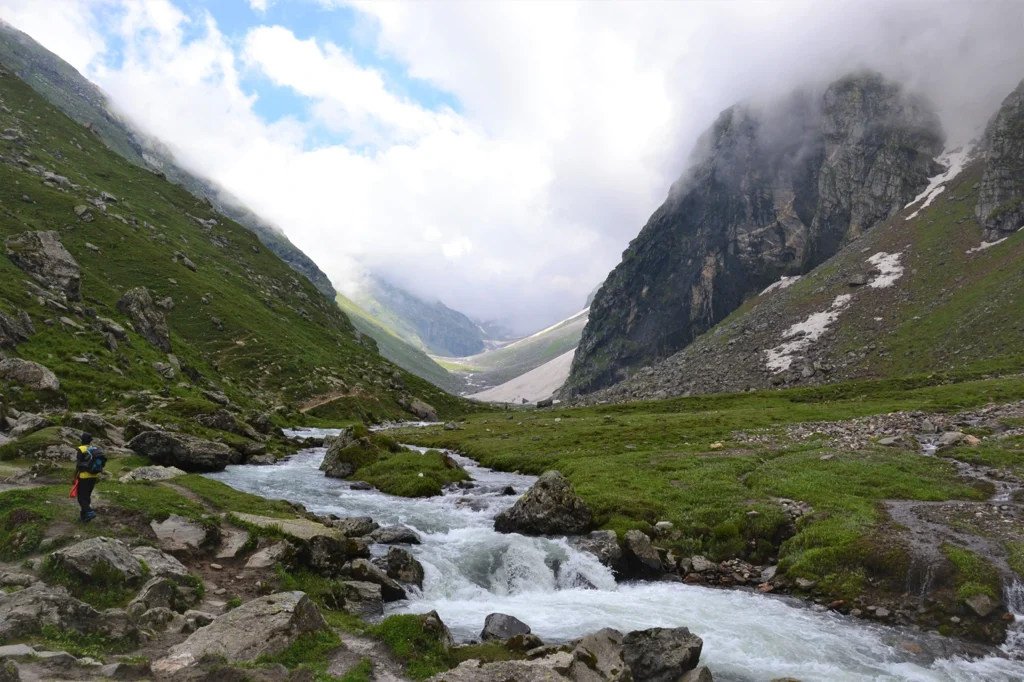
The trek from Pulna to Ghangaria covers approximately 9 km and usually takes 4 to 6 hours, depending on your pace and fitness level. The trail is well-maintained, clearly marked, and follows the scenic Pushpawati River through forests, waterfalls, and mountain landscapes. While it is suitable for beginners with a reasonable level of fitness, the continuous uphill climb can be physically demanding.
Starting the trek early in the morning is highly recommended, as it allows plenty of daylight and a more comfortable walking experience. Carrying only essential items in a small daypack will make the climb much easier.
Pony Service
Travellers who prefer not to walk can hire a pony from Govindghat or Pulna. The journey generally takes 3 to 4 hours and is a popular option for senior citizens, families with young children, and those who want to conserve energy for exploring the Valley of Flowers the following day.
Porter Service
If you would like to enjoy the trek without carrying heavy luggage, hiring a porter is an excellent option. Porters carry your backpack or duffel bag, allowing you to walk comfortably with only a light daypack. This is especially helpful for first-time trekkers and anyone carrying camping or photography equipment.
For elderly travellers or those with limited mobility, special carrier services (known locally as Kandi or Dandi) may also be available, subject to availability.
Helicopter Service
Helicopter services operate between Govindghat and Ghangaria, reducing the journey to just a few minutes. This is the fastest option and is particularly suitable for senior citizens or travellers who are unable to complete the trek. However, helicopter operations are completely weather-dependent and are often affected during the monsoon season due to poor visibility and rainfall. Because seats are limited, advance booking is highly recommended.
Need Extra Assistance? Roopkund Heaven Can Arrange It ⭐
If you are trekking with Roopkund Heaven, you can request pony services, porter services, helicopter assistance, or other trekking support at the time of booking your valley of flowers trek package. Our team will help arrange these services in advance, subject to availability, so you don’t have to search for them after reaching Govindghat.
Please note that these services are optional and are not included in the standard trek package. They are available at an additional cost, and the charges vary depending on the season and local government-approved rates. Booking them in advance helps ensure better availability, especially during the peak season.
Ghangaria to Valley of Flowers Trek
From Ghangaria, the final stretch into Valley of Flowers covers approximately 3-4 km one way, gaining meaningful altitude along a well-maintained but genuinely uphill trail. Trek distance and difficulty here shouldn’t be underestimated just because the numbers look small on paper — this stretch involves steady, sustained climbing, and combined with the altitude already gained at Ghangaria (around 3,000 metres), most trekkers find this more physically demanding than the Govindghat-to-Ghangaria leg despite covering less distance.
The entry gate to Valley of Flowers opens at 7:00 AM and typically requires visitors to exit by 5:00 PM, following strict forest department rules designed to protect the ecosystem and ensure visitor safety. Starting early, ideally reaching the gate right at opening time, gives you the most time to explore deeper into the valley rather than rushing a shortened visit.
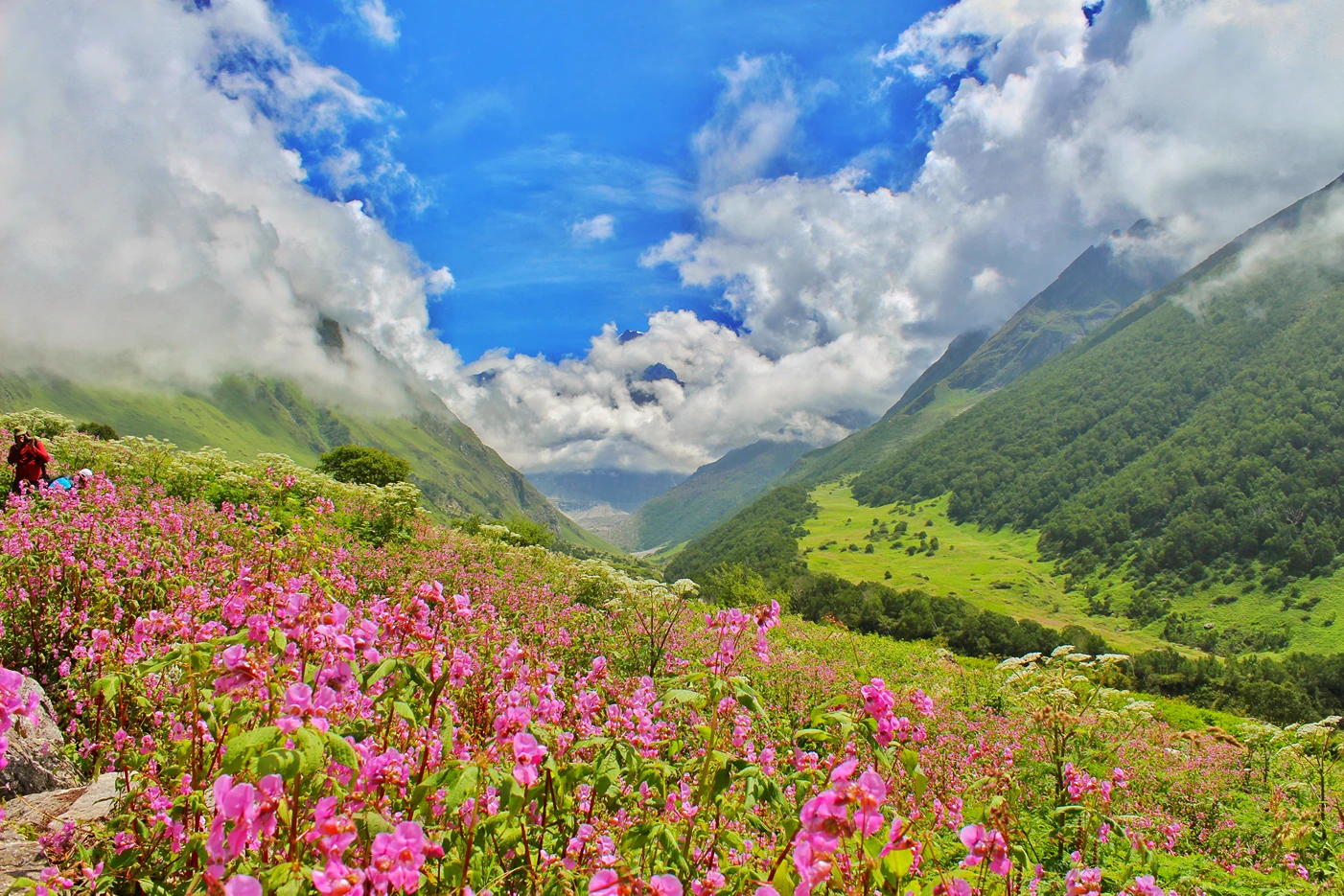
Most trekkers spend a full day exploring, since the valley’s most striking, flower-dense areas sit further in rather than right at the entrance — a common mistake beginners make is turning back too early, assuming they’ve seen the highlights, when the truly spectacular sections require genuine walking time to reach. Plan for a full 6-8 hour round trip within the valley itself if you want to see it properly rather than just the outer edges.
Entry Permit, Fees & Timings
Valley of Flowers Entry Fees currently stand at approximately ₹150 for Indian nationals and ₹600 for foreign nationals, though these figures are worth reconfirming closer to your travel date since forest department fees can be revised. The Entry Permit Process is straightforward — permits are issued at the entry point in Ghangaria itself, requiring basic ID proof, and importantly, this permit remains valid for three consecutive days, meaning you don’t need to purchase a fresh one if you visit the valley across multiple days during your stay.
Opening & Closing Timings follow a consistent daily pattern — the gate opens at 7:00 AM and all visitors must exit by 5:00 PM, with no exceptions made for stragglers, since this timing exists specifically for visitor safety given how quickly weather and light conditions can change at this altitude.
Beyond daily timings, the park itself has a seasonal opening window, typically from around June 1st through October, depending on snow conditions and forest department assessment each year — visiting outside this window simply isn’t possible, so confirming current-year opening dates before finalising your travel plans is a genuinely essential step, not an optional check.
Road Conditions & Travel Tips
Current Road Conditions
The road from Rishikesh to Govindghat is generally in good condition, but heavy rainfall during the monsoon can cause temporary landslides and road closures, especially around Chamoli and Joshimath. Before starting your journey, it’s always a good idea to check the latest road conditions with your tour operator or local authorities.
Monsoon Travel Tips
The best time to see the Valley of Flowers in bloom—July and August—also coincides with the monsoon season. Expect occasional rain, slippery trails, and possible traffic delays due to landslides. Carry quality rain gear, waterproof your luggage, and keep a buffer day in your itinerary to accommodate weather-related delays.
Fuel, ATMs & Mobile Network
Joshimath is the last reliable town for fuel stations, ATMs, and essential supplies before Govindghat, so complete your cash withdrawals and refuelling there. Mobile connectivity is limited beyond Joshimath, with BSNL offering the best coverage. Network signals are weak in Ghangaria and almost unavailable inside the Valley of Flowers, so inform your family before beginning the trek.
Total Days Required to Reach & Explore Valley of Flowers
A 6-day itinerary is ideal for exploring the Valley of Flowers comfortably. It allows enough time for the long road journey, trekking, sightseeing, and gradual acclimatisation to the higher altitude. While it is possible to complete the trip in fewer days, doing so can be tiring and leaves little room for weather-related delays, which are common during the monsoon season.
Recommended 6-Day Itinerary
Day 1: Travel from Delhi to Haridwar or Rishikesh by train, bus, flight, or private taxi.
Day 2: Drive from Haridwar/Rishikesh to Govindghat via Devprayag, Rudraprayag, Karnaprayag, and Joshimath.
Day 3: Take a shared taxi to Pulna, then trek 9 km to Ghangaria, the base camp for the Valley of Flowers and Hemkund Sahib.
Day 4: Trek 4 km to the Valley of Flowers, spend the day exploring the national park, and return to Ghangaria by evening.
Day 5: Visit Hemkund Sahib (optional) or enjoy a second visit to the Valley of Flowers before trekking back to Pulna and driving to Govindghat.
Day 6: Drive back to Haridwar or Rishikesh and continue your onward journey.
This itinerary offers a comfortable pace, reduces travel fatigue, and provides enough flexibility to handle unexpected weather or road delays while making the most of your Valley of Flowers experience.
How to book Valley of Flowers Trek Package?
Booking this trek with Roopkund Heaven is simple and takes just a few minutes online. Our current package starts from ₹8,200+ per person on triple sharing, based out of Govindghat, for the full 6 Days / 5 Nights trip, and includes your guide, meals, and stay.
Here’s how the booking process works, step by step:
- Step 1 – Traveller Details: Enter your basic information needed to confirm your booking.
- Step 2 – Trip Configuration: Choose your batch date, package type, and number of travellers joining you.
- Step 3 – Rental Gear: Add any rental gear you need, like trekking poles or rain jackets — your total updates instantly as you add items.
- Step 4 – Final Notes & Summary: Add any special notes, then review your full trek total, including trip cost, add-ons, rental gear, and GST (5%).
Once you’re happy with the summary, choose your payment plan through Razorpay — either Pay Full for instant confirmation, or Pay 30% Advance to reserve your seat now and clear the rest later. For example, on a base price of ₹8,200 with GST included, your full payable amount comes to ₹8,610. You can also apply a coupon code before payment if you have one. Once payment is done, your seat is confirmed immediately.
Package Inclusions & Exclusions
Knowing exactly what’s covered helps you plan your budget properly.
Included in the package:
- Stay on a sharing basis at Govindghat and Ghangaria
- All meals (breakfast and dinner) as per the itinerary
- Experienced trek guide throughout the journey
- Transport from Rishikesh to Govindghat and back
Not included in the package:
- Valley of Flowers entry permit fee (₹150/₹600, paid separately)
- Lunch and snacks during the trek
- Personal expenses like laundry, tips, and shopping
- Porter, pony, or helicopter charges (available at extra cost if needed)
- Travel insurance and medical expenses
- GST (5%), applied extra on the package price
Frequently Asked Questions
How many days are needed to reach Valley of Flowers?
Reaching Valley of Flowers from Delhi typically takes 2-3 days of travel, including road journey and the Govindghat-Ghangaria trek. A complete trip with proper exploration and return journey needs a minimum of 5-6 days overall.
What is the nearest airport to Valley of Flowers?
Jolly Grant Airport in Dehradun is the nearest commercial airport, located roughly 270-300 km away by road. From there, you’ll still need to travel through Rishikesh and Joshimath before reaching Govindghat, the road’s endpoint.
What is the nearest railway station to Valley of Flowers?
Rishikesh and Haridwar are the two most commonly used railway stations, both located roughly 270-300 km from Valley of Flowers, with Haridwar offering somewhat better long-distance train connectivity across India.
Can I drive directly to Valley of Flowers?
No, you can only drive as far as Govindghat, roughly 17 km from the valley. Beyond Govindghat, the remaining distance must be covered by trekking, pony, porter, or helicopter, since no motorable road exists into the protected park.
Is helicopter service available for Ghangaria?
Yes, helicopter service operates between Govindghat and Ghangaria, though availability is unpredictable, especially during July and August when monsoon weather frequently causes delays or cancellations. Always have a backup plan if relying on this option.
Can senior citizens use pony or helicopter instead of trekking?
Yes, both pony and helicopter services are commonly used by senior citizens or travellers with mobility concerns to cover the Govindghat-Ghangaria stretch without trekking. Booking these in advance, rather than assuming same-day availability, is genuinely important during peak season.
Is the entry permit valid for multiple days?
Yes, the Valley of Flowers entry permit remains valid for three consecutive days from issue, meaning you don’t need a fresh permit if you visit the valley more than once during your stay in Ghangaria.
Is public transport available from Haridwar and Rishikesh?
Yes, regular buses and shared taxis operate from both Haridwar and Rishikesh toward Joshimath and Govindghat, offering a budget-friendly alternative to private taxis, though with less flexibility around timing and stops.
What is the best route to reach Valley of Flowers?
The most common and well-established route is Delhi/Haridwar/Rishikesh to Joshimath to Govindghat, followed by the trek to Ghangaria and onward to Valley of Flowers. This route has the best transport infrastructure and support services along the way.
Is the road to Govindghat open throughout the year?
The road generally stays open through the trekking season (roughly May to October), but conditions can be temporarily disrupted during heavy monsoon rain due to landslide risk. Valley of Flowers itself is only accessible during its seasonal opening window, typically June through October.