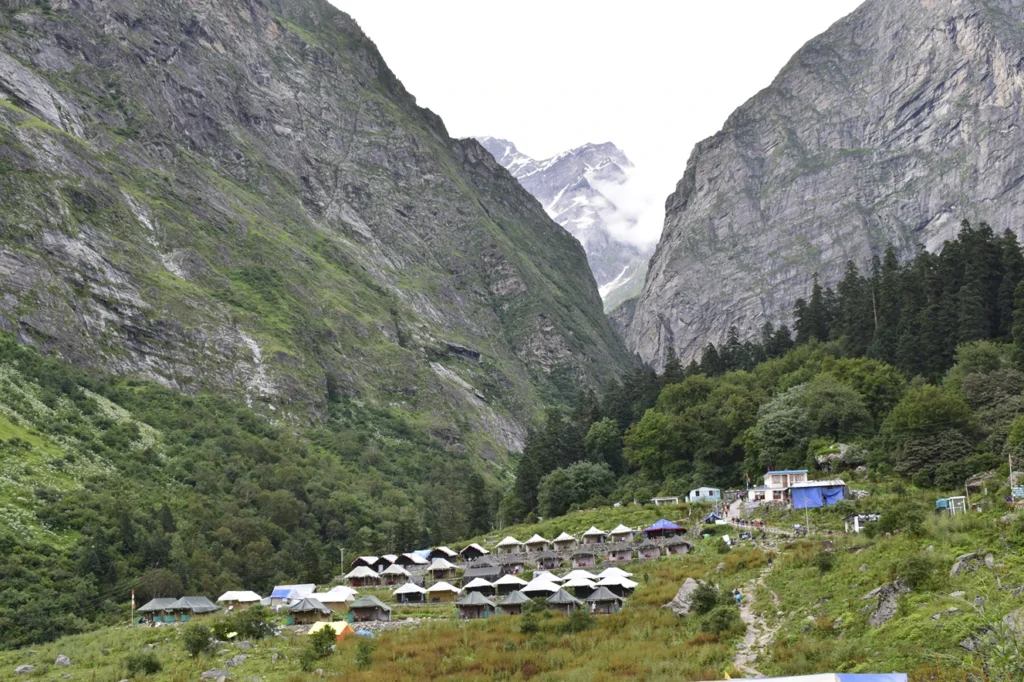
If you’re wondering whether the Roopkund Trek is possible during the monsoon, the honest answer is that it’s best to avoid this season. In this guide, you’ll learn why monsoon trekking to Roopkund is risky, when the trail is usually suitable for trekking, and the best alternatives if July or August is your only time to travel.
Can You Do the Roopkund Trek During the Monsoon?
Technically, yes—the Roopkund Trek can be attempted during the monsoon. However, just because it’s possible doesn’t mean it’s advisable. July and August bring heavy rainfall to the region, making the trail significantly more challenging and increasing the overall risk.
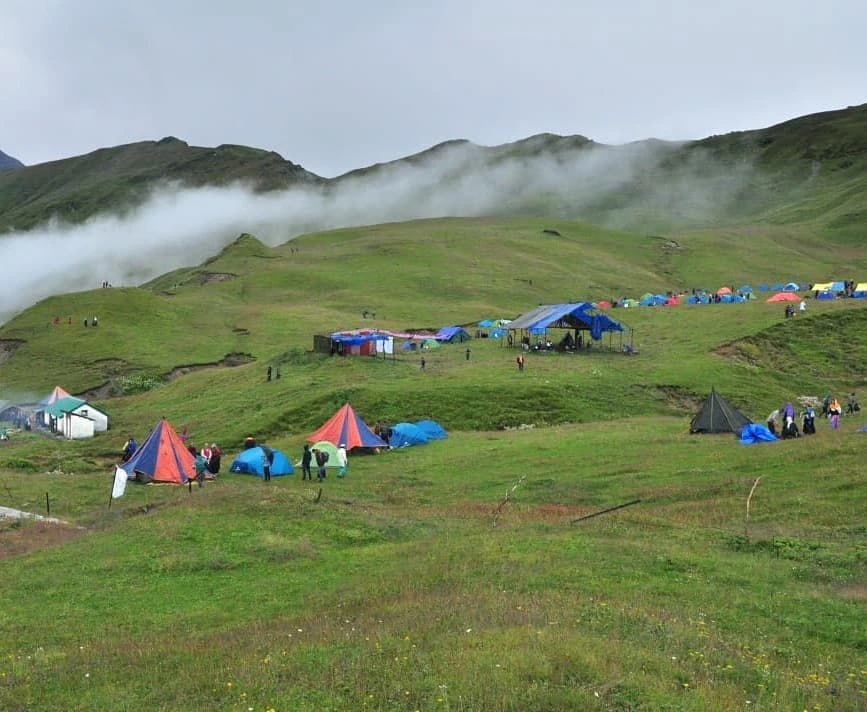
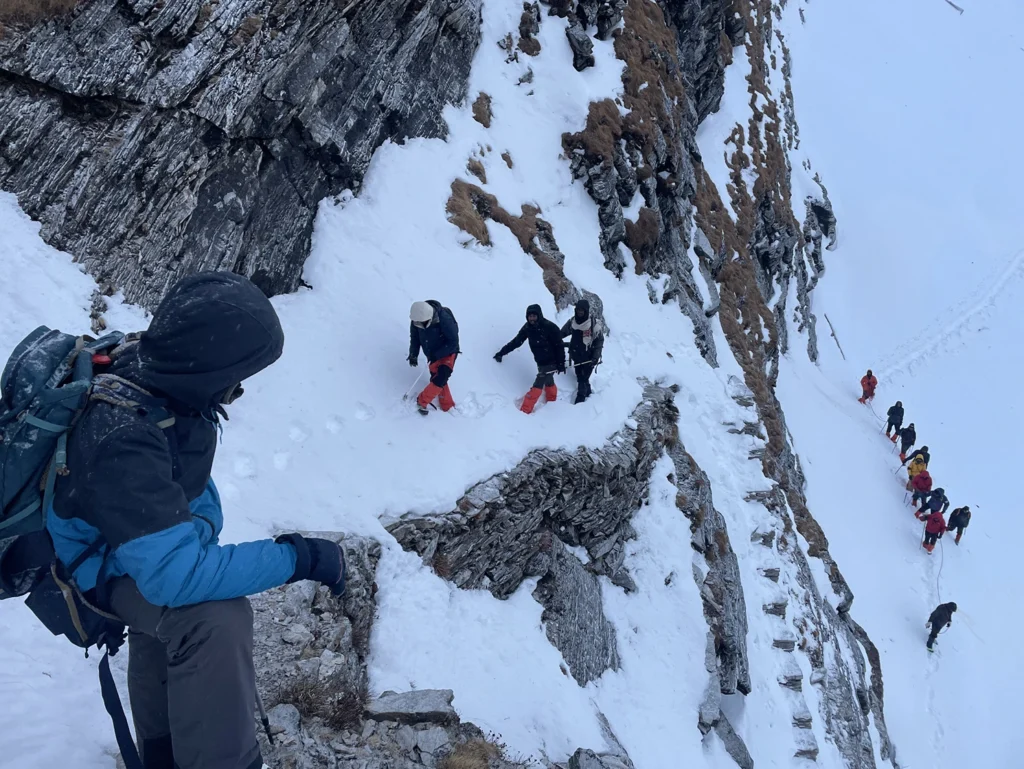
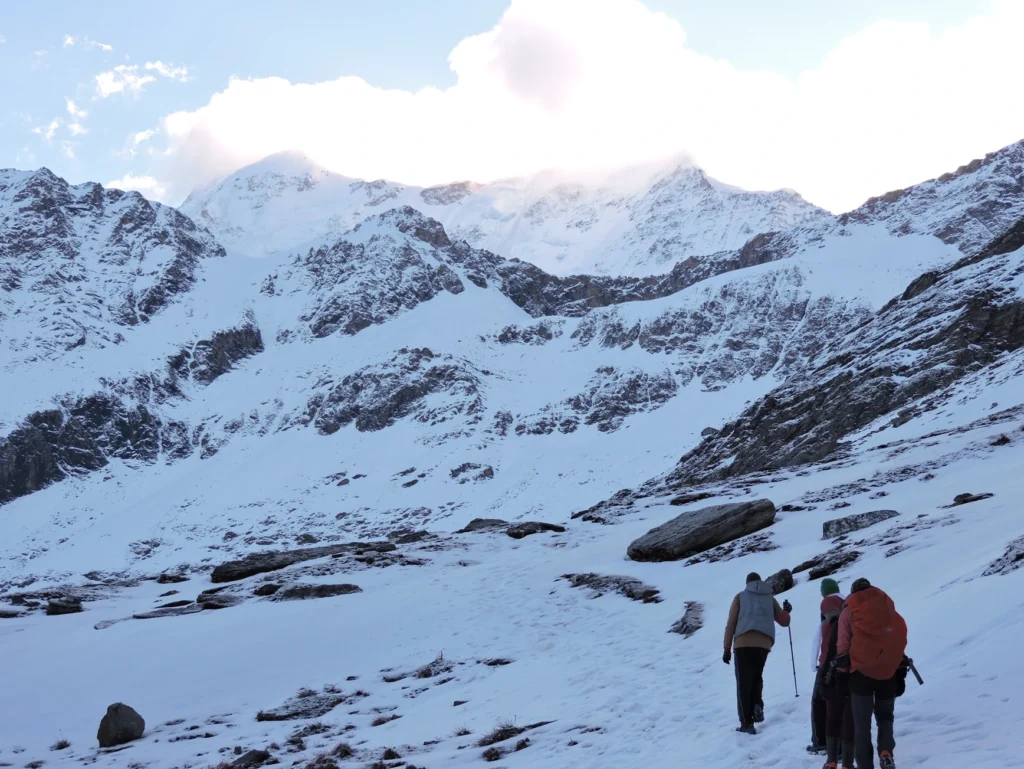
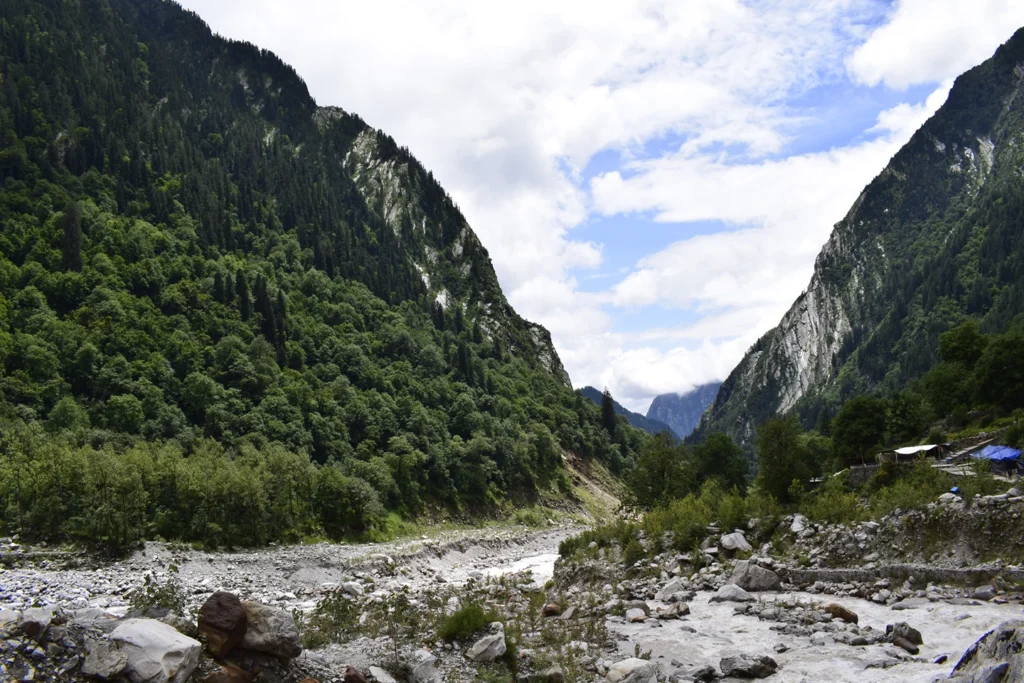
The route passes through dense forests, steep ascents, rocky sections, and alpine meadows. During the monsoon, these trails become muddy and slippery, while mountain roads leading to the trek are prone to landslides and temporary closures. Even if the trail remains open, trekking in such conditions can be physically demanding and less enjoyable.
Unpredictable weather is another major concern. Rain, fog, and low visibility can make navigation difficult, while swollen streams and waterlogged sections may slow your progress or force changes to the itinerary.
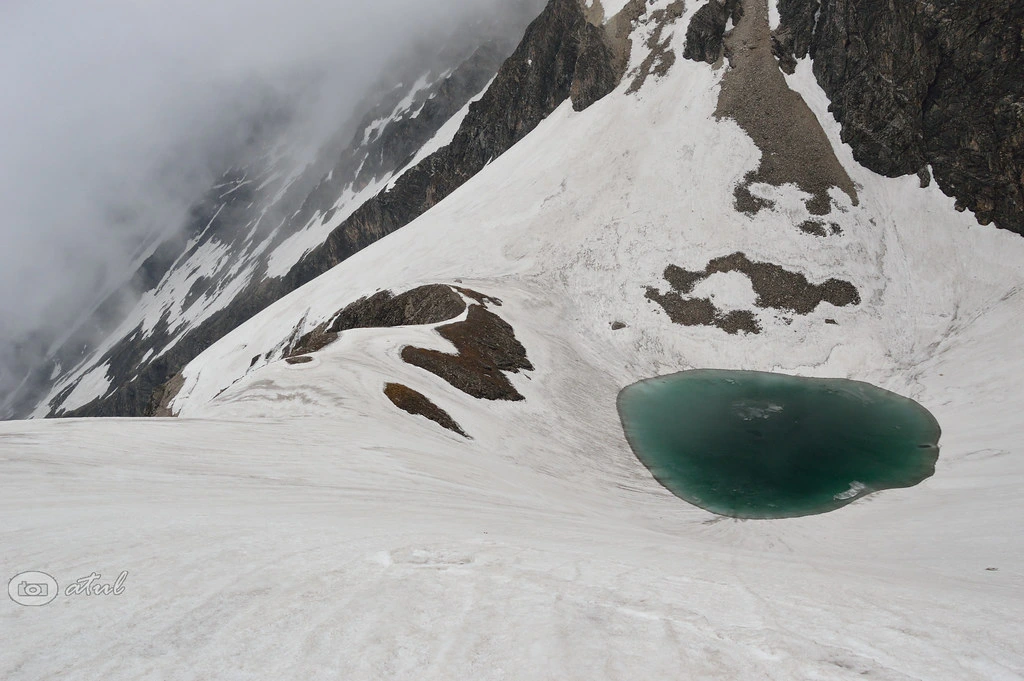
For these reasons, the Roopkund Trek is not recommended during the monsoon season. If you want clear Himalayan views, safer trail conditions, and the best chance to see the famous Roopkund skeletons, plan your trek during the recommended seasons instead.
To choose the right season based on what you want to experience, read our guide on Best Time to do Roopkund Trek, where we’ve covered the weather, trail conditions, and highlights of each season in detail.
Why Late June Through August is the Riskiest Window
Late June through August is when Uttarakhand receives its heaviest, most unpredictable rainfall, and the Roopkund route sits right in the middle of terrain that reacts badly to this kind of weather.
Landslide Risk on the Lohajung Approach Road
Before you even start trekking, you need to reach Lohajung by road, making the drive to Lohajung one of the biggest challenges. Heavy rain often triggers landslides and road blockages, which can delay your journey by several hours or even days. During peak monsoon, travel disruptions are common, so reaching or returning from the trek becomes unpredictable.
Slippery and Unsafe Trail Conditions
Continuous rainfall turns the Roopkund trail muddy and slippery, especially on steep sections between Didna and Ali Bugyal. Wet rocks, loose soil, and reduced traction increase the risk of slips, falls, and ankle injuries, making an already demanding trek much more difficult.
These challenging road and trail conditions are the main reasons late June to August is considered the riskiest period for the Roopkund Trek.
Specific Monsoon Hazards on the Roopkund Route
Beyond general slipperiness and road risk, monsoon brings a handful of specific problems that trekkers genuinely need to know about before deciding to go.
Fast-Flowing, Freezing Stream Crossings
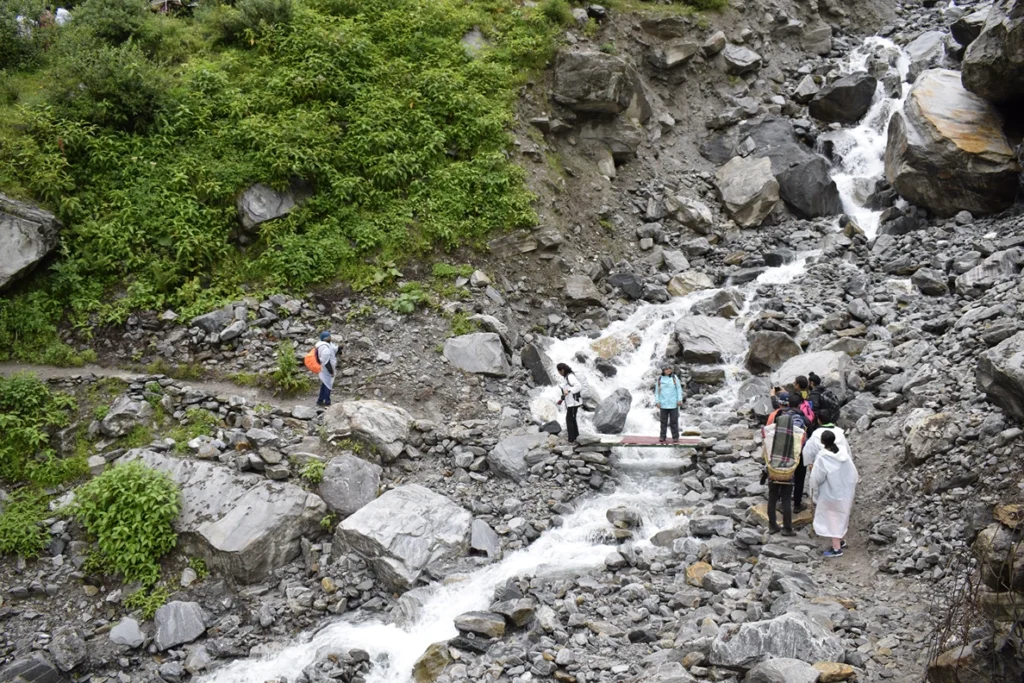
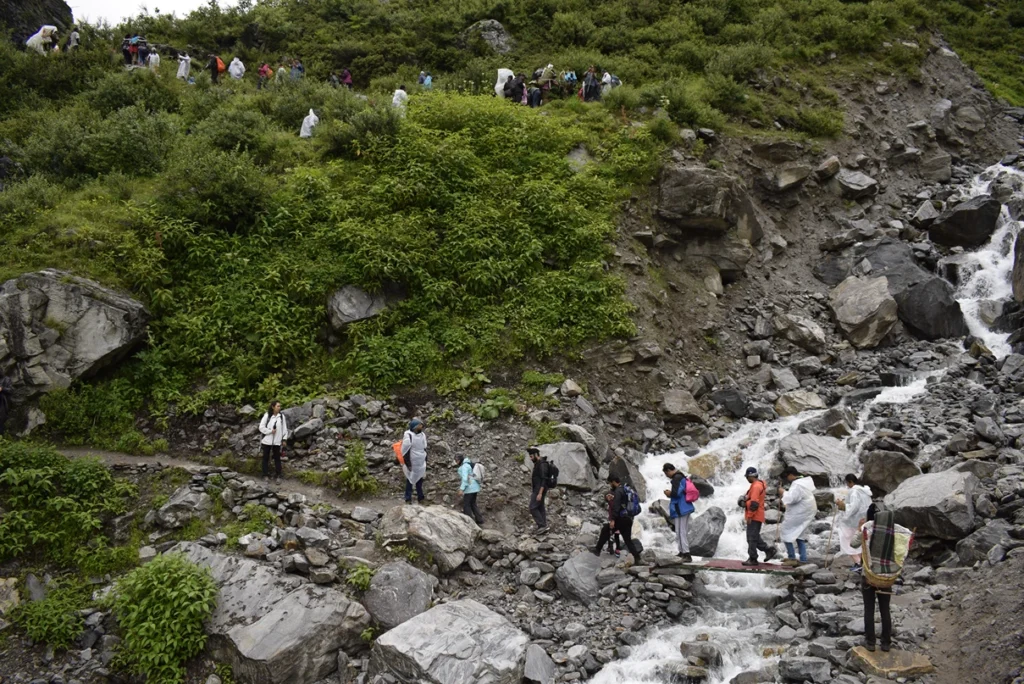
Several points along the route require crossing small streams, and these completely change character during monsoon. What’s normally a gentle trickle can turn into a fast-moving, ice-cold stream within a single day of heavy rain higher up the mountain.
Crossing a swollen stream is genuinely risky, especially for beginners who aren’t used to judging water depth and current strength. Even experienced trekkers sometimes choose to wait rather than cross when water levels rise unexpectedly, and that’s exactly the kind of judgment monsoon trekking forces you into.
Hailstorms on the Higher Sections
As you gain altitude, monsoon weather can turn from rain to sudden hailstorms with very little warning. These storms are more common on the higher, more exposed sections of the trail, where there’s little natural shelter available.
Getting caught in a hailstorm at altitude isn’t just uncomfortable — it genuinely increases your risk of hypothermia if you’re not dressed for it, and it can reduce visibility so much that continuing safely becomes genuinely difficult. This is one of the least predictable monsoon risks on this route, since hailstorms can appear even on days that started out looking clear.
Leeches in the Lohajung-to-Ali Bugyal Forest Stretch
The forested stretch between Lohajung and Ali Bugyal becomes genuinely leech-prone during monsoon months. This isn’t dangerous in a life-threatening sense, but it’s uncomfortable, distracting, and something most trekkers would rather avoid entirely.
Constantly checking your ankles and legs for leeches adds a mental burden on top of the physical effort of trekking, and it’s exactly the kind of small, annoying problem that adds up over a long trekking day and makes the whole experience less enjoyable.
Zero Visibility – Losing the Point of the Trek
Perhaps the most disappointing monsoon hazard isn’t dangerous at all — it’s simply disappointing. Thick monsoon clouds can reduce visibility to just a few metres, completely hiding the mountain views that make this trek worth doing in the first place.
You could complete the entire trek, reach Roopkund Lake, and still miss out on seeing Mount Trishul or the wider Himalayan panorama that draws most people to this trek. Given how much effort this trek demands, trekking through thick cloud cover with zero views is a genuinely frustrating outcome to risk.
But Isn’t It Sunny Sometimes During Monsoon?
Yes, there can be sunny and pleasant days during the monsoon. However, a few hours of clear weather don’t make the Roopkund Trek safe. Weather in the Himalayas changes rapidly, and rain, fog, or hail can arrive with little warning.
Unlike some rain-shadow regions of Himachal or Kashmir, Roopkund in Uttarakhand receives heavy monsoon rainfall. Even on a sunny morning, the risks of landslides, slippery trails, and swollen streams remain.
While you might get lucky with clear skies, trek planning should be based on overall safety rather than chance. That’s why we do not operate Roopkund Trek batches during the monsoon season. We prioritize the safety of our trekkers and only conduct departures when trail and weather conditions are suitable for a safe and enjoyable trekking experience.
When Do We Actually Close Roopkund for the Season?
At Roopkund Heaven, we usually conclude our Roopkund Trek batches by the last week of June, before the monsoon becomes active in Uttarakhand. We do not operate batches during July and August because of heavy rainfall, landslides, slippery trails, and unpredictable weather conditions.
We also do not conduct Roopkund Trek departures during the winter months, from November to March, when heavy snowfall makes the trail inaccessible and unsafe.
These decisions are based on years of experience and our commitment to trekker safety. We resume our Roopkund Trek batches only when weather, trail conditions, and forest department regulations allow for a safe trekking experience.
For upcoming Batches visit our website or check our Roopkund Trek page.
Is the end of June or Last Week of August ever okay?
This is one of the most common questions we receive, and the honest answer is it depends on that year’s weather.
The last week of June falls right at the beginning of the monsoon. In some years, the rains arrive late and trekking may still be possible, while in others, the monsoon begins early, making the trail unsafe. Similarly, the last week of August may see improving weather, but rainfall can still be unpredictable.
Because these periods vary from year to year, we do not schedule Roopkund Trek batches based on calendar dates alone. At Roopkund Heaven, every departure is planned only after carefully assessing weather forecasts, trail conditions, and safety.
When Does Roopkund Reopen After Monsoon?
At Roopkund Heaven, we typically resume our Roopkund Trek batches from mid-September, once the monsoon has largely withdrawn and weather conditions become more stable. Before reopening the trek, we carefully assess road conditions, trail safety, and the latest forest department guidelines.
The September to November season is considered one of the best times to visit Roopkund. The skies are usually clear, the trails are more stable, and trekkers can enjoy spectacular Himalayan views along with a better chance of seeing the famous Roopkund skeletons after the snow has melted.
If your travel dates are flexible, we strongly recommend planning your trek after the monsoon instead of during July or August. It offers a much safer, more comfortable, and far more rewarding trekking experience.
What to Do If You Can Only Travel in Monsoon Season
We understand that not everyone has flexible dates. If monsoon genuinely is your only available window, here’s how to handle it sensibly.
Better Monsoon Trek Alternatives
Valley of Flowers Trek – The best monsoon trek in Uttarakhand, with vibrant alpine flowers in full bloom during July and August.
Hampta Pass Trek – Crosses into the rain-shadow region of Lahaul, where rainfall is much lower.
Kashmir Great Lakes Trek – Receives significantly less monsoon rainfall than Uttarakhand and offers stunning alpine lakes.
Pin Bhaba Pass Trek – Passes through the Spiti rain-shadow region, making it a good option during the monsoon.
Ali Bedni Bugyal Trek– A great choice if your main goal is to experience Roopkund’s beautiful meadows without trekking all the way to the lake.
If You Still Plan a Monsoon Trek
If you decide to trek during the monsoon, make safety your top priority:
Carry a waterproof jacket, backpack rain cover, and quick-dry clothing.
Prepare with extra fitness training, as wet trails require more effort.
Check the weather forecast daily before your departure.
Trek only with an experienced operator that has proper safety protocols and emergency plans.
At Roopkund Heaven, we do not operate Roopkund Trek batches during the monsoon season because your safety is always our highest priority. If you need help choosing the best trek for your travel dates, our team will be happy to recommend a suitable alternative.
Why Choose Roopkund Heaven for Booking Roopkund Trek Package
At Roopkund Heaven, your safety comes first. We carefully schedule our Roopkund Trek departures only during the best trekking seasons—May to June and September to November—when weather and trail conditions are most suitable.
Our experienced trek leaders know the Roopkund route well and are trained to handle changing mountain conditions. We take care of permits, transportation, accommodation, meals, camping arrangements, experienced guides, and complete trek logistics, so you can focus on enjoying your adventure.
If you are Planning Roopkund Trek, visit our website to explore upcoming departures, check detailed trek information, and book online. If you’re travelling with a group of 5 or more trekkers, we also offer customized departures, allowing you to choose your preferred trekking dates based on your group’s convenience, subject to availability.
Frequently Asked Questions
H3: Is Roopkund trek safe in July?
No, July falls within the highest-risk monsoon window, with genuine landslide risk on the approach road and slippery, unstable trail conditions. We recommend avoiding this month entirely and shifting to September or October if your schedule allows.
H3: Is the last week of August good for Roopkund?
It’s inconsistent. Some years see monsoon intensity ease slightly by late August, but this varies significantly year to year, so we wouldn’t recommend fixed, non-flexible plans around this exact window without checking real-time conditions first.
H3: Is it possible to trek in end of June?
It’s on the edge of the risk window and depends on how early monsoon arrives that particular year. We typically close our own batches by the last week of June specifically because this timing becomes unreliable.
H3: Are there leeches on the Roopkund trail during monsoon?
Yes, particularly in the forested stretch between Lohajung and Ali Bugyal. This isn’t dangerous but is genuinely uncomfortable, and it’s one more reason most operators avoid running this trek during peak monsoon months.
H3: What’s the landslide risk specifically on this route?
The Lohajung approach road is the most vulnerable stretch, since heavy rain softens hillsides along this steep terrain, sometimes blocking the road for hours or days. This risk peaks during late June through August.
H3: Is Roopkund Trek safe during the monsoon?
Generally, no. Between landslide risk, slippery trails, swollen streams, and reduced visibility, monsoon conditions genuinely increase the risk profile of this trek beyond what most trekkers should accept for a recreational trip.
H3: Can beginners do the Roopkund Trek in July?
We’d strongly advise against it. This trek is already physically demanding for beginners in ideal conditions, and adding monsoon-specific hazards on top of that makes it a genuinely poor choice for a first-timer’s July attempt.
H3: Does it rain every day during the monsoon?
No, not every single day, but rainfall is frequent and unpredictable enough that planning around occasional clear days isn’t a reliable strategy. The underlying risks remain even on days that start out sunny.
H3: Why do We avoid Roopkund in monsoon?
We avoid it because the combination of landslide-prone roads, slippery trails, swollen stream crossings, and reduced visibility genuinely increases risk without adding any real benefit to the trekking experience.
H3: Which month is best for the Roopkund Trek?
June, right before monsoon intensifies, and September through October, after monsoon eases, are genuinely the best windows, offering the most stable weather and clearest mountain views.
H3: Is the Roopkund Trek currently open?
This depends on the season — check directly with your operator, since availability shifts based on current weather patterns and forest department regulations, particularly around the monsoon closure and reopening windows.
H3: What is the biggest risk during the monsoon trek?
Landslide risk on the Lohajung approach road is generally considered the single biggest concern, since it can strand trekkers before they even begin the actual trail, or block their return journey afterward.
H3: What should I pack for a monsoon trek?
A proper waterproof jacket, backpack rain cover, quick-dry synthetic clothing, and grip-focused trekking shoes are essential. Avoid cotton clothing entirely, since it stays wet and cold for extended periods once soaked.
H3: Which treks are better than Roopkund during the monsoon?
Valley of Flowers, Hampta Pass, Kashmir Great Lakes, and Pin Bhaba Pass are all genuinely better suited to monsoon conditions, either because they need the rain (Valley of Flowers) or sit in rain-shadow regions with lighter monsoon impact.
H3: Can roads to Lohajung get blocked during the rainy season?
Yes, this happens regularly during peak monsoon months, sometimes for several hours and occasionally for days, due to landslide debris on the approach road. This is one of the core reasons we close our Roopkund batches before this risk window begins.
What is the best time to do the Roopkund trek?
What Makes the Roopkund Trek One of Uttarakhand’s Most Famous Treks?
The Roopkund Trek is not just another Himalayan trek. It’s famous because it combines mystery, beautiful alpine meadows, dense forests, and the legendary Skeleton Lake—all in one unforgettable journey.
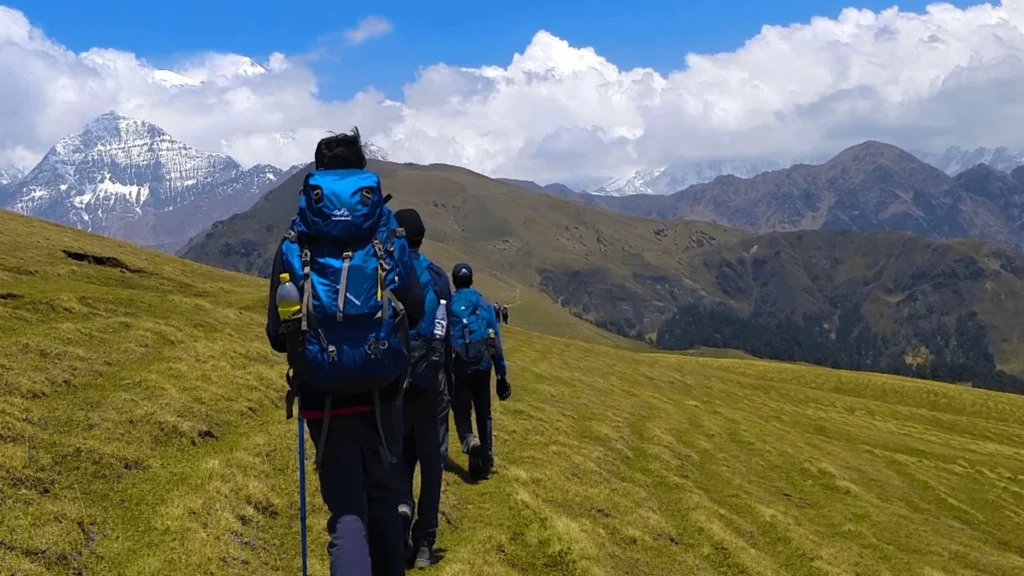
The trek takes you deep into the Garhwal Himalayas of Uttarakhand. Every day, the scenery changes. You begin by walking through thick oak and rhododendron forests before reaching the vast grasslands of Ali Bugyal and Bedni Bugyal. These are some of the biggest grassy meadows in all of Asia.
The trek became world-famous because of the skeletons found near Roopkund Lake. Scientists say these bones are hundreds of years old, which is why people call it “Skeleton Lake.” But most trekkers don’t come just for the bones — they come for the raw, real Himalayan experience.
On a clear day, you can also see big mountains like Trishul, Nanda Ghunti, Chaukhamba, and Neelkanth standing tall in front of you. This is not a short weekend trek. It feels like a real expedition , with long trekking days, high-altitude camps, and constantly changing weather.
But here’s something beginners often get wrong — they think it will be easy. It is not. The trail climbs above 4,500 metres, includes steep ascents and rocky sections, and mountain weather can change quickly. That is why picking the right month, and preparing your body properly in advance are two of the most important parts of planning a safe and enjoyable adventure.
Where Is Roopkund Lake Located?
Roopkund Lake is located in the Chamoli district of Uttarakhand, high in the Garhwal Himalayas, near Trishul Peak, at an altitude of around 4,800 metres (15,750 ft). The lake lies within the Nanda Devi Biosphere Reserve, one of India’s most beautiful high-altitude regions.
Roopkund Trek starts from a small village called Lohajung (about 2,300 metres), which is the last point accessible by road. From here, the journey continues on foot through forests, alpine meadows, and high mountain trails.
The route passes through:
Didna Village
Ali Bugyal
Bedni Bugyal
Bhagwabasa
Roopkund Lake
Depending on the approved trekking route, the total trekking distance is around 50 km.
Here’s something many beginners don’t realise — after Bedni Bugyal, the air gets thin very quickly. There is less oxygen, especially near Bhagwabasa and Roopkund. This is exactly where many trekkers start feeling tired, short of breath, or slightly sick from the altitude.
Because this region receives heavy snowfall in winter and frequent rain during the monsoon, trail conditions can become unsafe. That is exactly why choosing the right season is not just about comfort — it is about genuine safety.
Roopkund Trek Best Time: Which Season Should You Choose?
The best time to do the Roopkund Trek is during two seasons:
Summer: May to June
Autumn: September to October
Each season offers a completely different experience.
May and June are ideal if you want to enjoy lush green meadows, patches of snow near the higher sections, pleasant daytime temperatures, and flowing mountain streams. The weather is comfortable for trekking, and you’ll still get a taste of the Himalayan snow without facing harsh winter conditions.
September and October, after the monsoon, offer crystal-clear mountain views, fresh green landscapes, and excellent visibility. Since most of the seasonal snow around Roopkund Lake has melted by this time, the famous ancient skeletons are usually easier to see, making autumn the best season if visiting the legendary Skeleton Lake is one of your main reasons for doing the trek.
So, which season should you choose?
Choose May or June if you want to see snow, green bugyals, and pleasant trekking weather.
Choose September or October if you want the clearest mountain views, stable weather, and the best chance to see the Skeleton Lake clearly.
July and August are generally avoided because heavy rainfall makes trails slippery and increases the risk of landslides. Winter (November to April) is also not suitable, as heavy snowfall covers the trail and Roopkund Lake, hiding the skeletons beneath the snow.
For most trekkers—especially beginners—late May, June, and September offer the safest and most enjoyable Roopkund Trek experience, while September and October are the best months to see the famous skeletons at Roopkund Lake.
Month-by-Month Guide to the Roopkund Trek
Instead of just picking a season, it helps to know exactly what each month looks like on the ground. Here’s a simple, honest breakdown of every trekking month, from April all the way to October.
April – Not Recommended (Heavy Snow, Avalanche Risk)
April is genuinely not a good time for this trek. Heavy snow still covers most of the trail, and campsites near Bedni Bugyal and Ali Bugyal remain frozen and hard to use properly. River crossings can also become dangerous, since melting ice makes the water flow unpredictable.
The biggest concern in April is avalanche risk on the higher sections of the trail. Only very experienced snow trekkers, travelling with proper gear and expert guides, should even consider attempting Roopkund this early. For regular trekkers and beginners, April should be avoided entirely.
May – Start of Season
May marks the real start of the trekking season. Lower camps begin clearing up nicely, but higher meadows still hold a good amount of snow, which makes the final push toward the lake more challenging than in June.
Daytime temperatures usually sit between 8°C and 15°C, while nights can drop to 0°C or even -5°C at higher camps. May genuinely works best for adventure lovers and snow lovers — people who specifically want that classic, snow-covered Himalayan trekking feel. Fit beginners can attempt this month too, but only with an experienced guide who understands changing snow conditions.
June – Best for Most Beginners
June is considered one of the best months for the Roopkund Trek. The trails become easier to walk, the weather is pleasant, and only patches of snow remain near the higher sections.
Day temperature: 12°C to 18°C
Night temperature: 3°C to 7°C
Rhododendron forests bloom beautifully during this time, making the trek even more scenic. June offers a great balance of comfortable weather, beautiful landscapes, and relatively easy trail conditions.
July–August – Monsoon (Avoid)
July and August bring heavy monsoon rain to the region. Trails become muddy and slippery, streams swell, and landslide risks increase. Leeches are also common in the forest sections.
For safety reasons, we do not operate Roopkund Trek batches during the monsoon season.
September – Best Overall (Clear Skies, Fewer Crowds)
September is when the Himalayas truly come alive after the monsoon. The skies turn clear, the air becomes fresh, and the mountain views are at their best. If your goal is to enjoy breathtaking Himalayan scenery and see Skeleton Lake, September is one of the best months to do the Roopkund Trek.
The meadows of Ali Bugyal and Bedni Bugyal change from bright green to golden shades, creating a beautiful contrast against snow-capped peaks like Trishul and Nanda Ghunti. By this time, most of the seasonal snow around Roopkund Lake has melted, making the ancient skeletons much easier to see. Day temperatures range between 10°C and 18°C, while nights stay around 0°C to 5°C. With fewer crowds and pleasant weather, September offers one of the best overall trekking experiences.
October – For Experienced Trekkers Only
October brings the clearest, most stable weather of the entire season, but also the coldest nights. Temperatures at Bhagwabasa can drop as low as -10°C, and the air feels thinner and drier, which can make breathing feel harder for some trekkers.
Snow near Roopkund itself is usually minimal by this point, making the climb technically a bit easier, even though it’s physically colder overall. Storms are rare in October, which actually makes this one of the most statistically reliable months for successfully reaching Roopkund. That said, given the extreme cold and shorter daylight hours, this month suits experienced trekkers more than complete beginners.
Why You Should Avoid the Roopkund Trek During Monsoon
July and August are not recommended for the Roopkund Trek. During these months, Chamoli receives heavy rainfall, making both the journey and the trek challenging.
The road to Lohajung often faces landslides and temporary closures, which can delay your trip before the trek even begins. On the trail, continuous rain turns the paths muddy and slippery, increasing the risk of slips and injuries.
The forests also become home to leeches, while thick clouds often hide the beautiful Himalayan views that make this trek so special. Higher sections of the trail become less stable during heavy rain, and lightning is an added risk in open alpine areas.
Because of these safety concerns, we do not operate Roopkund Trek batches during the monsoon season. We recommend planning your trek in September-October or May–June, when the weather is safer, the trails are more stable, and the overall trekking experience is much better.
Best Time for Photography, Camping, and Himalayan Views
If photography is your main goal, September and October are the best months for the Roopkund Trek. The monsoon leaves the air clean, giving you crystal-clear views of Mount Trishul, Nanda Ghunti, and other Himalayan peaks. The golden meadows, blue skies, and beautiful sunrise and sunset light create perfect conditions for landscape photography.
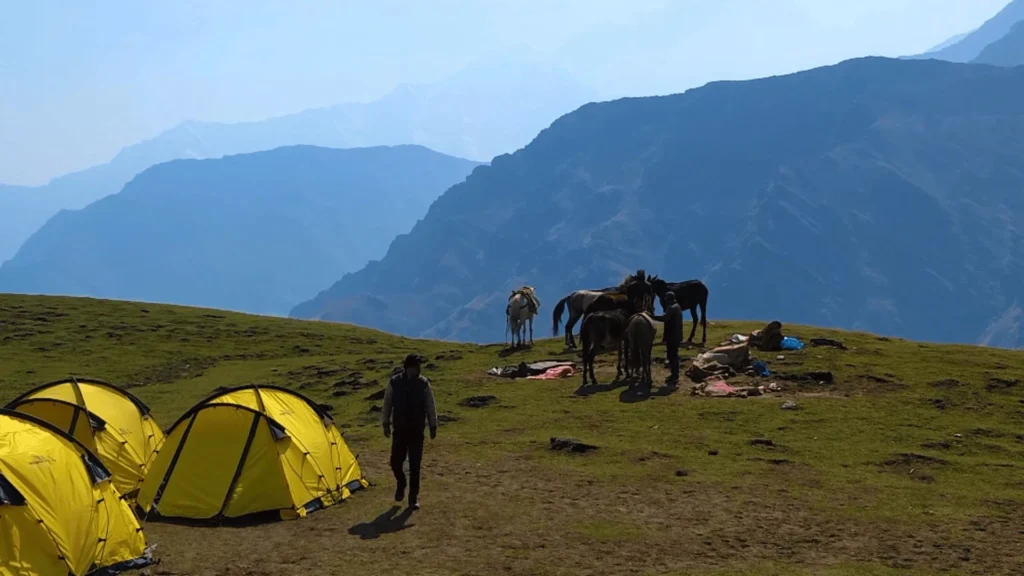
For camping specifically, June offers the best overall experience. The weather stays warm enough to actually sit outside your tent in the evening and enjoy a clear view of the Milky Way. Camping at Ali Bugyal under a summer night sky is often the single highlight trekkers remember most from their entire Roopkund trip. The meadows feel soft underfoot, and horses grazing nearby add a genuinely peaceful, pastoral charm to your photos — something the harsher, colder autumn months simply don’t offer in the same way.
How to Reach Lohajung: The Base Camp of Roopkund Trek
Lohajung is the starting point of the Roopkund Trek, so planning your journey here is just as important as preparing for the trek itself.
From Rishikesh/Dehradun: The drive takes around 10–12 hours, passing through Devprayag, Rudraprayag, Karnaprayag, and Gwaldam. It’s best to start early in the morning.
From Kathgodam: The journey takes about 9–10 hours via Almora and Kausani, making it another popular route for trekkers.
Our tip: Before booking your Roopkund Trek, always check whether transport from Rishikesh is included in your package. If it’s not, you can usually add it as an optional service for around ₹1,800–₹2,000 per person.
If you book your transport with Roopkund Heaven, we arrange your pickup from Rishikesh on the trek departure day. A day before your trek, we’ll share your pickup time, location, vehicle details, and driver’s contact number, making your journey to Lohajung smooth and hassle-free.
Roopkund Trek Route Explained: Lohajung to Roopkund Lake
The Roopkund trek route is a genuine journey through changing Himalayan terrain, typically spanning 6 to 8 days depending on your pace and how much time you build in for acclimatisation.
Day 1: Rishikesh to Lohajung Drive from Rishikesh to Lohajung (2,350 m), the starting point of the trek.
Day 2: Lohajung to Didna Village The trek begins with a descent to the Neel Ganga River, followed by a climb through oak and rhododendron forests to the peaceful village of Didna.
Day 3: Didna Village to Ali Bedni Bugyal Climb through forests before reaching the vast alpine meadows of Ali and Bedni Bugyal, famous for their panoramic Himalayan views.
Day 4: Ali Bedni Bugyal to Patar Nachauni A gradual walk across open meadows leads to Patar Nachauni, with spectacular views of Mount Trishul and Nanda Ghunti throughout the day.
Day 5: Patar Nachauni to Bhagwabasa The trail climbs past Kalu Vinayak Temple before reaching Bhagwabasa, the highest campsite and the base for the summit day.
Day 6: Bhagwabasa to Roopkund Lake and Back to Patar Nachauni Start before sunrise for the climb to Roopkund Lake (4,800 m). After spending time at the famous Skeleton Lake, descend the same day to Patar Nachauni for the night.
Day 7: Patar Nachauni to Lohajung via Wan Village Descend through beautiful forests and the traditional village of Wan before returning to Lohajung.
Day 8: Lohajung to Rishikesh Drive back to Rishikesh, bringing your Roopkund adventure to an end.
This itinerary follows the current trekking regulations, allowing trekkers to visit Roopkund Lake while protecting the fragile Himalayan environment.
Physical Fitness and Preparation for the Roopkund Trek
The Roopkund Trek is a moderate to difficult trek, so good preparation is important. We recommend starting your fitness routine 6–8 weeks before your trek.
Build your stamina: Try to run or jog 5 km in 30–40 minutes without feeling exhausted. This will help you handle long trekking days and the thin air at high altitude.
Strengthen your legs: Include exercises like squats, lunges, step-ups, and stair climbing in your routine. Strong legs make steep climbs and long descents much easier.
Improve your breathing: Practice deep breathing exercises or Pranayama for 10–15 minutes daily. While it cannot prevent altitude sickness, it can improve your lung capacity and help you stay calm while trekking.
Prepare mentally: Some days involve walking 6–8 hours on steep trails in cold weather. Stay patient, walk at a steady pace, drink plenty of water, and avoid rushing. A positive mindset is just as important as physical fitness on high-altitude treks.
Our advice is simple: The fitter you are before the trek, the more you’ll enjoy the journey instead of just trying to finish it.
Quick Tips for Success (Permits, Difficulty, and Training)
Permits: You need forest department permits to trek here. because the trail passes through protected Himalayan areas. When you book a Roopkund Trek package with us, you don’t have to worry about the permit process — we manage and arrange all the required permits for our trekkers before the trek begins. Keep 3–4 photocopies of your government ID proof and a few passport-size photographs with you during the journey. These documents may be required at checkpoints or during official verification.
Difficulty: This trek is rated Moderate-Difficult. It genuinely isn’t suitable for someone who has never hiked before in their life. If you’re brand new to trekking, try a smaller trek like Nag Tibba first to build confidence and basic fitness.
Training: Carry a 5 kg backpack during your practice walks in the weeks before your trek. This simulates real trek conditions far better than walking empty-handed.
Hydration: Drink around 4 litres of water a day during the trek. Dehydration is genuinely one of the fastest ways to trigger altitude sickness symptoms.
Essential Packing List
Footwear: High-ankle trekking boots with deep grip (lugs) are essential. Avoid regular sports shoes completely — they simply don’t offer the ankle support or traction this terrain demands.
Clothing: The layering system matters more than any single expensive jacket. You need a moisture-wicking base layer, a fleece mid-layer, and a heavy down jacket rated for at least -10°C for the colder camps.
Headgear: A woollen cap that properly covers your ears for cold camps, plus a sun hat for the exposed, sunny meadow stretches lower down.
Accessories: UV-protected sunglasses are genuinely essential, not optional — they prevent snow blindness on the bright, snow-covered upper sections. Good-quality trekking poles also make a real difference in protecting your knees, especially during the long descent.
Safety and Altitude Challenges: Managing AMS
At Roopkund Lake’s altitude, oxygen levels are nearly 40% lower than at sea level. Acute Mountain Sickness (AMS) is a genuinely real risk here, not just a precautionary warning. Understanding the symptoms and taking quick action can prevent a small problem from becoming a serious situation.
Symptoms to watch for: A persistent headache, nausea, loss of appetite, unusual tiredness, and dizziness are some of the earliest warning signs of AMS. Do not ignore these symptoms or assume they are just normal trekking fatigue — they are your body’s way of indicating that it is struggling to adjust to the altitude.
What to do if symptoms appear: If these symptoms continue at Patar Nachuni, immediately inform your trek leader and do not continue further towards Bhagwabasa without proper assessment. The safest and most effective treatment for AMS is descending to a lower altitude. Continuing to climb despite worsening symptoms can turn a manageable condition into a serious medical emergency.
How to prevent it in the first place: Follow the “climb high, sleep low” principle whenever your itinerary allows. A well-planned Roopkund Trek itinerary includes gradual altitude gain, proper acclimatisation, and sufficient rest days to help your body adjust safely.
Stay properly hydrated, avoid overexertion during the initial days, and always communicate openly with your trek leader about how you feel. Never hide symptoms or try to push through discomfort at high altitude.
Why We Prefer Booking Roopkund Trek Package with Roopkund Heaven
Planning a trek this demanding entirely on your own — permits, transport, experienced guides, altitude safety — genuinely adds a lot of stress on top of an already physically tough journey. That’s exactly why so many trekkers choose to book through Roopkund Heaven instead of arranging everything independently.
We provide well-planned itineraries, experienced trek leaders, required permits for our trekkers, camping arrangements, meals, transportation, and high-altitude safety support, including oxygen support when required.
With regular trek batches during the season, you get the flexibility to choose dates that suit your schedule. Book your Roopkund Trek with Roopkund Heaven for a safe and memorable trekking experience.
Frequently Asked Questions
1. Are the skeletons still visible at Roopkund Lake? Yes. The skeletons are more visible during autumn after the snow melts, especially around the edges of the lake.
2. Is the Roopkund Trek safe for solo trekkers? No. Due to the high altitude and unpredictable weather, it is recommended to trek with an experienced guide or an organized group.
3. What is the minimum age for the Roopkund Trek? Most operators accept trekkers aged 12 years and above, provided they are physically fit.
4. Are toilets available during the trek? Yes. Dry pit toilets are available at the main campsites.
5. Is there mobile network coverage? Mobile connectivity is generally available only up to Lohajung. Beyond that, there is little to no network.
6. Can I do the trek in sports shoes or sneakers? No. High-ankle trekking boots with good grip are essential for safety and comfort.
7. What is the total trekking distance? The complete Roopkund Trek covers approximately 53 km (round trip), depending on the route.
8. Is non-vegetarian food served during the trek? No. Most trek operators, including Roopkund Heaven, provide nutritious vegetarian meals that are easier to digest at high altitude.
9. Can I hire a mule? Yes. Mules are available for carrying backpacks, but they cannot be used for riding on steep sections.
10. How cold does it get? Temperatures typically range between 5°C and -10°C, depending on the season and campsite.
11. Do I need a medical fitness certificate? Yes. A basic fitness certificate from a registered doctor is generally mandatory before joining the trek.
12. Is electricity available on the trek? No. There is no electricity at the higher camps, so carrying a fully charged power bank is recommended.
13. Is the Roopkund Trek open this year? The trek is subject to forest department regulations. Always check the latest updates before planning your trip.
14. What is Junargali? Junargali is a ridge located about 700 feet above Roopkund Lake, offering spectacular panoramic Himalayan views.
15. Are there leeches on the trail? Leeches may be found during the monsoon season, which is why July and August are generally avoided.
16. How long is the summit day? The summit day usually involves 7–9 hours of continuous trekking.
17. Can I see Mount Trishul clearly? Yes. Mount Trishul offers magnificent views from several points, especially around Bhagwabasa.
18. Is the water safe to drink? Natural spring water is generally clean, but using water purification tablets or a filter is recommended.
19. What happens if it rains during the trek? Wear a waterproof poncho or rain jacket and continue trekking carefully. If there is lightning or severe weather, follow your trek leader’s instructions immediately.
20. Why is Roopkund called the Skeleton Lake? Roopkund is known as the Skeleton Lake because more than 500 human skeletons were discovered in and around the lake, believed to date back several centuries.
Why You Must Trek To Valley Of Flowers In July And August
The Valley of Flowers is one Himalayan trek that’s best experienced during the monsoon. In July and August, the valley is covered with colourful wildflowers, lush greenery, and beautiful waterfalls. This guide explains why these are the best months to visit and how to prepare for the trek.
Valley of Flowers — A Quick Overview
The Valley of Flowers is one of the most beautiful trekking destinations in Uttarakhand. Located in the Chamoli district of the Garhwal Himalayas, this UNESCO World Heritage Site sits at an altitude of around 3,600 metres (11,800 feet), surrounded by peaks rising above 6,000 meters. The Pushpawati River runs straight through the middle, fed by melting ice from the Tipra Glacier above.
The valley became famous in 1931 when British mountaineer Frank S. Smythe discovered it while returning from an expedition to Mount Kamet. He was amazed by the colourful flowers covering the entire valley and later named it the “Valley of Flowers.” Before that, local villagers largely avoided entering the valley, believing it was home to fairies who could trap visitors forever.
The Valley of Flowers trek is considered an easy-to-moderate Himalayan trek, making it suitable for beginners, families, and first-time trekkers. The trek usually takes 5 to 6 days and covers around 35–40 kilometres, depending on the itinerary. Most trekkers stay in Ghangaria, the base village for both Valley of Flowers and Hemkund Sahib, and make a day visit to the valley because overnight camping inside the national park is not allowed.
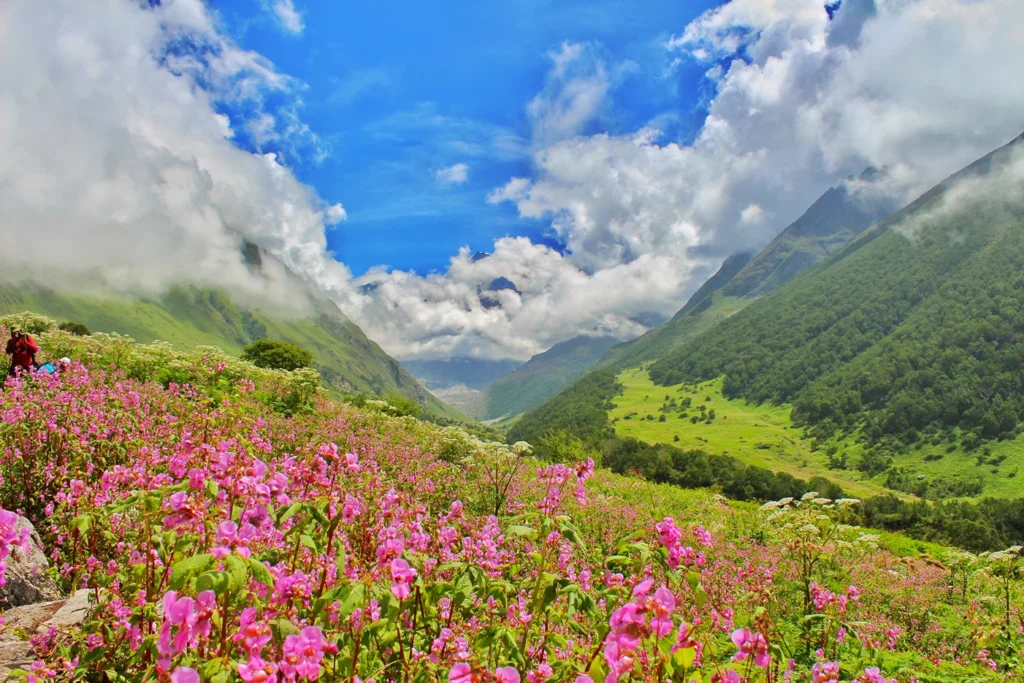
What makes this trek truly special is that its best season falls during the monsoon months of July and August. While many Himalayan treks are avoided during the rainy season, the Valley of Flowers comes alive because of the rain. Thousands of rare alpine flowers bloom during these months, turning the entire valley into a colourful natural garden. This is why July and August are widely considered the best time to visit the Valley of Flowers and experience its famous peak bloom season.
Why Monsoon Is Actually the Best Season for Trekking Valley of flowers
We know monsoon trekking sounds intimidating on paper, but for this specific trek, it’s actually the complete opposite of what most general trekking advice suggests
Debunking the Monsoon Trekking Myth
Many people think that trekking during the monsoon means walking through deep mud, heavy rain all day, and dangerous trails. While this can be true on some days when it rains continuously, that’s not what you’ll usually experience on the Valley of Flowers trek.
The trail does become wet and slightly slippery in some sections, but it remains well-maintained and easy to walk with proper trekking shoes and a steady pace. You won’t be crossing waist-deep water or navigating dangerous landslide zones. The route to Ghangaria and into the Valley of Flowers is well-established and used by thousands of trekkers and pilgrims throughout the season.
What actually happens is quite different from what many people imagine. You may get light to moderate rain on some days, while other days remain partly cloudy or completely clear. The rain is what transforms the valley into a colourful paradise filled with blooming flowers, lush green meadows, and countless waterfalls. In fact, the flowers that make this valley world-famous simply wouldn’t bloom without the monsoon.
The advice to avoid monsoon trekking is more suitable for steep, high-altitude passes where heavy rain can make trekking risky. The Valley of Flowers trek, however, is specifically known for its monsoon beauty and follows a well-maintained trail, making it one of the best Himalayan treks to do during July and August.
How Much It Actually Rains (and When)
One of the biggest myths about the Valley of Flowers trek is that it rains all day, every day. In reality, that’s rarely the case.
During July and August, you can usually expect 1–2 days of moderate rainfall during a typical 5–6 day trek. On the remaining days, you may experience light showers, cloudy skies, or even bright sunshine. Mountain weather changes quickly, so it’s common to see rain, sunshine, and mist all in the same day.
Rain generally falls in the afternoon or evening, while mornings are often clearer and ideal for trekking. Daytime temperatures usually range between 12°C and 20°C, making the weather cool and comfortable for walking.
With a good rain jacket, waterproof trekking shoes, and a backpack rain cover, occasional showers become part of the experience rather than a problem. In fact, this rainfall is exactly what keeps the valley green and helps thousands of rare alpine flowers bloom during their peak season.
Read our complete guide on What to Pack for a Monsoon Trek to know exactly what clothing, footwear, rain gear, and essentials you should carry for a safe and comfortable journey.
The Flowers You Can Only See in July and August
This is genuinely the heart of why this trek exists, and why timing your visit correctly matters so much more here than on almost any other Himalayan route.
The Himalayan Blue Poppy
The Himalayan Blue Poppy (Meconopsis) is one of the most famous flowers found in the valley. Its beautiful blue petals and bright yellow centre make it easy to recognize. It usually grows above 3,400 metres in rocky alpine areas.
The best chance to see this rare flower is during July and August. Since it blooms for only a short period, many trekkers who visit before or after the monsoon miss it completely. Walk slowly and keep your eyes on the trail edges, as Blue Poppies often grow in small patches rather than covering large areas.
Cobra Lily and Other Rare Blooms
The Cobra Lily is one of the valley’s strangest and most memorable flowers, genuinely resembling a cobra with its hood flared open, appearing in shades of green, deep purple, and striped brown. Rather than typical petals, it has a hood-shaped structure that traps insects for pollination.
Beyond the Cobra Lily, July specifically brings a wave of other rare blooms into view — various orchid species, Morina Longifolia with its white-to-pink flower spikes that fill the air with fragrance, and countless smaller wildflowers that grow close to the ground and are easy to walk past if you’re not paying attention.
July genuinely rewards trekkers who want to see these rarer species before the more common, showier flowers take over the landscape in August. If specific, unusual blooms matter more to you than sheer volume of color, July deserves serious consideration over August.
Peak Bloom Density in August
If you want to see the valley covered in flowers from end to end, August is the best month. This is when the valley reaches what we’d call peak bloom density — thousands of flowers blooming simultaneously across the meadows in overlapping shades of pink, purple, yellow, blue, and white.
Flowers like Balsams, Blue Poppy, Morina Longifolia, Cobra Lily, Anemones, and Potentillas are all commonly visible together during this window, creating the kind of overwhelming, carpet-like flower coverage that makes this trek famous in photographs.
Although August attracts more trekkers and receives more rainfall, it offers the richest flower display of the entire season.
👉 Want to know every flower that blooms here? Read our detailed guide: Flowers You Can Only See in the Valley of Flowers Trek. It includes a complete reference table of the major flower species, their blooming months, colours, and where you’re most likely to spot them during the trek.
July vs August — Which Month Should You Choose
Both July and August are excellent months for the Valley of Flowers trek, but the better choice depends on what you want to experience.
Choose July if:
You want to see rare flowers like the Himalayan Blue Poppy and Cobra Lily.
You prefer fewer crowds and a quieter trekking experience.
You enjoy watching the valley slowly come alive as different flowers begin to bloom.
You want fresh greenery and pleasant weather after the early monsoon rains.
Choose August if:
You want to see the valley at its peak bloom, with thousands of flowers covering the meadows.
You love colourful landscapes and photography.
You don’t mind larger crowds and a slightly higher chance of rain.
You want the classic “carpet of flowers” views that make the valley famous.
If you’re still unsure, the first three weeks of August (1st–20th August) are often considered the best time to visit. During this period, the valley is at its most colourful, and many flower species are blooming together.
The most important thing to remember is that there is no single perfect date. The Valley of Flowers changes every week during the monsoon. Some flowers bloom early, while others bloom later, so every visit offers a unique experience. Choose the month that matches your interests, and you’ll have an unforgettable trek.
Beyond the Flowers — The Landscape and Views
While the flowers are the biggest attraction, they’re not the only thing that makes the Valley of Flowers trek so special. The surrounding landscape is just as breathtaking and deserves equal attention.
The trail to the valley takes you through dense forests, alongside the crystal-clear Pushpawati River, and across wooden bridges before opening into the vast alpine meadows. As you gain altitude, you’ll be surrounded by mist-covered mountains, flowing waterfalls, and fresh green slopes that change their appearance throughout the day as clouds drift across the valley.
The valley itself has a bowl-shaped landscape formed by ancient glaciers. snow-capped peaks rising above 6,000 metres surround the colourful meadows, creating a beautiful contrast between rugged Himalayan mountains and delicate wildflowers. This unique combination is what makes the Valley of Flowers unlike any other trek in the Himalayas.
The monsoon weather adds even more beauty to the experience. Sunlight often breaks through moving clouds, creating dramatic light and shadow across the valley. One moment the mountains are hidden in mist, and the next they appear under bright sunshine. This ever-changing scenery makes every hour on the trail feel different, and many trekkers describe it as one of the most magical parts of the journey.
The Spiritual Detour — Hemkund Sahib
Many trekkers choose to extend their Valley of Flowers trek by visiting Hemkund Sahib and Badrinath Temple, making the journey a perfect mix of nature and spirituality.
Hemkund Sahib, located at an altitude of about 4,632 metres, is one of the highest Sikh Gurudwaras in the world. The trek from Ghangaria to Hemkund Sahib is steep and more challenging than the Valley of Flowers trail, but the reward is unforgettable. You’ll reach a peaceful glacial lake surrounded by snow-covered peaks, creating a truly spiritual atmosphere.
If you visit Hemkund Sahib during July and August, you may also spot the Brahma Kamal, Uttarakhand’s state flower. This rare alpine flower grows at higher elevations near Hemkund Sahib and is considered sacred in Hindu tradition.
Many trekkers also continue their journey to Badrinath Temple, one of the four sacred Char Dham shrines. Located about 25 km from Govindghat, the temple is dedicated to Lord Vishnu and attracts thousands of pilgrims every year. Visiting Badrinath after completing the trek adds a meaningful spiritual ending to your Himalayan adventure.
We recommend keeping an extra day in your itinerary if you plan to visit Hemkund Sahib and Badrinath. Trying to fit everything into one day can be tiring, while an extra day allows you to enjoy each destination at a comfortable pace.
A Paradise for Photographers
If photography is part of why you’re drawn to this trek, July and August genuinely offer conditions you won’t find during any other season here.
The combination of vibrant flower colors, mist rolling through the valley, and dramatic mountain backdrops creates compositions that work well regardless of your experience level. Early morning light, before crowds arrive and while mist still lingers over the meadows, tends to produce the most striking results.
Beyond wide landscape shots, this trek rewards macro photography specifically. Many of the valley’s rarest flowers — the Cobra Lily, various orchid species, smaller wildflowers like Primulas and Forget-Me-Nots — are genuinely easy to miss unless you’re walking slowly and looking closely, which also happens to be exactly the pace that produces the best close-up shots.
A few simple tips can make a big difference. Keep your camera or phone protected with a waterproof cover, carry a microfiber cloth to wipe away raindrops, and avoid rushing through the valley just to capture wide-angle views. Some of the most memorable photos come from patiently photographing a single flower, a butterfly, or a dew-covered leaf rather than only the grand landscapes.
How to Prepare Mentally and Physically for a Monsoon Trek
Preparing for the Valley of Flowers trek in July and August is a little different from preparing for a summer or winter trek. If you know what to expect, you’ll enjoy the journey much more.
Trail Conditions — What Monsoon Trekking Really Feels Like
Let’s set realistic expectations. The trail does become muddy and slippery in some places, especially on rocky sections and near streams. However, it is well-maintained and easy to walk if you wear good trekking shoes with proper grip and take your time.
You should expect your shoes and lower legs to get wet at some point during the trek. That’s completely normal during the monsoon. Instead of trying to stay perfectly dry, focus on staying comfortable.
A few things that help are:
Wear quick-dry clothes instead of cotton.
Use trekking shoes with good grip.
Walk slowly on wet rocks and muddy patches.
Accept that a little rain is part of what makes this trek so beautiful.
With the right mindset, the rain becomes part of the adventure rather than a problem.
Staying Dry — Poncho vs Raincoat
One of the most common questions trekkers ask is whether to carry a poncho or a raincoat.
For the Valley of Flowers trek, we recommend carrying a good-quality poncho. It covers both you and your backpack, keeping your clothes and gear dry in one layer. A raincoat protects only your body, so you’ll also need a separate backpack rain cover.
Ponchos are also lightweight, easy to pack, and quick to wear whenever the weather changes. Since rain during July and August often comes in short spells, this makes them very convenient.
Our recommendation is simple:
Carry a poncho as your main rain protection.
Use a backpack rain cover as extra protection.
Keep your phone, camera, and important documents inside waterproof zip-lock bags or dry bags.
👉 Read our complete guide:What to Pack for a Monsoon Trek – Complete Packing List, where we’ve explained exactly what to carry, what to avoid, and how to keep yourself and your gear dry throughout the trek.
What to Pack for Monsoon Trek
Packing well can make your Trek much more comfortable. Since you’ll be trekking during the monsoon, choose gear that dries quickly, keeps you comfortable, and helps you walk safely on wet trails.
Footwear
Your shoes are the most important part of your packing list.
Trekking shoes with good grip – Choose shoes with strong traction to prevent slipping on wet rocks and muddy trails. Good grip is more important than waterproofing.
Extra pair of trekking socks – Carry at least one or two extra pairs so you can change into dry socks if your feet get wet.
Clothing
Wear clothes that dry fast and keep you comfortable.
Quick-dry T-shirts and trekking pants – Avoid cotton, as it stays wet for a long time and can make you feel cold.
Poncho or rain protection – A poncho covers both you and your backpack, making it the best choice for this trek.
Warm layer – Carry a light fleece or jacket for chilly mornings and evenings.
Protect Your Gear
Rain can arrive anytime, so keep your valuables safe.
Dry bags or zip-lock bags – Protect your phone, camera, power bank, wallet, and important documents.
Backpack rain cover – Adds an extra layer of protection during heavy showers.
Trekking poles – Very helpful for balance on slippery trails and stream crossings while reducing pressure on your knees.
Other Essentials
Don’t forget these useful items:
Basic first-aid kit and blister patches
Reusable water bottle
Sunglasses and sunscreen (UV rays are still strong at high altitude)
Cap, personal medicines, and energy snacks
Need a complete packing checklist? Read our detailed guide: What to Pack for a Monsoon Trek – A Complete Guide by Roopkund Heaven, where we’ve explained every item in detail and why it matters for trekking during the rainy season.
Responsible Trekking — Why You Shouldn’t Touch the Flowers
The Valley of Flowers is a protected UNESCO World Heritage Site and National Park. Every trekker has a responsibility to help protect this beautiful place for future generations.
Picking, touching, or plucking flowers is strictly prohibited. Many of the flowers found here bloom for only a short time each year, and damaging them affects their natural growth and seed production. Some species are also rare and found only in the Himalayas.
It’s equally important to stay on the marked trail. Walking into the flower meadows for photos may seem harmless, but it can crush delicate plants and damage the soil, making it harder for flowers to bloom again.
To trek responsibly, always remember to:
Stay on the designated trail.
Never pick or touch the flowers.
Carry all your waste back with you.
Avoid loud noise and respect wildlife.
Follow your trek leader and Forest Department guidelines.
By following these simple rules, we can all help preserve its beauty and ensure future trekkers experience the same colourful Himalayan paradise.
Why Book Your Valley of Flowers Trek with Roopkund Heaven
Planning the Valley of Flowers trek on your own is possible, but it involves arranging permits, transport, accommodation, and keeping track of changing weather and trail conditions. That’s where we make your journey simple and stress-free.
At Roopkund Heaven, our experienced trek leaders know the Valley of Flowers and Hemkund Sahib routes well. Because we operate daily trek batches throughout the season, we closely monitor the flowering cycle every week. If you’re hoping to see the valley at its peak bloom, simply ask us before booking. We’ll help you choose the departure date that offers the best chance of experiencing the valley at its most colourful.
We also keep our groups manageable, so every trekker receives personal attention on the trail. From Forest Department permits, accommodation, meals, and transportation to trained trek leaders, first-aid kits, oxygen cylinders, and oximeters, we take care of everything so you can focus on enjoying the trek.
Contact our team before booking, and we’ll help you choose the best departure date for the best flower bloom experience.
FAQs
1. What is the best month to visit the Valley of Flowers?
The best time to visit the Valley of Flowers trek is July and August. July offers rare flowers like the Himalayan Blue Poppy with fewer crowds, while August brings the valley to peak bloom with thousands of flowers covering the meadows.
2. Is the Valley of Flowers trek difficult for beginners?
No. The trek is considered easy to moderate and is suitable for beginners with basic fitness. Regular walking or light cardio for 3–4 weeks before the trek is usually enough to prepare.
3. How much does it rain during the Valley of Flowers trek?
Rainfall varies every year, but expect light to moderate showers, mostly in the afternoon or evening. It does not usually rain all day, and mornings are often clear for trekking.
4. Can I see the Himalayan Blue Poppy in Valley of Flowers?
Yes. The Himalayan Blue Poppy usually blooms during July and early August. Since it grows in limited areas, spotting it depends on the season, weather, and flowering cycle.
5. Should I visit Valley of Flowers in July or August?
Choose July if you prefer fewer crowds and want to see rare flowers. Choose August if you want the valley at its most colourful with the highest flower density. Both months offer an unforgettable experience.
6. Is it safe to trek to Valley of Flowers during the monsoon?
Yes. The Valley of Flowers is one of the few Himalayan treks that is best experienced during the monsoon. The trail is well-defined, but proper trekking shoes, rain gear, and careful walking are essential.
7. Can I combine Valley of Flowers with Hemkund Sahib?
Yes. Most trekkers visit Hemkund Sahib during the same trip from Ghangaria. It requires a steeper climb than the Valley of Flowers, so be prepared for a more challenging day.
8. What should I pack for the Valley of Flowers trek?
Carry trekking shoes with good grip, quick-dry clothes, a poncho, warm layers, extra socks, trekking poles, waterproof bags for electronics, personal medicines, sunscreen, and a reusable water bottle. Proper packing makes the trek much more comfortable.
9. Are the flowers in Valley of Flowers poisonous?
Some Himalayan plants can be poisonous, while many are harmless. Since the area is a protected National Park, you should never touch or pluck any flowers. Enjoy them from the marked trail.
10. Do I need a permit for the Valley of Flowers trek?
Yes. Every visitor needs a Forest Department entry permit to enter the Valley of Flowers National Park. If you book your trek with Roopkund Heaven, we arrange all the required permits, allowing you to enjoy a hassle-free trekking experience.
Flowers You Can Only See in the Valley of Flowers Trek
Valley of Flowers Trek Overview
The Valley of Flowers is one of the most beautiful places in the Indian Himalayas. Located in Chamoli district, Uttarakhand, this UNESCO World Heritage Site is famous for its colourful alpine meadows, snow-covered peaks, waterfalls, and hundreds of rare Himalayan flowers that bloom during the monsoon season.
The story behind its discovery is genuinely interesting. In 1931, when British mountaineer Frank S. Smythe, along with his companions Eric Shipton and R.L. Holdsworth, lost their way while coming back from climbing Mount Kamet. They accidentally walked into this valley and found it so full of flowers that they simply named it the “Valley of Flowers.” and later introduced it to the world through his book. Before that, local villagers knew the valley existed but rarely went inside, since old stories said fairies (called Apsaras) lived there and could keep visitors trapped forever.
The valley sits at an altitude of around 3,600 metres (11,800 ft), while the surrounding mountains rise above 6,000 metres. The Pushpawati River flows right through the middle, fed by melting ice from the Tipra Glacier above. Because it’s shaped like a bowl carved out by old glaciers, the valley traps just the right amount of moisture and sunlight for flowers to grow — not too hot, not too dry.
In 2005, the Valley of Flowers was declared a UNESCO World Heritage Site because of its incredible biodiversity and rare Himalayan plants. To protect this fragile ecosystem, visitors are allowed to explore the valley only during the day. You must enter from Ghangaria and return before the park closes, as overnight stays inside the national park are not permitted. These rules help keep the valley clean, preserve its unique flowers, and protect its natural beauty for future generations.
Flowers You Can Only See in the Valley of Flowers Uttarakhand
While plenty of flowers here also grow elsewhere in the Himalayas, a handful of “celebrity” blooms are either found only in this valley or reach their most perfect form right here.
The Himalayan Blue Poppy: The Elusive Queen of the Valley
The Himalayan Blue Poppy is the most famous flower in the Valley of Flowers. Known by its scientific name Meconopsis aculeata, its striking sky-blue petals with a bright yellow centre make it one of the rarest and most beautiful flowers in the Himalayas. It usually grows in rocky, well-drained areas above 3,400 metres (11,000 feet) and is most commonly seen during July and August.
Because it blooms for only a short time and in limited locations, spotting a Blue Poppy is considered a special moment for many trekkers and photographers.
Cobra Lilies and Arisaema: The Alien-Like Residents
The Cobra Lily (scientific name Arisaema jacquemontii) is one of the valley’s most unusual flowers. These plants genuinely look like a cobra snake with its hood flared open, coming in shades of green, deep purple, and striped brown.
What’s fascinating is that these plants can actually change their sex from one year to the next, depending on growing conditions. They grow best in shaded, damp patches, especially closer to the valley’s entrance. Instead of normal petals, they have a hood-shaped part called a spathe, which is specially shaped to trap insects inside for pollination.
Morina Longifolia and the Fragrance of the Alpine Meadows
Morina Longifolia, also known as Long-leaved Morina, is one of the most beautiful and fragrant flowers found in the Valley of Flowers. It grows in tall spikes with blossoms arranged in circular layers around the stem. As the flowers mature, their colour gradually changes from white to soft pink, creating a beautiful contrast across the alpine meadows.
During the peak flowering season in July and August, these flowers fill the valley with a sweet natural fragrance that many trekkers remember long after their journey. They are commonly seen in open grassy meadows and remain standing even after heavy monsoon rain, making them one of the most eye-catching flowers along the trail. Walking through fields of blooming Morina Longifolia is one of the most memorable experiences in the Valley of Flowers.
Himalayan Slipper Orchid (Cypripedium himalaicum)
The Himalayan Slipper Orchid is one of the rarest orchids found in the Valley of Flowers. It gets its name from its pouch-shaped flower, which looks like a tiny slipper.
These orchids grow in limited numbers in moist forest areas and are often missed because of their small size. Walking slowly and observing the vegetation carefully increases your chances of spotting one.
Marsh Marigold (Caltha palustris)
The bright yellow Marsh Marigold grows near streams, wetlands, and marshy patches throughout the valley. It is among the earliest flowers to bloom after the snow melts and adds vibrant golden colour to the landscape.
These flowers are easy to identify and are commonly seen during the early weeks of the flowering season.
Brahma Kamal (Saussurea obvallata)
Although Brahma Kamal is not commonly found inside the main Valley of Flowers, it grows at higher altitudes around Hemkund Sahib, which many trekkers visit during the same trip. It is the state flower of Uttarakhand and is considered sacred in Hindu culture.
If you include the Hemkund Sahib trek in your itinerary, you may get the chance to see this rare Himalayan flower blooming during the monsoon.
Lesser-Known Rare Flowers Trekkers Often Miss
Apart from the famous flowers, the Valley of Flowers is also home to many small and rare wildflowers that are easy to miss. Flowers like Anemones, Potentillas, Himalayan Daisies, Primulas, Bistorta, and Forget-Me-Nots often grow close to the ground or blend into the grass.
If you walk slowly and look carefully around the trail instead of only focusing on the larger flowers, you’ll discover many hidden blooms that make the trek even more special.
Where to Spot These Flowers on the Trek
Different parts of the Valley of Flowers are known for different flower species:
Near the Entrance: Cobra Lily, ferns, and early-blooming wildflowers.
Middle Meadows: Large patches of Balsams, Anemones, Morina Longifolia, and Himalayan Daisies.
Around the Smythe Memorial: One of the best places to spot the rare Himalayan Blue Poppy and Potentilla.
Along the Pushpawati River: Marsh Marigolds, Epilobium (Willow Herb), and other moisture-loving flowers.
Higher Rocky Slopes (towards Tipra Glacier): Edelweiss, Saxifrages, and other hardy alpine flowers that grow at higher elevations.
Complete List of Flowers Found in the Valley of Flowers
Here’s a full reference table listing the flowers found across the valley, along with their local names, typical height, plant family, and how long they live.
Scientific Name
Local Name
Height
Family
Lifespan
Aconitum balfourii
Meetha Vish
1-2 feet
Ranunculaceae
Perennial
Aconitum violaceum
Mitha telia
3-4 feet
Ranunculaceae
Perennial
Aconogonum rumicifolium
Khyak Jari
1-3 feet
Polygonaceae
Perennial
Ainsliaea aptera
Khad-jhari
2-3 feet
Asteraceae
Perennial
Aletris pauciflora
Khasi
Up to 12 inches
Melanthiaceae
Perennial
Allium humile
Jangli lahsun
10-15 cm
Amaryllidaceae
Perennial
Allium wallichii
Doona
15-30 cm
Amaryllidaceae
Perennial
Anaphalis royleana
Sugandhi booti, Kapasi
30-90 cm
Asteraceae
Perennial
Androsace (Rock Jasmine)
Not specified
5-15 cm
Primulaceae
Perennial
Anemone obtusiloba (Four Petal Anemone)
Not specified
6-12 inches
Ranunculaceae
Perennial
Anemone vitifolia
Mudeela, Agali
12-18 inches
Ranunculaceae
Perennial
Aquilegia pubiflora
Not specified
1-2 feet
Ranunculaceae
Perennial
Arisaema jacquemontii
Not specified
1-2 feet
Araceae
Perennial (10-15 yrs)
Arisaema propinquum
Not specified
1-2 feet
Araceae
Perennial
Arisaema tortuosum
Arum lily, Varuna, Bagh Jandhra
1-2 feet
Araceae
Perennial
Aruncus dioicus
Not specified
3-6 feet
Rosaceae
Perennial
Aster albescens
Not specified
1-2 feet
Asteraceae
Perennial
Diplostephium diplostephioides
Not commonly known
~20-40 cm
Asteraceae
Perennial
Berberis aristata
Daruhaldi
2-3 metres
Berberidaceae
Perennial
Berberis jaeschkeana
Not specified
2-3 metres
Berberidaceae
Perennial
Bistorta affinis
Indian Bistort
30-60 cm
Polygonaceae
Perennial
Bistorta vaccinifolia
Not specified
10-20 cm
Polygonaceae
Perennial
Meconopsis betonicifolia (Blue Poppy)
Neela Posta
2-4 feet
Papaveraceae
Perennial
Saussurea obvallata
Brahma Kamal
30-40 cm
Asteraceae
Perennial
Caltha palustris
Marsh Marigold
30-90 cm
Ranunculaceae
Perennial
Campanula latifolia
Not specified
2-4 feet
Campanulaceae
Perennial
Campanula pallida
Not specified
30-60 cm
Campanulaceae
Perennial
Cicerbita macrorhiza
Not specified
1-2 metres
Asteraceae
Biennial
Clematis barbellata
Not specified
Up to 1.5 metres
Ranunculaceae
Perennial
Clematis montana
Not specified
10-15 feet
Ranunculaceae
Perennial
Codonopsis rotundifolia
Gokhru
30-60 cm
Campanulaceae
Perennial
Colquhounia coccinea
Lal Hinsal
1-2 metres
Lamiaceae
Perennial
Corydalis cashmeriana
Kasboora
20-30 cm
Papaveraceae
Perennial
Corydalis meifolia
Not specified
30-60 cm
Papaveraceae
Perennial
Cotoneaster microphyllus
Not specified
60-90 cm
Rosaceae
Perennial
Cremanthodium arnicoides
Not specified
30-60 cm
Asteraceae
Perennial
Cuscuta europaea
Not specified
Parasitic vine
Convolvulaceae
Annual
Cuscuta reflexa
Amar bel, Akash bel
Several metres
Convolvulaceae
Annual/Perennial
Cyananthus lobatus
Not specified
20-30 cm
Campanulaceae
Not specified
Cyananthus microphyllus
Not specified
30-60 cm
Asteraceae
Perennial
Dactylorhiza hatagirea
Panchaule
20-60 cm
Orchidaceae
Perennial
Dipsacus inermis
Not specified
1.5-2 metres
Caprifoliaceae
Biennial
Epilobium latifolium
Not specified
1.5 metres
Onagraceae
Perennial
Epilobium laxum
Not specified
1-2 metres
Onagraceae
Perennial
Erigeron bellidioides
Not specified
10-30 cm
Asteraceae
Perennial
Erigeron multiradiatus
Not specified
10-20 cm
Asteraceae
Perennial
Eritrichium canum
Not specified
10-30 cm
Boraginaceae
Perennial
Erysimum hieraciifolium
Not specified
30-60 cm
Brassicaceae
Perennial
Euphorbia pilosa
Not specified
30-60 cm
Euphorbiaceae
Perennial
Fritillaria roylei
Kashmir Fritillary
30-60 cm
Liliaceae
Perennial
Gagea lutea
Not specified
10-30 cm
Liliaceae
Perennial
Gaultheria trichophylla
Khasi Patta
15-30 cm
Ericaceae
Perennial
Gentiana pedicellata
Not specified
10-30 cm
Gentianaceae
Perennial
Gentiana phyllocalyx
Not specified
10-40 cm
Gentianaceae
Perennial
Geranium robertianum
Herb-Robert
10-50 cm
Geraniaceae
Perennial
Geranium wallichianum
Himalayan Geranium
30-60 cm
Geraniaceae
Perennial
Gymnadenia orchidis
Not specified
20-60 cm
Orchidaceae
Perennial
Halenia elliptica
Not specified
20-60 cm
Gentianaceae
Perennial
Heracleum candicans
Not specified
2-3 metres
Apiaceae
Biennial
Paphiopedilum wardii
Himalayan Slipper Orchid
30-40 cm
Orchidaceae
Perennial (15-20 yrs)
Hypericum oblongifolium
Not specified
1-3 feet
Hypericaceae
Perennial
Impatiens sulcata
Not specified
1-2 feet
Balsaminaceae
1-2 years
Inula grandiflora
Not specified
2-4 feet
Asteraceae
3-5 years
Ipomoea purpurea
Vishnukranti, Kailash Pushp
6-10 feet
Convolvulaceae
Annual
Iris kaemaonensis
Kaemaon Lily
30-45 cm
Iridaceae
Perennial
Juncus himalensis
Not specified
60-90 cm
Juncaceae
Perennial
Juncus thomsonii
Not specified
1-2 feet
Juncaceae
Perennial
Leontopodium brachyactis
Edelweiss
10-20 cm
Asteraceae
Perennial
Ligularia amplexicaulis
Not specified
1-2 metres
Asteraceae
Perennial
Lilium oxypetalum
Surya Pushpam / Brahma Kamal
1-2 metres
Liliaceae
Perennial
Mianthemum purpureum
Not specified
30-60 cm
Asparagaceae
Perennial
Morina longifolia
Not specified
1.5-2 metres
Caprifoliaceae
Perennial
Nepeta erecta
Not specified
30-60 cm
Lamiaceae
Perennial
Nepeta laevigata
Not specified
30-60 cm
Lamiaceae
Perennial
Origanum vulgare
Patta Ajwain
20-80 cm
Lamiaceae
Perennial
Oxyria digyna
Not specified
10-30 cm
Polygonaceae
Perennial
Oxytropis lapponica
Not specified
10-20 cm
Fabaceae
Perennial
Parnassia nubicola
Not specified
10-25 cm
Celastraceae
Perennial
Pedicularis hoffmeisteri
Not specified
30-60 cm
Scrophulariaceae
Perennial
Pedicularis porrecta
Not specified
30-60 cm
Orobanchaceae
Perennial
Pedicularis punctata
Not specified
20-60 cm
Orobanchaceae
Perennial
Peristrophe paniculata
Vanjaramani, Keela Nelli
1-2 metres
Acanthaceae
Perennial
Phlomis bracteosa
Bhootkeshi
2-3 feet
Lamiaceae
Perennial
Phytolacca acinosa
Kharphul
2-3 metres
Phytolaccaceae
Perennial
Pleurospermum candollei
Not specified
2-4 feet
Apiaceae
Perennial
Podophyllum hexandrum
Bankakri, Ban Kakri
30-60 cm
Berberidaceae
Perennial
Polemonium caeruleum
Not specified
1-3 feet
Polemoniaceae
Perennial
Polygonatum verticillatum
Not specified
30-90 cm
Asparagaceae
Perennial
Polygonum amplexicaule
Not specified
Up to 1 metre
Polygonaceae
Perennial
Polygonum capitatum
Not specified
Up to 20-30 cm
Polygonaceae
Perennial
Polygonum polystachyum
Not specified
1.5 metres
Polygonaceae
Perennial
Potentilla rigida
Not specified
10-30 cm
Rosaceae
Perennial
Potentilla (general)
Vajardanti
30-90 cm
Rosaceae
Perennial
Prenanthes brunoniana
Not specified
1-2 metres
Asteraceae
Perennial
Primula denticulata
Drumstick Primrose
12-24 inches
Primulaceae
Perennial
Primula macrophylla
Not specified
20-40 cm
Primulaceae
Perennial
Primula macrophylla var. moorcroftiana
Not specified
2-3 cm
Primulaceae
Perennial
Primula reidii
Not specified
15-30 cm
Primulaceae
Perennial
Prunus cornuta
Not specified
15-30 feet
Rosaceae
Perennial (20-25 yrs)
Ranunculus laetus
Not specified
3-5 cm
Ranunculaceae
Perennial
Reinwardtia indica
Yellow Bells
Up to 2 metres
Linaceae
Perennial
Rhodiola heterodonta
Not specified
10-15 cm
Crassulaceae
Perennial
Rhodiola imbricata
Lali Gurans
30-50 cm
Crassulaceae
Perennial
Rhododendron campanulatum
Buras
2-5 metres
Ericaceae
50-100 years
Rhododendron lepidotum
Buras
2-4 metres
Ericaceae
30-50 years
Rosa macrophylla
Indian Rose
10-20 feet
Rosaceae
5-10 years
Roscoea alpina
Not specified
1-2 feet
Zingiberaceae
Perennial
Rubus niveus
Kavanda
1-2 cm
Rosaceae
Perennial
Rumex acetosa
Chukka
30-90 cm
Polygonaceae
Perennial
Salvia nubicola
Not specified
1-2 feet
Lamiaceae
Perennial
Saussurea costus
Kuth, Kuth Root
1-2 metres
Asteraceae
Perennial
Saussurea gossypiphora
Kapasru
1-2 feet
Asteraceae
Perennial
Saussurea piptathera
Jangli Baduli
20-40 cm
Asteraceae
Perennial
Saussurea simpsoniana
Not specified
30-60 cm
Asteraceae
Perennial
Saxifraga brunonis
Not specified
10-15 cm
Saxifragaceae
Perennial
Saxifraga cernua
Not specified
10-30 cm
Saxifragaceae
Perennial
Saxifraga parnassifolia
Not specified
10-20 cm
Saxifragaceae
Perennial
Selinum wallichianum
Not specified
60-90 cm
Apiaceae
Perennial
Senecio graciliflorus
Not specified
1-2 feet
Asteraceae
Perennial (short-lived)
Senecio laetus
Not specified
1-2 feet
Asteraceae
Perennial
Silene indica
Bhatkayi, Khursani
30-60 cm
Caryophyllaceae
Perennial
Silene vulgaris
Not specified
30-60 cm
Caryophyllaceae
Perennial
Solidago virgaurea
Not specified
1-3 feet
Asteraceae
2-5 years
Sorbaria tomentosa
Not specified
6-10 feet
Rosaceae
10-15 years
Spiraea bella
Not specified
2-3 feet
Rosaceae
3-10 years
Spiraea canescens
Not specified
3-5 feet
Rosaceae
5-10 years
Spiranthes sinensis
Not specified
20-30 cm
Orchidaceae
Perennial
Stellaria semivestita
Not specified
15-30 cm
Caryophyllaceae
Perennial
Taraxacum officinale
Dudhi, Simhadanti
15-45 cm
Asteraceae
2-5 years
Thalictrum cultratum
Not specified
3-4 feet
Ranunculaceae
2-5 years
Thermopsis barbata
Not specified
2-4 feet
Fabaceae
Perennial
Thymus linearis
Not specified
10-20 cm
Lamiaceae
Perennial
Trichosanthes tricuspidata
Padwal, Paddu
Up to 6 metres
Cucurbitaceae
Perennial vine
Valeriana hardwickii
Tagar
1-1.5 metres
Caprifoliaceae
Perennial
Verbascum thapsus
Gidar tamaku
1-2 metres
Scrophulariaceae
Short-lived perennial
Vigna vexillata
Dalchini Kandi
Up to 2 metres
Fabaceae
Variable
Viola biflora
Not specified
10-20 cm
Violaceae
Perennial
Viola pilosa
Not specified
10-20 cm
Violaceae
2-3 years
Anemone rivularis
Not specified
30-60 cm
Ranunculaceae
Perennial
Delphinium vestitum
Not specified
30-90 cm
Ranunculaceae
Perennial
Rheum australe
Himalayan Rhubarb, Dolu
1-1.5 metres
Polygonaceae
Perennial
Trillium govanianum
Nag Chhatri
20-40 cm
Melanthiaceae
Perennial
Potentilla atrosanguinea
Not specified
20-40 cm
Rosaceae
Perennial
This list covers most of the commonly documented species in and around the valley.
The Floral Calendar: Understanding the Best Time to Visit Valley of Flowers Trek
One of the biggest mistakes trekkers make is thinking the valley looks exactly the same all summer. In reality, the flowers you see change every couple of weeks.
June: Melting Snow and the First Primulas
The valley begins to come alive as the snow melts. Early flowers like Primulas, Marsh Marigolds, and Anemones start blooming, while patches of snow can still be seen. The trails are quieter, making it a peaceful time to visit.
July: The Monsoon Awakening and the Arrival of the Blue Poppy
With the arrival of the monsoon, the valley becomes lush green and more flowers begin to bloom. This is one of the best times to spot the Himalayan Blue Poppy, Cobra Lily, Orchids, and Morina Longifolia. The valley looks fresh, colourful, and full of life. Crowds are moderate here, and if you want to see rare species before the more common Balsams take over, this is genuinely a great window.
August: The Peak Bloom and Maximal Color Density
August is the best month to visit the Valley of Flowers if you want to see the valley at its most colourful. Thousands of flowers bloom together, covering the meadows in shades of pink, purple, yellow, blue, and white. Popular flowers like Balsam, Blue Poppy, Morina Longifolia, Cobra Lily, Anemones, and Potentillas are commonly seen during this time.
This is also the busiest month for trekkers. Expect rain almost daily. If you’re also visiting Hemkund Sahib, this is the best time to see the sacred Brahma Kamal blooming near the higher-altitude trail.
September: The Golden Hour of Autumnal Hues
By September, the rains start easing off. Flowers begin turning to seed, and the valley shifts into shades of gold, brown, and bronze. The air clears up noticeably, giving you the best mountain views of the whole season, even though flower numbers are lower than August.
Best Time to Visit Valley of Flowers for Maximum Flower Variety
If you want to see the maximum variety of flowers, plan your visit between 1st August and 20th August. During this period, the valley is at its peak bloom, with early-season flowers still visible and many new species flowering together. This is also one of the best times to spot the famous Himalayan Blue Poppy.
Since August falls during the monsoon, you should be prepared for regular rainfall and possible road delays on the way to Govindghat. If you prefer clearer weather and fewer crowds, early September is a good alternative, though the number of blooming flowers will be lower than in August.
How Weather and Altitude Affect Flower Bloom in the Valley
The Role of the Indian Monsoon in Triggering Germination
The Indian monsoon is the main reason the Valley of Flowers comes to life every year. After remaining covered under snow for several months, the first monsoon rains provide the moisture that seeds need to grow. The regular rainfall, cool temperatures, and melting snow create the perfect conditions for flowers to bloom.
The clouds also help by reducing strong sunlight at high altitudes, protecting young plants while they grow. This is why the valley is covered with colourful flowers from late June to early September.
Vertical Distribution: How Flora Changes from Ghangaria to the Tipra Glacier
As you walk higher into the valley, the flowers and plants keep changing.
Ghangaria (around 3,000 m): Forests of birch, maple, and rhododendron.
Valley Floor (around 3,500–3,700 m): Colourful meadows filled with Blue Poppy, Balsam, Cobra Lily, Anemones, and many other wildflowers.
Higher Slopes (above 4,000 m): Hardy alpine plants such as Brahma Kamal, mosses, and lichens grow in the colder conditions.
The Impact of Global Warming on the Bloom Cycles
Changing weather patterns are slowly affecting the Valley of Flowers. In some years, flowers start blooming a little earlier because of warmer temperatures. Since the blooming season depends on snowfall and monsoon rainfall, it’s always best to check the latest local updates before planning your trek.
Common Mistakes Trekkers Make While Expecting Flower Blooms
Many trekkers visit at the wrong time and expect to see the valley covered in flowers. The best flowering season is from July to August, while June has fewer blooms.
Another common mistake is expecting flowers everywhere. Different flowers bloom at different times and in different parts of the valley, so keep walking to explore more.
Finally, don’t rush your trek. Walk slowly, especially in foggy weather, as many rare flowers are small and easy to miss. Taking your time helps you enjoy the true beauty of the Valley of Flowers.
Responsible Trekking: Why You Should Never Touch or Pluck Flowers
The Valley of Flowers is a protected UNESCO World Heritage Site, so every visitor should help preserve its natural beauty.
Do not pluck or touch flowers. Picking flowers is strictly prohibited and can lead to fines under national park rules.
Stay on the marked trail. Walking into the flower meadows damages delicate plants and makes it harder for them to grow again.
Leave no waste behind. Carry back all plastic bottles, wrappers, and other waste to help keep the valley clean.
Respect nature. Avoid making loud noise, do not disturb wildlife, and enjoy the valley without harming its fragile ecosystem.
By following these simple rules, you help protect the Valley of Flowers so future generations can enjoy its beauty too.
Backpacking guide for monsoon trekking
Packing the right gear makes your monsoon trek safer and more comfortable. Here are the essentials:
Choose Shoes with Good Grip
Wear trekking shoes with a strong grip to walk safely on wet rocks and muddy trails. Waterproof shoes are helpful, but good traction is even more important.
Wear Quick-Dry Clothes
Choose synthetic, quick-dry clothes instead of cotton. Cotton stays wet for a long time, making you feel cold and uncomfortable during the trek.
Keep Electronics Dry
Store your phone, camera, power bank, and other valuables in dry bags or ziplock bags. This protects them from rain and moisture.
Carry Essential Trekking Gear
Bring a poncho or waterproof rain jacket, trekking poles, and dry bags to keep yourself and your backpack protected. Trekking poles also provide better balance on slippery trails.
Want the complete packing checklist? Read our detailed guide: “What to Pack for a Monsoon Trek: A Complete Guide by Roopkund Heaven.”
Why Prefer Booking Valley of Flowers Trek Package with Roopkund Heaven
Planning a Valley of Flowers Trek on your own can be challenging, especially if it’s your first Himalayan trek. At Roopkund Heaven, we take care of everything so you can enjoy the journey without worrying about transport, permits, accommodation, or trek planning.
Our experienced trek leaders and certified guides know the Valley of Flowers and Hemkund Sahib routes well. They help you maintain a comfortable pace, share insights about the region, and ensure your safety throughout the trek. We keep our group sizes small, giving every trekker a better experience with more personal attention and plenty of time to enjoy the stunning landscapes and colourful alpine flowers.
Your safety is our top priority. Our team carries first-aid kits, oxygen cylinders, and oximeters, and our guides are trained to handle high-altitude situations. From your arrival to the end of the trek, we manage transport, accommodation, meals, permits, and all trek logistics, making your journey completely hassle-free.
Our 6 Days / 5 Nights Valley of Flowers Trek Package starts from ₹8,200 per person (Triple Sharing) and includes:
Experienced Trek Leader & Local Guide
Accommodation throughout the trek
Nutritious Meals
Forest Entry Permits
Trek Support & Safety Equipment
All necessary local arrangements
Optional Add-ons
You can customise your trek by adding the following optional services during booking:
Add-on
Price
Transport (Rishikesh ↔ Govindghat)
₹1,600 per person
Backpack Offloading
₹1,600 per bag
Double Sharing Room Upgrade
₹1,000 per person
Travel Insurance
₹210 per person
Jumbo Bag (Duffle Bag) Rental
₹2,500
Booking is simple. Select your preferred trek date, choose your package, add any optional services you need, and review the final price before checkout. You can pay the full amount for instant confirmation or reserve your seat by paying just a 30% advance, with the remaining balance payable before the trek.
Whether you’re a first-time trekker or an experienced hiker, Roopkund Heaven offers a safe, well-organised, and memorable Valley of Flowers experience, so you can focus on enjoying one of India’s most beautiful Himalayan treks.
Frequently Asked Questions (FAQs)
1. What types of flowers are found in the Valley of Flowers?
The Valley of Flowers is home to more than 500 species of wildflowers. Some of the most famous include the Himalayan Blue Poppy, Cobra Lily, Brahma Kamal, Marsh Marigold, Himalayan Slipper Orchid, Balsams, Anemones, and Primulas.
2. Which rare flowers are found in the Valley of Flowers, Uttarakhand?
Some of the rarest flowers found here are the Himalayan Blue Poppy, Brahma Kamal, Himalayan Slipper Orchid, and Cobra Lily. These flowers grow only in specific Himalayan conditions and are a major attraction of the trek.
3. What is the best month to see flowers in the Valley of Flowers?
August is the best month to visit, especially from 1st to 20th August, when the valley is covered with colourful flowers and the maximum number of species are in bloom.
4. Are the flowers in the Valley of Flowers poisonous?
Most flowers are harmless to look at, but some Himalayan plants can be poisonous if touched or eaten. It is best not to pluck or handle any flowers and simply enjoy them from the marked trail.
5. Is the Valley of Flowers trek difficult?
The trek is considered Easy to Moderate. It is suitable for beginners with basic fitness, but the gradual climb and high altitude require good preparation.
6. Can I see flowers in June?
Yes, but only the early-blooming flowers appear in June. For the widest variety and the most colourful views, July and August are much better months to visit.
7. How many days are needed for the Valley of Flowers trek?
A 6 Days / 5 Nights itinerary is ideal. It gives you enough time for travel, trekking to Ghangaria, exploring the Valley of Flowers, and visiting Hemkund Sahib if you wish.
8. Do I need a permit to enter the Valley of Flowers?
Yes. A Forest Department entry permit is mandatory for all visitors. If you book your trek with Roopkund Heaven, we arrange all the required permits for you.
9. Is mobile network available during the trek?
Mobile connectivity is limited. BSNL and Jio usually work in Govindghat and Ghangaria, but there is no reliable network inside the Valley of Flowers.
10. Can beginners do the Valley of Flowers trek without a guide?
Yes, but going with an experienced guide is recommended. A guided trek makes the journey safer, helps you understand the local flora and wildlife, and takes care of permits, accommodation, and other logistics, allowing you to enjoy the trek without any hassle.
Valley of Flowers Trek with Hemkund Sahib & Badrinath: Complete Guide
Valley of Flowers Trek Overview
Here’s a quick overview of the trek to help you understand the journey at a glance.
Detail
Information
Trek Name
Valley of Flowers Trek with Hemkund Sahib & Badrinath
Duration
6 Days / 5 Nights
Starting Point
Rishikesh
Total Trek Distance
Approx. 45-50 km (walking)
Max Altitude
Hemkund Sahib – 4,329 metres
Difficulty
Easy to Moderate
Best Time
July to September
Starting Price
₹8,200+ per person (Triple Sharing)
Why Should We Visit The Valley of Flowers Trek At Least Once in Lifetime?
The Valley of Flowers Trek is more than just a Himalayan adventure—it’s a journey that brings together nature, adventure, and spirituality in one unforgettable experience. From walking through lush forests and crossing sparkling mountain streams to witnessing colourful alpine meadows in full bloom, every step offers breathtaking views. The journey becomes even more rewarding with visits to Hemkund Sahib, one of the world’s highest Gurudwaras, and Badrinath Temple, one of India’s sacred Char Dham shrines.
What makes this trek truly unique is that it lets you explore a UNESCO World Heritage Site, experience a rewarding Himalayan trek, and visit two of Uttarakhand’s most revered pilgrimage destinations—all in a single trip.
Hemkund Sahib – One of the World’s Highest Gurudwaras
Hemkund Sahib sits at about 4,329 metres, making it one of the highest Gurudwaras in the world. It is surrounded by seven snow-capped mountains, with a clear lake right in front of the Gurudwara. Sikh pilgrims believe this is the place where Guru Gobind Singh Ji meditated in his past life, and that belief makes this spot deeply spiritual for lakhs of visitors every year.
Reaching here needs a proper uphill trek, but the moment you see the lake and the mountains around it, most trekkers say the effort feels completely worth it. Even people who aren’t religious often describe this place as one of the most peaceful spots they’ve ever visited.
About Badrinath Temple
Badrinath Temple is one of the four sacred Char Dham sites in India, dedicated to Lord Vishnu. It sits on the banks of the Alaknanda river, with the Neelkanth peak standing tall behind it. Unlike Hemkund Sahib, you don’t need to trek to reach Badrinath — a vehicle can take you right up to the temple.
This makes Badrinath a great add-on to your trip, since it doesn’t add extra physical effort but still gives you a full spiritual experience. Nearby, you can also visit Mana Village, known as India’s last village before the Tibet border.
Why Combine Valley of Flowers, Hemkund Sahib & Badrinath?
Combining Valley of Flowers, Hemkund Sahib, and Badrinath allows you to experience three unique aspects of Uttarakhand in one memorable journey. Since all three destinations lie on the same route, covering them together is more convenient and practical compared to planning separate trips. It helps save valuable time while making your travel experience more comfortable and cost-effective.
The Valley of Flowers offers breathtaking Himalayan landscapes, colourful alpine blooms, and scenic trekking trails surrounded by nature. Hemkund Sahib adds an element of adventure and spirituality with its challenging high-altitude trek, peaceful lake, and sacred atmosphere. Badrinath completes the journey with a divine experience at one of India’s most important Char Dham pilgrimage sites.
Total Trek Distance Day-Wise
Here’s how the walking distance breaks down across the trip:
Govindghat to Ghangaria: 10 km
Ghangaria to Valley of Flowers (one way): 6 km
Ghangaria to Hemkund Sahib (one way): 6 km
Ghangaria to Govindghat (return): 10 km
Overall, you will cover around 45–50 km of trekking distance during the complete journey, spread across four main trekking days. Although this distance may seem challenging at first, the gradual pace, well-planned itinerary, and rest periods between trek days make it achievable for most beginners with a basic level of fitness.
How Difficult is Valley of Flowers
The Valley of Flowers trek itself is rated Easy to Moderate, since the trail is well-marked and doesn’t involve any technical climbing. The main challenge is simply the steady uphill walking combined with altitude, which can tire out someone who isn’t used to regular walking or light exercise.
Hemkund Sahib is the tougher part of this combined trip, since it climbs higher and the path gets steeper near the top. Beginners should genuinely prepare their body a few weeks before — walking daily, climbing stairs, or light jogging for 3-4 weeks helps build the stamina this trek actually needs.
Best Time to Visit Valley of Flowers Trek
The best time to do this trek is between July and September, since this is when the Valley of Flowers park stays open and the flowers are actually in bloom. Mid-July to mid-August is usually the peak flowering period, when the valley looks its most colourful.
Keep in mind that this window also overlaps with the monsoon season, so rain is expected almost every day. September brings clearer skies and easier trekking, but the flowers start fading by then. If you want the fullest bloom, go in late July or early August and carry proper rain gear. If you prefer easier walking with fewer flowers, September works better.
The complete route for this trek runs from Rishikesh to Govindghat by road, and then continues on foot through Ghangaria to Valley of Flowers, Hemkund Sahib, and finally Badrinath. This entire path follows one single road and trail system, so there’s no confusion about direction once you start — just one route in and the same route back out.
Understanding this map before you start helps you mentally prepare for what’s ahead: a long road journey first, then four days of walking at increasing altitude, and a short road trip to Badrinath at the end.
How to reach Rishikesh
Rishikesh is the starting point for this entire trip, so getting here properly and on time matters a lot.
Arrival by Road
Rishikesh is well connected by road to Delhi, roughly 230-250 km away, taking about 6-7 hours by bus or private taxi. Both government and private buses run regularly, and overnight buses are a popular choice since they save you a day of travel.
Arrival by Train
Rishikesh has its own railway station, well connected to Delhi, Haridwar, and other major cities across India. Overnight trains are especially convenient, letting you sleep through the journey and arrive fresh in the morning, ready to begin your trek the same day.
Arrival by Air
The nearest airport is Jolly Grant Airport in Dehradun, about 35 km from Rishikesh, with regular flights from Delhi and other big cities. From the airport, a short taxi ride brings you into Rishikesh within about an hour.
Pickup and Drop Information
If you have opted for our pickup and drop-off service under the “View Add-ons” section during booking, your complete travel logistics from Rishikesh to the mountain base camp will be fully managed by the Roopkund Heaven team.
Once your booking is confirmed, you will receive a detailed itinerary guide via email including the exact assembly point location, reporting time, and coordinator contact details for your trek with Roopkund Heaven. This means you don’t have to worry about arranging your own transport from Rishikesh onward — just reach Rishikesh, and we take care of the rest.
Valley of Flowers Trek Itinerary (6 Days)
Here is exactly what happens each day on this trek, from start to finish.
Day 1 – Rishikesh to Govindghat
Your journey begins early morning from Rishikesh, driving through Devprayag, Rudraprayag, and Joshimath to reach Govindghat. This is a long drive, taking around 10-11 hours, covering roughly 270-290 km through winding mountain roads.
You’ll check into your hotel in Govindghat by evening, have dinner, and rest well, since your actual trekking begins the next morning.
Day 2 – Govindghat to Ghangaria
After breakfast, you’ll drive a short distance to Pulna village, and from there begin your trek to Ghangaria, covering about 10 km. The trail follows the Laxman Ganga river and takes around 6-7 hours to complete.
Ghangaria sits at about 3,000 metres and is the last village on this route, so you’ll spend the night here before both the Valley of Flowers and Hemkund Sahib treks the next two days.
Day 3 – Ghangaria to Valley of Flowers and Back
Today is dedicated to the Valley of Flowers. After an early breakfast, you’ll trek about 6 km one way into the valley, collect your entry permit on the way, and spend a few hours exploring the flowers, streams, and mountain views.
You’ll trek back to Ghangaria by evening, covering roughly 12 km total for the day. This day requires steady walking but no technical difficulty, making it manageable even for careful beginners.
Day 4 – Ghangaria to Hemkund Sahib and Back
This is the toughest day of the whole trip. You’ll start very early, since the climb to Hemkund Sahib is steeper and covers around 6 km one way, gaining significant altitude to reach 4,329 metres.
After spending time at the Gurudwara and the lake, you’ll trek back down to Ghangaria the same day, completing about 12 km total. Starting early and pacing yourself matters a lot on this particular day.
Day 5 – Ghangaria to Govindghat, Badrinath & Mana Village
After breakfast, you’ll trek back down to Govindghat, covering the same 10 km from Day 2 in reverse. From Govindghat, you’ll then travel by vehicle to Badrinath Temple and nearby Mana Village.
This day mixes trekking with easy sightseeing, so while your legs are tired from the descent, the Badrinath visit itself requires no walking effort. You’ll stay overnight in Govindghat again.
Day 6 – Govindghat to Rishikesh
The final day is a long drive back to Rishikesh, retracing the same route from Day 1, taking around 10-11 hours. You’ll be dropped off in Rishikesh by evening, marking the end of your trek with plenty of memories and photos.
Valley of Flowers Entry Permit & Fees
To enter the Valley of Flowers National Park, every visitor needs an entry permit, issued right at the entry point near Ghangaria. The fee is ₹150 per person for Indian nationals and ₹600 per person for foreign nationals, and this permit stays valid for three days, so you can visit more than once if needed without paying again.
You’ll need to carry a valid ID proof to get this permit, and our trek coordinators help you complete this process quickly on Day 3 morning, so you don’t lose valuable exploring time standing in line.
How to book Valley of Flowers Trek Package?
Booking Valley of flowers trek with Roopkund Heaven is simple and takes just a few minutes online. Our current package starts from ₹8,200+ per person on triple sharing, based out of Govindghat, for the full 6 Days / 5 Nights trip, and includes your guide, meals, and stay.
Here’s how the booking process works, step by step:
Step 1 – Traveller Details: Enter your basic information needed to confirm your booking.
Step 2 – Trip Configuration: Choose your batch date, package type, and number of travellers joining you.
Step 3 – Rental Gear: Add any rental gear you need, like trekking poles or rain jackets — your total updates instantly as you add items.
Step 4 – Final Notes & Summary: Add any special notes, then review your full trek total, including trip cost, add-ons, rental gear, and GST (5%).
Once you’re happy with the summary, choose your payment plan through Razorpay — either Pay Full for instant confirmation, or Pay 30% Advance to reserve your seat now and clear the rest later. For example, on a base price of ₹8,200 with GST included, your full payable amount comes to ₹8,610. You can also apply a coupon code before payment if you have one. Once payment is done, your seat is confirmed immediately.
Package Inclusions & Exclusions
Knowing exactly what’s covered helps you plan your budget properly.
Included in the package:
Stay on a sharing basis at Govindghat and Ghangaria
All meals (breakfast and dinner) as per the itinerary
Experienced trek guide throughout the journey
Transport from Rishikesh to Govindghat and back
Not included in the package:
Valley of Flowers entry permit fee (₹150/₹600, paid separately)
Lunch and snacks during the trek
Personal expenses like laundry, tips, and shopping
Porter, pony, or helicopter charges (available at extra cost if needed)
Travel insurance and medical expenses
GST (5%), applied extra on the package price
What to Pack for Valley of Flowers Trek
Since this trek happens right in the middle of monsoon season, packing the right gear matters a lot for your comfort and safety. You’ll need proper rain protection, the right clothing, good trekking shoes, and a few extra essentials to handle wet, slippery trails.
Rather than repeating everything here, we’ve already written a complete, detailed guide covering exactly what to pack — check out our blog “What to Pack for a Monsoon Trek” for the full checklist, including rain gear, clothing tips, footwear advice, and health essentials specifically built for treks like this one.
Frequently Asked Questions
How many days are needed for Valley of Flowers, Hemkund Sahib & Badrinath?
This combined trip takes 6 days and 5 nights in total, starting and ending in Rishikesh. This includes travel days, two trekking days for Valley of Flowers and Hemkund Sahib, and a day for Badrinath and Mana Village.
Is the Hemkund Sahib trek difficult?
Yes, Hemkund Sahib is the toughest part of this trip, since it climbs higher and the path gets steeper near the top, reaching 4,329 metres. With some basic fitness preparation and an early start, most beginners complete it successfully.
Can senior citizens do this combined trek?
Yes, with proper planning. Senior citizens can use pony or porter services for the Govindghat-Ghangaria stretch and take things slow on trek days. We’d recommend consulting a doctor beforehand and going during clearer weather in September if possible.
What is the Valley of Flowers entry permit cost?
The entry permit costs ₹150 per person for Indian nationals and ₹600 per person for foreign nationals. This permit is valid for three consecutive days, so you don’t need to pay again if you visit more than once.
Is helicopter available for this trek?
Helicopter service is available for the Govindghat-Ghangaria stretch at an additional cost, though it’s not included in our standard package. Availability can be unpredictable during heavy rain, so we recommend keeping a backup plan.
Can I visit Badrinath without trekking?
Yes, Badrinath doesn’t require any trekking at all — a vehicle can take you right up to the temple. This is why it fits perfectly as a relaxed final stop after the more physically demanding Valley of Flowers and Hemkund Sahib treks.
How to Reach Valley of Flowers by Road
Road travel is unavoidable at some point in this journey regardless of how you start, so understanding your options here matters more than for almost any other leg.
Bus Services
Government and private buses operate regularly from Delhi, Haridwar, and Rishikesh to Joshimath, with onward transport available to Govindghat.
Delhi to Joshimath: Overnight buses available during the season.
Haridwar/Rishikesh to Joshimath: Regular Uttarakhand Roadways and private buses.
Joshimath to Govindghat: Shared taxis and local buses are easily available.
Buses are the most economical option, but the mountain journey is long and involves winding roads. If you’re prone to motion sickness, carrying medication is recommended.
Shared Taxi
Shared taxis are a popular and budget-friendly way to travel to Govindghat, especially for solo travellers and small groups. They are easily available from Rishikesh, Joshimath, and Govindghat during the trekking season.
Most shared taxis operate on a fill-and-depart basis rather than a fixed timetable, so you may need to wait until all seats are occupied before the vehicle leaves.
This option offers a good balance between cost and convenience, making it ideal for travellers who want a faster journey than a bus without paying for a private taxi. For the final stretch, shared taxis also run between Govindghat and Pulna, the last motorable village before the trek to Ghangaria begins.
City-Wise Route to Valley of Flowers
No matter which city you start from, every journey to the Valley of Flowers eventually follows the same Himalayan route through Haridwar or Rishikesh, Joshimath, Govindghat, Pulna, and Ghangaria. The only difference is how you reach Uttarakhand before beginning the mountain drive.
Delhi to Valley of Flowers
Delhi is the most popular starting point for the Valley of Flowers trek due to its excellent air, rail, and road connectivity. The usual route is Delhi → Haridwar/Rishikesh → Joshimath → Govindghat → Pulna → Ghangaria → Valley of Flowers. The road distance from Delhi to Govindghat is approximately 520–540 km, which takes around 12–14 hours of driving. Since the journey involves long mountain roads, most travellers divide it into two days by staying overnight in Haridwar, Rishikesh, or Joshimath. This makes the trip more comfortable and allows you to begin the trek feeling well-rested.
Bangalore to Valley of Flowers
Travellers from Bangalore are advised to fly to Dehradun or Delhi, as travelling entirely by train or road can take several days. After reaching Uttarakhand, the route continues through Rishikesh, Joshimath, Govindghat, Pulna, and Ghangaria before reaching the Valley of Flowers. Because the journey involves both flights and long mountain drives, it is a good idea to include an extra buffer day in your itinerary to accommodate possible flight delays or weather-related disruptions during the monsoon season.
Haridwar to Valley of Flowers
Haridwar serves as one of the main gateways to the Garhwal Himalayas. From here, the route passes through Rishikesh, Devprayag, Rudraprayag, Karnaprayag, Joshimath, Govindghat, Pulna, and Ghangaria before reaching the Valley of Flowers. The distance from Haridwar to Govindghat is approximately 290–300 km, and the drive usually takes 10–11 hours, depending on road conditions and traffic. Many travellers choose to stay overnight in Joshimath before continuing to Govindghat the following morning.
Rishikesh to Valley of Flowers
Rishikesh is one of the most convenient starting points for the Valley of Flowers trek. The route follows Rishikesh → Devprayag → Rudraprayag → Karnaprayag → Joshimath → Govindghat → Pulna → Ghangaria → Valley of Flowers. The road distance to Govindghat is around 270–280 km, and the journey generally takes 9–10 hours. From Rishikesh, travellers can easily find buses, shared taxis, and private cabs during the trekking season, making it a preferred departure point for many visitors.
Dehradun to Valley of Flowers
Dehradun is the nearest major city for travellers arriving by air. The route follows Dehradun → Rishikesh → Devprayag → Rudraprayag → Karnaprayag → Joshimath → Govindghat → Pulna → Ghangaria → Valley of Flowers. The road distance to Govindghat is approximately 290 km, with a travel time of around 9–10 hours. Since the route merges with the standard pilgrimage highway soon after leaving Dehradun, it is an ideal starting point for visitors flying into Uttarakhand before continuing their journey into the Himalayas.
Govindghat to Ghangaria – Your Travel Options
This is the stretch where the road genuinely ends, and choosing the right option here matters for both your comfort and your overall trek experience.
Trek from Govindghat to Ghangaria
The trek from Pulna to Ghangaria covers approximately 9 km and usually takes 4 to 6 hours, depending on your pace and fitness level. The trail is well-maintained, clearly marked, and follows the scenic Pushpawati River through forests, waterfalls, and mountain landscapes. While it is suitable for beginners with a reasonable level of fitness, the continuous uphill climb can be physically demanding.
Starting the trek early in the morning is highly recommended, as it allows plenty of daylight and a more comfortable walking experience. Carrying only essential items in a small daypack will make the climb much easier.
Pony Service
Travellers who prefer not to walk can hire a pony from Govindghat or Pulna. The journey generally takes 3 to 4 hours and is a popular option for senior citizens, families with young children, and those who want to conserve energy for exploring the Valley of Flowers the following day.
Porter Service
If you would like to enjoy the trek without carrying heavy luggage, hiring a porter is an excellent option. Porters carry your backpack or duffel bag, allowing you to walk comfortably with only a light daypack. This is especially helpful for first-time trekkers and anyone carrying camping or photography equipment.
For elderly travellers or those with limited mobility, special carrier services (known locally as Kandi or Dandi) may also be available, subject to availability.
Helicopter Service
Helicopter services operate between Govindghat and Ghangaria, reducing the journey to just a few minutes. This is the fastest option and is particularly suitable for senior citizens or travellers who are unable to complete the trek. However, helicopter operations are completely weather-dependent and are often affected during the monsoon season due to poor visibility and rainfall. Because seats are limited, advance booking is highly recommended.
Need Extra Assistance? Roopkund Heaven Can Arrange It ⭐
If you are trekking with Roopkund Heaven, you can request pony services, porter services, helicopter assistance, or other trekking support at the time of booking your valley of flowers trek package. Our team will help arrange these services in advance, subject to availability, so you don’t have to search for them after reaching Govindghat.
Please note that these services are optional and are not included in the standard trek package. They are available at an additional cost, and the charges vary depending on the season and local government-approved rates. Booking them in advance helps ensure better availability, especially during the peak season.
Ghangaria to Valley of Flowers Trek
From Ghangaria, the final stretch into Valley of Flowers covers approximately 3-4 km one way, gaining meaningful altitude along a well-maintained but genuinely uphill trail. Trek distance and difficulty here shouldn’t be underestimated just because the numbers look small on paper — this stretch involves steady, sustained climbing, and combined with the altitude already gained at Ghangaria (around 3,000 metres), most trekkers find this more physically demanding than the Govindghat-to-Ghangaria leg despite covering less distance.
The entry gate to Valley of Flowers opens at 7:00 AM and typically requires visitors to exit by 5:00 PM, following strict forest department rules designed to protect the ecosystem and ensure visitor safety. Starting early, ideally reaching the gate right at opening time, gives you the most time to explore deeper into the valley rather than rushing a shortened visit.
Most trekkers spend a full day exploring, since the valley’s most striking, flower-dense areas sit further in rather than right at the entrance — a common mistake beginners make is turning back too early, assuming they’ve seen the highlights, when the truly spectacular sections require genuine walking time to reach. Plan for a full 6-8 hour round trip within the valley itself if you want to see it properly rather than just the outer edges.
Entry Permit, Fees & Timings
Valley of Flowers Entry Fees currently stand at approximately ₹150 for Indian nationals and ₹600 for foreign nationals, though these figures are worth reconfirming closer to your travel date since forest department fees can be revised. The Entry Permit Process is straightforward — permits are issued at the entry point in Ghangaria itself, requiring basic ID proof, and importantly, this permit remains valid for three consecutive days, meaning you don’t need to purchase a fresh one if you visit the valley across multiple days during your stay.
Opening & Closing Timings follow a consistent daily pattern — the gate opens at 7:00 AM and all visitors must exit by 5:00 PM, with no exceptions made for stragglers, since this timing exists specifically for visitor safety given how quickly weather and light conditions can change at this altitude.
Beyond daily timings, the park itself has a seasonal opening window, typically from around June 1st through October, depending on snow conditions and forest department assessment each year — visiting outside this window simply isn’t possible, so confirming current-year opening dates before finalising your travel plans is a genuinely essential step, not an optional check.
Road Conditions & Travel Tips
Current Road Conditions
The road from Rishikesh to Govindghat is generally in good condition, but heavy rainfall during the monsoon can cause temporary landslides and road closures, especially around Chamoli and Joshimath. Before starting your journey, it’s always a good idea to check the latest road conditions with your tour operator or local authorities.
Monsoon Travel Tips
The best time to see the Valley of Flowers in bloom—July and August—also coincides with the monsoon season. Expect occasional rain, slippery trails, and possible traffic delays due to landslides. Carry quality rain gear, waterproof your luggage, and keep a buffer day in your itinerary to accommodate weather-related delays.
Fuel, ATMs & Mobile Network
Joshimath is the last reliable town for fuel stations, ATMs, and essential supplies before Govindghat, so complete your cash withdrawals and refuelling there. Mobile connectivity is limited beyond Joshimath, with BSNL offering the best coverage. Network signals are weak in Ghangaria and almost unavailable inside the Valley of Flowers, so inform your family before beginning the trek.
Total Days Required to Reach & Explore Valley of Flowers
A 6-day itinerary is ideal for exploring the Valley of Flowers comfortably. It allows enough time for the long road journey, trekking, sightseeing, and gradual acclimatisation to the higher altitude. While it is possible to complete the trip in fewer days, doing so can be tiring and leaves little room for weather-related delays, which are common during the monsoon season.
Recommended 6-Day Itinerary
Day 1: Travel from Delhi to Haridwar or Rishikesh by train, bus, flight, or private taxi.
Day 2: Drive from Haridwar/Rishikesh to Govindghat via Devprayag, Rudraprayag, Karnaprayag, and Joshimath.
Day 3: Take a shared taxi to Pulna, then trek 9 km to Ghangaria, the base camp for the Valley of Flowers and Hemkund Sahib.
Day 4: Trek 4 km to the Valley of Flowers, spend the day exploring the national park, and return to Ghangaria by evening.
Day 5: Visit Hemkund Sahib (optional) or enjoy a second visit to the Valley of Flowers before trekking back to Pulna and driving to Govindghat.
Day 6: Drive back to Haridwar or Rishikesh and continue your onward journey.
This itinerary offers a comfortable pace, reduces travel fatigue, and provides enough flexibility to handle unexpected weather or road delays while making the most of your Valley of Flowers experience.
How to book Valley of Flowers Trek Package?
Booking this trek with Roopkund Heaven is simple and takes just a few minutes online. Our current package starts from ₹8,200+ per person on triple sharing, based out of Govindghat, for the full 6 Days / 5 Nights trip, and includes your guide, meals, and stay.
Here’s how the booking process works, step by step:
Step 1 – Traveller Details: Enter your basic information needed to confirm your booking.
Step 2 – Trip Configuration: Choose your batch date, package type, and number of travellers joining you.
Step 3 – Rental Gear: Add any rental gear you need, like trekking poles or rain jackets — your total updates instantly as you add items.
Step 4 – Final Notes & Summary: Add any special notes, then review your full trek total, including trip cost, add-ons, rental gear, and GST (5%).
Once you’re happy with the summary, choose your payment plan through Razorpay — either Pay Full for instant confirmation, or Pay 30% Advance to reserve your seat now and clear the rest later. For example, on a base price of ₹8,200 with GST included, your full payable amount comes to ₹8,610. You can also apply a coupon code before payment if you have one. Once payment is done, your seat is confirmed immediately.
Package Inclusions & Exclusions
Knowing exactly what’s covered helps you plan your budget properly.
Included in the package:
Stay on a sharing basis at Govindghat and Ghangaria
All meals (breakfast and dinner) as per the itinerary
Experienced trek guide throughout the journey
Transport from Rishikesh to Govindghat and back
Not included in the package:
Valley of Flowers entry permit fee (₹150/₹600, paid separately)
Lunch and snacks during the trek
Personal expenses like laundry, tips, and shopping
Porter, pony, or helicopter charges (available at extra cost if needed)
Travel insurance and medical expenses
GST (5%), applied extra on the package price
Frequently Asked Questions
How many days are needed to reach Valley of Flowers?
Reaching Valley of Flowers from Delhi typically takes 2-3 days of travel, including road journey and the Govindghat-Ghangaria trek. A complete trip with proper exploration and return journey needs a minimum of 5-6 days overall.
What is the nearest airport to Valley of Flowers?
Jolly Grant Airport in Dehradun is the nearest commercial airport, located roughly 270-300 km away by road. From there, you’ll still need to travel through Rishikesh and Joshimath before reaching Govindghat, the road’s endpoint.
What is the nearest railway station to Valley of Flowers?
Rishikesh and Haridwar are the two most commonly used railway stations, both located roughly 270-300 km from Valley of Flowers, with Haridwar offering somewhat better long-distance train connectivity across India.
Can I drive directly to Valley of Flowers?
No, you can only drive as far as Govindghat, roughly 17 km from the valley. Beyond Govindghat, the remaining distance must be covered by trekking, pony, porter, or helicopter, since no motorable road exists into the protected park.
Is helicopter service available for Ghangaria?
Yes, helicopter service operates between Govindghat and Ghangaria, though availability is unpredictable, especially during July and August when monsoon weather frequently causes delays or cancellations. Always have a backup plan if relying on this option.
Can senior citizens use pony or helicopter instead of trekking?
Yes, both pony and helicopter services are commonly used by senior citizens or travellers with mobility concerns to cover the Govindghat-Ghangaria stretch without trekking. Booking these in advance, rather than assuming same-day availability, is genuinely important during peak season.
Is the entry permit valid for multiple days?
Yes, the Valley of Flowers entry permit remains valid for three consecutive days from issue, meaning you don’t need a fresh permit if you visit the valley more than once during your stay in Ghangaria.
Is public transport available from Haridwar and Rishikesh?
Yes, regular buses and shared taxis operate from both Haridwar and Rishikesh toward Joshimath and Govindghat, offering a budget-friendly alternative to private taxis, though with less flexibility around timing and stops.
What is the best route to reach Valley of Flowers?
The most common and well-established route is Delhi/Haridwar/Rishikesh to Joshimath to Govindghat, followed by the trek to Ghangaria and onward to Valley of Flowers. This route has the best transport infrastructure and support services along the way.
Is the road to Govindghat open throughout the year?
The road generally stays open through the trekking season (roughly May to October), but conditions can be temporarily disrupted during heavy monsoon rain due to landslide risk. Valley of Flowers itself is only accessible during its seasonal opening window, typically June through October.
What to Pack for a Monsoon Trek: A Complete Guide by Roopkund Heaven
Monsoon trekking is an amazing experience, but the rain also brings muddy trails, slippery paths, and wet gear. Packing the right essentials can make your trek safer, more comfortable, and enjoyable.
In this guide, we’ll cover everything you need to pack for your monsoon trek , from rain gear and clothing to footwear, backpack essentials, and safety items. Whether you’re a beginner or an experienced trekker, this checklist will help you stay dry, comfortable, and well-prepared throughout your journey.
Why Monsoon Trekking Needs a Different Packing Approach
Monsoon trekking isn’t just “summer trekking with an umbrella” — it’s a genuinely different experience that demands a different kit altogether. Trails that are dusty and firm in April turn slippery and unpredictable in July, streams that are barely a trickle can swell into genuine crossings within hours, and the humidity means nothing you’re wearing dries quickly once it’s wet.
This is exactly why packing for a monsoon trek needs a fundamentally different mindset than packing for any other season. It’s not about bringing more gear — it’s about bringing gear specifically chosen to handle sustained wetness, sudden temperature drops, and terrain that behaves nothing like it does in dry months. A cotton t-shirt that’s perfectly fine in October becomes a genuine liability in August, staying damp and cold against your skin for hours instead of drying out.
At Roopkund Heaven, we’ve seen trekkers make the same mistake repeatedly — packing regular clothes and shoes that work well in dry weather, then being caught off guard when monsoon conditions hit differently than expected. Once you understand how monsoon conditions affect the trail, choosing the right gear becomes much easier, and that’s exactly what the rest of this guide walks you through.
How to Choose the Right Gear Based on Your Trekking Location
The gear you need for a monsoon trek depends on where you’re trekking. Different regions have different weather, trail conditions, and challenges, so it’s important to pack accordingly.
For Himalayan treks in Uttarakhand and Himachal Pradesh, such as the Valley of Flowers, Hampta Pass, or Kashmir treks, expect cool weather, higher altitudes, and occasional rain. Carry good rain protection, warm layers, waterproof trekking shoes, and quick-dry clothing to stay comfortable.
For Western Ghats treks in Maharashtra, Karnataka, or Kerala, heavy rainfall, muddy trails, and leeches are common. Along with rain gear, carry anti-leech socks, insect repellent, waterproof bags, and footwear with good grip.
If your trek goes above 3,000 metres, the weather can change quickly. Even during the monsoon, nights can be cold, so pack a fleece jacket, thermal layer, gloves, and a warm cap in addition to your rain gear.
Before you start packing, always check:
Expected weather and rainfall
Trek altitude and night temperatures
Trail conditions (muddy, rocky, or forest trails)
Trek duration and camping requirements
Packing according to your trekking location helps you stay comfortable, travel lighter, and enjoy the trek safely, no matter where you’re heading.
Rain Protection Essentials
Rain protection forms the backbone of any monsoon packing list, since everything else you carry depends on staying reasonably dry in the first place.
Poncho vs Rain Jacket – Which Should You Choose?
This is one of the most common questions trekkers ask is whether to carry a poncho or a rain jacket. The answer depends on the type of trek and how often you go trekking.
A poncho is a good choice for beginners. It covers both your body and your backpack, provides better airflow, and is an affordable option for short or easy treks. However, it can be difficult to manage on narrow trails or during strong winds.
A waterproof rain jacket is the better choice for regular trekkers and multi-day Himalayan treks. It offers a better fit, allows easier movement while climbing, and provides better protection in heavy rain and windy conditions. Pair it with waterproof rain pants for complete rain protection. Since a rain jacket doesn’t cover your backpack, you’ll also need a backpack rain cover.
Rain Cover for Your Backpack
A dedicated rain cover for your backpack isn’t optional — it’s one of those items that seems minor until the one time you skip it and open your bag at camp to find your sleeping bag and spare clothes soaked through. Most modern trekking backpacks include a built-in cover tucked into a bottom pocket, but if yours doesn’t, buying or renting one is genuinely worth the small cost.
Rain seeping into an uncovered backpack doesn’t just dampen your gear — it can ruin electronics, soak the one dry set of clothes you were saving for camp, and add significant weight from waterlogged fabric. A rain cover solves this simply and cheaply, and it’s one of the first things we check before any monsoon batch heads out.
Sun Cap Under Your Hood (Why It’s a Game-Changer)
It may seem odd to wear a sun cap, but it really works. When you’re wearing a rain jacket or poncho hood in steady rain, water constantly runs off the edge of the hood and drips straight onto your face. This can blur your vision and make it harder to see the trail ahead, especially on slippery or uneven sections.
Wearing a simple sun cap underneath your hood helps direct the water away from your face, keeping your line of sight clear. It’s a small, inexpensive addition that makes a big difference during long, rainy stretches. As a bonus, the same cap also protects you from the sun when the weather clears up.
Clothing for Monsoon Treks
What you wear directly against your skin matters just as much as your outer rain layer, since the wrong fabric choice can leave you cold and uncomfortable even under good rain protection.
Best Fabrics (Synthetic vs Cotton)
Synthetic fabrics like polyester, nylon, or moisture-wicking blends are the best choice for monsoon trekking. They dry much faster than cotton and don’t hold moisture against your skin for long. Cotton, on the other hand, absorbs water easily and takes a long time to dry. Once it’s wet, it usually stays wet—and cold—for most of the day.
This difference becomes obvious on the trail. A synthetic T-shirt that gets wet from sweat or rain starts drying quickly when the rain slows down. A cotton T-shirt stays damp, feels uncomfortable, and can make you feel cold, especially at higher altitudes or during windy weather.
What to Avoid Wearing
Jeans are one of the biggest mistakes beginners make on monsoon treks. They are already heavy, and once they get wet, they become even heavier, colder, and can take an entire day to dry. No matter how easy the trek looks, it’s best to leave your jeans at home.
Also avoid cotton innerwear and clothing that doesn’t stretch or breathe well. Monsoon trekking requires extra balance and movement on slippery trails, and tight or heavy clothing only makes the hike more tiring. Light-coloured cotton clothes also show mud and stains very easily, so darker, quick-dry fabrics are a much better option.
Packing Extra Dry Clothes
Always carry at least one complete spare set of clothes, including a T-shirt, trekking pants, and innerwear. Pack them separately in a waterproof dry bag or a sealed plastic bag so they stay completely dry throughout the trek.
Keep this backup set only for your campsite or overnight stay. Changing into clean, dry clothes after a long day of trekking in the rain makes a huge difference to your comfort and helps you stay warm.
Never pack your dry clothes together with wet ones. Even a little moisture can make them damp and defeat the purpose of carrying a spare set. We always tell our trekkers: pack your dry clothes like they’re the most precious thing in your bag, because by evening, they genuinely will be.
Footwear for Wet, Slippery Trails
Your feet face the toughest conditions during a monsoon trek, so choosing the right footwear is one of the most important decisions you can make
Waterproof vs Water-Resistant Trekking Shoes
Many people assume fully waterproof trekking shoes are the best option for monsoon treks. While they do keep water out for some time, they also trap heat and sweat inside, making your feet feel damp during long hours of walking. Water-resistant trekking shoes are often more breathable and comfortable for extended hikes.
However, here’s the reality of monsoon trekking: no matter which type of shoe you choose, your shoes will eventually get wet. Heavy rain, muddy trails, stream crossings, and water entering from the top make completely dry shoes almost impossible on a true monsoon trek.
Instead of focusing only on waterproofing, choose trekking shoes with:
Good ankle support
Deep, grippy soles for better traction on wet rocks and muddy trails
A snug yet comfortable fit
Most importantly, never wear brand-new trekking shoes on your trek. Break them in at least a few weeks before your trip. Wet conditions combined with new shoes can quickly cause painful blisters, turning an enjoyable trek into an uncomfortable experience.
Waterproof Socks
Waterproof socks are one of the most useful gear items for monsoon trekking, yet many beginners don’t discover them until after their first rainy trek. They are made with a three-layer design—a durable outer layer, a waterproof membrane in the middle, and a soft inner lining—that helps keep your feet dry even when your trekking shoes become wet.
Since wet feet are almost unavoidable during monsoon treks, carrying at least one good pair of waterproof socks can make a big difference in comfort. They are especially helpful on multi-day treks, where constantly damp feet can lead to blisters, cold feet, and overall discomfort. A quality pair of waterproof socks helps keep your feet warmer, drier, and more comfortable throughout the journey.
Additional Footwear – Clogs or Sandals for Camp
Carry a lightweight pair of clogs or sandals for use at the campsite. They may seem like an extra item to pack, but after spending the day in wet trekking shoes, changing into dry, comfortable footwear gives your feet a chance to rest and recover.
They are also useful during stream crossings, allowing you to avoid walking barefoot over slippery rocks or hidden sharp stones.
To save space inside your backpack, clip your clogs or sandals to the outside of your bag instead of packing them inside. This keeps your main compartment free for gear that needs to stay dry.
Anti-Leech Socks
If your trek passes through leech-prone areas—such as the Western Ghats or lower-altitude Himalayan forests—anti-leech socks are highly recommended. They are made from thick, tightly woven material and are worn over your trekking pants and inside your shoes, helping prevent leeches from reaching your skin.
For many trekkers, especially first-timers, anti-leech socks provide extra confidence on wet forest trails. When combined with full-length pants and avoiding shorts, they offer excellent protection and let you enjoy the trek without constantly worrying about leeches.
Waterproofing Your Backpack and Belongings
A backpack rain cover protects your bag from direct rainfall, but it’s not enough on its own. During heavy rain, water can still seep inside through zippers, seams, or when you open your backpack. That’s why it’s important to protect your belongings from the inside as well.
Dry Sacks & Waterproof Bags
Dry sacks are waterproof bags that go inside your backpack to keep your essential gear completely dry. Use them to store items such as warm clothes, thermals, spare clothing, sleeping wear, and anything else you can’t afford to get wet.
If you don’t want to buy dry sacks, sturdy plastic bags or ziplock bags are a simple and affordable alternative. Pack your belongings in separate bags before placing them inside your backpack. This easy “jugaad” method has been used by trekkers for years and works surprisingly well.
Protecting Electronics and Gadgets
Your phone, camera, power bank, and other electronic devices should always be packed in waterproof pouches or dry bags. Even a short period of heavy rain can damage electronics if they aren’t properly protected.
If you plan to use your phone for photos or navigation during the trek, consider using a waterproof phone case. It’s also a good idea to keep a few silica gel packets inside your electronics pouch. They help absorb moisture and reduce the risk of humidity damaging devices, especially cameras and camera lenses.
Protecting Documents, ID & Cash
Keep your ID cards, permits, cash, and other important documents in a separate waterproof pouch or ziplock bag. On many Himalayan treks, you’ll need to show your ID or permits at registration points or checkpoints. Wet or damaged documents can create unnecessary problems.
Store this pouch in an easy-to-reach pocket of your backpack so you can access it quickly without unpacking your entire bag. It’s a small habit that can save you a lot of hassle during your trek.
Camping & Trekking Accessories
Beyond clothing and rain gear, a handful of accessories make a genuine difference to comfort and safety on monsoon treks specifically.
Trekking Poles
Trekking poles are one of the most useful accessories for monsoon trekking. Wet rocks, muddy trails, and slippery descents increase the risk of slipping, and trekking poles provide extra balance and stability. They also reduce pressure on your knees, especially while walking downhill.
For beginners, trekking poles help build confidence by allowing you to test the ground before taking a step. On difficult sections, they act as extra points of support and can significantly reduce the chances of falls.
Headlamp/Flashlight & Power Bank
Power cuts are common during the monsoon, especially at remote campsites and homestays. A waterproof or water-resistant headlamp is a much better choice than a regular flashlight because it keeps your hands free while walking around camp, setting up your tent, or handling tasks after sunset.
A power bank is equally important. Rainy weather and remote locations often mean limited charging opportunities, and your phone is essential for navigation, communication, emergency contact, and taking photos. Keep both your power bank and charging cables inside a waterproof pouch to protect them from moisture.
Thermal Flask & Quick-Dry Towel
A thermal flask filled with hot water, tea, or coffee can be incredibly comforting after hours of trekking in cold rain. It helps you stay warm and hydrated without needing to stop and prepare a hot drink.
A quick-dry microfiber towel is another must-have. Unlike regular cotton towels, it dries much faster, weighs less, and doesn’t stay damp for days. It also takes up very little space in your backpack, making it ideal for multi-day treks.
Sleeping Bag & Waterproof Tent (If Camping)
If your trek includes camping, carry a sleeping bag suitable for the expected temperatures. Store it in a waterproof dry sack so it stays completely dry. Even a high-quality sleeping bag loses much of its warmth if it becomes wet.
Your tent should also be designed for rainy conditions. Choose a waterproof tent with sealed seams and a good-quality rainfly to prevent water from leaking inside during heavy rain. Before your trek, always check that your tent is in good condition and fully waterproof to avoid an uncomfortable night in the mountains.
Health & Insect Protection
Monsoon conditions bring specific health considerations that dry-season treks simply don’t require you to think about as carefully.
Basic First Aid Kit
Your monsoon trek first aid kit should include the basics — cotton, antiseptic cream, band-aids, and any personal medication — but with a few monsoon-specific additions like antifungal cream for feet that stay damp for extended periods, and rehydration salts in case of any stomach upset from questionable water sources along remote routes.
Blisters and minor cuts, common enough in any season, become more prone to infection in constantly damp, muddy conditions, so treating even minor injuries promptly rather than waiting until camp genuinely matters more during monsoon than dry-season trekking.
Mosquito & Leech Repellents
Mosquitoes and leeches are much more common during the monsoon, especially on forest trails. Carry a good insect repellent and apply it to exposed skin before starting your trek. Reapply it during the day, as rain and sweat can reduce its effectiveness.
For leech-prone areas, combine insect repellent with full-length clothing, proper trekking shoes, and anti-leech socks for the best protection.
Waterproof Gloves (Cold-Weather Protection)
Waterproof gloves are often overlooked but can be extremely useful on high-altitude monsoon treks. Rain, wind, and cold temperatures can quickly make your hands numb, making it difficult to hold trekking poles, adjust your backpack, or use your phone.
If you’re trekking above 3,000–3,500 metres, such as on the Valley of Flowers Trek or other Himalayan routes, waterproof insulated gloves are well worth carrying. They keep your hands warm, dry, and comfortable even in cold, rainy conditions.
Common Monsoon Trekking Mistakes to Avoid
Most problems people face on monsoon treks are caused by a few common mistakes that are easy to avoid with the right preparation.
One of the biggest mistakes is overpacking unnecessary items while forgetting important essentials like a backpack rain cover, dry sacks, waterproof socks, or a spare set of dry clothes. Pack only what you truly need and make sure every item has a clear purpose.
Here are some of the most common monsoon trekking mistakes:
Wearing jeans or cotton clothing, which stays wet for hours and can make you feel cold and uncomfortable.
Wearing new trekking shoes without breaking them in first, increasing the risk of painful blisters.
Underestimating how slippery monsoon trails can be and skipping trekking poles for extra balance.
Packing wet and dry clothes together instead of keeping spare clothes in waterproof bags.
Leaving phones, cameras, power banks, and important documents without proper waterproof protection.
Ignoring mosquito or leech protection on forest trails where insects are common.
Carrying too much weight, making it harder to walk on muddy and slippery terrain.
A little planning goes a long way. Packing the right gear, keeping your essentials dry, and preparing for wet trail conditions will make your monsoon trek safer, more comfortable, and much more enjoyable.
Pro Tips for a Comfortable Monsoon Trek
A few simple habits can make your monsoon trek much more comfortable and enjoyable.
Keep your rain jacket, poncho, and backpack rain cover at the top of your backpack so you can reach them quickly. In the Himalayas, rain often starts suddenly, especially during the afternoon, and you don’t want to unpack your entire bag when the weather changes.
As soon as you reach your campsite or homestay, change into a dry set of clothes. Staying in wet clothes for too long can make you feel cold and uncomfortable, especially in the evening.
Walk at a steady pace and don’t rush. Monsoon trails are muddy, slippery, and more tiring than they appear. Taking smaller, careful steps and using trekking poles will help you stay balanced and conserve energy throughout the day.
Drink plenty of water and eat regular snacks to maintain your energy levels, even if the cool weather makes you feel less thirsty.
Most importantly, go with the right mindset. On a monsoon trek, getting wet is part of the experience. Trails may take longer than expected, weather can change quickly, and plans may need to be adjusted for safety. If you stay flexible and enjoy the lush green landscapes, waterfalls, misty forests, and peaceful atmosphere that the monsoon brings, you’ll likely find it to be one of the most memorable trekking experiences.
Frequently Asked Questions
Is a poncho or rain jacket better for trekking?
Both work well, but the better choice depends on your trek. A poncho is a good option for beginners and occasional trekkers because it covers both you and your backpack while providing better airflow. A rain jacket with rain pants offers better freedom of movement and is more comfortable on challenging or multi-day treks. If you choose a rain jacket, don’t forget to carry a separate backpack rain cover.
How do I keep my backpack dry during a monsoon trek?
Use a backpack rain cover to protect the outside of your bag. Inside your backpack, pack important items like clothes, electronics, and sleeping gear in dry sacks or waterproof plastic bags. This double layer of protection keeps your belongings dry even during heavy rain.
What shoes are best for monsoon trekking?
Choose trekking shoes with good ankle support, deep-grip soles, and a comfortable fit. Whether you choose waterproof or water-resistant shoes, they are likely to get wet during a heavy monsoon trek. Pairing your shoes with waterproof socks helps keep your feet more comfortable and reduces the chances of blisters.
How do I protect my phone and camera from rain?
Keep your phone, camera, power bank, and other electronics inside a waterproof pouch or dry bag. If you plan to use your phone while it’s raining, a waterproof phone case is a worthwhile investment. You can also place a few silica gel packets inside the pouch to absorb moisture and protect your devices from humidity.
How do I avoid leeches while trekking?
If you’re trekking in leech-prone areas, wear anti-leech socks, full-length trekking pants, and proper trekking shoes. Avoid wearing shorts, and apply insect repellent to exposed skin. Together, these simple precautions greatly reduce the chances of leech bites and let you enjoy the trek with confidence.
Meet the Himalayan Flowers That Bloom Only for a Few Weeks
A Complete Guide to the Magical Wildflowers of the Valley of Flowers
The Himalayas are breathtaking in every season. Snow-covered peaks during winter, lush forests in spring, crystal-clear rivers in summer, and golden landscapes in autumn each have their own charm.
Yet, for just a few magical weeks during the monsoon, one destination transforms into something extraordinary—a vibrant alpine paradise filled with thousands of blooming wildflowers.
Welcome to the Valley of Flowers Trek, one of India’s most spectacular Himalayan experiences.
Unlike botanical gardens, where flowers bloom throughout the year with human care, the Valley of Flowers follows nature’s own rhythm. Most flowers bloom only for a brief period between July and early September, completing their entire life cycle within a few weeks before disappearing until the following year.
This fleeting beauty is exactly what makes the valley so special.
Every visit is different. Every season tells a new story.
The Valley of Flowers – Nature’s Living Canvas
Nestled in the Chamoli district of Uttarakhand, the Valley of Flowers National Park sits at an altitude of approximately 3,658 meters (12,000 ft) and forms part of the UNESCO World Heritage Site within the Nanda Devi Biosphere Reserve.
Covering nearly 87 square kilometers, the valley is home to more than 500 species of alpine flowers, along with rare birds, butterflies, medicinal plants, and Himalayan wildlife.
During the monsoon, melting snow and regular rainfall awaken the alpine meadows, turning the valley into a colorful carpet unlike anywhere else in the Himalayas.
The landscape constantly changes throughout the blooming season.
Flowers visible in early July may completely disappear by August, replaced by entirely different species.
Nature follows its own calendar.
Why Do These Himalayan Flowers Bloom for Such a Short Time?
Life at high altitude is challenging.
The Himalayan growing season is extremely short because:
Snow covers the region for nearly eight months.
Temperatures remain below freezing for much of the year.
Plants have only a few weeks of favorable weather.
They must germinate, bloom, attract pollinators, produce seeds, and complete their life cycle before winter returns.
This remarkable adaptation is what creates the valley’s spectacular but short-lived floral display.
Meet the Himalayan Flowers That Bloom Only for a Few Weeks
1. Brahma Kamal (Saussurea obvallata)
Perhaps the most sacred flower in the Indian Himalayas, Brahma Kamal is Uttarakhand’s State Flower.
Although many visitors associate it with the Valley of Flowers, it is actually found at higher elevations, especially around Hemkund Sahib, which many trekkers visit after completing the Valley of Flowers Trek.
The flower blooms during the monsoon and is revered in local traditions and Hindu mythology.
Interesting fact: It often blooms at night and survives in some of the harshest alpine conditions.
2. Himalayan Blue Poppy
One of the most sought-after flowers in the Himalayas, the Blue Poppy captivates visitors with its delicate sky-blue petals.
It thrives in cool alpine meadows and is considered one of the rarest flowering plants found in the higher Himalayan ecosystem.
Its brilliant color creates an unforgettable contrast against the surrounding green landscape.
3. Cobra Lily
The Cobra Lily is among the most fascinating wildflowers found in the valley.
Its unusual hood-shaped structure resembles a cobra ready to strike, giving it its distinctive name.
Despite its dramatic appearance, it plays an important ecological role within the alpine ecosystem.
4. Primulas
Primulas are among the first flowers to welcome trekkers entering the valley.
These charming blossoms appear in shades of:
Pink
Purple
Yellow
White
Lavender
Their colorful clusters brighten the meadows and create some of the valley’s most photogenic landscapes.
5. Himalayan Anemones
Graceful and elegant, Himalayan Anemones gently sway with the mountain breeze.
Their soft petals and delicate stems add movement and beauty to the already vibrant alpine meadows.
These flowers are often seen alongside streams and grassy slopes.
6. Potentillas
Potentillas cover large sections of the valley floor with cheerful yellow blossoms.
Although individually small, they create vast golden patches that blend beautifully with surrounding purple and pink flowers.
They are among the most widespread flowering species during peak bloom.
7. Himalayan Geraniums
Purple and pink Himalayan Geraniums are commonly seen throughout the trekking trail.
Their vibrant colors attract butterflies and pollinating insects, making them an essential part of the valley’s fragile ecosystem.
They often bloom in dense clusters, adding even more richness to the landscape.
More Than Just Seven Flowers
These famous flowers represent only a small part of the valley’s incredible biodiversity.
The Valley of Flowers is home to hundreds of flowering plants, including:
Marsh Marigolds
Himalayan Bellflowers
Bistort
Pedicularis
Daisies
Orchids
Buttercups
Delphiniums
Campanulas
Ligularias
Together, they create one of the richest high-altitude floral ecosystems anywhere in the world.
Every Week Looks Different
One of the most fascinating aspects of the Valley of Flowers Trek is how quickly the landscape changes.
Early July
Snow begins melting.
Fresh greenery emerges.
Early bloomers start appearing.
Mid July
Meadows become increasingly colorful.
Primulas and early alpine flowers dominate.
Late July
Peak flowering season.
Maximum variety of species.
Ideal photography conditions.
August
New flowers replace earlier blooms.
Different shades and floral patterns emerge.
Early September
Flowers gradually fade.
Meadows prepare for winter.
Grasses turn golden before snowfall returns.
This ever-changing cycle ensures that no two visits are exactly alike.
Responsible Trekking Matters
The flowers of the Himalayas survive only because this fragile ecosystem has remained largely undisturbed.
As trekkers, photographers, and nature lovers, we all share the responsibility of protecting it.
While visiting the Valley of Flowers, always remember:
Never pick wildflowers.
Stay on designated trekking trails.
Avoid stepping into flower beds for photographs.
Carry back all plastic and waste.
Respect wildlife and local biodiversity.
Avoid making loud noises.
Leave the valley exactly as you found it.
Small actions by every visitor help preserve this incredible landscape for future generations.
Other Himalayan Treks That Nature Lovers Should Explore
If alpine meadows, mountain flowers, and Himalayan landscapes fascinate you, there are several other unforgettable treks in Uttarakhand besides the Valley of Flowers Trek.
Ali Bedni Bugyal Trek
The Ali Bedni Bugyal Trek is famous for its endless rolling meadows, panoramic Himalayan views, ancient temples, and vibrant grasslands that come alive during the monsoon.
Roopkund Trek
The legendary Roopkund Trek combines alpine meadows, mysterious history, glacial landscapes, and spectacular mountain scenery, making it one of Uttarakhand’s most iconic high-altitude adventures.
Brahmatal Trek
Although renowned as a winter trek, the Brahmatal Trek also showcases beautiful alpine vegetation, pristine forests, and breathtaking Himalayan views during the warmer months.
Kuari Pass Trek
The Kuari Pass Trek offers dense oak forests, rhododendron trails, open bugyals, and panoramic views of towering Himalayan peaks, making it one of the most scenic moderate treks in Uttarakhand.
Conclusion
Some of nature’s greatest wonders exist only for a short time.
The flowers of the Himalayas remind us that beauty does not have to last forever to leave a lasting impression.
For just a few weeks every year, the Valley of Flowers becomes one of the world’s most extraordinary natural spectacles—a place where every bloom has a purpose, every meadow tells a story, and every responsible trekker plays a role in preserving it.
Whether you’re planning the Valley of Flowers Trek, exploring the Ali Bedni Bugyal Trek, dreaming about the Roopkund Trek, enjoying the scenic Kuari Pass Trek, or experiencing the beauty of the Brahmatal Trek, remember that these fragile Himalayan ecosystems deserve our respect as much as our admiration.
Because every flower in the Himalayas has a story.
And every responsible trekker helps protect that story for generations to come.
Adi Kailash Yatra Suspended Till Monsoon
If you’re planning the Adi Kailash Yatra and have heard that the pilgrimage has been suspended, it’s natural to have questions. Due to heavy monsoon rainfall in the Pithoragarh region, the local administration has temporarily stopped the yatra and suspended the issuance of Inner Line Permits (ILPs) for the safety of pilgrims.
In this guide, we explain why the yatra has been paused, which routes are affected, when it is likely to resume, and what you should do if you have already booked your trip. This simple guide will help you stay informed and plan your journey with confidence.
Adi Kailash Yatra Suspended – Latest Official Update
The Adi Kailash Yatra has been temporarily suspended by the Pithoragarh district administration due to continuous heavy rainfall and unsafe road conditions. This is an official announcement, not a rumour, and it applies to all pilgrims planning to visit Adi Kailash.
The suspension was announced after heavy monsoon rains caused landslides, falling rocks, road damage, and debris at several points along the route. Since the Adi Kailash Yatra passes through remote Himalayan roads near the India–China border, even a small landslide can block the only access road and create serious safety risks. To protect pilgrims, the administration has temporarily stopped all yatra activities until conditions improve.
The July and August monsoon season is one of the most challenging periods for travel in this region. Continuous rainfall can quickly weaken mountain slopes, leading to road closures, flash floods, and unexpected landslides. This is why authorities closely monitor weather conditions and suspend the yatra whenever passenger safety is at risk.
If you have planned your journey with Roopkund Heaven or are travelling independently, we strongly recommend not starting your trip until the administration officially announces that the route is safe to reopen. The suspension also affects travel schedules, Inner Line Permits, and vehicle movement, so waiting for official clearance is the safest option.
Inner Line Permit (ILP) Suspension – Everything You Need to Know
The Inner Line Permit (ILP) is mandatory for visiting Adi Kailash because the route passes through a sensitive border area near the India–China border. Without a valid ILP, no pilgrim is allowed to enter the yatra route.
Due to the temporary suspension of the Adi Kailash Yatra, the administration has also stopped issuing new Inner Line Permits. The suspension came into effect in early July 2026 after continuous heavy rainfall, landslides, and road damage made the route unsafe for travel.
The administration has paused new permits to prevent more pilgrims from entering a region where road conditions are unstable and rescue operations can become difficult. By stopping ILP issuance, authorities can better manage the number of people already on the route and reduce the risk of anyone getting stranded due to landslides or road closures.
If you already have a booking for the Adi Kailash Yatra, please note that a previous booking does not guarantee entry. Without an active and valid Inner Line Permit, pilgrims will not be allowed to cross the security checkpoints.
We are following official updates regarding ILP issuance. As soon as the administration resumes issuing permits and declares the route safe, we will help our guests complete the permit process and update them with the latest travel information.
Official Statement from the Pithoragarh District Administration
The Pithoragarh district administration has issued an official advisory regarding the temporary suspension of the Adi Kailash Yatra. The administration has asked all pilgrims to avoid travelling on the Adi Kailash route until further notice due to unsafe road conditions caused by heavy rainfall and landslides. Security checkpoints are also ensuring that no one enters the restricted route without permission.
Officials have acknowledged that the suspension may affect the travel plans of many pilgrims and have expressed regret for the inconvenience. However, they have emphasized that the safety of pilgrims is the highest priority, and the yatra will resume only after the roads are declared safe.
The administration has also instructed all tour operators to stop new departures on the affected route and to provide accurate information to travellers instead of making uncertain promises about reopening dates.
Pilgrims are advised to follow only official updates from the district administration, Uttarakhand Government, and the India Meteorological Department (IMD). Avoid relying on unverified social media posts or forwarded messages, as they may contain outdated or incorrect information.
Landslide-Prone Areas Along the Adi Kailash Route
Not every part of the route is equally affected, and knowing exactly where the real risk lies helps you understand this situation instead of assuming the entire region is a disaster zone.
Dharchula to Tawaghat Road Conditions
One of the most vulnerable sections is the Dharchula–Tawaghat road. Heavy rain has caused landslides, falling debris, and road damage in this area, making it unsafe for vehicles. Since this is the main route to Adi Kailash, any blockage here can temporarily stop the entire yatra.
Mangti and Other High-Risk Zones
Another high-risk area is Mangti, along with a few nearby stretches. During the monsoon, continuous rain weakens the mountain slopes, increasing the chances of fresh landslides and road closures. Even if a road appears open, conditions can change quickly due to falling rocks or sudden slope failure.
The district administration and road maintenance teams are working to clear debris and restore the roads. However, repair work depends on weather conditions, and heavy rain can delay restoration efforts.
India Meteorological Department (IMD) Weather Alert
The India Meteorological Department (IMD) has issued Yellow and Orange weather alerts for Pithoragarh and nearby districts due to continuous heavy rainfall during the first week of July. An Orange Alert indicates the possibility of heavy rain, landslides, road blockages, and travel disruptions, making conditions unsafe for pilgrims.
Based on these weather warnings and the ground situation, the district administration temporarily suspended the Adi Kailash Yatra to ensure the safety of all travellers.
According to the latest forecasts, intermittent heavy rainfall is expected to continue, and weather conditions may remain unstable for the next few days. The administration is expected to resume the yatra only after rainfall decreases, roads are restored, and the route is declared safe.
How Many Pilgrims Have Completed the Adi Kailash Yatra So Far?
Before the temporary suspension, the 2026 Adi Kailash Yatra was witnessing an excellent response from pilgrims across India.
Since the yatra opened on 1 May 2026, the administration has issued more than 52,441 Inner Line Permits (ILPs) for the Adi Kailash and Om Parvat routes, making it one of the busiest pilgrimage seasons in recent years. Most pilgrims completed their journey successfully during May and June, when weather conditions remained favourable and roads were largely accessible.
The current suspension is mainly due to the July–August monsoon season, when heavy rainfall increases the risk of landslides, road closures, and flash floods in the Himalayan region. This is a normal weather pattern, and every year the administration closely monitors conditions before allowing pilgrims to travel.
If weather conditions improve as expected, the Adi Kailash Yatra is likely to resume from September and continue through October, which is considered one of the best times to visit Adi Kailash. During these months, the skies are usually clearer, the mountain views are spectacular, and road conditions are much more stable than during the monsoon.
Plan Your September–October Adi Kailash Yatra
If you’re planning to visit Adi Kailash after the monsoon, we recommend booking your September or October departure in advance. These months are in high demand, and permits, accommodation, and transport fill up quickly once the yatra reopens.
At Roopkund Heaven, we have already started accepting advance bookings for the September–October 2026 Adi Kailash Yatra. Once the administration officially resumes the yatra, our team will handle your Inner Line Permit, accommodation, transportation, and complete travel arrangements, ensuring a safe and hassle-free pilgrimage.
About Adi Kailash and Om Parvat
Adi Kailash and Om Parvat are two of the most sacred destinations in Uttarakhand, attracting thousands of pilgrims and nature lovers every year. Located in the Pithoragarh district near the India–China border, both places are known for their religious importance and breathtaking Himalayan scenery.
Adi Kailash (Chhota Kailash)
Adi Kailash, also known as Chhota Kailash, is believed to be the earthly abode of Lord Shiva and is considered a sacred counterpart to Mount Kailash in Tibet. The mountain stands near Jolingkong, where pilgrims also visit the holy Parvati Sarovar. Surrounded by snow-capped peaks and peaceful landscapes, Adi Kailash offers a unique spiritual experience in the Himalayas.
Om Parvat
Om Parvat is famous for the naturally formed “Om (ॐ)” symbol that appears on its snow-covered face. This rare natural phenomenon makes it one of the most revered mountains in India. Pilgrims usually visit Adi Kailash and Om Parvat together as part of the same yatra.
Location Near the India–China Border
Both Adi Kailash and Om Parvat are located close to the India–China border, which is why an Inner Line Permit (ILP) is mandatory for all visitors. The route passes through security checkpoints, and every traveller must carry valid documents and permits throughout the journey.
Spiritual Significance
The Adi Kailash Yatra is often considered a spiritual alternative to the Kailash Mansarovar Yatra. While Mount Kailash lies in Tibet, Adi Kailash allows devotees to experience a similar spiritual atmosphere without leaving India. Every year, thousands of pilgrims visit this sacred region to seek the blessings of Lord Shiva and enjoy the peaceful beauty of the Himalayas.
When Will the Adi Kailash Yatra Resume?
Based on previous years, the Adi Kailash Yatra is expected to reopen from September 2026, after the monsoon season. September and October are considered the best months to visit Adi Kailash, as the weather is pleasant, the skies are clearer, and road conditions are generally much safer.
If you are planning your pilgrimage after the monsoon, we recommend booking your September or October departure in advance, as Inner Line Permits (ILPs), accommodation, and transport get booked quickly once the yatra resumes.
Already Booked Your Adi Kailash Yatra with Roopkund Heaven?
If your travel dates fall during the suspension period, there’s no need to worry. Our team is here to assist you throughout the process.
Frequently Asked Questions (FAQs)
Is the Adi Kailash Yatra currently closed?
Yes. The Adi Kailash Yatra is temporarily suspended due to heavy monsoon rainfall, landslides, and unsafe road conditions in Pithoragarh district. The yatra will resume only after the administration declares the route safe.
When is the Adi Kailash Yatra expected to reopen?
There is no official reopening date yet. However, if weather conditions improve, the yatra is expected to resume from September 2026. September and October are considered the best months to visit Adi Kailash.
Are Inner Line Permits (ILPs) being issued?
No. New Inner Line Permits (ILPs) are currently on hold due to the suspension. Permit issuance will restart once the administration officially reopens the yatra.
What is the difference between Adi Kailash and Om Parvat?
Adi Kailash is a sacred mountain near Jolingkong, revered as the earthly abode of Lord Shiva. Om Parvat is a nearby peak famous for the naturally formed “Om (ॐ)” symbol created by snow on its face. Most pilgrims visit both destinations during the same journey.
What happens if I have already booked my Adi Kailash Yatra?
If you have booked with Roopkund Heaven, our team will help you reschedule your trip, assist with updated ILP arrangements, and provide the latest official travel updates. Refunds or cancellations are handled according to the booking terms and conditions.
Can I visit Om Parvat during the suspension?
No. Since Om Parvat and Adi Kailash share the same route and permit system, both destinations remain closed until the administration lifts the suspension.
Which is the best time to visit Adi Kailash?
The best time to visit is May to June and September to October. For post-monsoon travel, September and October offer pleasant weather, clear mountain views, and safer road conditions.
Where can I get the latest Adi Kailash Yatra updates?
You can follow updates from the Pithoragarh District Administration, Uttarakhand Government, and the India Meteorological Department (IMD). You can also contact Roopkund Heaven, and our team will keep you informed about the latest road conditions, permit status, and reopening announcements.
Why Trekking to Adi Kailash Is More Than Just a Hike – Culture, Myth & Himalayan Majesty
In the vast, sprawling network of Himalayan trails, few hold the sanctity, history, and raw natural grandeur of the route leading to Adi Kailash. Often overshadowed by its colossal namesake in Tibet, the Adi Kailash trek also known as Chhota Kailash or the Shiva Parvati abode is not merely a test of endurance; it is a profound pilgrimage (yatra) that weaves together spirituality, ancient culture, and some of the most breathtaking mountain scenery in the world.
To undertake this journey is to travel through time, tracing the footsteps of sages, explorers, and devotees.This long form guide reveals why trekking to Adi Kailash offers a transformative experience that transcends the definition of a simple hike.
The Pillar of Myth and Spirituality: A Journey to the Sacred
The primary distinction of the Adi Kailash trek is its profound spiritual resonance. It is a journey to a mountain revered by millions, making it a sacred obligation rather than a recreational choice for many.
The Mythological Significance
Adi Kailash is recognized as the original abode of Shiva and Parvati in the Indian Puranas, predating the current narrative surrounding the larger Mount Kailash.
Chhota Kailash: The peak itself, though smaller than the Tibetan Kailash, mirrors its pyramidal structure and holds immense symbolic power.Its proximity to the sacred Parvati Sarovar (Parvati Lake) and Gauri Kund signifies the eternal union of the divine couple, Shiva and Parvati.
The Om Parvat: The trek includes a detour to witness the spectacular Om Parvat (or Little Kailash), a mountain where the deposition of snow and the outline of the peak naturally form the sacred symbol ‘ॐ’ (Om).This visible divine manifestation is a source of awe and deep spiritual emotion for all who witness it.
A Pilgrim’s Dedication: Unlike standard trekking where the goal is the summit, the goal of the Adi Kailash journey is the darshan (sacred viewing) of the peak, the circumambulation (parikrama) of the Parvati Sarovar, and a deep, focused period of devotion and introspection.
The Intrinsic Power of the Yatra
A trek becomes a yatra when the external path mirrors an internal journey. The difficulty of the terrain, the remoteness, and the sustained effort encourage self-reflection and humility. The silence of the high mountains serves as a powerful catalyst for mental clarity, shedding the anxieties of daily life and fostering a deep, almost meditative, state of mind.
Culture and History Along the Kali River
The Adi Kailash trek is a crucial passage through the Kumaon region of Uttarakhand, closely following the banks of the mighty Kali River (Kāli Gangā), which forms a natural boundary with Nepal. This geographical route is steeped in history and characterized by a unique cultural landscape.
Life in the Border Villages
The trek takes you through ancient villages like Dharchula, Malpa, Budhi, and Kuti, which are home to the resilient and resourceful Bhotia tribes (specifically the Byans and Darma Bhotias).
Trans-Himalayan Trade Route: For centuries, these villages were critical stops on the ancient trade route connecting India and Tibet. Trekkers get a rare opportunity to witness their traditional stone architecture, unique dialects, and a fascinating blend of Hindu and Buddhist spiritual practices.
Cultural Exchange: Staying in these villages offers an authentic glimpse into a life dictated by the harsh, yet beautiful, mountain environment.Local hospitality is a defining feature of this trek, connecting you to the human element that has survived and thrived in this challenging topography.
Historical Significance and Preservation
The path itself is a testament to human resilience. The historical route has been utilized for millennia for trade and pilgrimage. Modern infrastructure improvements have made the journey more accessible, but the remote culture remains largely untouched, preserving the ancient ways of life that have been lost in more developed areas.
The Himalayan Majesty: Unmatched Scenic Grandeur
The sheer visual spectacle of the Adi Kailash trek is reason enough to choose it over a typical holiday. It offers a sustained, ever-changing panorama of the Greater Himalayas that is simply unmatched.
A Feast for the Eyes
The route travels through dramatic ecological zones, offering a masterclass in Himalayan diversity:
Lower and Mid-Altitudes: Starting in the sub-tropical zones, the trail ascends through dense forests of Rhododendron and Oak, crossing cascading waterfalls and the deep, green gorges carved by the Kali River.
High-Altitude Alpine: As you move above the tree line, the landscape transitions into barren, rocky scree and vast, rolling alpine meadows (Bugyals). These areas burst into color during the summer months with high-altitude flowers.
Snow-Capped Giants: The trek provides breathtaking, continuous views of some of the highest and most revered peaks, including Nanda Devi, Trishul, and Panchachuli. The five prominent peaks of Panchachuli are believed to be the spot where the Pandavas cooked their final meal before ascending to heaven.
Sacred Lakes and Glacial Rivers
The environment here is defined by water, the lifeblood of the Himalayas:
Parvati Sarovar: The lake associated with Goddess Parvati, where pilgrims perform ritual bathing. The reflection of the Adi Kailash peak in its tranquil waters is a mesmerizing sight.
Gauri Kund: A smaller sacred pool nearby, adding to the atmosphere of spiritual purity.
Kali River’s Origin: Tracing the Kali River deep into the mountains, witnessing its transformation from a powerful torrent to a glacial stream, connects the trekker to the geological power of the region.
The Practicalities: Why Guided Treks are Essential
Given the immense remoteness and the altitude challenges of the Adi Kailash region, this is not a trek to be undertaken lightly or independently. The experience of this yatra is significantly enhanced by professional guidance.
An expert outfitter like Roopkund Heaven is crucial for managing the complex logistics and safety protocols of this high-altitude journey:
Safety and Acclimatization: Expert guides are vital for navigating the rapidly changing mountain weather, monitoring trekkers for Acute Mountain Sickness (AMS), and ensuring the itinerary is built around safe, gradual acclimatization.Emergency protocols, medical kits, and satellite communication are non-negotiable necessities provided by a reliable outfitter.
Logistical Expertise: The route requires meticulous planning for food supply, camping in remote areas, and arranging transport to the roadhead at Dharchula. A guided package ensures high-quality tents, hygienic, nutritious food, and the services of local support staff (cooks and porters), allowing the pilgrim-trekker to focus entirely on the experience.
Permit Clearance: Being a sensitive border region, the trek requires special permits (Inner Line Permits).Professional operators handle all the necessary bureaucratic clearances, streamlining the journey.
Conclusion: A Trek That Transforms
Trekking to Adi Kailash is far more than physical exercise or a scenic holiday.It is an extraordinary convergence of ancient mythology, living culture, and unparalleled natural beauty. It is a journey that demands resilience but rewards with profound inner peace, spiritual fulfillment, and an unmatched sense of awe before the majesty of the Himalayas.
Choosing this path is choosing transformation over relaxation; choosing depth over superficiality. It is an experience that stays with you, long after the mountains are out of sight.
Ready to embark on this spiritual and physical journey?
Limited-time Trek Assistance
Plan Your Next Himalayan Escape
Share your details and our trek team will call you with routes, dates, and best offers.