Uttarakhand does not really have a single trekking season. The character of its trails changes almost every month. January can mean deep snow and frozen alpine lakes; April brings clearer trails and the first signs of spring; July and August transform the higher valleys into intensely green landscapes; September usually offers a combination of post-monsoon clarity and comfortable trekking temperatures; and October brings crisp autumn conditions before winter gradually returns.
That seasonal variation is exactly why choosing a trek only by its name or difficulty level is not enough. The same trail can feel completely different in February, August and October.
This Uttarakhand Trekking Calendar 2027 provides a month-by-month guide to help you understand where to trek, what conditions to expect, which trails are best avoided during certain periods, and how to choose the right Himalayan experience.
Important for 2027: Trek opening dates, forest permissions, protected-area access, weather-related closures and local regulations can change. Always confirm the latest official conditions before travelling, particularly for protected or environmentally sensitive routes such as Roopkund and the Valley of Flowers.
Uttarakhand Trekking Calendar 2027 at a Glance
| Month | Recommended Trek Experiences | What to Expect |
| January | Brahmatal, Kuari Pass | Snow, sub-zero nights, winter landscapes |
| February | Kuari Pass, Brahmatal | Excellent snow trekking conditions |
| March | Kuari Pass, Brahmatal | Late-winter snow with gradually improving weather |
| April | Kuari Pass, lower-altitude Himalayan trails | Spring conditions and clearer trails |
| May | Ali Bedni Bugyal, Kuari Pass | Green meadows and comfortable trekking weather |
| June | Ali Bedni Bugyal, Valley of Flowers season begins | Early summer and access to higher trails |
| July | Valley of Flowers | Peak monsoon greenery and flowering season |
| August | Valley of Flowers, Hemkund Sahib | Richest monsoon landscapes and abundant flowers |
| September | Valley of Flowers, Ali Bedni Bugyal | Post-monsoon views and fewer crowds later in the month |
| October | Ali Bedni Bugyal and selected autumn treks | Clear mountain views and colder nights |
| November | Kuari Pass, Brahmatal season begins | Dry, cold conditions and early snow possibilities |
| December | Brahmatal, Kuari Pass | Established winter trekking season |
January: Frozen Lakes and a True Himalayan Winter
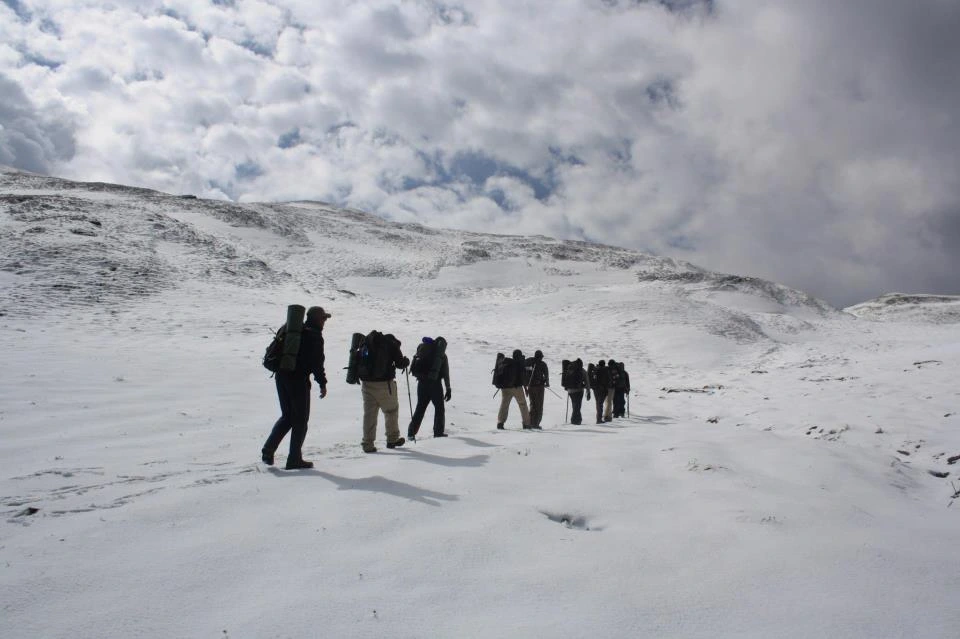
January is for trekkers who deliberately want winter rather than simply tolerating it. Snow can cover large sections of the trail, temperatures fall considerably after sunset, and daylight hours are shorter.
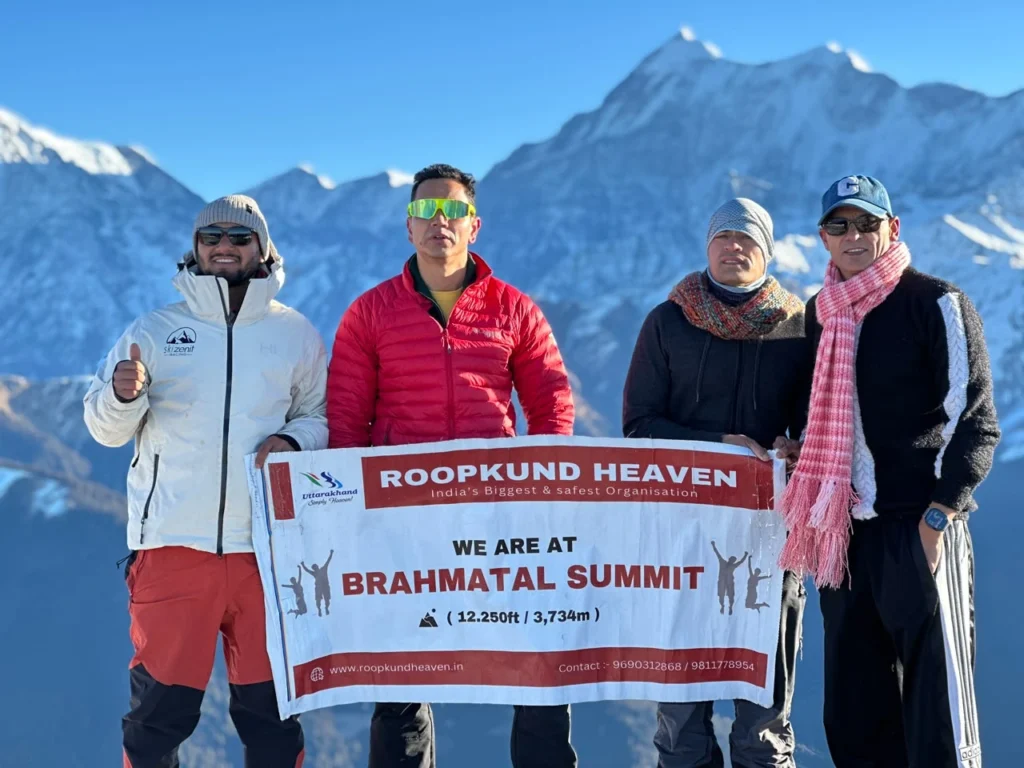
Among Uttarakhand’s winter routes, Brahmatal is particularly attractive because the landscape combines forest sections, snow-covered clearings, mountain viewpoints and an alpine lake.
Brahmatal Lake in Winter
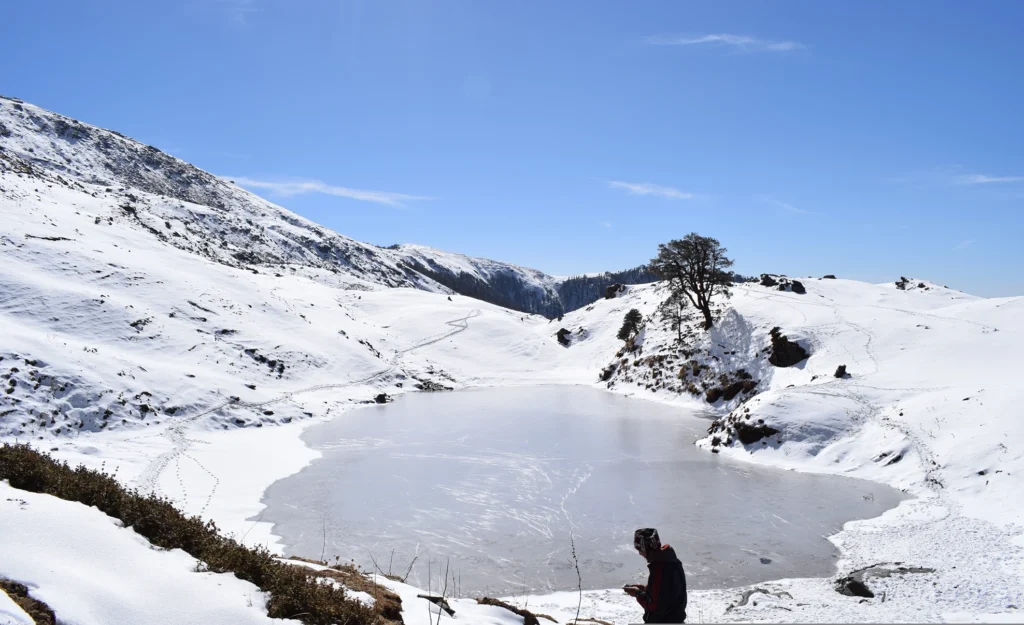
Seeing Brahmatal Lake in Winter is quite different from seeing the region during warmer months. Depending on recent weather and temperature, the lake may be partially or substantially frozen, while snow can cover the surrounding landscape.
The trek is also known for views towards prominent Garhwal peaks, particularly around the higher viewpoints.
Winter trekkers should nevertheless prepare for:
- Sub-zero night temperatures
- Snow or ice on the trail
- Shorter daylight hours
- Rapid weather changes
- Slippery ascents and descents
A frozen lake is never guaranteed merely because a trek is undertaken in winter. Temperature, snowfall and recent weather ultimately determine the lake’s condition.
February: One of the Best Months for Kuari Pass
February is an excellent month for travellers specifically searching for a snow trek.
Kuari Pass Trek in February
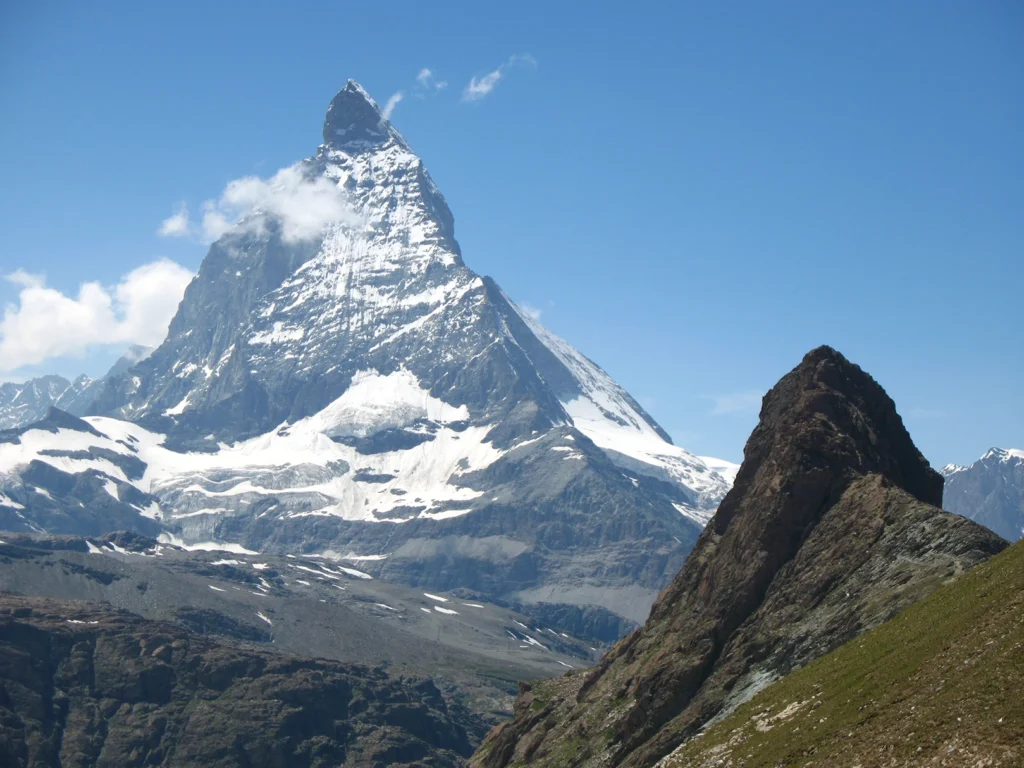
A Kuari Pass Trek in February typically offers extensive winter scenery, particularly at higher elevations. Snow-covered forests, white ridgelines and views towards peaks such as Dronagiri, Nanda Devi and other Garhwal summits are among the principal attractions.
February is especially suitable for trekkers who want:
- A genuine snow trekking experience
- Large Himalayan mountain views
- Forest and meadow landscapes under snow
- A multi-day winter trek without attempting a technical expedition
Snow depth varies considerably from year to year. Fresh snowfall can also increase the physical difficulty of the trail, so the February version of Kuari Pass should not be treated as identical to its spring or autumn version.
March: Winter Begins to Loosen Its Grip
March is a transition month.
Higher sections of trails can still retain considerable snow, particularly during the first half of the month, while lower elevations begin moving towards spring.
Kuari Pass and Brahmatal can both remain attractive choices depending on snow and trail conditions.
The advantage of March is that trekkers may encounter winter landscapes while experiencing slightly longer and, at times, more comfortable trekking days than during January.
However, melting snow can create slushy or slippery sections. Good trekking footwear remains essential.
April: Spring Trekking Begins
April marks a noticeable seasonal shift in Uttarakhand. Snow begins retreating from many lower and mid-altitude sections, forests become more active, and daytime conditions are generally more comfortable.
Kuari Pass can be particularly interesting during this transition because trekkers may experience green lower sections while snow persists higher up.
April is suitable for people who want Himalayan mountain scenery but do not necessarily want the intense cold associated with January or February.
It is also a useful month for beginners preparing for longer high-altitude treks later in the year.
May: The Bugyal Season Starts Becoming Beautiful
By May, Uttarakhand’s alpine meadow landscapes begin changing dramatically.
One of the most important regions to consider during this period is the Ali-Bedni landscape.
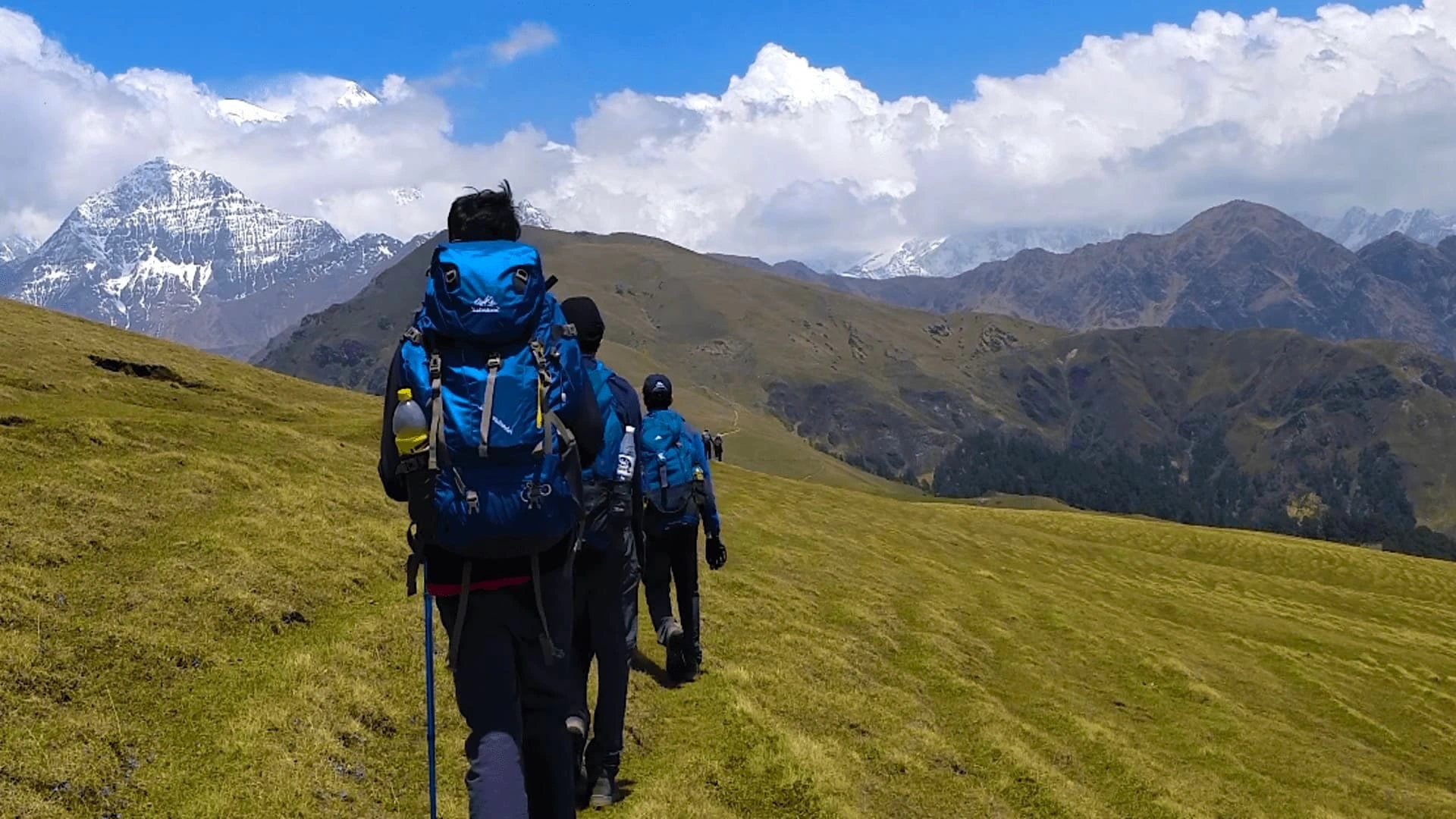
Ali Bugyal and Bedni Bugyal are famous for their expansive high-altitude grasslands. When conditions are clear, these open meadows provide spectacular views of peaks including Trishul and Nanda Ghunti.
May can offer an attractive balance of:
- Greener landscapes
- Pleasant daytime trekking
- Clearer mountain views
- Less monsoon interference
- Comfortable camping conditions
The precise accessibility of individual routes should still be checked before departure.
June: Early Summer and the Beginning of the Valley of Flowers Season
June is an important transition into Uttarakhand’s summer and monsoon trekking period.
The Valley of Flowers generally becomes accessible around the beginning of June, although the famous mass flowering display develops progressively rather than appearing immediately when the park opens.
The Valley of Flowers National Park is part of the Nanda Devi and Valley of Flowers UNESCO World Heritage landscape, making it both an ecological destination and a trekking experience.
For trekkers whose main priority is flowers, however, July and August are normally more rewarding than early June.
July: Valley of Flowers Reaches Its Most Famous Season
July changes the trekking equation in Uttarakhand.
Heavy rainfall makes many exposed mountain trails less desirable, but the same monsoon system creates the ecological conditions that make the Valley of Flowers extraordinary.
Valley of Flowers in July and August
For travellers primarily interested in wildflowers, Valley of Flowers in July and August is generally the key period to consider.
During the monsoon, the valley becomes intensely green and numerous flowering species emerge across different elevations and microhabitats.
Which Valley of Flowers Flowers Can You See?
The exact species visible depend on altitude, rainfall, temperature and the week of your visit. The wider region is known for Himalayan flowering plants such as primulas, potentillas, anemones, geraniums, balsams and several other alpine and sub-alpine species.
The important point is that Valley of Flowers flowers do not all bloom simultaneously.
The floral composition changes through the season. Someone visiting in early July can therefore experience a different valley from someone arriving in mid-August.
Rare Himalayan Flowers: Look, Photograph, but Do Not Disturb
One reason botanical enthusiasts visit Uttarakhand is the opportunity to observe Rare Himalayan Flowers in their natural habitats.
The Himalaya contains highly specialised plant communities adapted to cold temperatures, short growing seasons, intense ultraviolet radiation and highly specific soil and moisture conditions.
Some plants are restricted to narrow ecological zones, making them particularly vulnerable to disturbance.
Responsible behaviour is therefore essential.
Do not pluck wildflowers, uproot plants or walk through flowering patches simply to obtain photographs. Stay on established trails wherever required and allow the ecosystem to remain exactly as you found it.
August: Flowers, Rain and Hemkund Sahib
August continues the peak monsoon character of the Valley of Flowers region.
Rainfall can be frequent, clouds can temporarily obscure mountain views, and roads in Uttarakhand may experience weather-related disruptions. In return, the landscape can be extraordinarily lush.
Valley of Flowers with Hemkund Sahib
Many travellers plan Valley of Flowers with Hemkund Sahib because both routes use Ghangaria as an important base.
From Ghangaria, the two experiences are very different.
The Valley of Flowers route leads into a protected alpine valley filled with vegetation and seasonal blooms. Hemkund Sahib involves a considerably steeper ascent to the high-altitude Sikh pilgrimage site beside Hemkund Lake.
Combining both provides a strong mixture of ecology, trekking and spiritual significance.
Because Hemkund Sahib lies at substantially higher altitude than Ghangaria, trekkers should not underestimate the ascent simply because it is completed as a day excursion.
Monsoon Trek Packing List
A carefully prepared Monsoon Trek Packing List can make the difference between an uncomfortable trek and a manageable one.
For a monsoon trek in Uttarakhand, consider carrying:
- Waterproof or water-resistant trekking shoes with strong grip
- Rain jacket or poncho
- Backpack rain cover
- Quick-drying trekking trousers
- Moisture-wicking base layers
- Warm insulating layer
- Spare socks
- Waterproof storage for electronics and documents
- Trekking poles
- Reusable water bottle
- Personal medication and basic first-aid supplies
- Headlamp with spare batteries
- Sun protection
- Insect protection where appropriate
- Lightweight towel
- Biodegradable personal-care essentials
- Small waste bag for carrying personal waste back
Avoid relying only on a backpack rain cover. Important electronics, clothing and documents should have an additional waterproof layer inside the backpack.
September: One of Uttarakhand’s Most Interesting Trekking Months
September is a transition from monsoon towards autumn.
Rainfall generally begins declining as the month progresses, vegetation remains green, and periods of clear weather can produce impressive mountain visibility.
Two experiences deserve particular attention.
Valley of Flowers in September
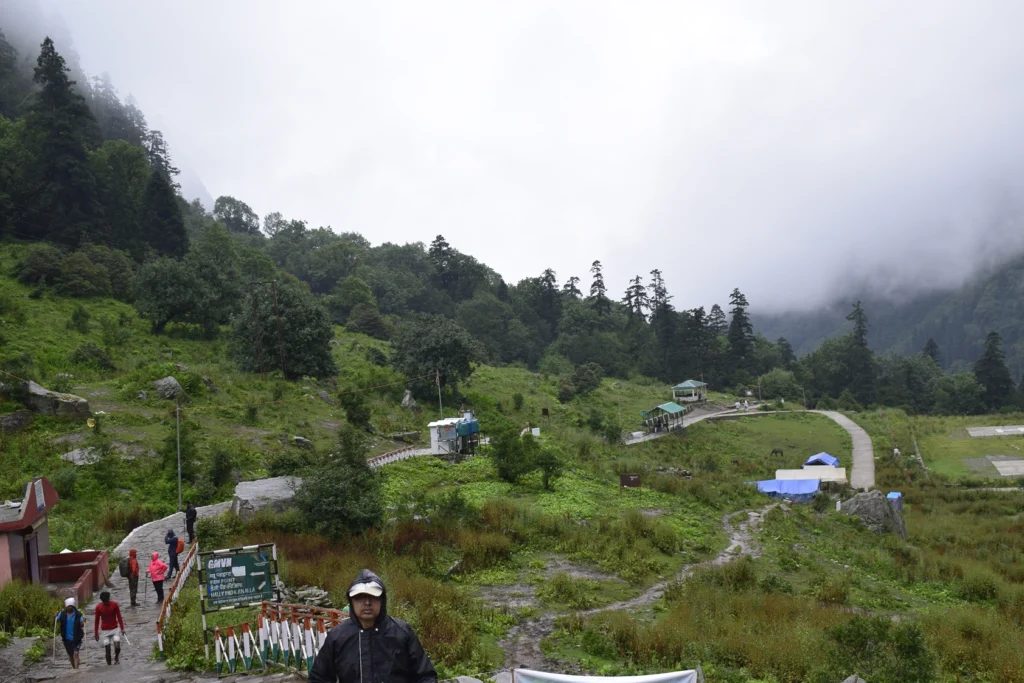
Is Valley of Flowers in September still worth visiting?
Yes—but it should not be sold as the same experience as peak flowering season.
By September, the composition and abundance of blooms begin changing. Trekkers may find fewer flowers than during the July-August peak, but the valley can still be attractive because of its greenery, waterfalls, quieter atmosphere and changing post-monsoon landscape.
People travelling primarily for maximum floral density should generally favour July or August. Travellers prioritising lower crowds and the broader Himalayan landscape may find September appealing.
Ali Bedni Bugyal Trek in September
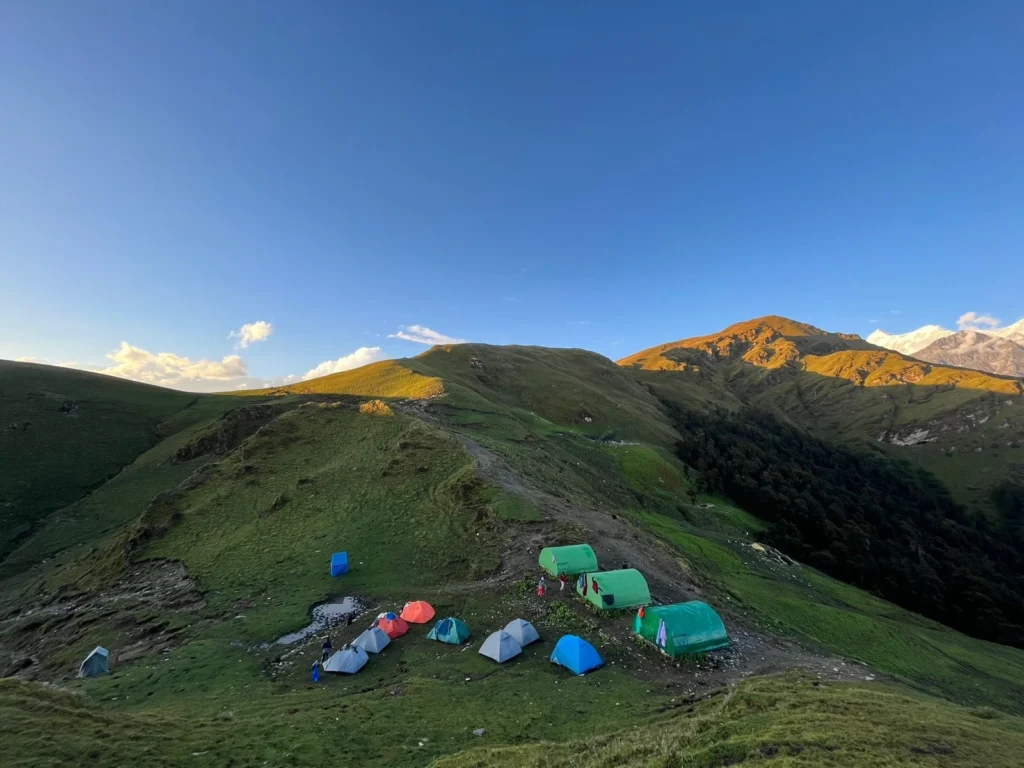
An Ali Bedni Bugyal Trek in September can provide an excellent combination of post-monsoon greenery and mountain views.
The meadows remain a major attraction, while clearer weather windows can reveal the surrounding peaks more dramatically than during the monsoon.
September is therefore one of the periods worth considering for trekkers whose priority is expansive bugyal scenery rather than snow.
Ali Bedni Bugyal Trek Difficulty: How Hard Is It?
Understanding Ali Bedni Bugyal Trek difficulty requires looking beyond a simple easy/moderate label.
The difficulty comes from a combination of:
- Sustained uphill walking
- Altitude gain
- Long trekking days depending on the itinerary
- Uneven mountain terrain
- Weather exposure
- Descents that can be demanding on the knees
- Consecutive days of physical activity
For a reasonably fit person with some trekking preparation, the route can be manageable. Beginners should nevertheless train before travelling.
Cardiovascular endurance, leg strength and the ability to walk uphill for several hours matter more than ordinary city walking fitness.
October: Clear Skies and Classic Autumn Trekking
October is one of Uttarakhand’s strongest months for mountain visibility.
The monsoon has usually withdrawn, humidity falls, skies can become clearer, and nights begin getting progressively colder.
Ali-Bedni landscapes can remain attractive during the autumn period, subject to route access and local regulations.
Trekkers who care more about distant mountain views than lush monsoon vegetation often prefer autumn conditions.
October also requires better cold-weather preparation, particularly at campsites after sunset.
November: The Mountains Move Back Towards Winter
November is another transition period.
Temperatures fall sharply, vegetation begins losing some of its monsoon richness, and early snowfall can occur at higher elevations.
Kuari Pass can again become an interesting option. Depending on the year, trekkers may encounter dry autumn trails, patches of snow or the beginning of more sustained winter conditions.
Brahmatal’s winter season also begins approaching.
The benefit of November is often clearer weather; the trade-off is increasingly cold nights.
December: Winter Trekking Returns
By December, winter trekking is again one of Uttarakhand’s principal attractions.
Brahmatal and Kuari Pass become strong choices for travellers seeking snow landscapes.
December can offer:
- Snow-covered trails
- Cold, clear mornings
- Winter mountain panoramas
- Forest trekking
- Snow camping experiences
Christmas and New Year periods can also be comparatively busy on popular winter routes, so trekkers looking for quieter trails may prefer early or mid-December.
Brahmatal Trek from Dehradun: How Should You Plan It?
Travellers searching for a Brahmatal Trek from Dehradun should understand that Dehradun is a transport gateway rather than the actual trailhead.
Brahmatal is approached through the Kumaon-Garhwal mountain road network towards the Lohajung region, with the precise pickup and operational route depending on the trekking itinerary.
If starting in Dehradun, keep a separate travel day or sufficient buffer for reaching the trek’s roadhead.
Mountain road journeys can take significantly longer than distances on a map suggest. Weather, traffic, roadwork and landslide-related restrictions can all affect travel time.
Roopkund Skeleton Lake: Why Is It So Famous?
Few trekking destinations in India have generated as much curiosity as Roopkund Skeleton Lake.
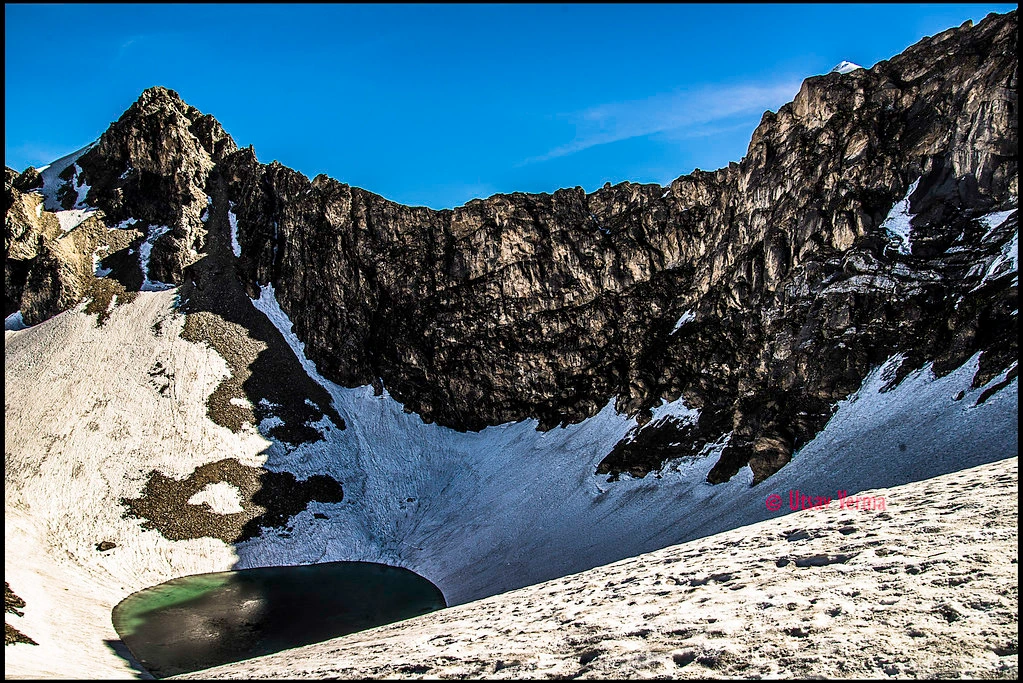
Roopkund is a high-altitude glacial lake situated at roughly 5,000 metres in Uttarakhand’s Chamoli region. It became internationally famous because human skeletal remains were discovered around the lake.
For decades, different explanations were proposed for the deaths.
Modern scientific investigation has made the story considerably more complex. Research involving ancient DNA and other archaeological techniques indicated that the individuals represented more than one genetically distinct group and were not necessarily the victims of a single event.
That makes Roopkund more than a trekking destination. It is also an important archaeological and scientific site within an ecologically fragile high-altitude environment.
Roopkund Trek Best Time: When Should You Plan It?
Historically, discussions about Roopkund Trek best time generally centred around the pre-monsoon and post-monsoon trekking windows.
Late spring and early summer offered greener meadows and comparatively favourable access, while the post-monsoon period was valued for clearer skies and expansive Himalayan views.
However, the question can no longer be answered by weather alone.
Roopkund lies in an environmentally sensitive landscape, and access has been subject to restrictions and regulatory changes. For 2027, the first question should therefore be whether the intended route is legally and officially open—not simply whether the weather is suitable.
Roopkund Trek in Monsoon: Why It Is Usually a Poor Choice
A Roopkund Trek in Monsoon should not be approached in the same way as the Valley of Flowers.
The Valley of Flowers is specifically valued for a monsoon-driven ecological phenomenon. Roopkund, by contrast, involves a high-altitude route where persistent rainfall can significantly increase operational risk.
Potential problems include:
- Slippery trails
- Mud
- Reduced visibility
- Landslide-prone approach roads
- Difficult river or stream crossings
- Unstable weather
- Reduced mountain visibility
Even if access regulations permit trekking in a particular year, the monsoon is generally not the season to select simply because the landscape is green.
Brahmatal vs Roopkund Trek: Which Is Better?
The Brahmatal vs Roopkund Trek comparison is interesting because the two experiences are fundamentally different.
Choose Brahmatal if you want:
- A recognised winter trekking experience
- Snow-covered forests
- A high-altitude lake
- Strong Himalayan viewpoints
- A comparatively accessible multi-day trekking format
Consider Roopkund only if officially permitted and you want:
- A much higher-altitude objective
- A historically significant route
- Expansive bugyals
- A physically more demanding experience
- The archaeological story associated with Skeleton Lake
The key difference is regulatory status. Brahmatal can be evaluated largely in terms of season, weather and trek difficulty. Roopkund additionally requires careful verification of current access regulations.
Roopkund Trek Reopens 2026: What Does It Mean for 2027?
Searches for Roopkund Trek Reopens 2026 increased significantly because trekkers wanted to know whether the famous trail would again become accessible after years of restrictions.
For anyone planning 2027, however, a headline announcing reopening should not automatically be interpreted as unrestricted access to the lake.
Roopkund lies within a fragile alpine environment, and any trekking access can be subject to forest regulations, route restrictions, group controls, camping rules, local administrative instructions and conservation requirements.
Before planning a 2027 departure, verify:
- The exact route currently permitted.
- Whether trekkers can legally approach the lake itself.
- Where camping is permitted.
- Current group-size restrictions.
- Forest or protected-area permissions.
- Waste-management requirements.
- Any seasonal closure or weather advisory.
Roopkund Trek Supreme Court Order 2026: Verify the Exact Order
The phrase Roopkund Trek Supreme Court Order 2026 should be handled carefully.
Legal and environmental updates are often simplified when they circulate through social media, trekking groups and secondary websites. A claim that a court order has “reopened Roopkund” can omit important conditions concerning ecological protection, route access, camping or implementation by state authorities.
For 2027 planning, trekkers and operators should rely on the actual judicial order and subsequent notifications from the competent Uttarakhand authorities rather than treating a social-media summary as the final operating rule.
This is particularly important because court directions and the on-ground trekking framework implemented afterward are not necessarily the same document.
Valley of Flowers Trek 2026: What It Tells Us About Planning for 2027
The Valley of Flowers Trek 2026 season provides a useful reference for understanding the established trekking pattern, but 2027 travellers should still confirm that year’s official opening and closing dates.
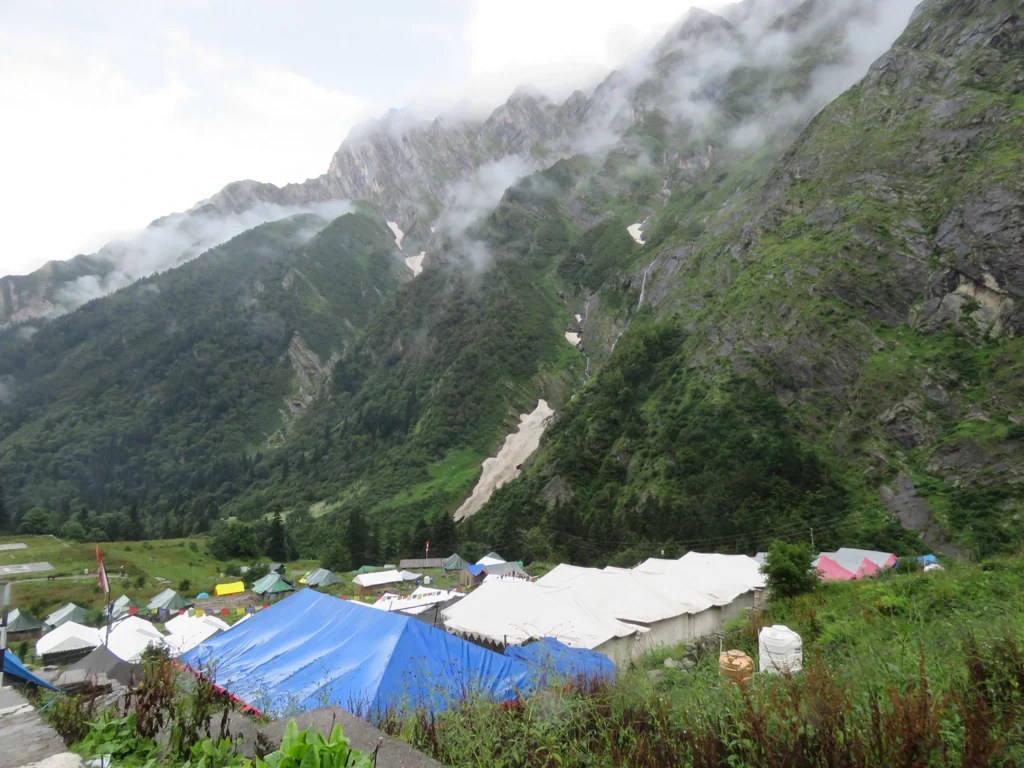
The park is a protected landscape, and access is regulated. Overnight stays inside the Valley of Flowers itself are not part of the normal trekking model; Ghangaria serves as the principal trekking base.
The conventional route is:
Haridwar/Rishikesh → Joshimath region → Govindghat → Pulna → Ghangaria → Valley of Flowers
Ghangaria can also be used for the Hemkund Sahib excursion.
The Valley of Flowers is part of the UNESCO-listed Nanda Devi and Valley of Flowers National Parks landscape and should be treated as a protected ecological destination rather than simply another meadow trek.
How to Reach Valley of Flowers by Road
Travellers searching How to Reach Valley of Flowers by Road should understand one important point: there is no motorable road directly into the Valley of Flowers.
A typical approach from the plains follows the mountain road network towards the Joshimath-Govindghat region. Road access takes travellers to the vicinity of the trekking approach, after which the journey continues on foot through the Pulna-Ghangaria corridor.
A common journey pattern is:
Haridwar/Rishikesh → Devprayag → Srinagar → Rudraprayag → Karnaprayag → Joshimath → Govindghat → Pulna → Ghangaria
From Ghangaria, trekkers enter the Valley of Flowers on foot.
During monsoon months, road travel deserves particular attention. Landslides, rockfall, heavy rain and road maintenance can cause delays, so avoid building an itinerary around extremely tight transfer times.
How to Choose the Right Trek Month in Uttarakhand
Instead of asking, “What is the best trek in Uttarakhand?”, ask:
What do I want to see?
For snow, consider December to March.
For Valley of Flowers flowers, focus primarily on July and August.
For green bugyals, late spring and the post-monsoon period can be excellent depending on the route.
For clear mountain panoramas, post-monsoon September and October are often strong choices.
For a winter lake experience, Brahmatal is an obvious candidate.
For Roopkund, check official access first and season second.
This distinction is important because Uttarakhand’s trekking calendar is driven by altitude, precipitation, snow accumulation, flowering cycles and protected-area regulations—not simply by tourist seasons.
Final Thoughts: There Is a Trek for Almost Every Season
The biggest advantage of trekking in Uttarakhand is its seasonal diversity.
February can give you a snow-covered Kuari Pass. July and August can transform the Valley of Flowers into one of India’s most remarkable alpine botanical landscapes. September can offer green meadows around Ali Bedni Bugyal, while December brings Brahmatal back into its winter character.
The most important principle for the Uttarakhand Trekking Calendar 2027 is therefore simple: match the trek to the season rather than forcing a particular trail into the month you happen to be free.
And for environmentally sensitive routes—especially Roopkund—always place official access rules ahead of old itineraries, blogs or assumptions based on previous trekking seasons.
Frequently Asked Questions About Uttarakhand Trekking in 2027
1. Which is the best month for trekking in Uttarakhand?
There is no single best month. April-May and September-October are excellent for many non-winter treks, while December-March is better for snow treks. July-August is particularly important for the Valley of Flowers.
2. Which Uttarakhand trek is best in January?
Brahmatal is one of the better-known winter choices. Kuari Pass can also be considered depending on snowfall and trail conditions.
3. Is Kuari Pass Trek in February worth doing?
Yes. A Kuari Pass Trek in February is particularly suitable for trekkers seeking snow, winter forests and major Himalayan views. Fresh snowfall can make the route more demanding.
4. Is Brahmatal Lake frozen in winter?
It can freeze partially or extensively during sufficiently cold periods, but the condition of Brahmatal Lake in Winter depends on recent temperature and weather. A completely frozen lake should never be guaranteed.
5. Can beginners do the Brahmatal Trek?
Fit beginners commonly undertake Brahmatal, but winter conditions add difficulty. Prior physical preparation, suitable equipment and realistic pacing are important.
6. How can I plan a Brahmatal Trek from Dehradun?
For a Brahmatal Trek from Dehradun, first travel towards the Lohajung side of Uttarakhand according to your operator’s road itinerary. Keep adequate buffer time because mountain transfers are long and can be affected by road conditions.
7. When is the best time for Valley of Flowers?
For abundant flowers, July through August is generally the most important period. The exact floral display varies every year with snowfall, rainfall and temperature.
8. Is Valley of Flowers in September worth visiting?
Yes. Valley of Flowers in September can still be beautiful, although travellers should expect a different floral profile and generally fewer blooms than during the July-August peak.
9. Which months have the most flowers in Valley of Flowers?
Valley of Flowers in July and August generally provides the strongest flowering experience. Different species bloom at different stages, so there is no single date when every flower is simultaneously at peak bloom.
10. Can Valley of Flowers and Hemkund Sahib be done together?
Yes. Valley of Flowers with Hemkund Sahib is a popular combination because Ghangaria acts as a base for both routes. Hemkund Sahib is considerably higher and involves a steep ascent, so adequate acclimatisation and fitness remain important.
11. How do I reach Valley of Flowers by road?
For anyone researching How to Reach Valley of Flowers by Road, vehicles can take you towards Govindghat/Pulna depending on current road arrangements. The final approach to Ghangaria and the Valley itself requires trekking.
12. What is Ali Bedni Bugyal Trek difficulty?
Ali Bedni Bugyal Trek difficulty can broadly be considered moderate for a prepared trekker, but altitude gain, consecutive walking days and sustained ascents make physical preparation necessary.
13. Is Ali Bedni Bugyal Trek in September good?
Yes. An Ali Bedni Bugyal Trek in September can provide green post-monsoon meadows, improving visibility and impressive views towards the surrounding Himalayan peaks.
14. Why is Roopkund called Skeleton Lake?
The name Roopkund Skeleton Lake comes from the human skeletal remains found around the high-altitude lake. Scientific studies suggest the remains have a more complex history than the older theory that everyone died during one catastrophic event.
15. What is the Roopkund Trek best time?
Historically, Roopkund Trek best time has been associated with pre-monsoon and post-monsoon periods. For 2027, however, legal access and conservation regulations must be verified before choosing dates.
16. Is Roopkund Trek in Monsoon recommended?
Generally, a Roopkund Trek in Monsoon is not the preferred choice. Heavy rainfall can increase trail slipperiness, landslide risk, road disruption and poor visibility.
17. Has the Roopkund Trek reopened?
Reports around Roopkund Trek Reopens 2026 should be checked against the latest government, forest department and applicable judicial directions before planning a 2027 trek. Reopening does not necessarily mean unrestricted access to every part of the historical route.
18. What is the Roopkund Trek Supreme Court Order 2026?
When researching the Roopkund Trek Supreme Court Order 2026, consult the actual judicial record and subsequent state implementation orders. Secondary reports can oversimplify what a court directed and what trekking activities are subsequently permitted.
19. Which is better: Brahmatal vs Roopkund Trek?
In a Brahmatal vs Roopkund Trek comparison, Brahmatal is better suited to travellers seeking a conventional winter trek. Roopkund is a higher and historically significant route whose accessibility depends heavily on current environmental regulations.
20. What should I include in a Monsoon Trek Packing List?
A good Monsoon Trek Packing List should include proper trekking shoes, rain protection, quick-drying clothing, trekking poles, waterproof internal storage, spare socks, warm layers, a headlamp and personal medical essentials.
21. Can I pluck rare Himalayan flowers for photographs or souvenirs?
No. Rare Himalayan Flowers should be observed without disturbing them. In protected landscapes such as the Valley of Flowers, trekkers should remain on designated routes and avoid damaging or removing vegetation.
22. Which is the best month for first-time trekkers in Uttarakhand?
April-May and September-October are often easier seasonal windows for beginners because they avoid the harshest winter conditions and the core monsoon period. The right month still depends on the specific trek.
23. Which Uttarakhand trek is best for snow in 2027?
Brahmatal and Kuari Pass are two major options to consider for winter snow trekking, particularly between December and March. Actual snow cover cannot be guaranteed months in advance.
24. Which month gives the clearest Himalayan views?
October is often excellent for clear mountain visibility after the monsoon, while late September can also provide outstanding views when the weather stabilises.
25. Do I need a guide for trekking in Uttarakhand?
It depends on the route and current regulations. For high-altitude, winter, protected-area or unfamiliar trails, trekking with experienced local support is strongly advisable. Some routes may also have specific registration, permit or guide requirements.